
NEW
Font size
 Worksheets
VA101 Color & Value
Total questions: 10
Worksheet time: 4mins
What is the definition of color in visual design?
A physical texture created by the surface of an object
It's a property of light.
A measurement of an object’s volume in three-dimensional space
The arrangement of shapes to create balance in a composition
What is value in visual design?
The emotional meaning communicated by a color
The temperature of a color, whether it feels warm or cool
The lightness or darkness of a color
The purity or intensity of a color
In the RGB color system, what does “RGB” stand for?
Red, Gold, Black
Reflective, Glowing, Bright
Radiant Graphic Balance
Red, Green, Blue
What type of color system is RGB?
Which of the following is an example of a tertiary color?
Red-Orange
Blue
What does “saturation” refer to in color theory?
The intensity or purity of a color.
It indicates the lightness of a color.
The temperature of a color.
The brightness of a color.

Look at Van Gogh’s Sunflowers. Which color scheme is primarily used in this painting?
Triadic
Monochromatic
Analogous
Complementary
What is a complementary color?
Colors that are opposite each other on the color wheel.
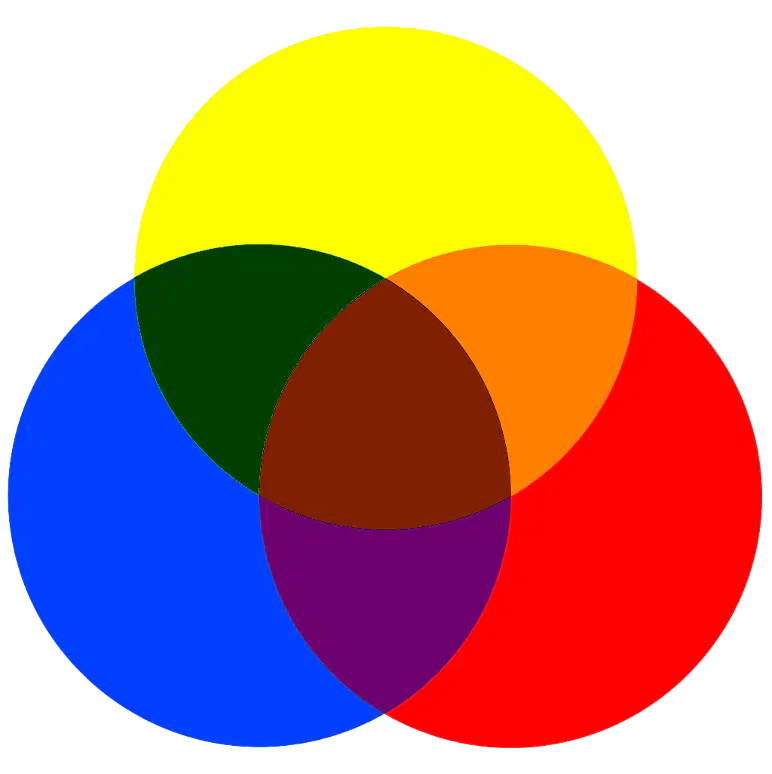
Which color model is represented in this image?
What is aerial perspective in visual design and painting?
A method of creating 3D models in digital design.
Refers to the use of geometric shapes to represent objects.
A technique for enhancing color saturation in paintings.
A technique that uses color and clarity to create the illusion of depth in visual design and painting.

