
NEW
Font size
 Worksheets
Fire Production Quiz
Total questions: 16
Worksheet time: 8mins
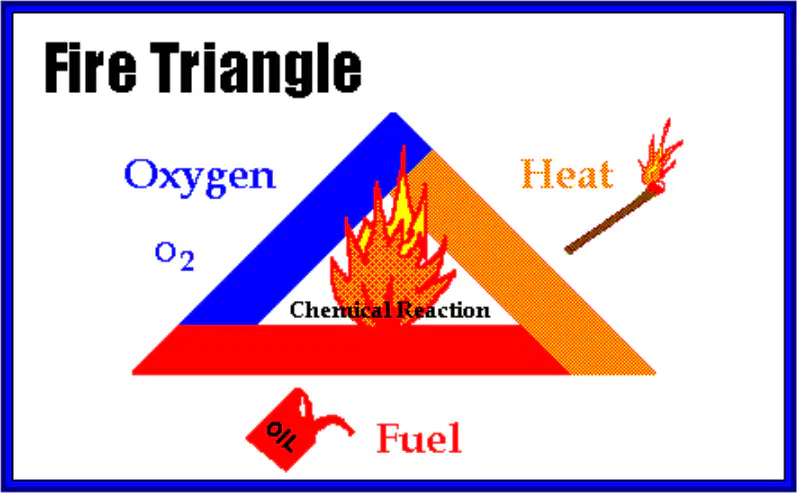
Which of the following is NOT a component of the Fire Triangle?
Oxygen
Water
Heat
Fuel
What is the basic principle of fire safety according to the Fire Triangle?
Mixing fuel and ignition sources
Keeping fuel sources and ignition sources separate
Increasing the amount of oxygen
Adding more heat to the environment
Keeping fuel sources and ignition sources separate is important for fire safety because, according to the Fire Triangle, it prevents the chemical reaction needed for fire to occur.
It increases the amount of oxygen available.
It makes the fire burn more efficiently.
It prevents the chemical reaction needed for fire to occur.
It adds more heat to the environment.
Which of the following is NOT a feature of passive fire protection approaches?
Provision of adequate fire resistance of the structure
Provision of proper FAR, open spaces
Installation of fire alarms
Provision of adequate access to water supply for fire brigade
Why is it important to avoid using plastic or wooden furniture in technical rooms from a fire safety perspective?
They are more flammable than steel furniture
They are heavier than steel furniture
They are more expensive than steel furniture
They are more difficult to clean than steel furniture
Why is it important to use fuse wire of the correct rating in a distribution system?
To save money
To ensure proper fire safety
To increase electricity usage
To reduce noise
Which of the following materials should be used for the false ceiling and fixtures of air-conditioning to ensure fire safety?
Combustible material
Non-combustible material
Plastic material
Wooden material
What is the purpose of designating one lift as a "FIRE LIFT" in a building?
To enable fire service personnel to use it during emergencies
To provide faster service to residents
To reduce electricity consumption
To increase the number of lifts available for the public
Which of the following is an example of an active fire protection approach?
Fire Extinguisher
Fireproof Paint
Fire-resistant Doors
Emergency Exit Signs
Class B fuels include which of the following?
Plastics
Flammable liquids like gasoline and oil
Energized electrical equipment
Aluminum
Which class of fuel includes metals such as potassium, sodium, aluminum, and magnesium?
Class A
Class B
Class C
Class D
If a fire involves trash and paper, which class of fire extinguisher should be used?
Class A
Class B
Class C
Class D
Which type of fire extinguisher should be used for a fire involving wood, paper, or cloth?
WATER, FOAM
FOAM, CO2
CO2
SPECIAL DRY CHEMICAL POWDER
What class of fire extinguisher is suitable for flammable liquids such as gasoline and oil?
Class A
Class B
Class C
Class D
Which extinguishing agent is recommended for electrical fires involving energized equipment?
WATER
FOAM
CO2
SPECIAL DRY CHEMICAL POWDER
A fire breaks out in a laboratory involving magnesium. Which extinguisher should be used?
WATER, FOAM
FOAM, CO2
SPECIAL DRY CHEMICAL POWDER
CO2

