
Font size
 Worksheets
Early Catholic Church History Quiz
Total questions: 53
Worksheet time: 27mins
What is one thing early Christians used to identify each other during persecution?
Secret handshakes
Fish drawings
Special clothing
Unique hairstyles
What is one reason the Roman road system was significant for early missionaries?
It was made of gold
It allowed for easier and faster travel across the empire
It was only used by soldiers
It was the first road system ever built
Where was the very first Christian church located?
Rome
Jerusalem
Athens
Alexandria
What major event happened in 70 AD that changed everything for early Christians?
The birth of Jesus
The destruction of the Jerusalem Temple by the Romans
The writing of the Bible
The first church council
Why is St. Paul's missionary travel distance compared to walking from New York to Los Angeles four times?
To show he traveled by ship
To emphasize the great distance he covered, over 10,000 miles
To explain he visited America
To show he only traveled in circles
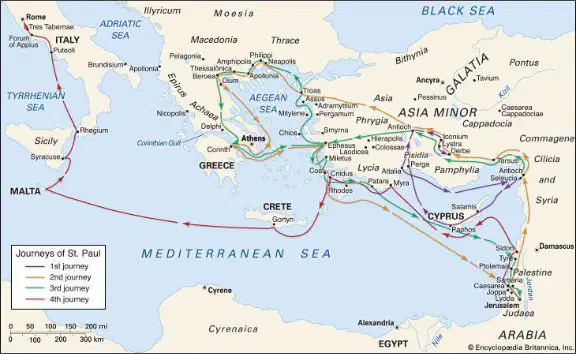
Which regions did St. Paul visit during his missionary journeys according to the map?
Only Italy and Greece
Only Egypt and Arabia
Various regions including Asia Minor, Greece, and Cyprus
Only Palestine and Syria
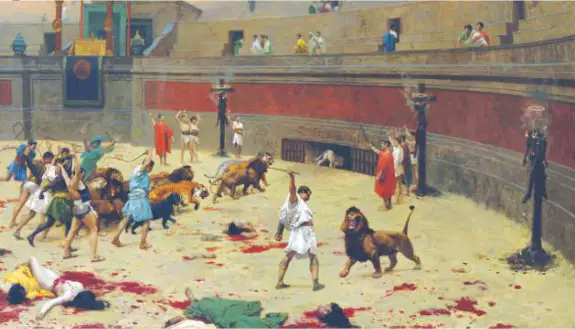
What does "Ante-Nicene" mean?
Before the Council of Nicaea
After the Council of Nicaea
During the Council of Nicaea
After the fall of the Roman Empire
During the Ante-Nicene period, where did Christians often have to meet in secret?
Underground cemeteries called catacombs
Roman temples
Public squares
Emperor's palace
Which of the following martyrs died for their faith and inspired others to become Christians?
St. Ignatius and St. Polycarp
St. Augustine and St. Jerome
St. Francis and St. Benedict
St. Peter and St. Paul
What was the main purpose of the writings of Christian apologists?
To entertain Roman citizens
To help educated Romans understand what Christians really believed
To create new laws for Christians
To translate the Bible into Latin
Which early heresy rejected the Old Testament completely?
Gnosticism
Montanism
Marcionism
Arianism
What was the main claim of Montanism?
Only the apostles could teach
New prophecies could go beyond the apostles' teachings
The Old Testament was the only scripture
Salvation was by works alone
What major change happened to Christianity after the Edict of Milan?
It became the official religion of Rome
It was banned in the Roman Empire
It split into two branches
It was only practiced in secret
How might the legalization of Christianity have changed the religion? Consider both benefits and challenges.
It allowed for open worship and growth, but also brought new challenges such as political involvement and debates over doctrine.
It made Christianity illegal everywhere.
It caused Christianity to disappear.
It led to the immediate collapse of the Roman Empire.
Why do you think it was important to have smart, educated people defending and explaining Christianity? (Choose the best answer)
They could help others understand and defend the faith
They could build bigger churches
They could collect more money
They could travel more easily
Why are medieval monasteries important for the preservation of ancient literature?
They built the first libraries
Monks copied manuscripts by hand, preserving most ancient books
They invented the printing press
They translated books into many languages
According to the learning material, what was the primary focus of the Church in the North during the Early Middle Ages?
Political changes
Cultural preservation
Missionary work
The Church's role was most important
Why is the Early Middle Ages sometimes called the "Dark Ages"?
Because there was no sunlight
Because it was a time of great learning
Because it was believed to be a period of decline and chaos
Because it was a time of peace and prosperity
How did Pope Gregory the Great manage the city of Rome when there was no other government?
Like a mayor
Like a general
Like a judge
Like a merchant
Why was Gregory the Great's book on pastoral care important?
It was like a "how-to" manual for being a good priest
It was the first book written in Latin
It was a guide for building churches
It was a history of Rome
What was the result of the alliance between the Popes and the Frankish kings?
The birth of the Holy Roman Empire
The end of the Roman Empire
The start of the Crusades
The fall of Constantinople
Why might the alliance between the Pope and Charlemagne have been beneficial for both parties?
The Pope gained protection and Charlemagne gained legitimacy as emperor
The Pope wanted to move to France
Charlemagne needed a new palace
The Frankish kings wanted to become Popes
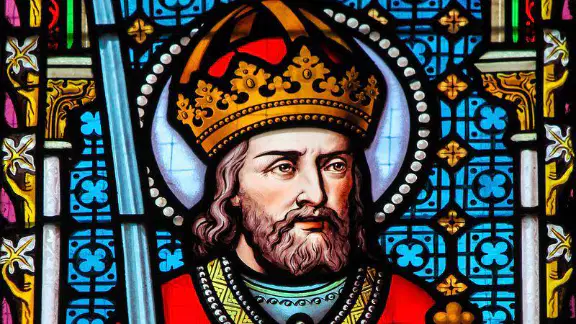
What is a surprising fact about Charlemagne mentioned in the material?
He was over 6 feet tall
He was born in Rome
He was a famous artist
He could speak ten languages
Who brought Christianity to England during the Great Missionary Age?
St. Augustine of Canterbury
St. Boniface
Saints Cyril and Methodius
Irish monks
In which century did Islam begin to spread rapidly, conquering Christian lands in the Middle East and North Africa?
5th century
6th century
7th century
8th century
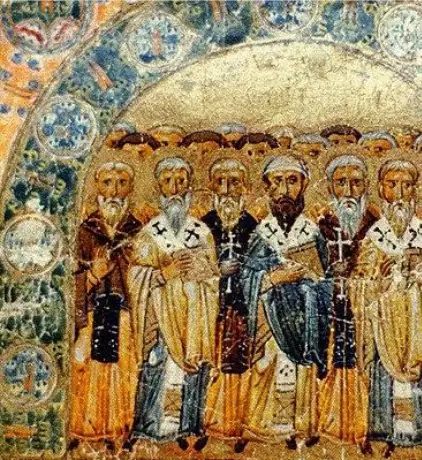
Which key figure is known for spreading Christianity throughout the Roman Empire as a great missionary?
St. Augustine
St. Paul
Constantine
Charlemagne
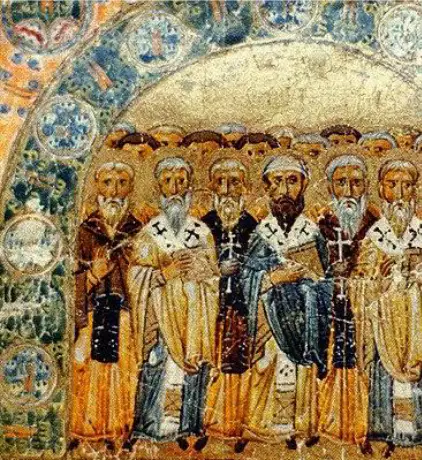
Which two figures from the list played a major role in spreading Christianity, and how did their contributions differ?
St. Peter and Charlemagne; St. Peter led the apostles, while Charlemagne united Europe under Christian rule.
St. Paul and Constantine; St. Paul spread Christianity as a missionary, while Constantine legalized it as emperor.
St. Augustine and St. Paul; St. Augustine was a theologian, while St. Paul was a missionary.
Constantine and Charlemagne; Constantine was a theologian, while Charlemagne was a missionary.
Which of the following was NOT a role of monasteries during the medieval period?
Centers of education
Centers of agriculture
Centers of technology
Centers of military training
What type of authority did the Pope have during the medieval period?
Only spiritual authority
Only political authority
Both spiritual and political authority
Only economic authority
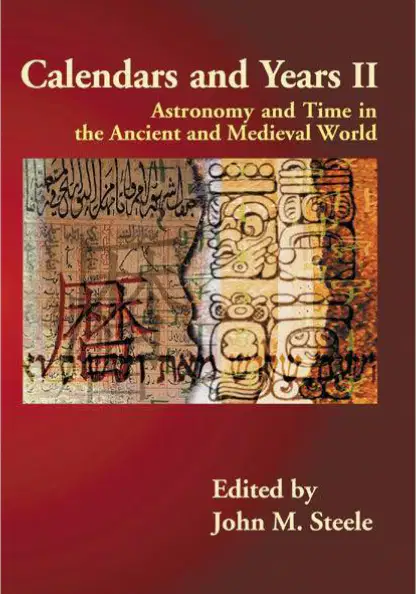
What is the title of the book shown in the image?
Calendars and Years II: Astronomy and Time in the Ancient and Medieval World
The History of the Medieval Church
Ancient Astronomy and Religion
The Rise of Papal Power
Which emperor issued the Edict of Milan, granting religious freedom to Christians?
Diocletian
Nero
Constantine
Augustus
What was a common reason early Christians faced persecution in the Roman Empire?
They refused to worship Roman gods
They supported the emperor
They were wealthy landowners
They built large temples
Who is credited with organizing the first major monastic community in Western Europe?
St. Benedict
St. Paul
St. Augustine of Hippo
St. Jerome
True or False: A martyr is someone who dies defending their faith
True
False
The first martyr and deacon of the church.
Paul
Peter
Stephen
Who was the first Apostle to be killed? He was beheaded by a king.
Philemon
Peter
James
Jesus
He was the Roman emperor during the first persecution of Christians in Rome, around AD 64
(a)
Believers were first called "Christians" in the city of...
Antioch
Jerusalem
Caesarea
Damascus
Who gave Christianity legal standing as a religion in 313 CE?
(a)
The Emperor Constantine issued the (a) , which made Christianity legal throughout the Roman Empire.
Who was responsible for making Rome a Christian state?
Constantine
Julius Caesar
Mohammed
Emperor Nero
The Book of the Bible that tells us about life in the early Church is called the
Acts of the Apostles
Book of the Blessed
Canticle of the Chosen
Deeds of the Disciples
What is the religion based on the life of Jesus and his teachings that started on the eastern end of the Mediterranean?
Hinduism
Judaism
Paganism
Christianity
Members of the early Church devoted themselves to
the teaching of the apostles
life as a community
selling everything and sharing everything
celebrating Eucharist together
all of the answers
Define: Gentile
a Jewish person
a non-Jewish person
a non-person
a "person"
Pentecost is the __________ of the church
fire
Holy Spirit
death
birthday
Identify the city where Pentecost happened.
Jerusalem
Rome
Bethlehem
Corinth
Who preached the sermon on the Day of Pentecost?
Jesus
James
Paul
Peter
What are two challenges the Church in the first century faced? (choose 2)
Conflict with Jewish neighbors who didn't believe in Jesus
Persecution from the Romans
They couldn't decide who should lead them.
They got along well with everyone, making them too busy.
Who was emperor of Rome when Peter was leading the church
Nero
Julius Caesar
Octavian
James

