
 Worksheets
Africa Exam
Total questions: 41
Worksheet time: 21mins
Name
Class
Date
1.

Which of the following best describes Ibn Battuta's legacy?
a)
He was the first European to travel to China and document his experiences.
b)
His writings help us understand the Middle Ages world today
c)
He was a military general who conquered much of North Africa and Central Asia.
d)
He was the personal ambassador of the Sultan of Delhi to the courts of China.
2.
How did Ghana become such a powerful state?
a)
Ghana owned more salt than other states.
b)
Leaders in Ghana formed alliances with other groups of people.
c)
It had the strongest army in all of Africa.
d)
It gained control of the valuable trade routes.
3.
Why was salt so valuable in Africa? Choose the Best response.
a)
Salt was used as a fertilizer for crops
b)
Salt was used in many religious ceremonies.
c)
People needed salt in their diets and to preserve/season food.
d)
Salt was used in medicines.
4.
The exchange of gold and salt by silent barter helped
a)
Mali control the trade routes
b)
Traders who spoke different languages communicate
c)
Keep the location of the gold mines a secret
d)
Ghana get money to finance its army
5.
Which of these resulted from the hajj of Mansa Musa?
a)
The fall of the Mali Empire and loss of trade routes
b)
The destruction of Timbuktu’s universities and mosques
c)
Europe began to adopt Islam
d)
Increased trade and cultural connections between Mali and other Islamic regions
6.
The earliest slave trade was across the Sahara. Slaves were brought up the Niger River to Timbuktu and transported across the Sahara into North Africa. Which of the following was necessary before large numbers of slaves could be moved across the desert?
a)
boats from Egypt
b)
horses from South America
c)
wagons from Europe
d)
camels from Arabia
7.
Which of the following was NOT true regarding Mansa Musa’s influence on Africa
a)
He funded the creation of Mosques across Northern Africa, encouraging Islam to flourish
b)
He once crashed the city of Cairo’s economy by giving away so much gold
c)
He established a secure Mali, ensuring that trade within his civilization was uninterrupted
d)
He used his wealth to unite all of Northern Africa, creating the largest African civilization in existence.
8.
What protected Ghana from being conquered by Muslim armies in the 700s?
a)
strong walls
b)
elite warriors
c)
a peace treaty
d)
the vast desert
9.
Which Middle Ages civilization encouraged the spread of Christianity throughout Africa?
a)
Mali
b)
Swahili
c)
Axum
d)
Ghana
e)
Great Zimbabwe
10.
How did the kings of Ghana and Mali ensure order and peace within their civilization? Choose the best answer.
a)
By granting fiefs in exchange for loyalty, a line of knights were recruited to keep the peace
b)
The kings imposed heavy fines on criminals
c)
The kings paid for a professional army using money collected by a tax on trade.
d)
All crime was met with harsh punishment, often death.
11.
Which of the following geographic features made trade with Arabia challenging for the Mali Empire during the Medieval period?
a)
the Mediterranean Sea
b)
the Nile River
c)
the Sahara Desert
d)
the Atlas Mountains
12.

What is the best title for this list below?
a)
Trading Cities of the Sahara
b)
Tribes Who Ruled the Desert
c)
Early Kingdoms of West Africa
d)
Animal Gods of the Niger Valley
13.
Which of these was an advantage of becoming part of an empire?
a)
paying tribute to the king
b)
trading with the governor
c)
having to serve in the army
d)
getting protection from raiders (enemies)
14.

In the early 1300s, Mansa Musa of the Mali Empire made a religious journey to Mecca and shared much of his wealth from Mali along the way. The passage suggests that much of the Mali Empire’s wealth came from
a)
mining for precious gold.
b)
processing plants to make spices.
c)
weaving silk to make textiles.
d)
creating weapons that use gunpowder.
15.
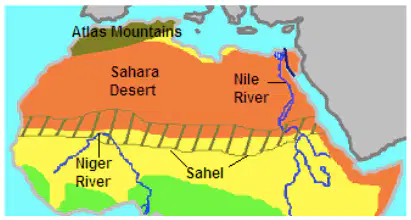
The bend of the Niger River was the focal point of trade in Western Sahara. Why was this river so important?
a)
The Niger provided easy access to the Nile River and Egypt.
b)
The Niger did not experience annual flooding and was safe to travel on.
c)
The Niger is the closest major source of water to the Sahara desert.
d)
The Niger River is the only saltwater river in Africa.
16.
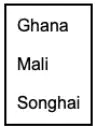
What was the importance of the empires listed above?
a)
They ended the slave trade among the central African tribes.
b)
They prevented the spread of the Islamic religion into Southern Africa.
c)
They kept European traders from exploiting African resources.
d)
They controlled the trade of salt, gold, and ivory across the Sahara.
17.
Which of the following trading goods were MOST commonly exported from Swahili coastal cities to other parts of the world?
a)
Silk and spices
b)
Gold and ivory
c)
Timber and cotton textiles
d)
Wheat and barley
18.
One danger associated with trade along routes like the Indian Ocean and the Trans-Saharan is that human interactions helped spread
a)
Disease
b)
Religious persecution
c)
Conquering barbarians
d)
Famine
19.
Which of the following best describes the role of the griots (oral historians) in preserving the legacy of Sunjata the Lion King in West African culture?
a)
They served as military strategists during Sunjata’s reign
b)
They were primarily responsible for administering the legal system in Mali
c)
They played a key role in the telling of both historical and moral lessons, often recounting Sunjata’s story in praise-singing performances
d)
They were advisors to the king, especially on matters of diplomacy and trade
20.
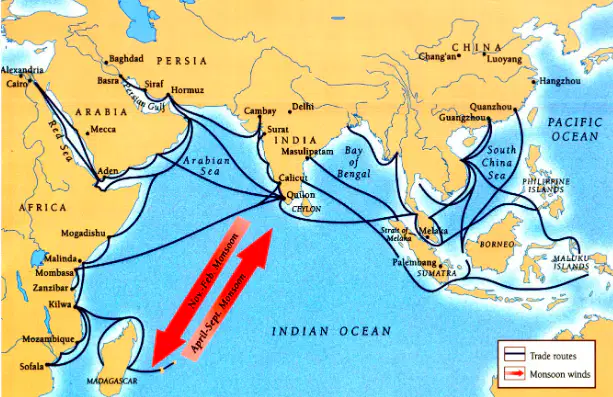
Which of the following made trade more reliable and profitable along the Indian Ocean (Choose Best Answer)
a)
Better Ship building techniques
b)
Strong and Predictable Monsoon Winds
c)
Educated Sea Captains
d)
Strong Navy to protect port-towns
21.
These were the travelers of the Sahara that made the Gold and Salt trade possible
a)
Berbers
b)
Moroccans
c)
Egyptians
d)
Swahili
e)
Moores
22.

Which of the following best describes the trade economy of the Mali Empire during the medieval period?
a)
The Mali Empire focused on trading primarily in agricultural products like grain and cotton.
b)
The Mali Empire’s wealth was based on its large-scale export of gold, salt, and ivory, facilitated by the Trans-Saharan trade routes.
c)
The Mali Empire traded mostly in ivory and luxury goods with the Kingdom of Aksum.
d)
The Mali Empire exported significant quantities of slaves to the Swahili Coast and India.
23.

Which medieval African ruler is known for spreading Islam across the Mali Empire and fostering diplomatic relations with Europe and the Middle East?
a)
King Tenkamenin of the Ghana Empire
b)
Mansa Musa of the Mali Empire
c)
King Ezana of Aksum
d)
King Chazarama of Great Zimbabwe
24.

Which of the following civilizations is most famous for using dry stone masonry in its architecture, notably in the construction of the Great Enclosure?
a)
The Mali Empire
b)
The Kingdom of Aksum
c)
The Kingdom of Ghana
d)
Great Zimbabwe
25.

Which of the following civilizations experienced a decline in the 7th century due to the rise of Islam and disruptions in trade routes?
a)
The Mali Empire
b)
The Kingdom of Aksum
c)
Great Zimbabwe
d)
The Ghana Empire
26.
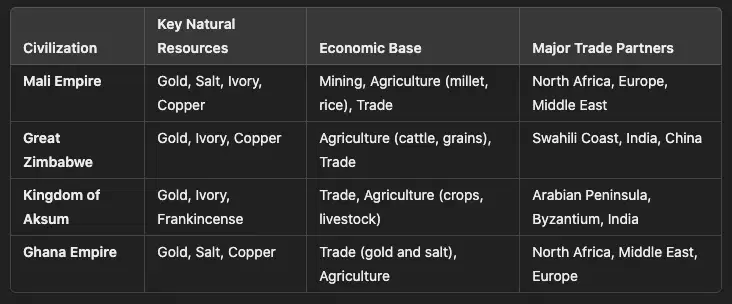
Which civilization relied most heavily on the export of gold and salt to support its economy and political power?
a)
Mali Empire
b)
Great Zimbabwe
c)
Kingdom of Aksum
d)
Ghana Empire
27.
Which of the following was a key feature of Swahili city-states in the medieval period?
a)
They were primarily agricultural societies with little connection to the outside world.
b)
They were ruled by centralized monarchs with large empires.
c)
They were independent city-states that thrived on trade with the Indian Ocean world.
d)
They were isolated and had limited interaction with the Indian Ocean world.
28.
In which language were most of the earliest books written in West Africa? This language was brought in by the Islamic Civilizations.
a)
Latin
b)
Arabic
c)
Mande
d)
Egyptian
29.
How have historians learned about the kingdom of Ghana?
a)
from writings of Arab scholars
b)
from wood carvings in the forest
c)
from royal tax collection records
d)
from paintings on salt mine walls
30.

What is the best title for this list below?
a)
Donkey: The Best Pack Animal
b)
Desert Survival Traits of Camels
c)
Skills Used in Dry Environments
d)
Characteristics of Arabian Horses
31.
For what was the city of Timbuktu especially well known?
a)
its productive salt mines
b)
its talented portrait artists
c)
its community of scholars
d)
its sea trade with East Asia
32.
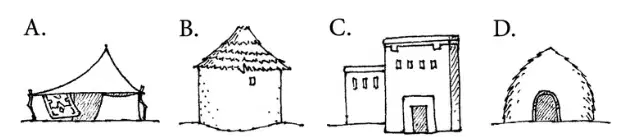
Which housing style introduced to West Africa by a Muslim architect would you most likely see?
a)
A
b)
B
c)
C
d)
D
33.
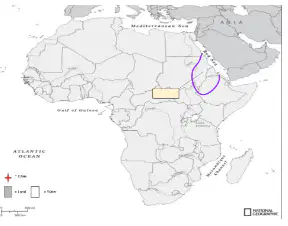
Identify the location of the Middle Ages civilization in the map
a)
Mali
b)
Great Zimbabwe
c)
Axum
d)
Indian Ocean
e)
Timbuktu
34.
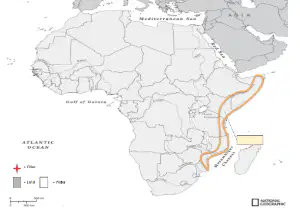
Identify the location of the Middle Ages civilization in the map
a)
Ghana
b)
Axum
c)
Mecca
d)
Great Zimbabwe
e)
Swahili Civilization
35.
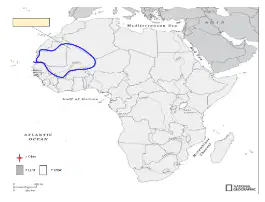
Identify the location of the Middle Ages civilization in the map
a)
Mali
b)
Axum
c)
Mecca
d)
Great Zimbabwe
e)
Egypt
36.
The Great Zimbabwe ruins are best known for their:
a)
Large, network of underground cities
b)
Use of iron smelting techniques in their construction
c)
Impressive stone structures, including the Great Enclosure, soapstone birds and the Hill Complex
d)
Wooden palaces and temples
37.
The stone walls of Great Zimbabwe were constructed using a technique known as:
a)
Adobe brick construction
b)
Mortar-based stone laying
c)
Dry stone masonry, where stones were fitted without mortar
d)
Mudbrick construction with wooden supports
38.
What major religion did the Kingdom of Aksum adopt in the 4th century CE, making it one of the earliest civilizations to do so?
a)
Islam
b)
Christianity
c)
Judaism
d)
Zoroastrianism
39.

Which of the following best describes the architectural significance of Aksum's (Axum) stelae (obelisks)?
a)
They are decorated with intricate paintings of Aksumite kings.
b)
They served as tombstones for royal family members and marked important locations.
c)
They were part of massive palaces built by Aksumite kings.
d)
They are believed to have been the foundations for Aksumite temples and shrines.
40.
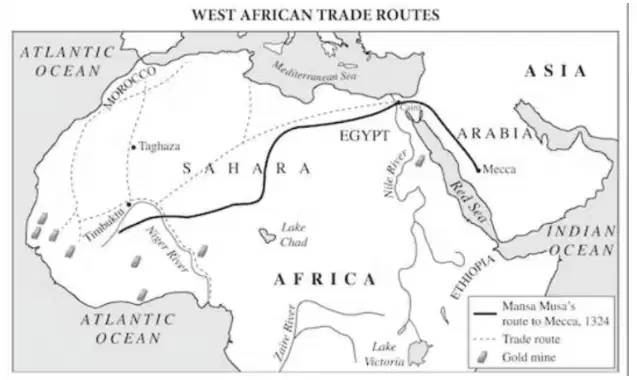
Musa I (also known as Mansa Musa) made a notable pilgrimage to Mecca and worked to spread Islam throughout his reign. This is an example of which of the following?
a)
Forced conversion of conquered people
b)
The spread of Islam causing a growth in trade relationships
c)
Religious conflict between native African religions
d)
A split between Sunni and Shi’a in Africa
41.
Which of these is the best example of an oral tradition?
a)
a great-grandmother's photo album
b)
a grandfather playing a game with his grandchildren
c)
a grandmother's diary found at the base of ancient ruins
d)
a grandfather telling a story about his childhood
100 %

