
NEW
Font size
 Worksheets
Review Game 2025
Total questions: 45
Worksheet time: 46mins
What impact did Marco Polo have on European trade after writing about his adventures in China?
Trade in foreign products increased
Trade in foreign products decreased
Trade remained the same
Trade between Europe and Asia stopped
What effect did the voyages of Zheng He have on the continued exploration of the coast of China and trade throughout southeast Asia?
Trade expanded to include items from Africa
Trade was halted due to fears of foreign technology
Trade increased only at the beginning of his exploration
Trade took place between only China and surrounding countries
What was the purpose of the Ming bringing back the civil service examination to obtain government positions?
Ensured only the wealthy held government positions
Ensured only people of higher status held government positions
Ensured only people who were highly qualified held government positions
Ensured only people who were devout Buddhists held government positions
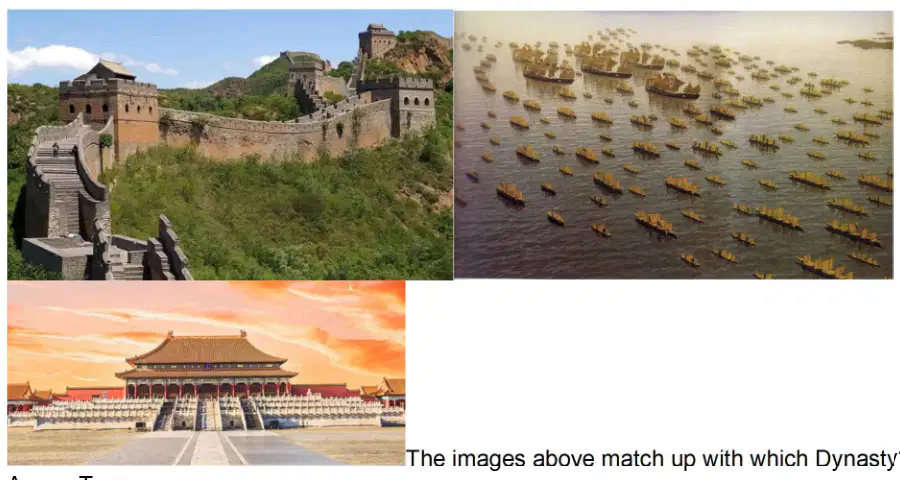
The images above (showing the Great Wall, a large naval fleet, and the Forbidden City) match up with which Dynasty?
Tang
Song
Yuan
Ming
What was the purpose of the Seven Voyages?
To show off the Chinese prestige, power, and riches
To find more trade routes to Europe
To make money for the Chines
To find a lost treasure
Which of the following Chinese technologies will likely lead to an increase in population?
New varieties of rice
Porcelain
Compass
Woodblock printing

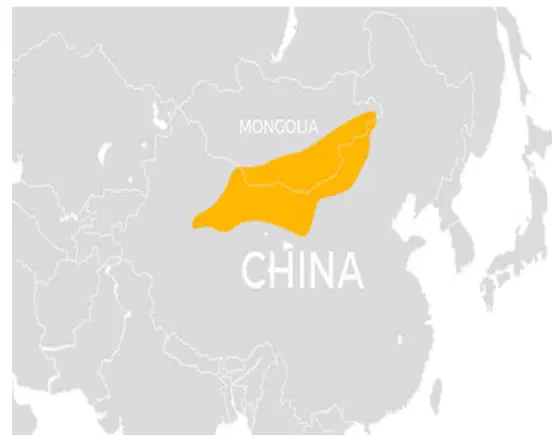
The image shown highlights which of the following physical features? Use the map.
Himalayan Mountains
Yangtze River
Plateau of Tibet
Gobi Desert

What major geographical feature served as protection on the southern border of China?
Yellow River
Himalayan Mountains
Gobi Desert
Taklaman Desert

Which body of water is represented with the letter "D"?
South China Sea
Pacific Ocean
Yangtze River
Yellow River
Sea of Japan

Which physical feature is represented by the letter "C"?
Himalaya Mountains
Korean Peninsula
Plateau of Tibet
Japan
Gobi Desert
Kulbei Khan started which dynasty?
Song
Yuan
Tang
Sui
The Mongol Empire is known as being the________ever.
Largest
Wealthiest
Most Diverse
Most Educated
A positive effect of the Mongol Empire was:
More people became doctors
More rights for children
Fewer causalities
Increased trade along the silk road
The Mongol Empire grew as a result of
Conquest
religious wars
Economic Partnerships
providing free education to all Chinese

Which of the following describes the point of origin for the religion of Buddhism?
China
Japan
India
Korea

Accomplishments Section:
What major construction project by the Sui Dynasty helped improve national transportation and trade in China?
Transcontinental Railroad
Silk Road
The Great Dam
Grand Canal

second West African empire that prospered from gold-salt trade. After converting to Islam, became a center of Muslim culture.
Ghana
Mali
Songhai
Griots
In African history, the main purpose of a "griot" was to
store grain and food
convert people to Christianity
channel water into areas needing irrigation
tell stories and keep alive the history of the people

first West African Empire that became wealthy through controlling the salt and gold trade.
Ghana
Mali
Songhai
Griots

A famous Mali king went on a pilgrimage. What is a pilgrimage?
a religious journey
a trade journey
a military journey
a political journey
Explain the importance of the Malian king Mansa Musa and his pilgrimage to Mecca in 1324.
West Africans kingdoms were not concerned about learning and trade.
West African kingdoms became centers for learning and trade.
Religion was more important to West Africans.
Algebra led to an increase in trade.
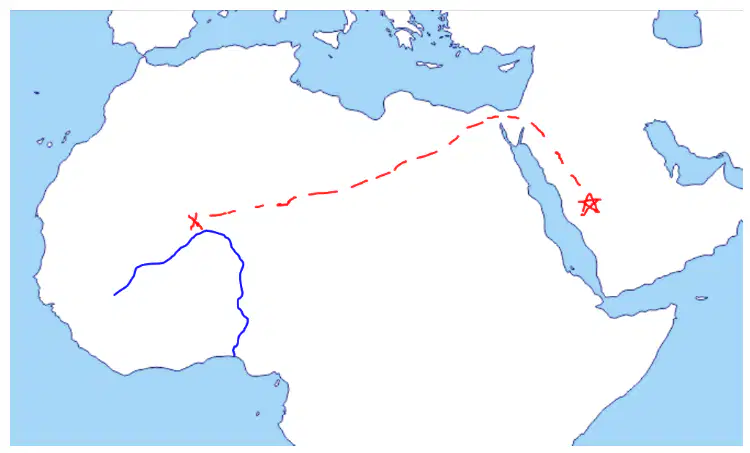
On the map above, the X is the location of
Mecca
Cairo
Timbuktu
Constantinople
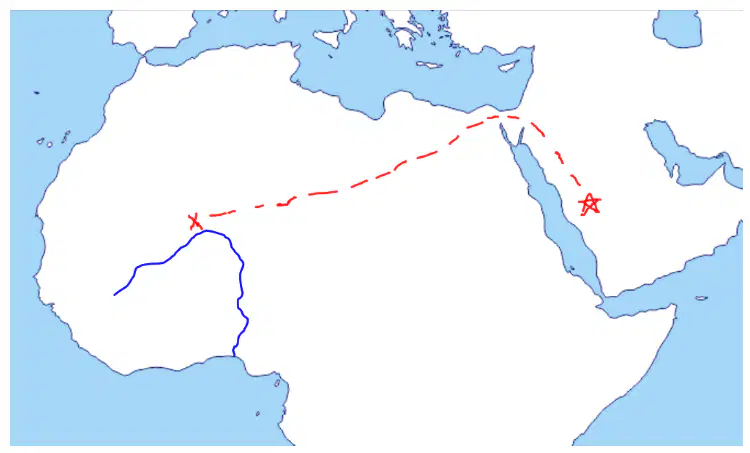
On the map above, the river next to the letter X is the
Nile River
Tigris River
Euphrates River
Niger River
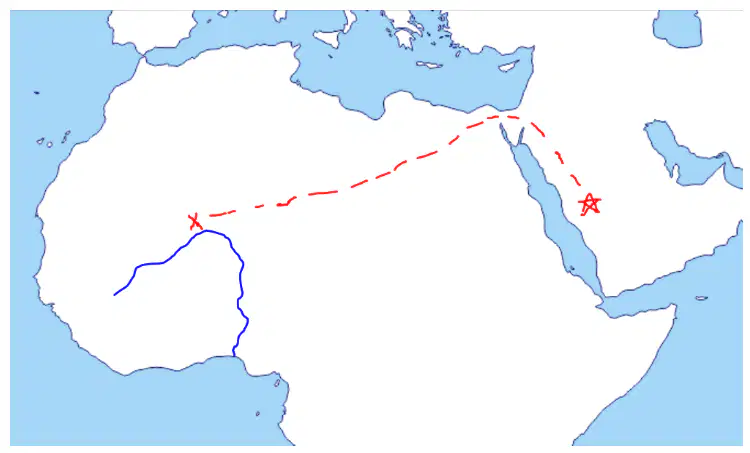
On the map above the dotted line passes through
The Alps
The Sahara Desert
Great African Forest
Fertile Crescent
Which of the following was a major reason for the prosperity of the West African kingdoms of Ghana, Mali, and Songhai?
Isolation from neighboring regions
Adoption of European legal systems
Control of trans-Saharan trade routes
Dependence on fishing industries
How did the expansion of trade routes in the Middle East impact Europe?
it isolated the region from Asia
it brought new technologies and goods to the region
it decreased the role of Christianity in the region
it prevented cultural diffusion from other civilizations
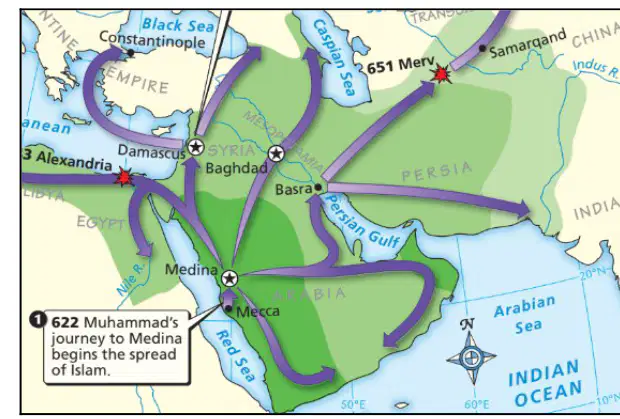
The diffusion of Islam, as seen on the map, was made possible mainly by
careful diplomacy.
military conquest and trade.
unification through royal marriages.
spreading science and education.
Which of the following conquered the Byzantine Empire?
the Persian Empire
the Ottoman Empire
the Egyptian Empire
the Mughal Empire
Which of the following was the Muslim ruler who conquered Constantinople?
Abraham
Muhammad
Mehmed II
Justinian I
Which of the following contributions was made in the area of art by Muslim scholars?
painting lifelike images of people and animals
using geometric and floral patterns to create detailed mosaics
sculpting the human body as in the style of the ancient Greeks
painting images from the bible, the great prophets, including Mohammad
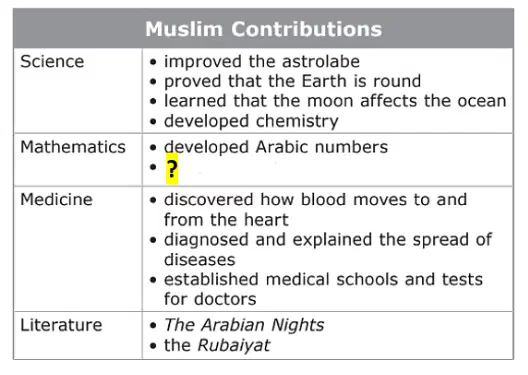
Which of the following completes the table to the right?
developed Algebra
created Roman Numerals
first to use math with architecture
first to develop a base ten system
The most sacred text in the religion of Islam is
the Quran.
the Shariah.
the Analects.
the New Testament.
The Sunnah is
the most holy text and the word of God to Muslims.
the laws written by the first five Caliphs to manage the empire.
the most holy structure in Islam where Muslims face when they pray.
the traditions and practices set by Muhammad for Muslims to follow.
According to Islamic teachings, the person who started the religion and centered it around the city of Mecca was
Moses
Abraham
Jesus
Muhammad
Which body of water is located closest to Mecca and Medina as seen on the map?
Mediterranean Sea
Red Sea
Black Sea
Persian Gulf
To have very limited contact with others- used when describing Arabia
Changed
Incorporated
Detached
Isolated
An individual who sells goods and travels in groups for protection
Pilgrim
Merchant
Soldier
Diviner

Justinain was known for building the __________.
Ankor Wat
Hagia Sophia
Colosseum
Parthenon

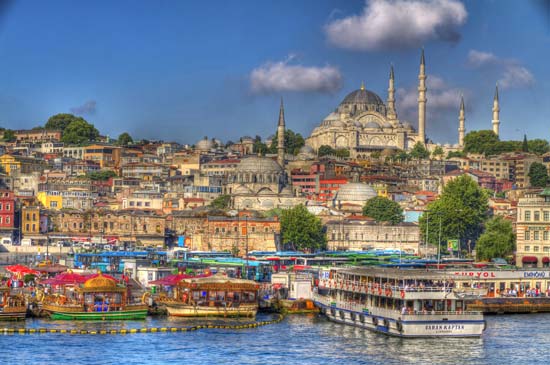
Why was Justinian's Code of laws important?
It established all rules regarding taxation.
It established codes regarding the Eastern Orthodox Church.
It formed the basis of European Law.
It established what entertainment acts were at Hippodrome.

Which map represents the Byzantine Empire DURING the rule of Justinian?



