
 Worksheets
Unit 2 Review
Total questions: 111
Worksheet time: 3hrs 21mins
Which types of organisms developed first due to the early environmental conditions on Earth?
prokaryotic and aerobic
prokaryotic and anaerobic
eukaryotic and aerobic
eukaryotic and anaerobic
Miller-Urey experiment produced 21 amino acids. What is the significance of the presence of amino acids on a young Earth?
Amino acids brought oxygen to the early atmosphere that started life on a young Earth
Amino acids created the eukaryotic cells that brought oxygen to the early Earth's atmosphere.
Amino acids are the make up proteins, which are the structural components of all living things.
According to Miller-Urey's experiment, what basic molecules that developed in the early atmosphere that started life on a young Earth?
Sun
water
salts
amino acids
Which process bring oxygen into the atmosphere?
protein synthesis
photosynthesis
cellular respiration
The early Earth's atmosphere lacks oxygen. True or False?
True
False
maybe
Anaerobic bacteria means a bacteria that
can live without the presence of oxygen
cannot live without the presence of oxygen
can live longer in the presence of oxygen
Who did the experiment that tried to show that organic building blocks of life could be created from toxic chemicals
Oparin
Miller and Urey
Darwin
Lamark
Monosaccharides/Glucose (simple sugars)
One of the functions of carbohydrates is to provide (a) term energy. On the other hand, lipids provide (b) term energy.
Which of the following elements is found in proteins but not found in carbohydrates or lipids?
Oxygen
Nitrogen
Hydrogen
Carbon
Match the following Macromolecules to their pictures.

Carbohydrate

Lipid

Protein

Nucleic acid
Nucleic acids, including DNA and RNA, are the only macromolecule that contains (a)

The 3 parts of the Cell Theory are...?
All living things are composed of cells
Cells are the basic units of structure and function in living things
All cells are produced from other cells
All living things are composed of cells
Cells are the basic units of dance and vibes in living things
All cells are destroyed from other aliens
All living things are composed of Jell-O
Cells are the basic units of structure and function in living things
All cells are produced from factories in Canada
All living things are composed of cells
Cells do karate and practice eating whole pies in their free time
All cells are produced from other cells


Louis Pasteur's experiment was set up to either accept or reject the hypothesis of
common ancestry.
organic molecules forming from simpler molecules.
electrical storms.
spontaneous generation.
The theory that mitochondria and chloroplasts originated as symbioses between separate single-celled organisms is known as
endoeukaryotic theory.
exosymbiotic theory.
endosymbiotic theory.
exoeukaryotic theory.
Which is NOT a piece of evidence supporting the endosymbiotic theory?
Mitochondria and chloroplasts have their own DNA.
Mitochondria and chloroplasts have ribosomes similar in size to prokaryotic ribosomes.
The inner membranes of mitochondria and chloroplasts have proteins similar to prokaryotes.
Mitochondria and chloroplasts are roughly the same size as the nucleus.

Whose experiment is show in the picture?
Aristotle's
Francesco Redi's
Louis Pasteur's
Albert Einstein's

Whose experiment is show in the picture?
Aristotle's
Francesco Redi's
Louis Pasteur's
Leeuwenhoek's
Where did Redi conclude maggots come from?
Maggots came from meat
Maggots are spontaneously generated
Maggots come from flies
Maggots come from the air

What was the purpose of covering the jar with a cloth in the experiment?
To keep the meat fresh
To allow air in but keep flies out
To trap the flies inside
To prevent the smell from escaping
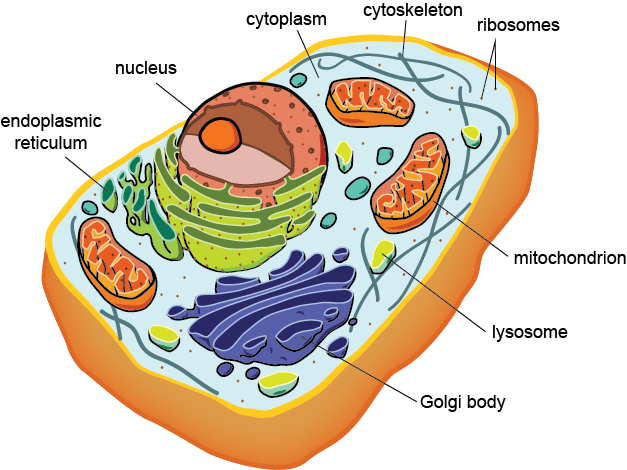
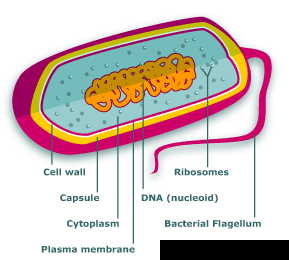
Which do BOTH prokaryotes and eukaryotes contain?
nucleus
mitochondria
ribosomes
cell wall
Which does only eukaryotic cells contain?
nucleus
DNA
cell membrane
ribosomes
Which of the following structures is ALWAYS found in both eukaryotic and prokaryotic cells?
nucleus
mitochondria
ribosomes
cell wall
The smallest unit of a living thing are
atoms
cells
DNA
organelles
Bacteria is an example of a(n)
prokaryotic cell.
eukaryotic cell.


Passive Transport means
Energy is used
No energy is used
Energy is created
Which type of passive transport uses proteins to help molecules pass through the membrane?
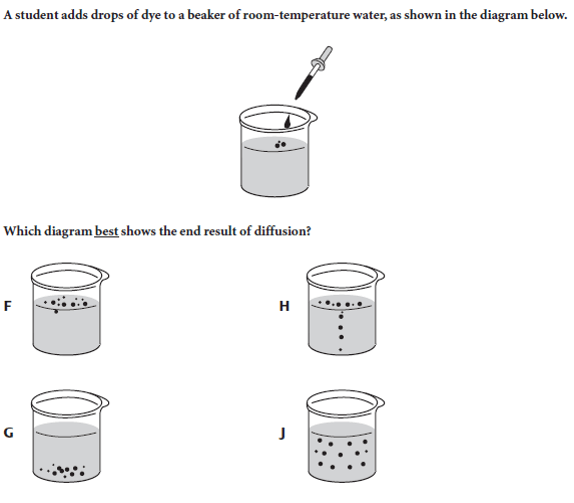

What type of transport is shown in the diagram?
Osmosis
Active Transport
Passive Transport
Diffusion
What type of transport moves molecules against the concentration gradient?
Passive Transport
Facilitated Diffusion
Active Transport
Osmosis
Select all of the following that are considered passive transport:
Diffusion
Active Transport
Facilitated Diffusion
Osmosis
Creating the H+ ion concentration gradient for ATP synthesis
What type of transport involves the natural movement of molecules from high to low concentrations?
Diffusion
Active Transport
Dispersal
Potassium Ion Channel
What is the movement of particles with the concentration gradient using protein "helpers"?
diffusion
facilitated diffusion
active transport
enzymatic reactions

Protective outermost layer of animal cells:
Cell Membrane
Nucleus
Chromatin
Microtubules

What is the function of a chloroplast?
makes proteins for animal cells
allows materials in and out of the cell
provides structure and support
absorbs sunlight for photosynthesis

Identify the structure that is indicated by the arrow in the image.
cell wall
central vacuole
chloroplast
nucleus

Identify the structure that is indicated by the arrow in the image.
cell wall
central vacuole
chloroplast
cell membrane

The arrow is showing the fluid inside the cell that surrounds the cell organelles and gives the cell its shape. What is the arrow pointing to in the cell?
cytoplasm
mitochondria
ribosomes
nucleus

What organelle is this??
cell wall
chloroplast
mitochondria
nucleus
cell membrane

I make proteins for the cell. What am I?
ribosome
cell membrane
nucleus
chloroplast
This organelle breaks down (digest) worn out cell parts
cytoplasm
lysosomes
mitochondria
vacuoles
This organelle stores water, and is very big in plant cells
nuclolus
ribosomes
golgi bodies
vacuoles
If many of the ribosomes of a cell were destroyed, what effect would this most likely have on the cell?
The cell would not be able to create energy.
The cell would not be able to make proteins.
The cell would not e able to photosynthesize.
The cell would not be able to break down waste in the cell.
Which statement is true about organelles that make food for animal and plant cells?
The mitochondria makes food for animal cells, and the nucleus makes food for plant cells.
The mitochondria makes food for plant cells, and the nucleus makes food for animal cells.
The chloroplasts make food for animal cells, but plant cells cannot make their own food.
The chloroplasts make food for plant cells, but animal cells cannot make their own food.
If a cell is compared to a city, then the Golgi apparatus, acts as the
trash service of the cell as it removes waste from the cell
post office of the cell by packaging and sorting proteins
mayor of the cell as it controls all of the cell's activities
electrical plant of the cell by making usable energy

This organelle is the transportation network for the cell and moves materials around in the cell. What am I?
mitochondria
lysosomes
chloroplast
endoplasmic reticulum
The _____________ is a gel-like fluid that fills plant and animal cells. It holds the organelles in place and gives each cell its shape.
Cytoplasm
Cell Membrane
Cell Wall
Chloroplast
The _____________ holds the DNA, and controls the functions of eukaryotic cells.
Nucleus
Nuclear Membrane
Mitochondria
Chloroplast
What is the organelle shown?
Plant
Ribosomes
ER
Chloroplast
What was the Earth's early atmosphere like ?
Similar to Mars and Venus. A large amount of carbon dioxide,little or no oxygen small amounts of other gases, such as ammonia and methane
Similar to Mercury. A large amount of oxygen, sodium and hydrogen.
Similar to Jupiter. A large amount of hydrogen and helium.
Similar to Pluto. A large amount of nitrogen.
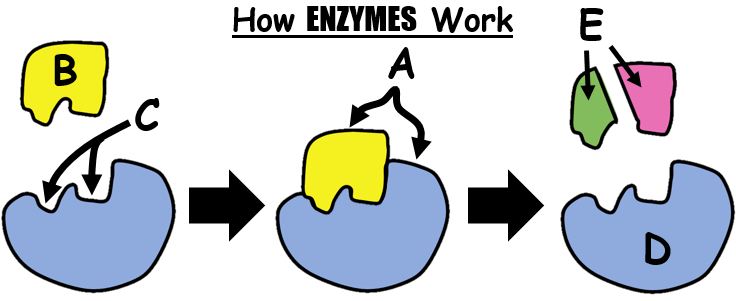
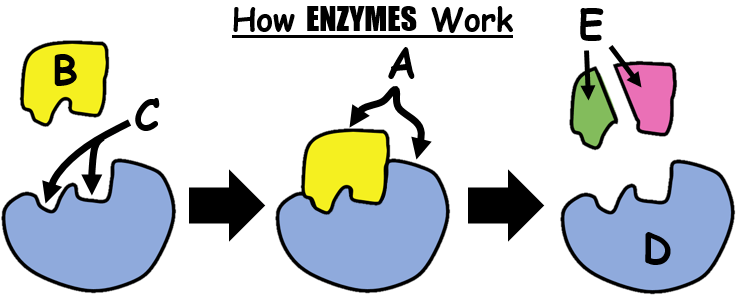
Letter C, where the reaction take place is called the
active site
enzyme
substrate
products
What is the primary function of a compound light microscope?
To decrease the size of an object
To magnify an object using a series of glass lenses
To scan the surface of non-living cells
To use magnets to aim a beam of electrons
Which type of microscope was invented in the 1940s and uses magnets instead of lenses?
Compound light microscope
Scanning electron microscope (SEM)
Transmission electron microscope (TEM)
Scanning tunneling microscope (STM)
Which microscope can magnify living cells?
Transmission electron microscope (TEM)
Compound light microscope
Scanning electron microscope (SEM)
Scanning tunneling microscope (STM)
Match the following types of microscopes with their descriptions:
Compound light microscope
Produces a two-dimensional image of the cell
Transmission electron microscope (TEM)
Produces a high-resolution two-dimensional image of ultra-thin sections
Scanning electron microscope (SEM)
Produces a three-dimensional image of the cell
Scanning tunneling microscope (STM)
Produces images of surfaces at the atomic level
There are two types of microscopes. (a) microscopes require thin specimens that are observed by shining a light through them. (b) microscopes create 3D images with higher magnification but can only be used to look at dead things.
Light
Scanning electron

Which microscope took a 3D image of this fly's head?
Compound Light
Transmission Electron
Dissecting
Scanning Electron

What do you call any substance that dissolves another substance?
Solvent
Height
Atoms
Oxygen

What property of water allows water to flow against gravity?
Polarity
Cohesion
Capillary Action
Adhesion
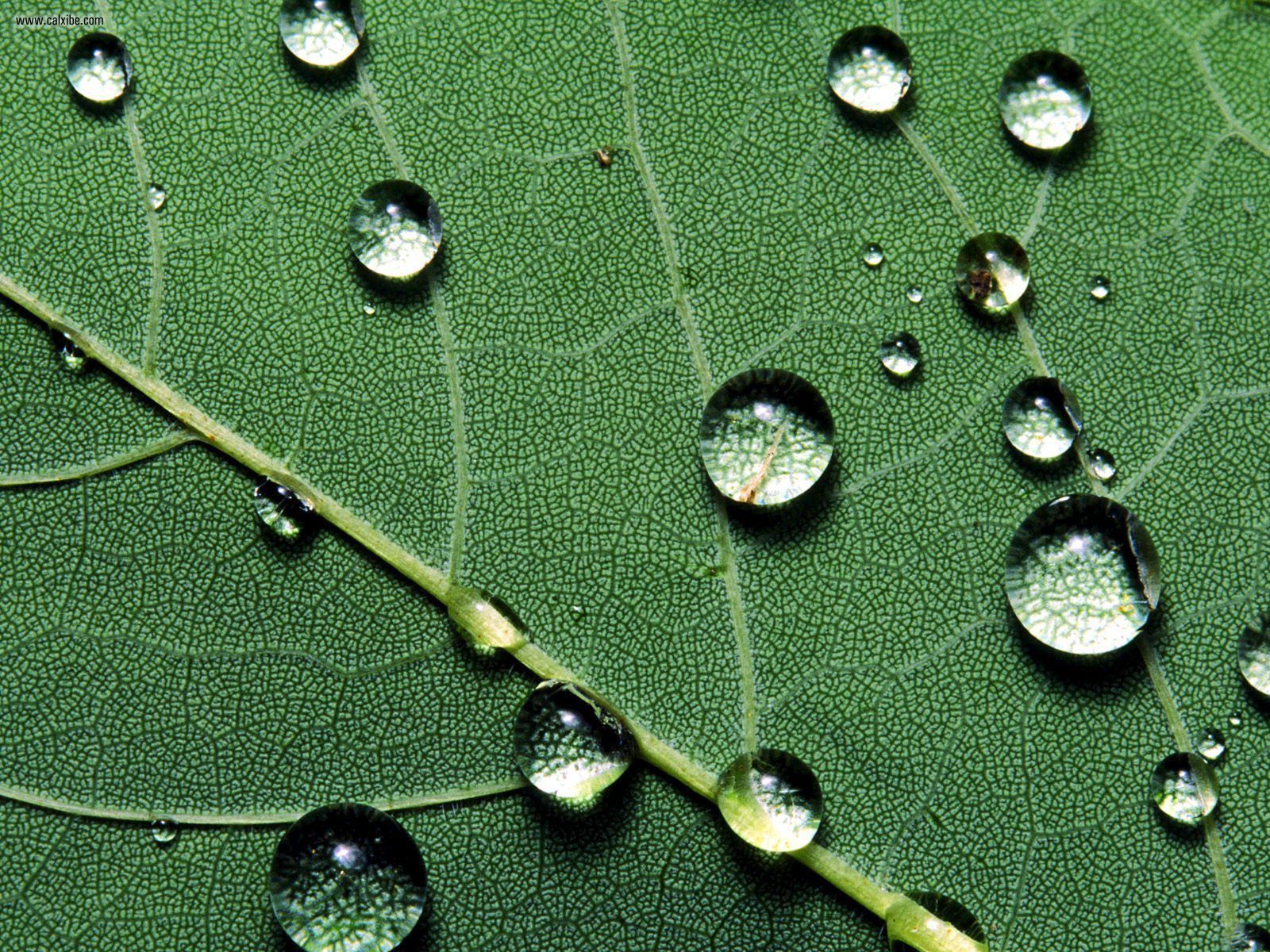
Refer to the picture of water sticking to a leaf; this is occurring because of:
Adhesion
Cohesion
Tamar is talking about evolution with a friend. The friend says, “It’s just a theory, so I don’t believe it. When they prove it and it becomes the law of evolution, then maybe I’ll change my mind.” Which of these possible replies best describes scientific principles or the work of scientists?
Scientific theories do not become scientific laws; they are explanations for natural phenomena based on evidence.
Science always finds the right answer; the answers that scientists and researchers discover never change.
He should be wary of science because it is based on research and evidence, not bias and opinion.
Scientists take each other at their word regarding experimental results, and the public should, too
Which of the following are well supported descriptions about what happens in nature, without attempting to explain why it happens?
Scientific law
Scientific Theory
Both a scientific law and theory
Scientific Observations
general assumptions of how systems work.
mathematical principles that can be proven true.
large amounts of data collected over time.
observations from within only one scientific discipline.
Scientific theory
Explains why or how something happens in nature
Scientific law
Describes what happens in nature
Scientific model
representation of a real event
Hypothesis
a proposed explaination, starting point of an experiment

