
 Worksheets
G4 Science2QQ1
Total questions: 144
Worksheet time: 1hrs 27mins
The human body is made up of many parts that work together. These parts are
grouped into ________.
A __________ is a group of organs that work together to do a job.
tissue
system
cell
All body systems work together to keep balance inside our body (internal
balance). This balance is called __________.
When we are hot, we ______ to cool down.
A group of parts that work together to do something important.
The body’s way of keeping everything balanced and working properly.
The _____________ system allows
us to move our bodies.
Muscles work by ________ and ________.
(a)
Without muscles, we wouldn’t be able to stand, walk, or even breathe.
true
false
What are the 3 types of muscles?
(a)
The type of muscles that move our bones.
The type of muscles found in organs
like the stomach.
The type of muscles found only in
the heart and never gets
tired.
The type of system that is made up of bones.
__________ give our body shape and support. They also protect our
internal organs.
The skull protects the brain.
The ribs protect the heart and lungs.
true
false
Bones also make blood cells inside a part. It is called the
____________.
Together with muscles, bones help the body move and stay upright.
true
false
The _________ system breaks down the food we eat into small parts that
our body can use.
It starts in the mouth,
where teeth chew food
and saliva softens it.
true
false
The food travels down the _________ to the stomach, where it is mixed
and broken down more.
After the esophagus, it goes to the __________, where nutrients
are absorbed into the blood.
Finally, waste materials go to the __________ and then leave the body
through the ______.
large intestines; anus
This system gives us energy for all our daily activities.
digestive system
skeletal system
muscular system
circulatory system
This system moves blood around the body.
__________ carries oxygen from the lungs and nutrients from the food to every part of the body.
This system makes sure that every part of your body gets what it needs to
stay alive.
This system helps us breathe.
We breathe in _____ and breathe out carbon dioxide.
carbon dioxide
oxygen
We breathe in oxygen and breathe out _________.
The system that gives our cells oxygen so they can do their jobs and keep us alive.

STUDY THE PICTURE
yes
no

What is #3?
(a)
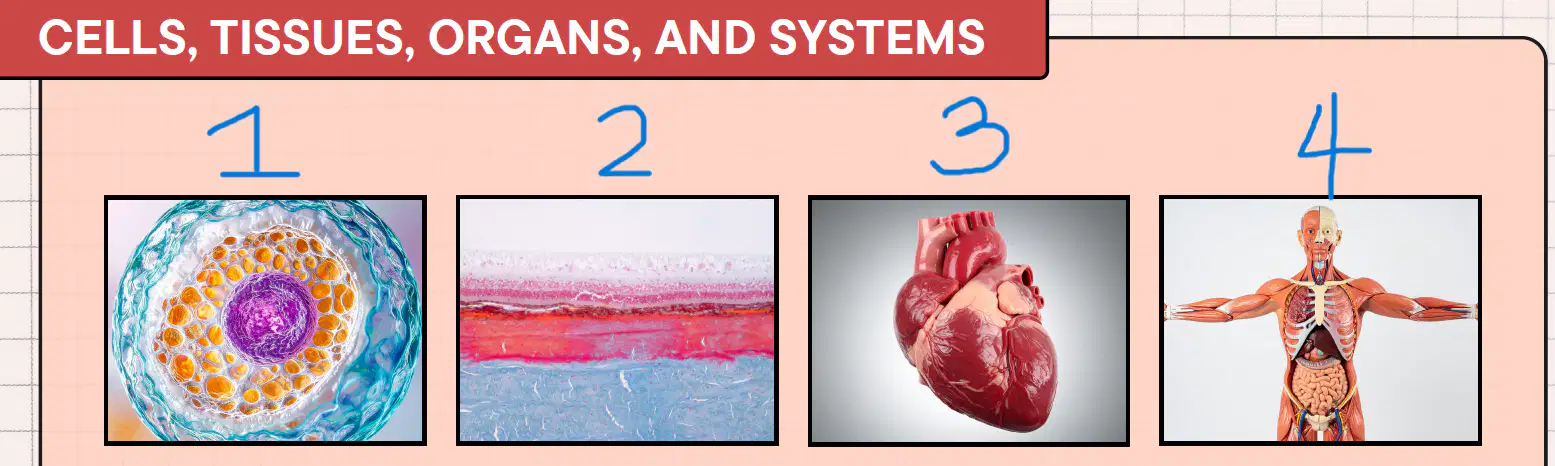
What is #1?
(a)

What is #4?
(a)
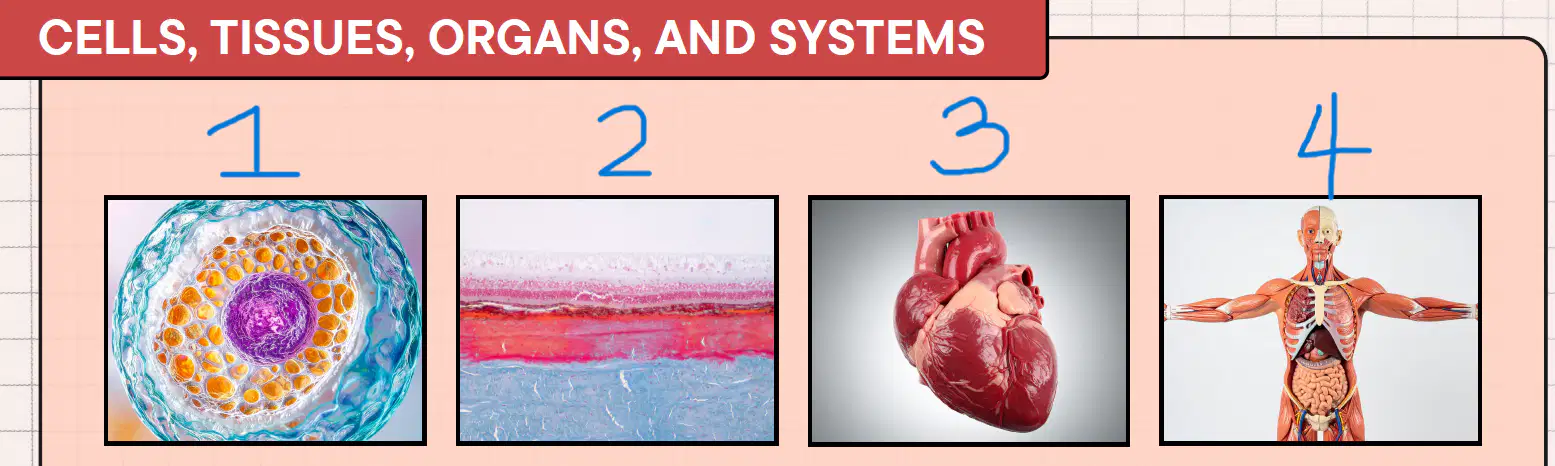
What is #2?
(a)
What do you call the smallest parts of the body?
Systems
It is a groups of cells working together.
System
Made of tissues that do a special job.
Groups of organs working together.
cells
system
tissue
organs
The ___________ helps our body move, stay stable, and support our posture.
circulatory system
respiratory system
muscular system
We have about (a) muscles in our body.
_______ make up almost half of our body weight.

STUDY THE PICTURE
(a)
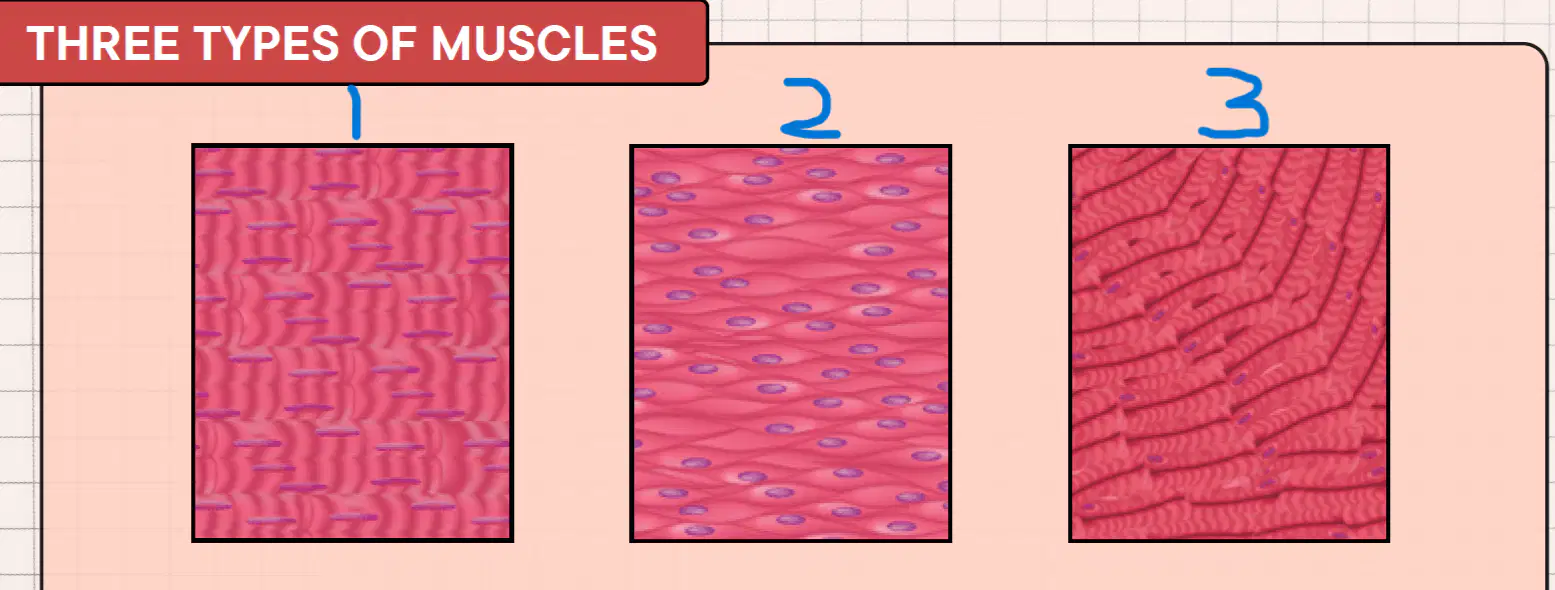
What is #2?
(a)
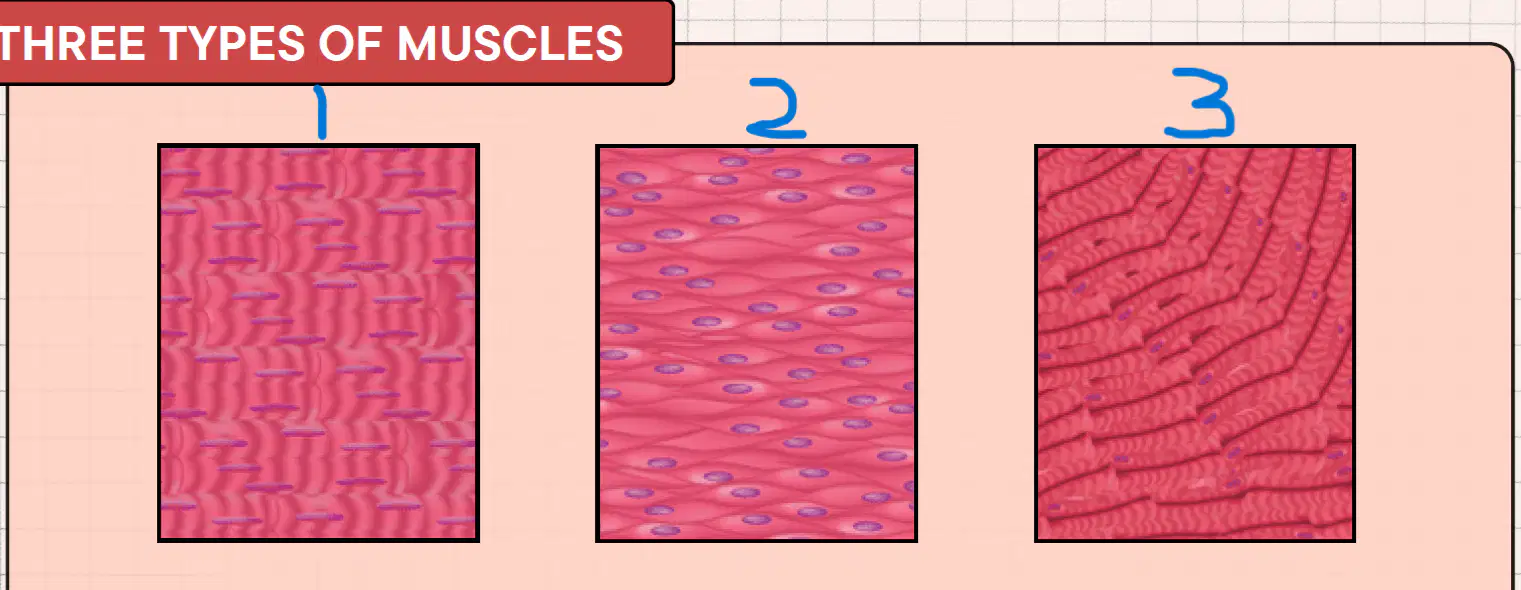
What is #1?
(a)

What is #3?
(a)
These type of muscles are attached to the bones.
Skeletal muscles
These type of muscles are found in internal organs
These type of muscles are found only in the heart
Skeletal muscles are attached to bones by ______
Skeletal muscles work in pairs: when one contracts, the other __________.
Skeletal muscles are also called ______
the oxygen
the blood
the breathers
the movers
Skeletal muscles are responsible for ________ movement.

In picture 1, what happens when you bend our arm?
(a)

In picture 2, what happens when you straighten your arm?
(a)
Where are smooth muscles found?
(a)
Smooth muscles perform ________ movement.
Help with digestion. They work slowly but can keep going for a long time.
true
false
Cardiac muscles are controlled by (a)
What are the 2 kinds of movements?
(a)
They are muscle movements that we can control.
They are muscle movements that work automatically.
voluntary movement
involuntary movement
Give examples of voluntary movement
(a)
Give examples of involuntary movement
(a)
When muscles contract, they get ______
shorter
longer
When muscles contract the get shorter, when muscles relax, they ________
get even more shorter
return to normal length
The ________ sends signals to muscles to tell them when to move.
The _______ system is the framework of the body.
The skeletal system is the framework of the body. Made up of _____ bones.
What system helps with movement.
What are the functions of the skeletal system?
(a)
Bone marrow makes ____ and _____ blood cells.
_____ protect the heart and lungs.
_________ protects the spinal cord.
Spine
The _____ protects the lower organs.
Some bones are not solid.
Inside, there is a soft part called ________.
Red marrow makes _____ and _________.
the hard structure of the skeleton is called
bones
where two bones meet.
soft, flexible tissue that prevents bones from rubbing.
ligament
cartilage
tough cords that connect bones to bones.
strong cords that connect muscles to bones.
Muscle fibers
Tendons
make the skeleton flexible.
joints
bones
allow movement (arms, legs).
movable joints
immovable joints
no movement (skull)
movable joints
immovable joints
keeps joints smooth and slippery
Two divisions of the skeleton
(a)
bones or skeleton in the head, neck, trunk, skull, spine, ribs, and sternum belong to:
axial skeleton
appendicular skeleton
skeletons in the limbs (shoulders, hips, arms, legs, hands and feet)
axial skeleton
appendicular skeleton
This system is made up of alimentary canal (GI tract) and accessory organs.
alimentary canal is also known as
GI tract
How long is the GI tract?
(12 meters) long.
(9 meters) long.
(7. 5 meters) long.
(4.5 meters) long.
GI tract includes:
(a)
Where food is chewed and mixed with
saliva.
A tube that pushes food from the mouth to the stomach.
Mixes food with acid and enzymes to break it down.
Absorbs nutrients from food into the blood.
Absorbs water and forms solid waste.
The opening where waste leaves the body.
Digestive system has accessory organs which include:
(a)
Accessory organ that Cut and grind food into smaller pieces.
Accessory organ that Helps move food and mix it with saliva.
Accessory organ that Produce saliva to soften food.
Accessory organ that Makes bile to digest fats
Accessory organ that Stores bile from the liver
Accessory organ that Produces digestive enzymes.
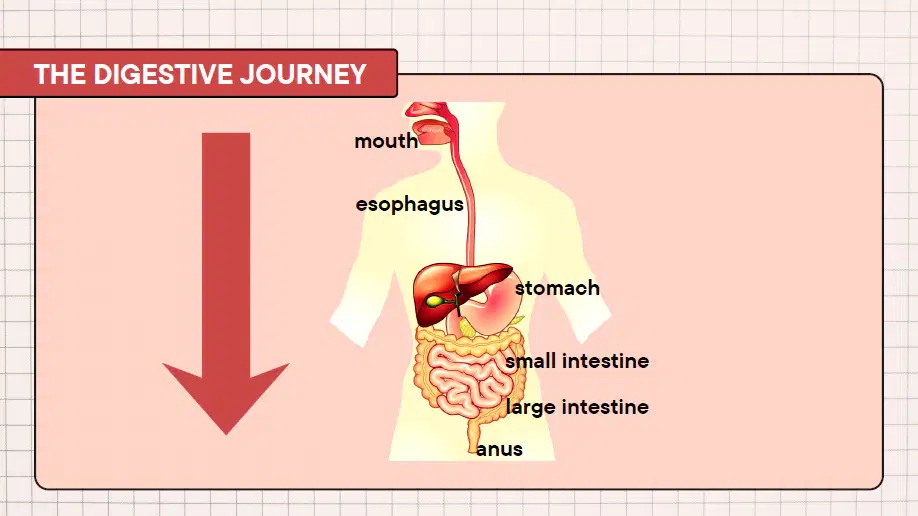
STUDY
(a)
STUDY: MA'AM QUEEN MIGHT MAKE YOU EXPLAIN FROM MOUTH TO ANUS DIGESTION OF FOOD:
When you eat food, your teeth chew it into small pieces while your tongue and saliva help make it soft. After you swallow, the food slides down the esophagus into your stomach where food is mixed with special juices. The food then travels through the small intestines where nutrients are absorbed, and leftover food goes to the large intestine. Finally, what is left becomes feces which comes out in the anus.
okay
okay
Starts when you chew food with your teeth. Your tongue helps move the food around so it mixes with saliva. Then, food travels down the esophagus through a squeezing movement called peristalsis, which pushes food into your stomach.
Chemical digeston
Mechanical digestion
Physical breakdown of food
into smaller pieces.
Chemical digestion
Mechanical digestion
happens when food is mixed with special juices made by your body —
like enzymes, bile, and acids. These break down food into nutrients your body can use.
Mechanical digeston
Chemical digestion
The chemical breakdown of food into nutrients.
mechanical digestion
chemical digeston
In the mouth, __________ breaks down starch and fats.
In the stomach, _________ break down proteins.
acids
In the small intestine, _____ and _____ finish digestion.
In the __________, nutrients from food are absorbed into your blood to give
energy to your body.
The leftover food then goes to the ____________, where
water is absorbed back into your body.
Main parts of the circulatory system:
(a)
Pumps blood around the body
Carries oxygen, nutrients, and wastes.
The pathways that blood travels through.
tissues
ligaments
blood vessels
Main organ of the circulatory system. Protected by the rib
cage and sternum.
The heart is about the size of your
clenched fist

STUDY
(a)
STUDY THE FLOW OF BLOOD:
Blood from the body enters the right atrium then to the right ventricle.
The heart pumps it to the lungs to get oxygen.
Fresh blood returns to the left atrium then moves to the left ventricle.
The heart pumps it out to the whole body.
yes i will study it
yes i will study it
3 main parts of the blood:
(a)
Carry oxygen and nutrients to all body parts.
White Blood Cells (WBCs)
Red Blood Cells (RBCs)
Platelets
Help fight off infections and diseases.
Platelets
Red Blood Cells (RBCs)
White Blood Cells (WBCs)
Help stop bleeding by forming clots.
3 main types of blood vessels:
(a)
Carry oxygen-rich blood away from the heart.
Carry oxygen-poor blood back to the heart.
Tiny vessels that allow gas and nutrient exchange between blood and tissues.
2 kinds of circulation:
(a)
The type of circulation from the heart to the lungs and back.
The type of circulation From the heart to the rest of the body and back.
Main organs of the respiratory system:
(a)
Transport oxygen to the blood and remove carbon dioxide.
A muscle below the lungs that helps you inhale and exhale.
lungs
diaphragm
Include the nose, trachea, and bronchi — passageways for air.
lungs
airways
diaphragm
Spell diaphragm
(a)
STUDY THE PROCESS OF BREATHING:
You breathe in oxygen then air travels through the trachea, bronchi, and bronchioles. In the lungs, oxygen enters the blood and carbon dioxide leaves. You breathe out carbon dioxide.
yes
yes

STUDY
YES
YES