
 Worksheets
R038 Topic Area 4: Evaluating Design Ideas
Total questions: 30
Worksheet time: 15mins
Which evaluation type is based on measurable facts, is reliable, and can be repeated by another person to get the same result?
Objective evaluation
Subjective evaluation
Summative evaluation
Formative evaluation
An appraisal of a design based on personal views, feelings, and opinions, which may include bias, is called what type of evaluation?
Objective
Summative
Subjective
Quantitative
An evaluation that takes place at the end of a series of processes, providing a final review of the entire process and the finished product, is known as what?
Formative evaluation
Summative evaluation
Qualitative evaluation
Comparative evaluation
When evaluating a completed model in a summative evaluation, what else should be reviewed besides the final product?
The designer’s mood
The planning and manufacturing process
The company’s stock price
The weather on the day
Comparing a prototype against the specification to check non‑numerical points like “must have a sleek appearance” is performing what kind of comparison?
Quantitative
Objective
Qualitative
Summative
A table that uses a numerical scoring system to rate and compare the features of a new design idea against existing competitor products is called a what?
Pareto chart
Ranking matrix
Ishikawa diagram
Gantt chart
The complex evaluation method that maps customer requirements against engineering characteristics in a ‘House of Quality’ matrix is known as what?
Failure Modes and Effects Analysis (FMEA)
Design of Experiments (DoE)
Quality Function Deployment (QFD)
Total Quality Management (TQM)
Which statement best describes a major advantage of using virtual (3D CAD) modelling compared to physical modelling?
It allows the user to physically hold the product.
Designs can be modified and tested very quickly.
It requires no training to use.
It is always the cheapest method.
What is a key limitation of virtual (3D CAD) modelling?
It is very slow to make changes.
There is no physical product to hold, feel, or test in the real world.
It is less accurate than a card model.
It cannot be used for complex shapes.
Which modelling method is best for quickly and cheaply checking the basic proportions and scale of a design?
Card modelling
3D printing
CNC machining
Breadboarding
A key disadvantage of ______ models is that they are not functional and are not made from the final production materials.
block
card
virtual (3D CAD)
metal
Using materials like modelling foam, wood, or metal to create a realistic, solid 3D model (which can be painted and finished) is called ______ modelling.
card
virtual
block
wireframe
What is a key advantage of block modelling over card modelling?
It is always cheaper and faster.
It requires no special tools.
It is used for electronic circuits.
It can be painted and finished to look and feel realistic.
Which modelling method is specifically used for building and testing temporary, solderless electronic circuits?
Block modelling
Card modelling
3D printing
Breadboarding
What is a limitation of using a solderless breadboard compared to a final Printed Circuit Board (PCB)?
It is more expensive than a PCB.
Connections can be unreliable and come loose.
It is much smaller than a PCB.
Changes cannot be made easily.
Fill in the gap: _________ is an additive manufacturing process that builds up a physical object, layer by layer, from a 3D CAD file.
Injection molding
CNC milling
Vacuum forming
3D printing
What is a key advantage of 3D printing for modelling?
It is the fastest method for mass production.
The materials used are always very strong.
It can create complex geometric shapes that are difficult to machine.
The machines are very cheap to buy.
What is a common disadvantage of 3D printing as a modelling method?
Parts often need cleaning up to remove support materials.
It can only be used for electronic circuits.
It cannot create complex shapes.
It uses more material than CNC machining.
Which measuring tool is most suitable for accurately measuring the external diameter of a 10 mm cylindrical rod to two decimal places (e.g., 10.25 mm)?
Steel rule
Vernier caliper
Micrometer
Multimeter
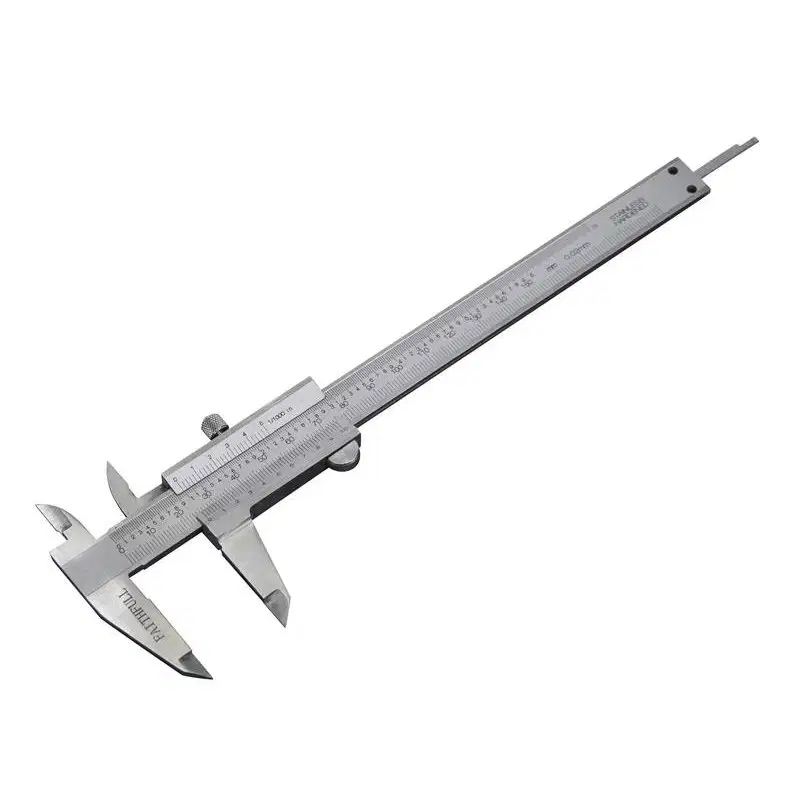
Which tool is a high‑precision instrument designed to measure very small distances (e.g., to 0.001 mm), often used for checking tolerances on round objects?
Steel rule
Vernier caliper
Micrometer
Multimeter
A simple ________ is a basic measuring device, often 300 mm long, that is low‑cost but is generally only accurate to about ±0.5 mm.
micrometer
vernier caliper
steel rule
multimeter

An instrument designed to measure electrical properties in a circuit, such as voltage, current, and resistance, is called a ________.
Micrometer
Vernier caliper
Multimeter
Steel rule
Testing a prototype to check that it works as intended (e.g., a vacuum picks up dust, or a lamp turns on) is called ________ testing.
quantitative
user
functionality
subjective
Checking a prototype’s measured weight (e.g., 2.1 kg) against the specification’s target (e.g., “2.0 kg ± 0.1 kg”) is an example of ________ comparison.
qualitative
quantitative
subjective
aesthetic
A designer measures a prototype’s height and compares it to the orthographic drawing. This is an example of:
Quantitative comparison
Qualitative comparison
User testing
Subjective evaluation
The process of giving a prototype to real, representative users to test in a real‑world situation is called ________.
functionality testing
user testing
quantitative comparison
calibration
Which statement best explains the main advantage of user testing in product evaluation?
It is the cheapest and fastest evaluation method.
It guarantees the product will be a bestseller.
It provides precise data on material strength.
It provides feedback on how people actually interact with the product.
What is a common disadvantage of user testing when evaluating a design outcome?
The feedback is always 100% accurate.
It only provides quantitative data.
It can be expensive and time‑consuming to organise and run.
It can only be done with 3D CAD models.
After evaluation, a designer will make _____ to the design to fix problems or improve features.
aesthetic sketches
material substitutions
modifications
marketing plans
After user testing, a designer adds a rubber grip to a handle to make it more comfortable. This modification is an improvement to the product's:
Aesthetics
Ergonomics
Sustainability
Material cost

