
 Worksheets
Unit 3 Properties of Matter Review
Total questions: 25
Worksheet time: 13mins
Which row correctly matches the term with its description?
Element: a pure substance made of one type of atom
Molecule: a physical blend of substances
Compound: a substance made of several of the same atom
Mixture: a pure substance made of one type of molecule
In a chemical equation, which substances are called reactants?
Substances produced by the reaction
Substances present before the reaction begins
Only the catalysts used
Only the solvents created
Ions differ in number of which subatomic particles?
Protons only
Neutrons only
Electrons only
Protons and neutrons only
Anions have which charge and what relative number of electrons compared to the neutral atom?
Positive; fewer electrons
Negative; more electrons
Negative; fewer electrons
Positive; more electrons
Isotopes of the same element differ in number of which of the following?
Protons and electrons
Neutrons and mass number
Protons only
Electrons only
A carbon atom that is a +2 cation must have how many electrons? (Atomic number of C is 6.)
2
6
10
4
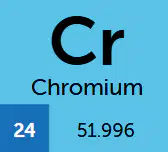
If a chromium atom is neutral, how many protons does it have?
24
26
52
28
If a chromium atom is neutral, how many electrons does it have?
24
26
52
28

For the element shown, what is the atomic number?
80
37
35
2

For the element shown, how many electrons does the ion have?
80
37
35
2
For the element shown, what mass does the ion have?
80
37
35
2

Is this element an isotope of Bromine?
Yes, because it has the same number of protons but a different mass number.
No, because ions cannot be isotopes.
No, because its atomic mass has not changed.
Yes, because it has gained electrons.
What is the molar mass of NH3? (Use whole-number atomic masses: N = 14, H = 1)
14 g/mol
15 g/mol
16 g/mol
17 g/mol
If Methane (CH4) has a molar mass 16, what percent of it is Hydrogen?
(Use whole-number atomic masses: C = 12, H = 1)
.25%
6.25%
8.3%
25%
50%
The Bohr-style diagram shown has two electrons in the first energy level and one electron in the second. Which element does this represent?
Helium (He)
Lithium (Li)
Beryllium (Be)
Boron (B)
Which statement correctly distinguishes ground state from excited state for electrons?
Excited state has one or more electrons promoted to higher levels.
Ground state has more electrons than excited state.
Excited state means the atom has gained protons.
Ground state applies only to ions.
What is a valence electron?
Any electron in the atom
An electron in the innermost shell
An electron in the outermost shell
A proton in the outermost shell
Which is the correct longhand electron configuration for nitrogen (atomic number 7)?
2p3
1s2 2s2 2p6 3s2 3p6
1s2 2s2 2p6
1s2 2s2 2p3
Which is the correct longhand electron configuration for chlorine (atomic number 17)?
1s2 2s2 2p6 3s2 3p5
1s2 2s6 2p2 3s2 3p5
[Ne] 3s2 3p5
[Cl] 3s2 3p5
Which is the correct shorthand electron configuration for chlorine (atomic number 17)?
1s2 2s2 2p6 3s2 3p5
1s2 2s6 2p2 3s2 3p5
[Ne] 3s2 3p5
[Cl] 3s2 3p5
Which shorthand configuration best represents tennessine (Ts, atomic number 117)?
[Ts] 7s2 5f14 6d10 7p5
[Rn] 7s2 5f14 6d10 7p6
[Og] 7s2 5f14 6d10 7p6
[Rn] 7s2 5f14 6d10 7p5
[Ts] 7s2 5f14 6d10 7p5
Which orbital filling for oxygen satisfies Hund’s rule and the Pauli exclusion principle?
1s: ↑↓ 2s: ↑↓ 2p: ↑↓ ↑ ↑
1s: ↑↓ 2s: ↑↓ 2p: ↑ ↑ ↑
1s: ↑ 2s: ↑ 2p: ↑ ↑ ↓
1s: ↑↓ 2s: ↑ 2p: ↑↓ ↑↓
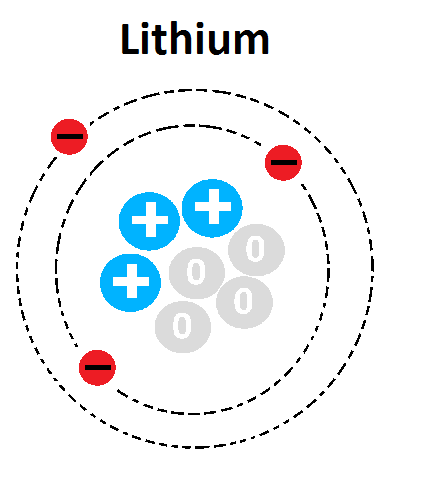
What is the atomic mass of this atom?
3
6
7
10
Select ALL of the Organic comounds.
(NH4)2SO4
CH3OH
Ca(OH)2
BaCO3
CH2Cl2
In Chemistry, (a) properties describe changes that requires change and time to observe, not something that can be assess in only one single moment.

