
 Worksheets
untitled
Total questions: 58
Worksheet time: 32mins

Mesopotamians and Ancient Egyptians worshiped multiple gods. This is an example of:
Polytheism
Monotheism
Agnosticism
Atheism
The major natural resource of Egypt is the
Nile River
Sahara Desert
Ganges River
Dead Sea
Upper Egypt is in the ____.
south
north
east
west
Lower Egypt is in the
north
south
east
west
Wild rapids called _________ are formed from the narrow cliffs on the Nile and prevented attacks from the south.
cataracts
tsunami's
white water
waterfalls
The Nile flows into which body of water?
Mediterranean Sea
Red Sea
Ionian Sea
Aegean Sea
Where the Nile River meets the Mediterranean Sea is called the
Nile Delta
brackish water
Dead Sea
Blue Delta
The Nile's flooding develops from the ......(choose 2)
massive amounts of rain in Central Africa
melting snow in East Africa
the Red Sea floods
melting snow in the Alps
What is a bucket attached to a long pole, to lift water from the Nile to put in the basin.
shadoof
bucket pole
water dump
canal lift
Egypt has natural protection in every direction! What protects Egypt to the North
Mediterranean Sea
Red Sea
Sahara Desert
Libyan Desert
Egypt has natural protection in every direction! What protects Egypt to the East
Mediterranean Sea
The Nile and Red Sea
Sahara Desert
Libyan Desert
Egypt's government, based on religion is called what?
theocracy
democracy
communist
fascists
Who controlled all elements of day to day life and was considered a god.
Pharaoh
Osiris
King
Emperor
Egyptians used the Nile to travel south to _______ to acquire Gold, Copper, Ivory, and slaves.
Kush/ modern day Nubia
South Sudan
Greece
Ethiopia
Egyptians were....
polytheistic
monotheistic
The afterlife in Egyptian mythology was considered a happy place and similar to their life on earth. It was based on a persons “ka,”or
life force
karma
dharma
chi
A method of artificial preservation, called _________was developed by the ancient Egyptians.
mummification
zombification
reincarnation
put on ice
A method of artificial preservation, called _________was developed by the ancient Egyptians.
mummification
zombification
reincarnation
put on ice
The Egyptian language is called
Hieroglyphics
Sanskrit
Cuneiform
calligraphy
Egyptians made paper out of reeds from the Nile , it is called___.
papyrus
clay
bamboo paper
rice paper

Tonya is in the library reading a book about ancient Egyptian architecture. What is the book about?
Sundials
Water clocks
Pyramids
Hieroglyphics

On which continent is Egypt located?
Asia
Africa
Europe
South America
The act of giving or doing something is called -
a contribution
diversity
adapting
architecture

In ancient Egypt, the pyramids were built -
to show other civilizations how strong the Egyptians were
as tombs for the kings and queens
to punish slaves
as a payment to the gods

From what plant did the Egyptians make paper?
Flax
Palm
Papyrus
Lotus

What is the name of the written language in the picture?
Characters
Papyrus
Symbolism
Hieroglyphics

How did the Nile River help the ancient Egyptians develop the calendar?
They measured the sunshine on the water to determine the length of a day.
They floated sundials down the Nile River.
They measured a day by the speed of the Nile River waters.
They measured a year by the rise and flood of the Nile.

Most of ancient Egypt's land was -
rainforest
mountains
desert
hilly

Ancient Egyptians created irrigation systems to adapt to their environment. The system helped them -
build better pyramids
move water inland for farming
fish in the rivers and seas
construct taller obelisks

Which three ancient Egyptian inventions help tell time?
Water clock
Obelisk
Hieroglyphics
365-day calendar
Papyrus paper

What are three reasons the Nile River was important to ancient Egyptians?
Rich farming soil
Fish to eat
Water for drinking and bathing
Wet sand to help build the pyramids

Where did the ancient Egyptians trade their goods?
In the Atlas Mountains
In West Africa
Along the Mediterranean coast
Across the Atlantic Ocean
What is one invention from ancient Egypt that we still use today?
365-day calendar
Kite
Light bulb
Fireworks

Ancient people made contributions that affect the present world. What does the word ancient mean in this sentence?
from the present
from a long time ago
from five years ago
from the future

What is architecture?
the design of buildings or structures
the written language of the ancient Egyptians
the act of giving or doing something
places that have the same characteristics

What is the climate in Egypt?
Cool to cold temperatures
Sunny and hot
Wet and damp
Four distinct seasons

Use the map to answer the question.
Which place is labeled "4" on the map?
Kush
Memphis
Thebes
Upper Egypt

Use the map to answer the question.
Which place is labeled "6" on the map?
Kush
Memphis
Thebes
Upper Egypt

Use the image to answer the question.
What were the pyramids in this image used for?
to exercise
to storewater
to bury pharaohs
to worship various gods
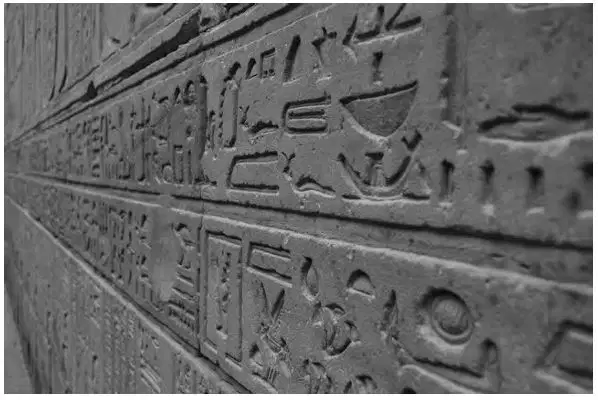
Use the image to answer the question.
What are the marks on this wall called?
papyrus
cuneiform
mastabas
hieroglyphics
Who had the most power and privilege in Egyptian society?
farmers
soldiers
pharaohs
merchants
Where did most people in ancient Egypt live?
in Nubia
by the Red Sea
along the Nile River
in the Valley of Kings
What problem did the cataracts on the Nile cause?
They created a delta.
They led to difficult travel.
They caused the river to flood frequently.
They caused the river to split into the White Nile and the Blue Nile.
Why was Hatshepsut an unusual pharaoh?
Hatshepsut was a child.
Hatshepsut was a woman.
Hatshepsut was originally from Nubia.
Hatshepsut held power for sixty-six years.
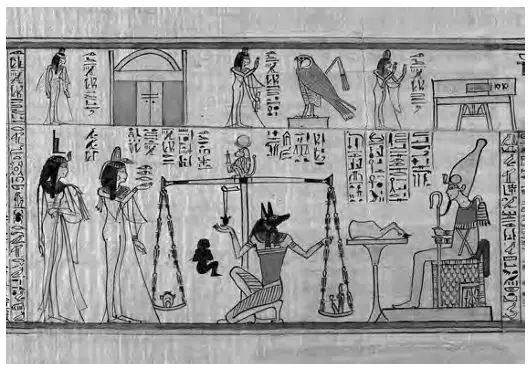
Use the image to answer the question.
What ancient Egyptian belief does this photograph show?
Pharaohs were chosen by the gods to rule.
Good people would be rewarded in the afterlife.
Women were important but not equal to men.
Mummification helped people reunite with their bodies after death.
What did Akhenaten try to change about Egyptian culture?
Select the two correct answers.
He tried to outlaw hieroglyphics.
He tried to stop the rule of pharaohs.
He tried to change religion in Egypt.
He tried to change the design of the pyramids.
He tried to reduce the power of priests.

This Source identify Ancient Egypt's _______.
Cities
Geography
Arts
Technology

This Source identifies Ancient Egypt's ___________.
Organized Government
Geography
Arts
Social Structure (Class)

This source identify Ancient Egypt's _________.
Geography
Arts
Religion
Organized Government

This Source identifies Ancient Egypt's ________.
Religion
Geography
Arts
Technology

This Source identifes Ancient Egypt's ____________.
Writing
Organized Government
Arts
Architecture

This Source identifies Ancient Egypt's __________
Job Specialization
Arts
Cities
Staple Food Supply

This Source identifies Ancient Egypt's _________
Arts
Geography
Social Structure (Class)
Technology

This Source identifies Ancient Egypt's ___________
Staple Food Supply
Social Structure (Class)
Arts
Geography

This Source identifies Ancient Egypt's _________.
Architecture
Staple Food Supply
Geography
Organized Government

This Source identifies Ancient Egypt's _________________.
Social Structure (Social Class)
Arts
Geography
Staple Food Supply

This Source Identify Ancient Egypt's canal as _______________.
Public Works (Infrastructures)
Architecture
Geography
Cities

This Source identifies Ancient Egypt's ________________.
Technology
Organized Government
Cities
Staple Food Supply.

