
 Worksheets
6035 Health & Safety Revision
Total questions: 40
Worksheet time: 20mins
Which act governs health and safety at work in the UK?
Health and Safety at Work Act 1974
Health and Safety Executive Act 1980
Workplace Safety Act 1990
Employee Protection Act 2000
What does HSE stand for?
Health and Safety Enforcement
Health and Safety Executive
Hazardous Substances Executive
Health and Safety Evaluation
How many employees must an employer have before a written Health & Safety Policy is required?
2
5
10
15
If a worker is off work due to a workplace accident for 7 or more days, within how many days should it be reported to RIDDOR?
7 days
10 days
15 days
30 days
Fill in the blank: Employers are responsible for supplying ______ and the employee is responsible for wearing it.
PPE (Personal Protective Equipment)
Uniforms
Lunch
Identification Badges
Which of the following is NOT an example of Personal Protective Equipment (PPE)?
Hard Hat
Eye Protection
High Visibility Clothing
Laptop
What does COSHH stand for?
Control of Substances Hazardous to Health
Control of Safety Hazards at Home
Control of Occupational Safety and Health
Control of Safety and Hygiene
Fill in the blank: A ______ is a document to be completed before work is carried out to highlight and eliminate potential risks.
Risk Assessment
Work Order
Invoice
Attendance Sheet
Asbestos is still commonly used as an insulation and fire protective material.
True
False
When working in a sewer system, what PPE should be worn due to the risk of noxious fumes and Weil’s disease?
Gloves and respirator
Safety shoes only
Hard hat only
No PPE required
What should be done with asbestos that needs to be removed?
Leave it in place
Remove it without any precautions
Double bag and label it up
Burn it
Site safe electric is identified by which colour?
Yellow
Red
Blue
Green
What voltage does site safe electric convert the normal mains electrical supply down to?
110V
220V
240V
12V
Which type of power tools are the safest to use on site?
Battery operated
Corded electric
Pneumatic (air-powered)
Gasoline powered
Which of the following lists the correct steps in the Safe Isolation Procedure?
Identify the circuit, test for dead, lock off, and prove dead.
Test for live, lock off, prove dead, and identify the circuit.
Lock off, prove dead, test for live, and identify the circuit.
Prove dead, identify the circuit, lock off, and test for live.
What should you do in an emergency where someone may be being electrocuted?
Turn off the electrical supply immediately and call emergency services.
Try to pull the person away from the electrical source with your bare hands.
Pour water on the person to cool them down.
Ignore the situation and wait for it to resolve itself.
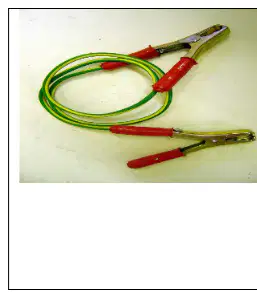
Temporary Continuity Bonding Clamps are applied before cutting metallic pipe work to prevent what?
Electrocution
Corrosion
Pipe leakage
Rust formation
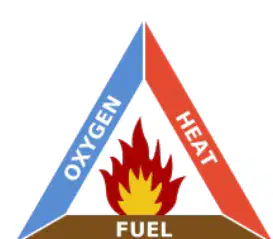
What are the three elements shown in the fire triangle diagram?
Oxygen, Heat, Fuel
Oxygen, Water, Fuel
Heat, Water, Carbon dioxide
Fuel, Water, Carbon monoxide
What is the cylinder/bottle colour for Propane gas?
Red
Blue
Green
Yellow
What is the cylinder/bottle colour for Butane gas?
Blue
Red
Yellow
Green
What is the cylinder/bottle colour for MAPP (Mix) gas?
Yellow
Red
Blue
Green
What is the cylinder/bottle colour for Acetylene gas?
Maroon
Blue
Grey
Black
What is the cylinder/bottle colour for Oxygen gas?
Black
Blue
Green
Red
Which class of fire involves flammable liquids such as oil and paraffin?
Class A
Class B
Class C
Class D
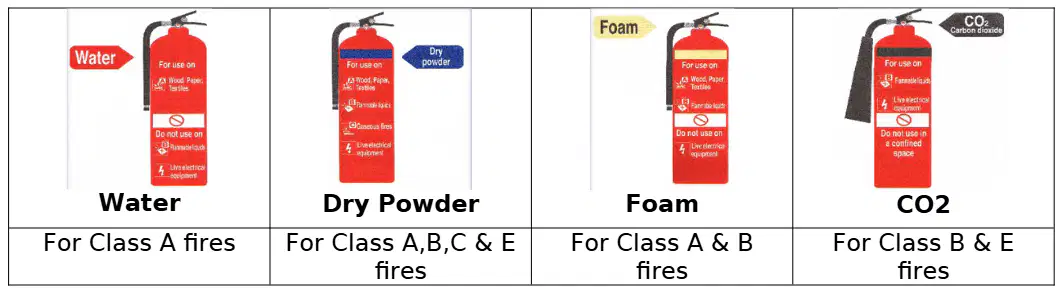
Which type of fire extinguisher is suitable for Class A fires?
Water
Dry Powder
Foam
CO2
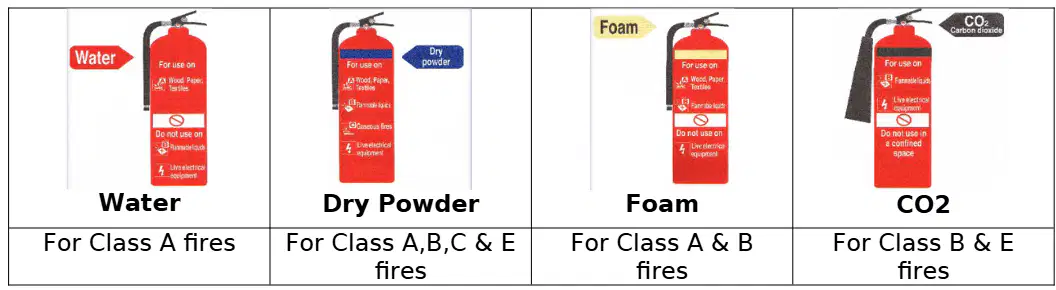
For which classes of fire can Dry Powder extinguishers be used?
Class A, B, C & E
Class A & B
Class B & E
Class F
What is the recommended angle to set a ladder?
60°
75°
90°
45°
Fill in the blank: The top of the ladder should extend ____ above the top of a working platform or 4 to 5 rungs above.
1.07m
0.5m
2.5m
0.75m
Ladders should be checked for damage prior to use.
True
False
The weight limit of the ladder must not be exceeded.
True
False
Fill in the blank: Step ladders are good for access to ____ areas where a customer does not have a permanent ladder.
loft
garden
garage
kitchen
Which of the following is a risk of being in a confined space?
Claustrophobia
Lack of oxygen
Collapse
All of the above
Fill in the blank: Plumbers may be required to work in a trench from time to time to install a ________ or running a cold water main into a property.
Rainwater Harvesting Tank
Electrical Junction Box
Gas Meter
Telephone Pole
Where the side of the trench is loose ground, it should be angled to prevent the sides from caving in.
True
False
What must be provided when the trench is over 1.2m deep?
Supported sides
Ladder access
Emergency ladder exit
All of the above
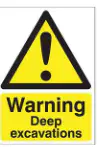
Which warning notice should be placed around the area of deep excavations?
Danger: Open Trench
Warning: Deep Excavations
Both A and B
None of the above
Fill in the blank: Spoils should be stored away from the ______, barrier around the top.
edge
center
base
side
Which of the following is NOT a risk of being in a confined space?
Fire and explosion
Flooding
Sunlight exposure
Build-up of fumes/vapours
Fill in the blank: Confined spaces are normally classed as a place where the space is substantially ______.
enclosed
open
ventilated
illuminated
Which of the following is a risk of hot work conditions in a confined space?
A) Fire and explosion
B) Lack of oxygen
C) Flooding
D) Claustrophobia

