
 Worksheets
7th Grade History
Total questions: 100
Worksheet time: 2hrs 47mins
How many years are there in a decade?
20 years
10 years
100 years
150 years
A primary source is a source created at the time an event occurred.
True
False
1 century = ______ years
1 000
100
10
1
1 millennium = _____ years
1 000
100
10
1
Cave paintings showed us that _______ was important to people at that time.
writing
reading
hunting
baseball
What is archaeology?
The study of objects to learn about past human life.
The study of dinosaurs and fossils.
The study of human culture.
None of these.
When studying history, what should we use to draw conclusions?
our own values
evidence
our opinions
any website that has an answer
A letter is a primary source.
True
False
A textbook is a primary source.
True
False
A secondary source is ________.
a tool or set of clothing worn by people from the time being studied.
written by an eyewitness.
better than a primary source.
a document or written work created after an event.
Select all sources that are typically reliable.
Website with a .edu ending
Website with a .gov ending
Website with a .com ending
None of these
Secondary sources present different points of view.
True
False
When you are going to complete a history project, which of the following should be the first step?
collect reliable resources
write the works cited section
choose a topic
start writing as soon as possible

Which country is labeled with the number 11 on the map?
Saudi Arabia
Iraq
Iran
Turkey

Which country is labeled with the number 1?
Saudi Arabia
Iran
Turkey
Iraq
What does water scarcity mean?
Unequal distribution
Lack of water volume
Water stressed
Population distribution
Where was oil first discovered?
Persia (Iran)
Saudi Arabia
Iraq
Kuwait
How has oil affected countries?
Lower standard of living
More money and a higher standard of living
Money
No money for education
What are the three main religious groups?
Judaism, Islam, Christianity
Arabs, Persians, Kurds
Sunni, Shia, Muslims
Jews, Muslims, Christians
What are the three main ethnic groups?
Judaism, Islam, Christianity
Arabs, Persians, Kurds
Jews, Muslims, Christians
Sunni, Shia, Muslims
Why did the Ottoman Empire collapse?
It was on the losing side of WWII
Fixed borders
It was on the losing side of WWI
Combined the Sunnis and Shias
The area of the world between Asia Minor and the Persian Gulf is referred to as the ______________________.
Fertile Basin
Crescent Moon
Fertile Crescent
Place where food can grow and stuff
The _____________ and ________________ rivers created very fertile land in the region between Asia Minor and the Persian Gulf.
Mississippi; Colorado
Ganges; Yellow
Nile; Amazon
Tigris; Euphrates
Mesopotamians used _____________________ to water certain areas of land and dug _____________________ to connect basins and ditches together.
Irrigation; Canals
Canals; Irrigation
Wells; Pipes
Pipes; Wells
In Mesopotamia, each worker had a specialized job in a system known as a ______________________.
Job Market
Skills workshop
Division of labor
Social hierarchy
True or False: Populations shrank when city-states became civilizations. Many more people were needed to be successful hunter-gatherers.
True
False
A(n) _____________________ area is where you would most likely find most of the farmland.
City-State
Forested
Urban
Rural
A(n) ____________________ area is where you would find a dense population with many structures and buildings.
Forested
Urban
Rural
Country
_____________________ is considered the first emperor in human history.
Gilgamesh
Hammurabi
Sargon
Enkidu
The Epic of __________________ tells the story of the King of Uruk, who seeks the secret to eternal life.
Hammurabi
Enkidu
Gilgamesh
Utnapishtim
_____________________ developed a code of law that was written and displayed for everyone to see.
Anakin Skywalker
Gilgamesh
Sargon
Hammurabi
_____________________ is the belief in many gods.
Polytheism
Monotheism
Theology of Duality
Social Hierarchy
The world’s first system of writing is called ______________________.
Hieroglyphics
Cuneiform
Pictographs
Symbols
The Sumerians used writing to keep track of many records, which made the job of ____________ very important.
Author
Scribe
Ancestor
Farmer
______________________, the science of building, began in Sumer as evidenced by the buildings and fine works they left behind.
Structuring
Archaeology
Architecture
Buildology
In most city-states, a ______________________ dominated the skyline as a temple tower.
Pyramid
Sphere
Ziggurat
Death Star
______________________ is a creation of the gods in the Epic of Gilgamesh who visits Gilgamesh to make him a good ruler.
Hammurabi
Utanpishtim
Enkidu
Sargon
The _______________________ sailed throughout the Mediterranean, building trade networks and founding new cities.
Phoenicians
Assyrians
Hittites
Kassites
The _______________________ were among the first to master ironworking.
Hittites
Kassites
Assyrians
Sith
What is the largest river in Africa?
The Mississippi River
The Nile River
The Yellow River
The Congo River
What is the name of the large desert that covers most of northern Africa?
The Sahara Desert
The Mojave Desert
The Nile Desert
I don't know

Feature #4
Sahara Desert
Kalahari Desert
Sahel
Congo Basin

Feature #1
Niger River
Nile River
Congo River
Danube River
Which lake is represented by feature #5?
Lake Victoria
Lake Elizabeth
Lake Superior
Lake Africa

What is the highest peak in Africa?
Mt. Kilimanjaro
Mt. Everest
Himalayan Mountains
Rocky Mountains
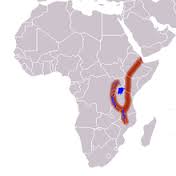
What geographic feature is highlighted? It is a ridge and plate boundary with significant volcanic activity beneath its surface. Millions of years from now, it will split the continent in half.
Sahel
Transition Zone
Ring of Fire
Great Rift Valley
Why is the population of the Sahara Desert so low?
Too much water
Too much oil
Limited access to oil
Limited access to water

Which number represents South Africa?
11
13
14
15
Which landform features rolling grasslands and scattered trees?
Savanna
Nile River
Tropical Rain Forest
Niger River
What landform lies along the Atlantic Coast near the equator?
Sahel
Savanah
Niger River
Tropical Rain Forest
What mountain range is located in North Africa?
Mt. Kilimanjaro
Atlas Mountains
Sahel Mountains
The Alps
This is the largest desert in the world.
Sahara
Namib
Kalahari
Gobi
Tropical Grassland that is home to a large number of animals and grass taller than people.
Congo Basin Rainforest
Sahara Desert
the Sahel
the Savanna
This region has a dry climate, hard soil, and is mostly grass.
Sahara Desert
The Savanna
The Sahel
The Great Rift Valley
Which mountain range is located in Northern Africa?
Atlas Mountains
Andes Mountains
Kilimanjaro Mountains
Alps Mountains
What is the largest fresh water lake in Africa?
Lake Superior
Lake Victoria
Lake Elizabeth
Lake Kilimanjaro
This mountain has the tallest peak in Africa.
Mt. Everest
Mt. Denali
Mt. Atlas
Mt. Kilimanjaro

This body of water is located to the West of Africa.
Atlantic Ocean
Mediterranean Sea
Red Sea
Indian Ocean

This body of water is located North of Africa.
Atlantic Ocean
Mediterranean Sea
Red Sea
Indian Ocean
This river, found in Africa, is the world's longest.
The Amazon River
The Nile River
The Rhine River
The Yangtze River

Name this area of Africa.
The Sahara Desert
The Namib Desert
The Kalahari Desert
The Great Rift Valley.
What is the largest desert in Africa?
Gobi Desert
Kalahari Desert
Sahara Desert
Arabian Desert
What is one characteristic of the rain forest according to the text?
It has few plants and animals.
It has many plants and animals.
It is mostly desert.
It is primarily grassland.
What are Africa's four main Problems
unstable government, famine, lack of education, lack of healthcare
unstable government, famine, lack of education, lack of water
unstable government, famine, lack of education, lack of houses
What causes government instability?
Good economic growth
Slow to no economic growth
High economic growth
What does government instability result in?
difficulties
conflicts
Civil War
What part of Africa has the highest risk of famine?
Sub-Saharan
South Africa
Kenya
How many Africans die in Africa each minute?
11
10
12
Name the five factors that have led to famine
climate change, human force, weak economies and corrupt governments
water change, human force, weak economies and corrupt governments
climate change, human force, weak economies and civil war
What does a lack of investment in education perpetuate?
Lack of Food
Lack of education
Lack of government control
A lack of education is the most prevalent in what areas of Africa?
towns
cities
rural
Who has a higher literacy rate, men or woman in Africa?
men
Woman
What does a lack of health care services result in?
Rampant disease
cure disease
heal the disease.
Name three health care professionals that Africa is in dire need of
lawyer, doctors, and surgeons
Nurses, doctors, and surgeons
Nurses, doctors, and chiefs
What are the three main epidemics in Africa?
Malaria, Ebola, and measles
Covid-19, Ebola, and AIDS
Malaria, Ebola, and AIDS
What are the two most important tools for fighting aids and disease?
Prevention and training
Education and training
Education and prevention
What does Africa need to help it's education and prevention programs?
Money
Beter government
Water
Explain how the development of agriculture contributed to the rise of civilizations.
It led to the extinction of certain species.
It allowed people to settle in one place and form communities.
It caused people to become nomadic.
It decreased food production.
Analyze the role of agriculture in the development of early human societies.
It led to the decline of trade.
It allowed for population growth and the establishment of cities.
It caused a decrease in technological advancements.
It resulted in the abandonment of permanent settlements.
What is the significance of the Fertile Crescent in the history of agriculture?
It was the first region to develop industrial farming.
It is where agriculture first began.
It is known for its mineral resources.
It was the last region to adopt agriculture.
What is a "famine"?
A celebration
A type of clothing
A widespread food shortage
A religious ceremony
What are Africa's four main Problems
unstable government, famine, lack of education, lack of healthcare
unstable government, famine, lack of education, lack of water
unstable government, famine, lack of education, lack of houses
What causes government instability?
Good economic growth
Slow to no economic growth
High economic growth
What does government instability result in?
difficulties
conflicts
Civil War
What part of Africa has the highest risk of famine?
Sub-Saharan
South Africa
Kenya
How many Africans die in Africa each minute?
11
10
12
Name the five factors that have led to famine
climate change, human force, weak economies and corrupt governments
water change, human force, weak economies and corrupt governments
climate change, human force, weak economies and civil war
What does a lack of investment in education perpetuate?
Lack of Food
Lack of education
Lack of government control
A lack of education is the most prevalent in what areas of Africa?
towns
cities
rural
Who has a higher literacy rate, men or woman in Africa?
men
Woman
What does a lack of health care services result in?
Rampant disease
cure disease
heal the disease.
Name three health care professionals that Africa is in dire need of
lawyer, doctors, and surgeons
Nurses, doctors, and surgeons
Nurses, doctors, and chiefs
What are the three main epidemics in Africa?
Malaria, Ebola, and measles
Covid-19, Ebola, and AIDS
Malaria, Ebola, and AIDS
What are the two most important tools for fighting aids and disease?
Prevention and training
Education and training
Education and prevention
What does Africa need to help it's education and prevention programs?
Money
Beter government
Water

Which trading resource was provided by the desert?
gold
diamonds
cloth
salt
What is a guru?
a type of storm that causes flooding
a Buddhist shrine
a teacher
the leader of an Indus Valley tribe

