wayground logo

Free Printable Worksheets

NEW

Font size

S
M
L
XL
Worksheets

11/5 assignment sswg4

Total questions: 35

Worksheet time: 23mins

Name
Class
Date
1.
State that has freedom over its own affairs has 
a)
centrifugal forces
b)
nationalism
c)
sovereignty
d)
pluralism
2.
The world's largest state is
a)
China
b)
Canada
c)
United States
d)
Russia
3.
Japan would be an example of a ______.
a)
Compact State
b)
Nation-State
c)
Multinational State
d)
Perforated States
4.
A group of people who share a common culture and identity as a cohesive group is a called a ___.
a)
Nation State
b)
Nation
c)
Country
d)
Sovereign State
5.

Give an example of a physical border:

a)

ocean

b)

river

c)

mountain range

d)

all of the above

6.

The U.S. Mexico Border is

a)

A physical border

b)

A political border

c)

Both a physical and political border

7.
10. India's historical division into 3 separate countries (India, Pakistan, and Bangladesh) due to religious differences is an example of ___ being drawn.
a)
Physical boundaries
b)
Ethnic boundaries
c)
Geometric boundaries
d)
Relic boundaries
8.
9. The Great Lakes between the United States and Canada are an example of a/an ___.
a)
Physical boundary
b)
Ethnic boundary
c)
Geometric boundary
d)
Relic boundary
9.
5. Most Kurds live in the border regions of Iran, Iraq, Syria, and Turkey because they still lack a state of their own. As a result, they are the largest modern example of a:
a)
multinational state
b)
autonomous region
c)
stateless nation
d)
nation-state
10.
4. Why isn't the United States a nation-state?
a)
We have a very large land area.
b)
We have a culturally diverse population.
c)
We are lacking complete sovereignty.
d)
We are too dependent on other countries.
11.
2. A nation is a group of people who share all of the following, except:
a)
religion
b)
education
c)
language
d)
ethnicity
12.
1. Which of the following is not required for a state to exist?
a)
A permanent population
b)
Access to a river or ocean
c)
A sovereign government
d)
Recognition from other countries
e)
Borders marking territorial limits
13.

 Another name for a country is ______________.

a)

Area

b)

State

14.

A line that separates areas of land is called a ________________.

a)

Line

b)

Border

15.

An example of a physical boundary is a(an)  ___________________.

a)

River

b)

Map

16.

Using the map, what physical border divides Illinois and Missouri?

a)

Mississippi River

b)

Atlantic Ocean

17.

The governing body of a nation, state or community

a)

Microstate

b)

Government

18.

Lines on a map between countries, states, counties, and cities and are created by people

a)

Political Boundary

b)

Physical Boundary

19.
The study of human political organization of the Earth
a)
Cultural Geography
b)
Ethnography
c)
Deography
d)
Political Geography
20.

What is the definition of movement?

a)

The import/export of people, ideas and goods around the world

b)

An area of the world that has similar physical or human characteristics

c)

People adapt to, depend on and/or modify their environment

d)

Where a place is and how we find it

21.

What is the definition of region?

a)

The import/export of people, ideas and goods around the world

b)

An area of the world that has common physical or human characteristics, such as the foods they eat

c)

People adapt to, depend on and/or modify their environment

d)

Where a place is and how we find it

22.

Which of the following is an example of a region?

a)

Exact coordinates: New Orleans 30 degrees N, 90 degrees W

b)

The Midwest, The Cotton Belt, and Great Plains

c)

Haiti is southeast of Cuba

d)

The Rocky Mountains are in western North America

23.

What is the definition of human-environment interaction?

a)

The import/export of people, ideas and goods around the world

b)

An area of the world that has similar physical or human characteristics

c)

People adapt to, depend on and/or modify their environment

d)

Where a place is and how we find it

24.

Which of the following is an example of how humans modify the environment to meet their own needs?

a)

Living in the Midwest and Great Plains

b)

Find their country's absolute location

c)

Building dams and bridges on rivers

d)

Sharing their religion when they immigrate

25.

Which of the following is an example of how humans depend on their environment?

a)

Using raw materials such as iron ore and coal in factories

b)

Bringing extra layers of clothing on a cool day

c)

Installing air conditioners or fans in windows during hot weather

d)

Migrating to a new country during war

26.
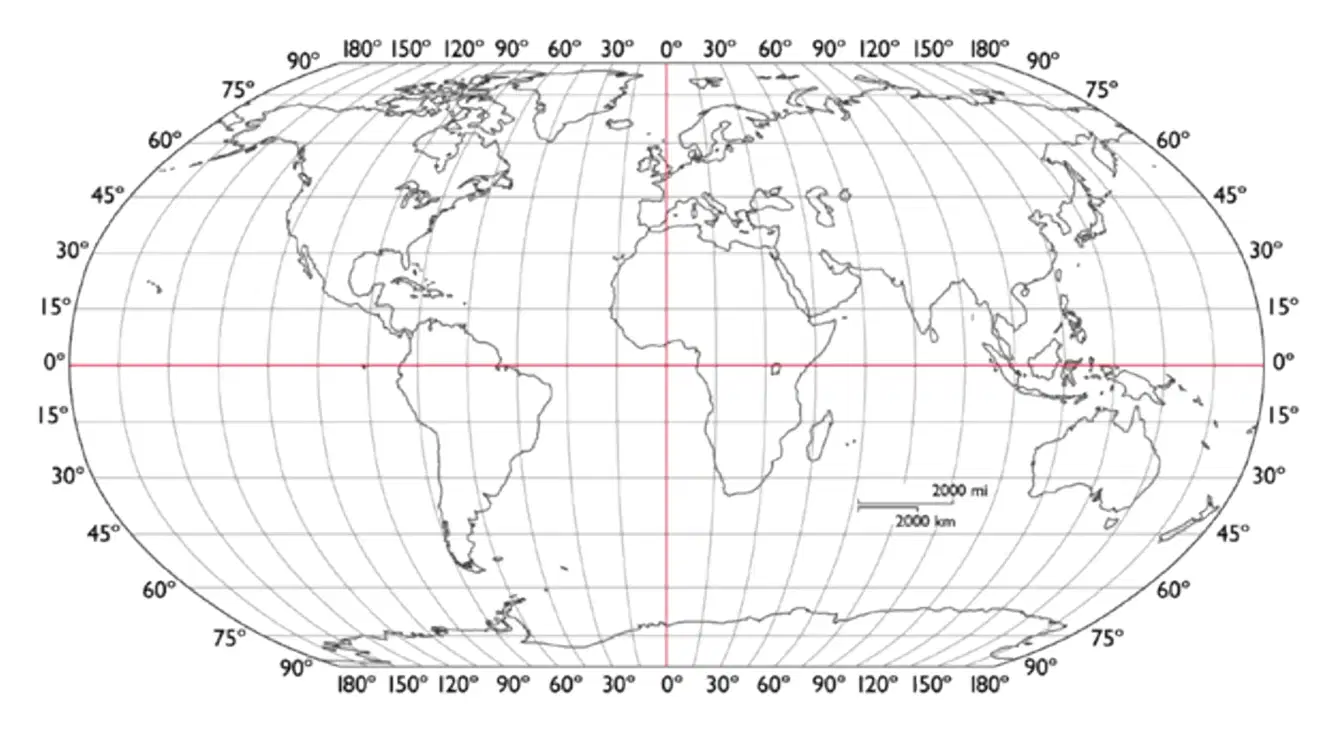
Which continent is in the Northern Hemisphere?
a)
Africa
b)
Antarctica
c)
Australia
d)
Europe
27.
Which continent is in the Southern Hemisphere?
a)
North America
b)
Europe
c)
Australia
d)
Asia
28.
Which ocean is at 45°N  45°W ?
a)
Atlantic
b)
Pacific
c)
Indian
d)
Zabel
29.
Which ocean is at 15°S  150°W ?
a)
Atlantic
b)
Pacific
c)
Indian
d)
Zabel
30.
Which continent at is 45°N 105°W ?
a)
North America
b)
South America
c)
Asia
d)
Australia
31.
Which continent at is 45°N 105°E ?
a)
North America
b)
South America
c)
Asia
d)
Australia
32.
Which continent at is 30°S 60°W ?
a)
North America
b)
South America
c)
Asia
d)
Australia
33.

What mountain range is circled in RED?

a)

Appalachian Mountains

b)

Rocky Mountains

c)

Cascade Mountains

34.

What is the RED circle around?

a)

Great Lakes

b)

Canada US border

c)

River systems

35.

Where does most of Canada's population live?

a)

The Southern Border of Canada near the USA

b)

In the Northern region or Tundra

c)

The Interior parts of Canada.

d)

The Northeastern Territories of Canada