
NEW
Font size
 Worksheets
Muscle Tissue Categories
Total questions: 20
Worksheet time: 10mins
Recall: Which list correctly names the three major categories of muscle fibers?
Skeletal, smooth, cardiac
Striated, voluntary, involuntary
Flexor, extensor, stabilizer
Red, white, intermediate
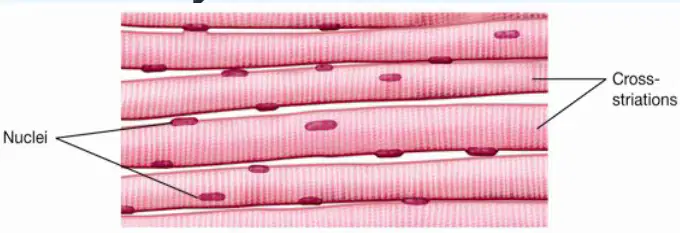
Skill/Concept: Skeletal muscle has two common alternative names. Based on its visible structure under a microscope and how it is controlled, which pair correctly describes skeletal muscle?
Striated muscle and voluntary muscle
Smooth muscle and involuntary muscle
Cardiac muscle and automatic muscle
Striped muscle and reflex muscle
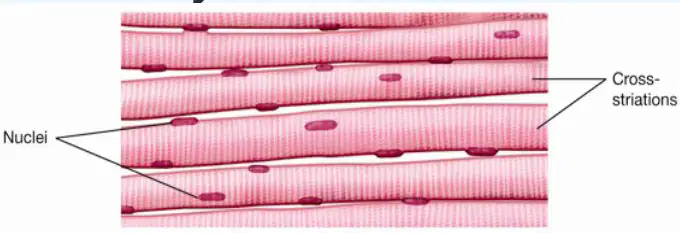
Strategic Thinking: A tissue sample shows prominent cross-stripes and is stimulated by consciously directed nerve activity. What body function is this tissue most responsible for?
Producing body movements by attaching to bones
Pumping blood through the heart chambers
Moving food through the digestive tract
Maintaining constant body temperature
Recall: In skeletal muscle, what term is used for an individual muscle cell and why?
Muscle fiber, because it is thread-like in shape
Sarcomere, because it is the basic contractile unit
Myofibril, because it contains actin and myosin
Fascicle, because it groups several cells together
Which layer directly surrounds each individual skeletal muscle fiber?
Epimysium
Perimysium
Endomysium
Aponeurosis
A coach designs training to increase an athlete’s muscle fiber diameter without changing fiber number. Which approach best aligns with how adults can adapt skeletal muscle?
Daily long-distance running at a light intensity
Regular resistance sessions with few repetitions of heavy loads
Static stretching before and after every workout
High-repetition, no-load finger dexterity practice
A patient’s muscle must transmit force to bone across a broad, flat area rather than through a cordlike structure. Which connective tissue arrangement would most effectively provide this attachment?
A tendon composed of extremely strong cordlike connective tissue
An aponeurosis forming a flat, sheet-like attachment
Ligaments connecting muscle directly to bone
Endomysium extending to the bone as a thin membrane
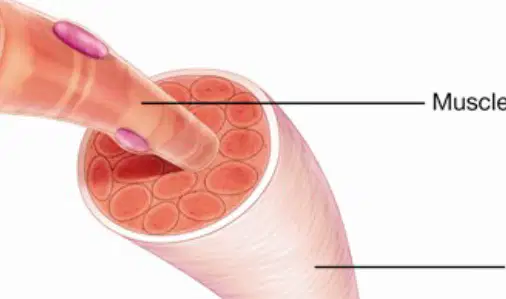
Refer to the skeletal muscle organization diagram. Which connective tissue layer directly surrounds individual muscle fibers?
Epimysium
Perimysium
Endomysium
Fascia
Using the summary of skeletal muscle organization and the labeled diagram, which statement best explains how fascicles are formed within a muscle?
The sarcolemma groups several fascicles to make up a muscle.
The endomysium bundles entire muscles into tendons.
The perimysium bundles groups of muscle fibers together to make a fascicle.
The aponeurosis wraps individual fibers to form fascicles.
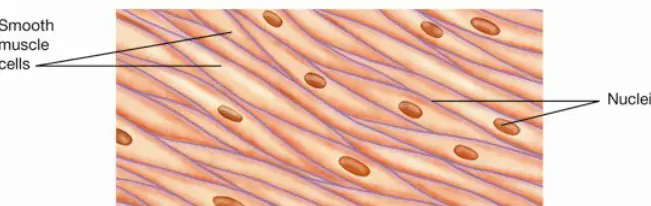
Recall: Which characteristic best describes smooth muscle cells?
Large, cylindrical, and striated
Small, spindle-shaped, and nonstriated
Branched with intercalated discs
Multinucleated and under voluntary control
Skill/Concept: Smooth muscle layers run lengthwise and surround the organ. What functional outcome results from their alternating contraction and relaxation?
Generating rapid voluntary movements of limbs
Increasing bone density through resistance
Changing the size and shape of the organ to move its contents
Producing electrical impulses that initiate heartbeats
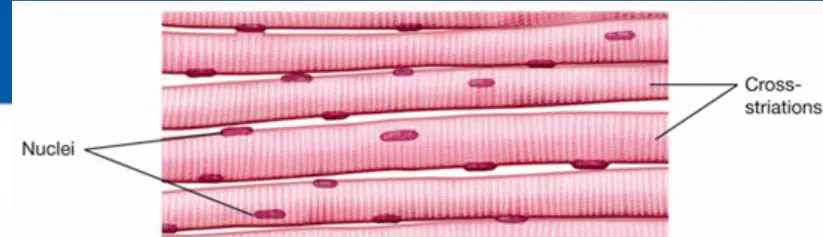
Refer to the labeled micrographs in the diagram: Skeletal muscle shows parallel fibers with cross-striations; Smooth muscle shows spindle-shaped cells with no striations; Cardiac muscle shows branched fibers with cross-striations and intercalated discs. Which tissue is voluntary in control?
Skeletal muscle
Smooth muscle
Cardiac muscle
All three tissues
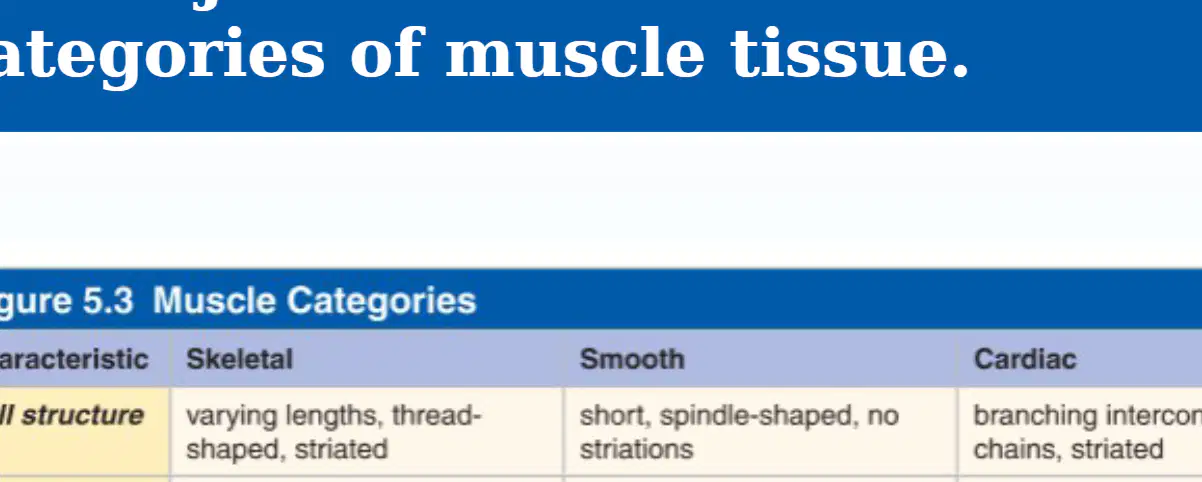
Refer to the “Muscle Categories” table. Which statement correctly matches a muscle type with both its control and typical location?
Skeletal muscle is involuntary and found in the walls of the heart
Smooth muscle is voluntary and attached to most bones
Cardiac muscle is involuntary and located in the walls of the heart
Skeletal muscle is voluntary and lines the walls of internal organs other than the heart
Which statement best distinguishes voluntary from involuntary muscle?
Voluntary muscles contract only during sleep, while involuntary muscles work only when awake.
Voluntary muscles respond to consciously directed nerve signals; involuntary muscles are not under conscious control.
Voluntary muscles are found only in the heart, while involuntary muscles occur only in limbs.
Voluntary muscles shorten without nerves, whereas involuntary muscles require constant conscious nerve input.
Which list correctly names the three connective tissue layers that run the length of a skeletal muscle?
Endomysium, perimysium, epimysium
Sarcolemma, sarcoplasm, myofibril
Fascia, tendons, ligaments
Actin, myosin, troponin
Which statement correctly describes smooth muscle based on the review material?
It is voluntary and controlled consciously
It is involuntary and not under conscious control
It is multinucleate like skeletal muscle
It has branching fibers similar to cardiac muscle
Cardiac muscle fibers are best described as which of the following?
Non-branching and cylindrical
Branching and interconnected
Multinucleate and long
Smooth and spindle-shaped
Which statement about smooth muscle nuclei is accurate?
Smooth muscle fibers are multinucleate
Smooth muscle fibers typically have a single nucleus
Smooth muscle fibers are anucleate
Smooth muscle fibers have alternating multiple nuclei
In skeletal muscle organization, what does the perimysium surround?
Individual muscle fibers
Entire muscles including tendons
Bundles of muscle fibers called fascicles
The sarcomere within myofibrils
Which connective tissue layer directly surrounds individual muscle fibers?
Epimysium
Perimysium
Endomysium
Myofibril sheath

