
Font size
 Worksheets
Modeling Conservation on Mass
Total questions: 14
Worksheet time: 10mins
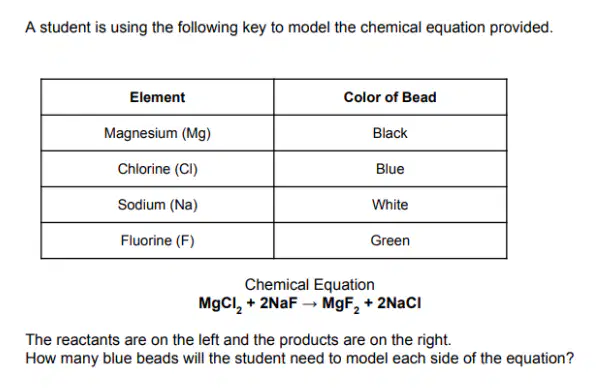
1 for the products and 1 for the reactants
2 for the products and 2 for the reactants
2 for the products and 1 for the reactants
1 for the products and 2 for the reactants
Students want to gather evidence for the claim that the number of atoms present before a chemical reaction is equal to the number of atoms present after the chemical reaction. They decide to react vinegar and baking soda in a sealed plastic bag. Which of the following would provide the evidence the students need?
The mass of the plastic bag, baking soda, and vinegar before the reaction was equal to the mass after the reaction
Bubbles were produced during the reaction, which meant that a gas was being produced
The plastic bag did not change in any way, indicating that it was not involved in the reaction
The mass of the baking soda was exactly equal ot the mass of the vinegar used to create the chemical reaction
Which of the following is true regarding the atoms involved in a chemical reaction?
The same number of each type of atom will always be present before and after a chemical reaction takes place
Some of the atoms present before the reaction will always be lost during a chemical reaction
Some of the atoms will always be changed into a different type of atom by a chemical reaction
During a chemical reaction, atoms will always be combined into much larger molecules
The ___________________ is the number written BELOW and to the RIGHT of a chemical symbol to show how many atoms are present.
Coefficient
mass
atoms
subscript
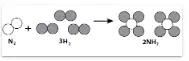
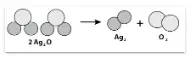
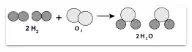
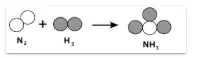
Which of the following atomic models of chemical reactions correctly demonstrates the Law of Conservation of Matter?
Match the vocab word to the correct definition:
Mass
How much matter is in an object
Atom
The smallest part of all matter
Conserve
To prevent the loss of something
Coefficient
A number in front of a chemical symbol
Match the vocab word to the correct definition:
Chemical Reaction
A process that leads to the transformation of one set of chemical substances to another.
Law of Conservation of Mass
Mass is neither created nor destroyed in a chemical reaction.
Subscript
A number written below and to the right of a chemical symbol.
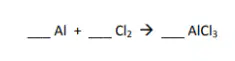
Balance the following equation:
2 : 5 : 1
2 : 3 : 2
1 : 1 : 1
1 : 2 : 1

Balance the following equation:
1 : 1 : 3 : 1 : 2
2 : 2 : 2 : 2 : 2
2 : 3 : 2 : 6 : 3
4 : 1 :2 : 3 : 1

Identify the type of chemical reaction
Synthesis
Decomposition
Single replacement
Double replacement
Combustion

Identify the type of chemical reaction
Synthesis
Decomposition
Single replacement
Double replacement
Combustion

What type of reaction is this?
2NaHCO3 --> Na2CO3 + H2O + CO2
Single Replacement
Combustion
Decomposition
Synthesis

Identify the type of chemical reaction
Synthesis
Decomposition
Single replacement
Double replacement
Combustion

What type of reaction is this?
CH4 + 2O2 --> 2H2O + CO2
Combustion
Synthesis
Double Replacement
Single Replacement

