
 Worksheets
Introduction and Learning Objectives
Total questions: 76
Worksheet time: 38mins
Which items are named as accessory organs whose anatomy and function you should be able to describe?
Salivary glands
Liver
Spleen
Pancreas
Thyroid
Which learning objective targets the terminal process of the digestive system?
Deglutition phases
Defecation and its significance
Gastric secretion
Pharyngeal anatomy
Which of the following pairs correctly matches an objective with the anatomical focus it names?
Deglutition — Liver
Stomach secretion — Stomach
Defecation — Salivary gland
Accessory organs — Kidney
Which learning goal would most directly guide a discussion of swallowing mechanics from mouth to esophagus?
Defecation significance
Deglutition and its phases
Accessory organ anatomy
Gastric absorption
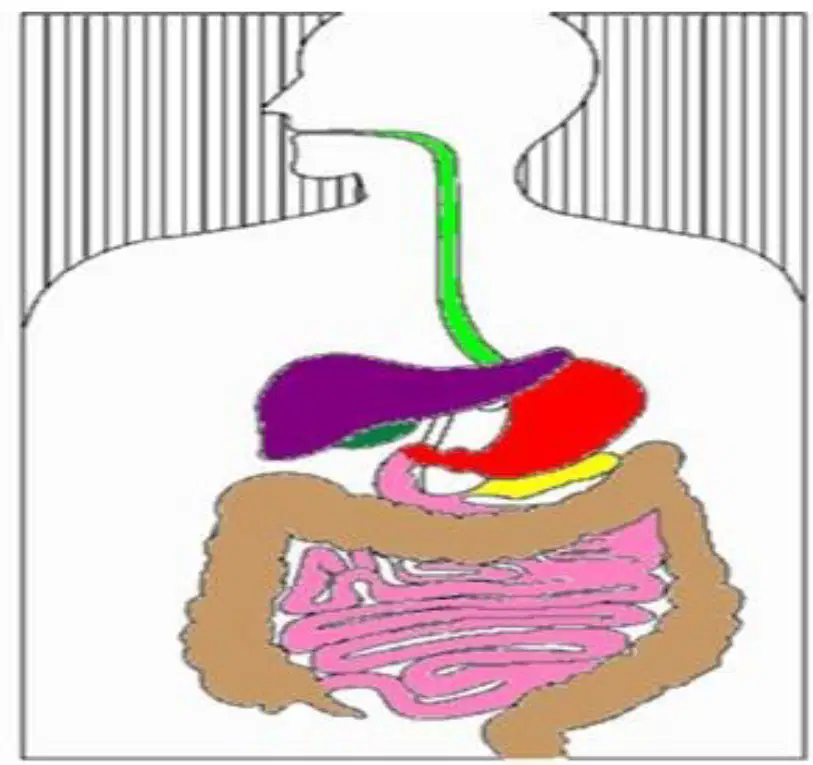
Refer to the diagram of the human digestive system. Which organ is the long, coiled structure in the lower abdomen where most nutrient absorption occurs?
Stomach
Small intestine
Large intestine
Esophagus
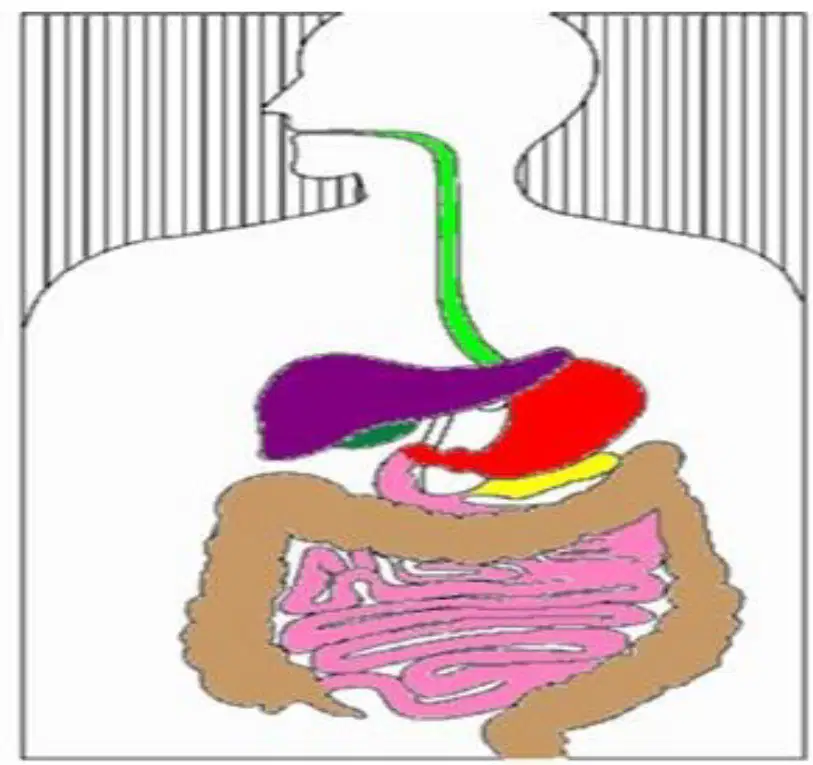
In the digestive system overview diagram, identify the correct pathway food follows immediately after leaving the mouth.
Pharynx → esophagus → stomach
Esophagus → trachea → stomach
Trachea → esophagus → small intestine
Pharynx → trachea → esophagus
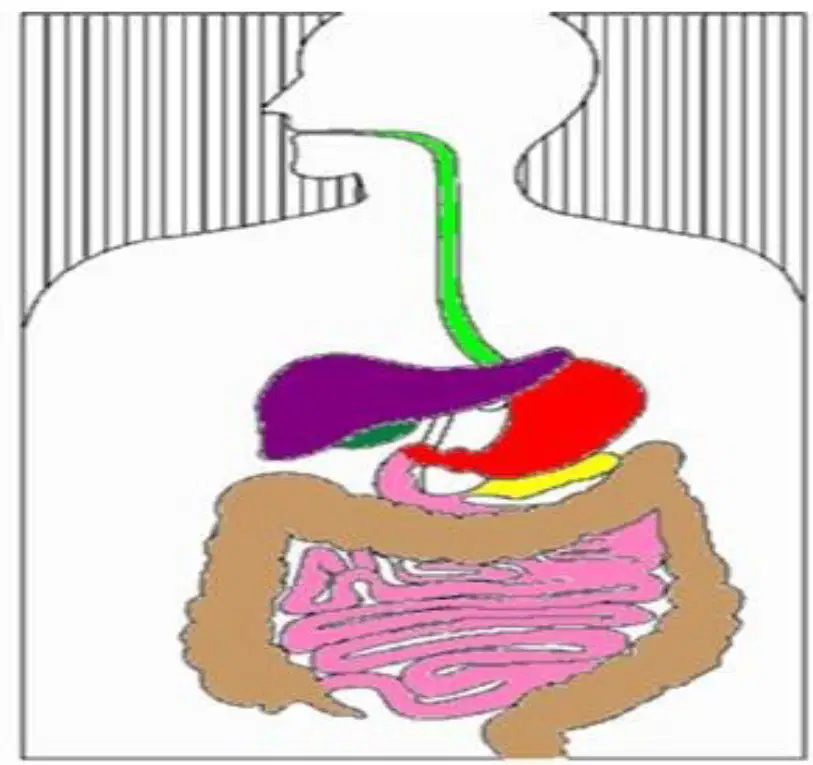
Based on the labeled shapes in the system overview diagram, which set includes accessory digestive organs that add secretions but are not part of the food’s direct path? Select all that apply.
Liver and pancreas
Stomach and small intestine
Gallbladder and liver
Esophagus and large intestine
According to the instructional text, the digestive system is composed of two main groups of organs. Which pairing correctly names these groups?
Gastrointestinal tract and accessory digestive organs
Respiratory tract and endocrine organs
Which statement best defines the gastrointestinal tract (also called the alimentary canal) as presented in the material?
A continuous tube extending from the mouth to the anus
A set of paired organs that store nutrients
Select all organs identified as part of the gastrointestinal tract (alimentary canal) in the material.
Mouth
Esophagus
Stomach
Small intestine
Which organ listed is NOT part of the gastrointestinal tract according to the text?
Esophagus
Liver
In the material, which term is used interchangeably with “gastrointestinal tract”?
Accessory digestive system
Alimentary canal
Which option correctly describes the overall path of the gastrointestinal tract?
From mouth to anus as a continuous tube
From liver to gallbladder via ducts
Which of the following are named as accessory digestive organs in the material? Select all that apply.
Teeth
Tongue
Salivary glands
Based on the instructional list, which item belongs to the accessory digestive organs rather than the gastrointestinal tract?
Tongue
Esophagus
Which pairing correctly matches a group with one of its listed components in the material?
Gastrointestinal tract — salivary glands
Accessory digestive organs — teeth
Which statement aligns with the material’s classification of digestive system components?
The gastrointestinal tract includes mouth, pharynx, esophagus, stomach, and intestines
Accessory digestive organs are part of the respiratory system
Identify the correct grouping for the liver as presented in the material.
It is an organ of the gastrointestinal tract
It is an accessory digestive organ
Which item from the list of accessory digestive organs is pluralized in the material and should be recognized as such?
Teeth
Salivary glands
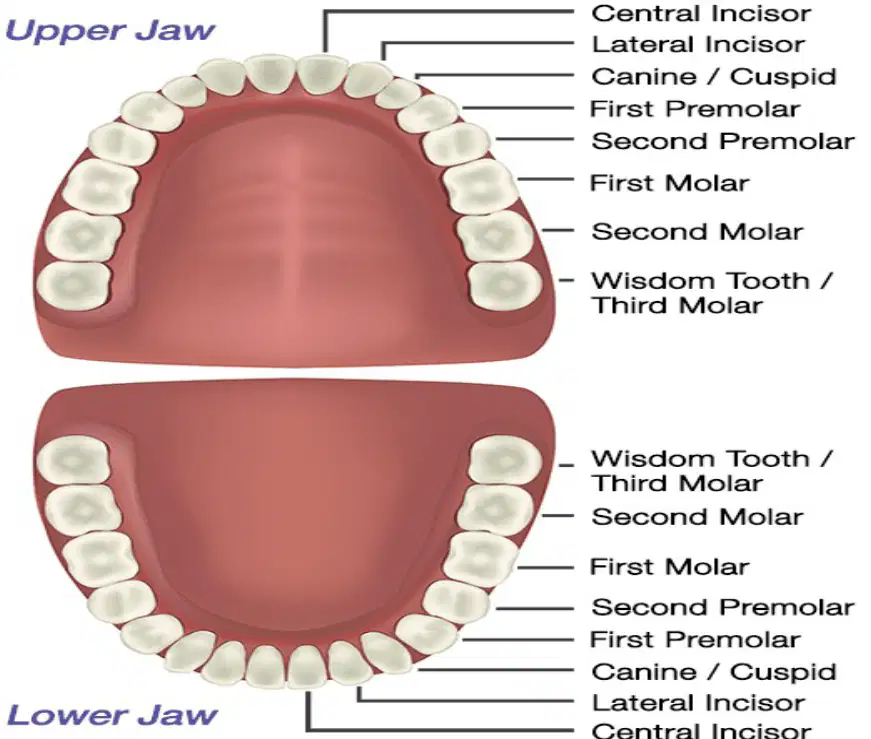
Refer to the labeled dental arches diagram. Which tooth type is positioned most medially at the front of both the upper and lower jaws?
Canine/Cuspid
Central Incisor
First Premolar
First Molar
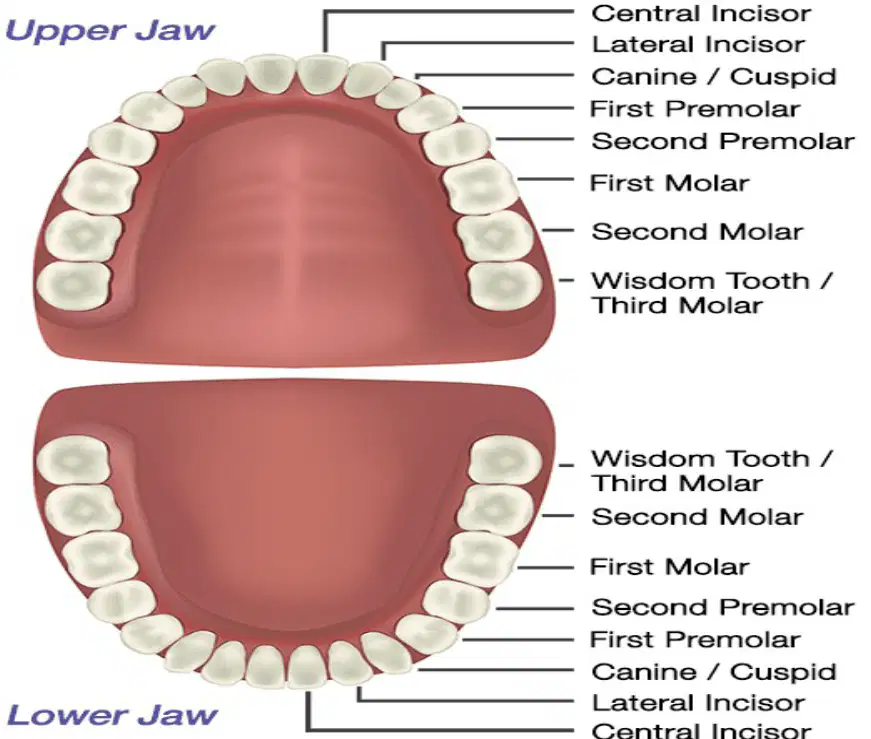
Using the dental arches diagram, which sequence correctly lists the teeth from the midline moving posteriorly on one side of the upper jaw?
Central incisor → Lateral incisor → Canine → First premolar → Second premolar → First molar → Second molar → Wisdom tooth/Third molar
Central incisor → Canine → Lateral incisor → First premolar → Second premolar → Second molar → First molar → Wisdom tooth/Third molar
Central incisor → Lateral incisor → First premolar → Canine → Second premolar → First molar → Wisdom tooth/Third molar → Second molar

In the lower jaw portion of the dental diagram, which tooth lies immediately distal to the canine/cuspid?
First premolar
Lateral incisor
Central incisor
First molar
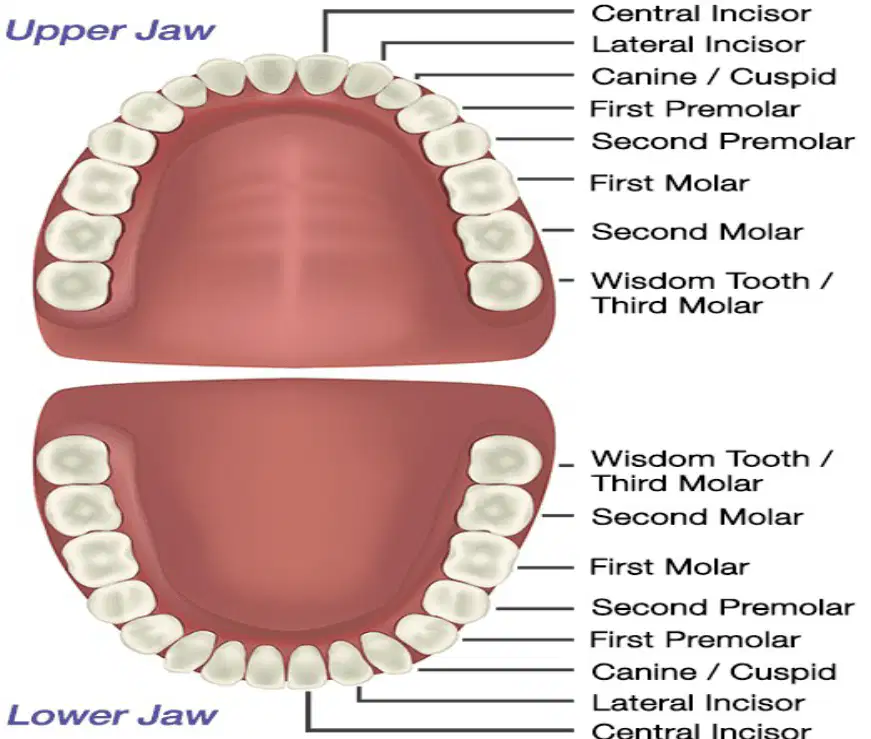
According to the dental diagram, which teeth are classified as premolars? Select all that apply.
First premolar
Second premolar
First molar
Lateral incisor
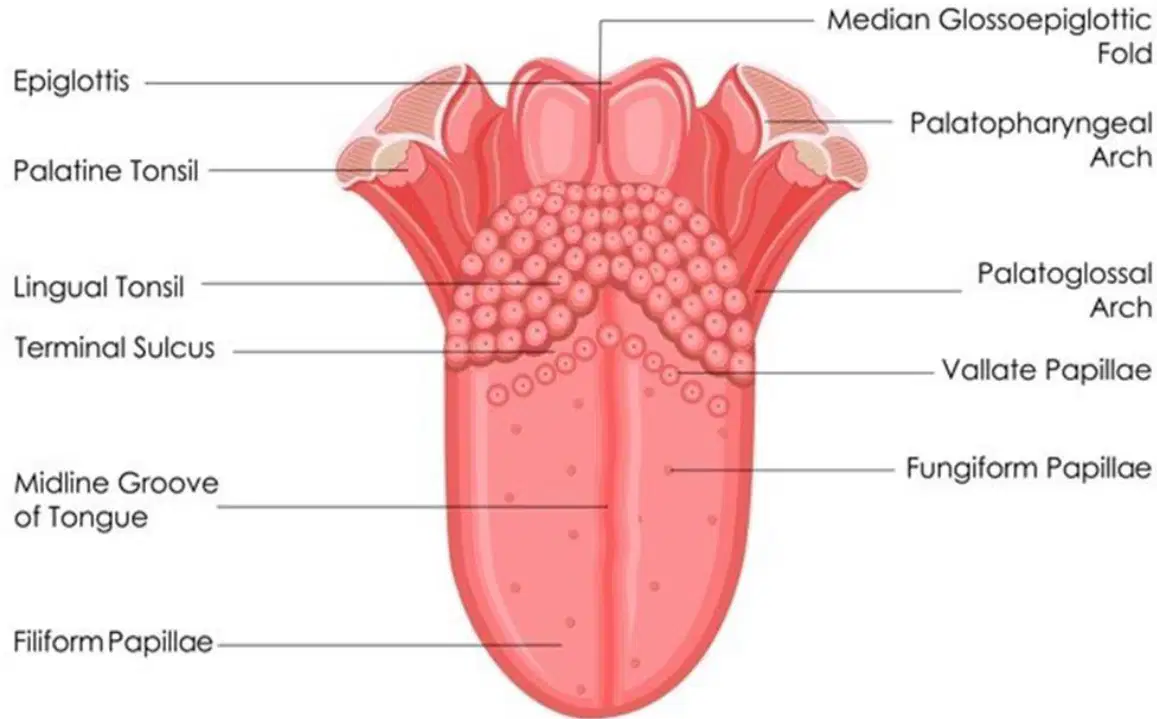
Based on the tongue anatomy diagram, which papillae form a V-shaped row anterior to the terminal sulcus?
Fungiform papillae
Filiform papillae
Vallate papillae
Foliate papillae
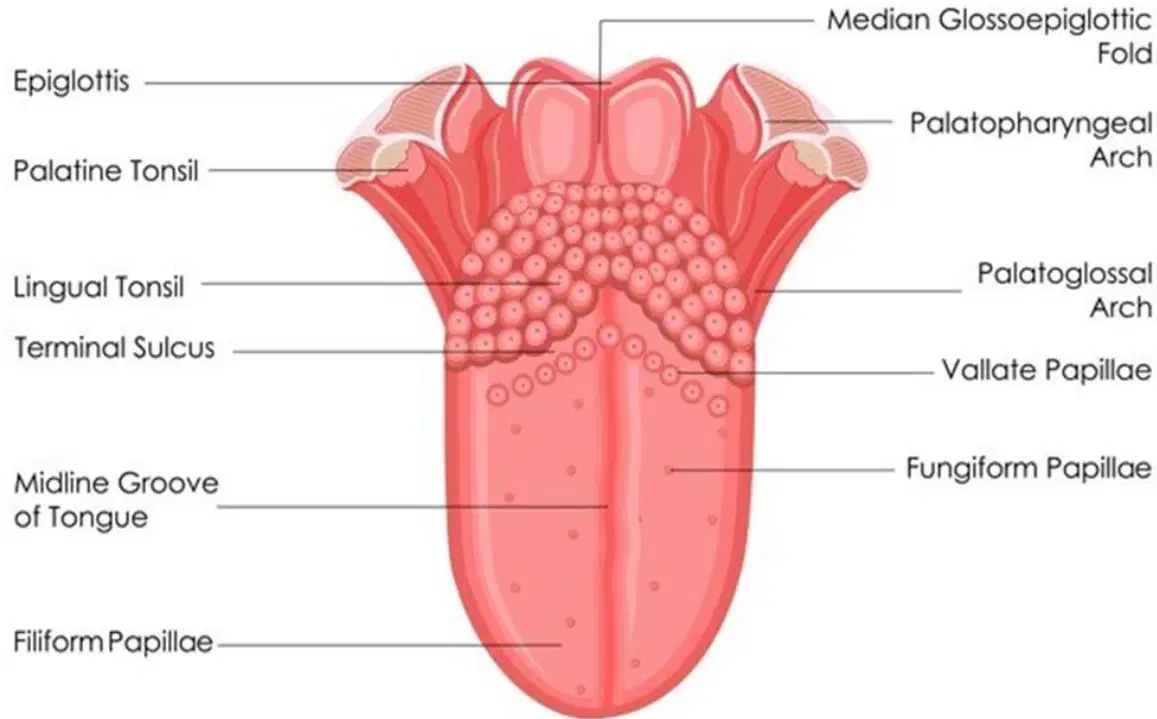
Refer to the tongue diagram. Which structure marks the posterior border of the oral part of the tongue?
Midline groove of tongue
Terminal sulcus
Palatoglossal arch
Palatopharyngeal arch
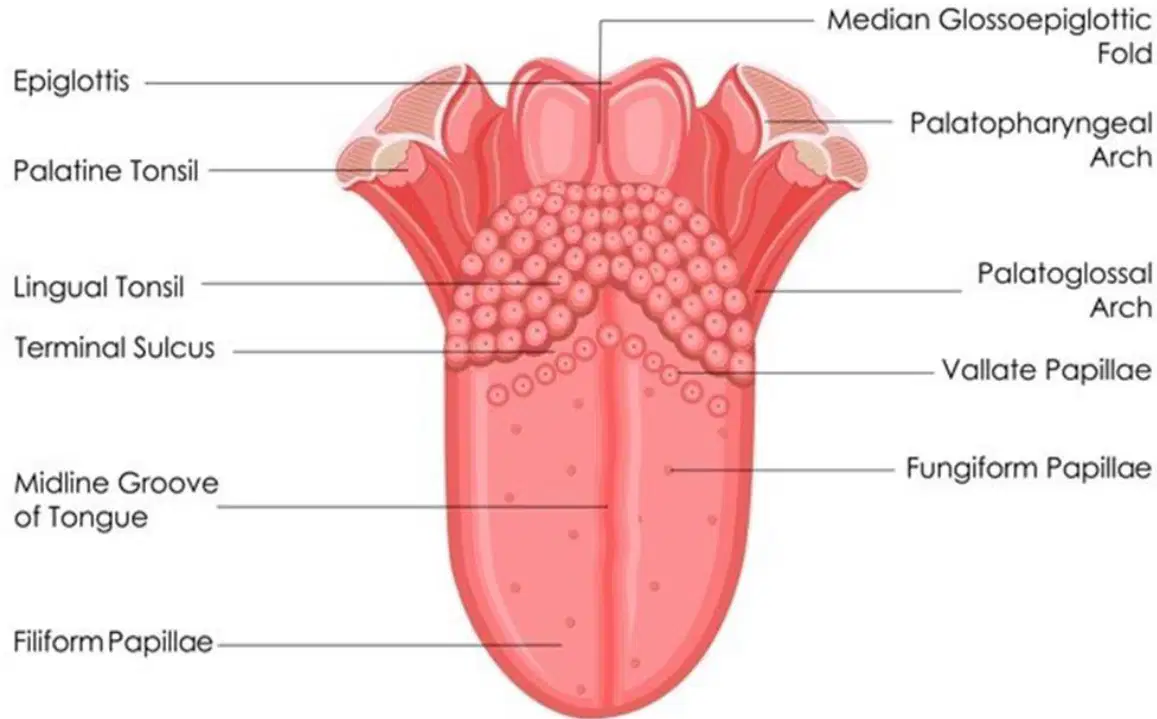
On the tongue diagram, which option correctly pairs an arch with its relative position?
Palatoglossal arch—posterior to the palatopharyngeal arch
Palatopharyngeal arch—anterior to the palatoglossal arch
Palatoglossal arch—anterior to the palatopharyngeal arch
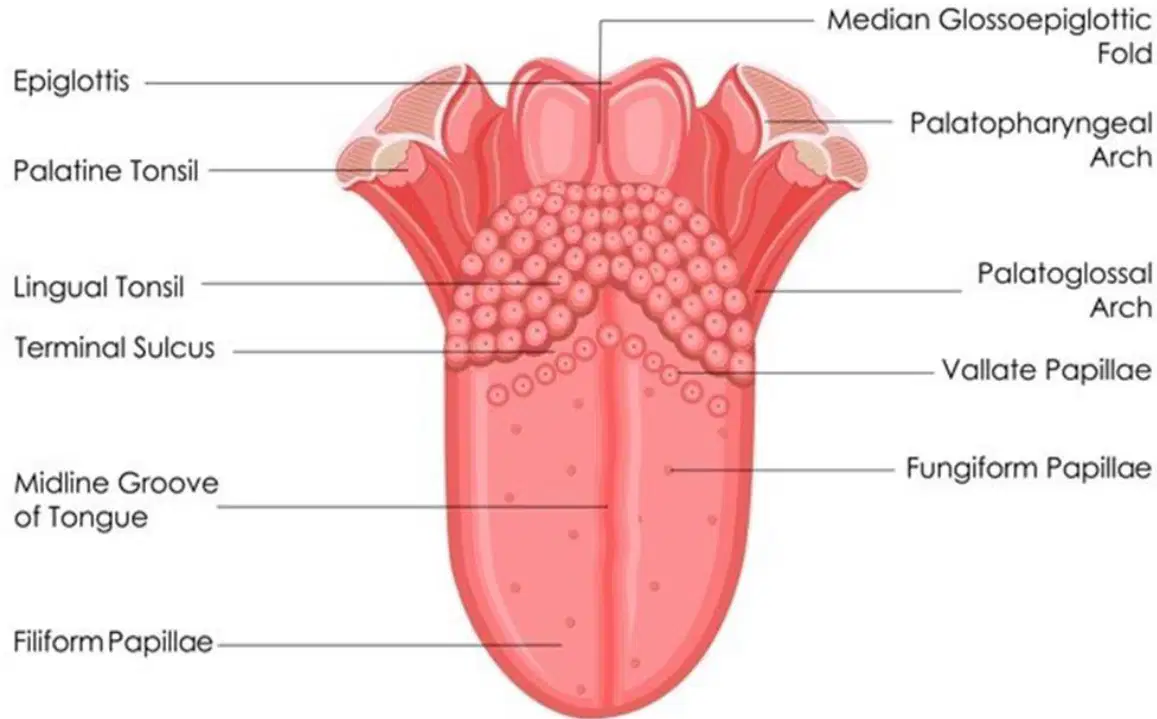
Using the tongue diagram, which set lists structures found on the posterior (pharyngeal) part of the tongue? Select all that apply.
Lingual tonsil
Epiglottis
Vallate papillae
Filiform papillae
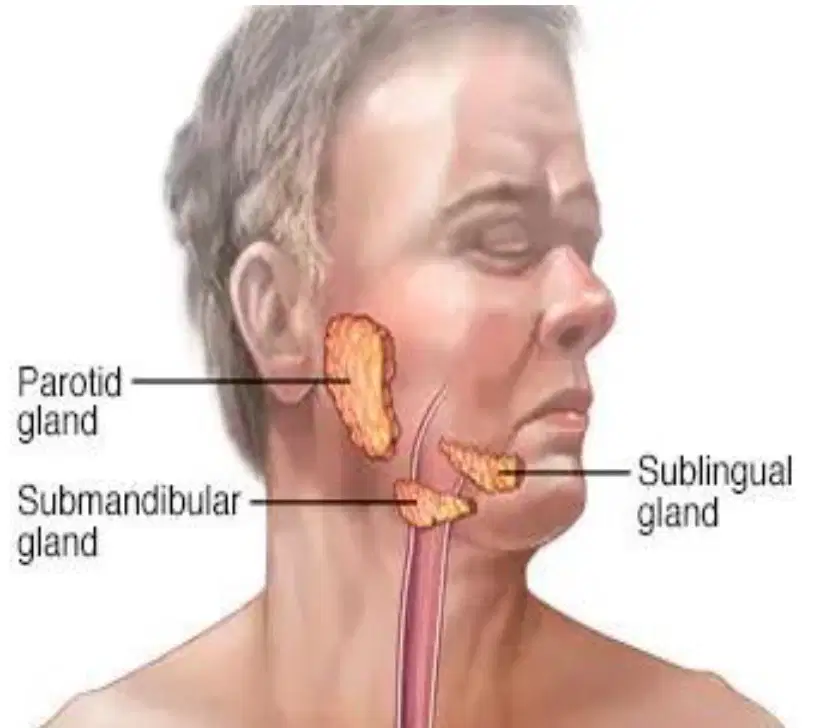
Based on the salivary gland location diagram, which major gland lies superficial and anterior to the ear?
Parotid gland
Submandibular gland
Sublingual gland
Thyroid gland
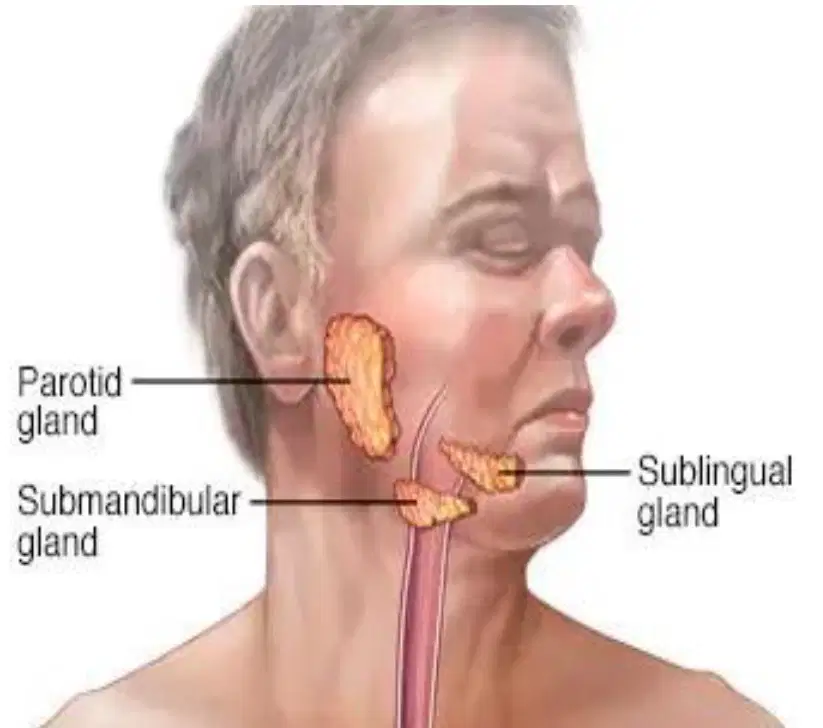
In the salivary gland diagram, which gland is located in the floor of the mouth, deep to the mucosa and anterior to the submandibular gland?
Parotid gland
Sublingual gland
Submandibular gland
Parathyroid gland
According to the list of digestive system functions, which process refers specifically to taking food and liquids into the mouth?
Secretion
Ingestion
Absorption
Defecation
Which statement best describes secretion in the gastrointestinal (GI) tract as presented?
Cells release hormones into the bloodstream to control appetite.
Cells within GI walls and accessory organs secrete about 7 liters daily of water, acid, buffers, and enzymes into the lumen.
Smooth muscle contracts to move chyme along the tract.
The pancreas stores food before digestion begins.
Select all components that are explicitly included in the daily 7-liter GI secretions.
Water
Acid
Buffers
Bile pigments only
Enzymes
In the context provided, what is meant by the lumen of the GI tract?
Outer muscular wall of the tract
Interior space within the tract where secretions are released
Accessory organs adjacent to the tract
Opening at the mouth
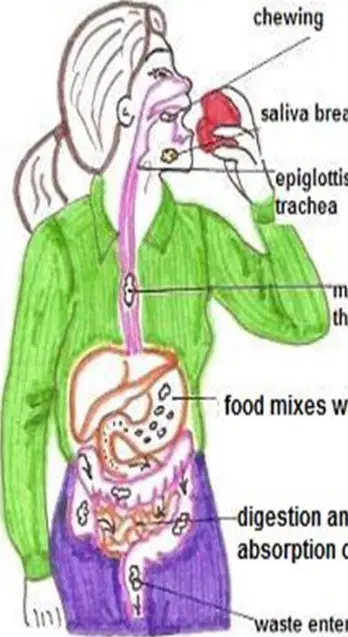
Which pairing correctly matches a function from the list with its brief role in the diagram showing the GI tract?
Ingestion — muscles push the food down the esophagus
Secretion — epiglottis blocks the trachea
Mixing and propulsion — food mixes with acid in the stomach
Defecation — waste enters the colon
Which description best captures mixing and propulsion in the GI tract?
Passive diffusion of nutrients into blood vessels
Alternating contractions and relaxation of smooth muscle that mix food and secretions and move them toward the anus
Continuous secretion of saliva that begins carbohydrate digestion
Voluntary skeletal muscle movement that churns the stomach contents
What term names the GI tract’s capability to mix and move material along its length?
Permeability
Motility
Secretion
Absorption
Which of the following is NOT part of mixing and propulsion as defined?
Alternating smooth muscle contractions and relaxations
Movement of contents toward the anus
Mixing food with secretions
Release of buffers into the lumen
Which sequence best reflects the early functions of the digestive system emphasized in this section?
Absorption → defecation → secretion
Ingestion → secretion → mixing and propulsion
Defecation → ingestion → absorption
Secretion → absorption → ingestion
Based on the daily secretion volume stated, which estimate is closest to the amount of GI secretions produced per week?
About 7 liters
About 21 liters
About 49 liters
About 70 liters
Which option correctly distinguishes ingestion from secretion?
Ingestion adds fluids to the lumen; secretion takes food into the mouth.
Ingestion involves taking food and liquids into the mouth; secretion releases water, acid, buffers, and enzymes into the lumen.
Ingestion mixes food via smooth muscle; secretion propels contents toward the anus.
Ingestion blocks the trachea via the epiglottis; secretion chews food.
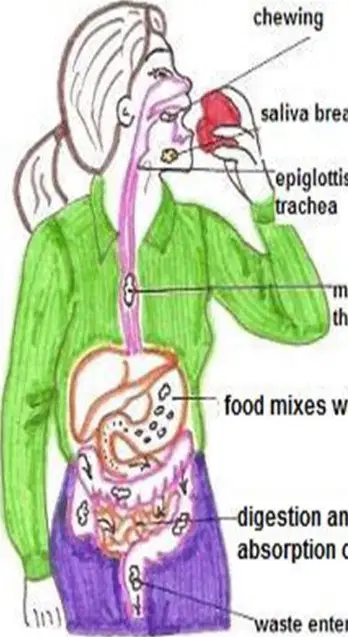
Which statement aligns with the diagram and list of functions regarding the movement of food after swallowing?
Food remains in the mouth until absorption occurs.
Muscles push the food down, and later waste enters the colon.
Epiglottis secretes enzymes that digest proteins.
Chewing propels contents toward the anus.
According to the description of digestion, what is the overall purpose of the mechanical and chemical processes in the digestive system?
To transport nutrients to cells after absorption
To break down ingested food into small molecules
To regulate hunger and satiety signals
To eliminate undigested waste from the body
Which statement best characterizes mechanical digestion as described?
It splits large biomolecules into smaller ones by hydrolysis.
It relies on teeth and smooth muscle activity to cut, grind, and churn food.
It requires enzymes secreted by glands and accessory organs.
It converts nutrients directly into ATP for energy.
Select all processes that are part of mechanical digestion in the sequence provided.
Cutting and grinding food by teeth before swallowing
Churning of food by smooth muscles of the stomach
Hydrolysis of proteins by pepsin
Mixing food thoroughly with digestive enzymes
What outcome of mechanical digestion is emphasized in the passage?
Food molecules become dissolved and thoroughly mixed with digestive enzymes.
All nutrients are absorbed directly without further processing.
Carbohydrates are converted to glycogen in the stomach.
Water and ions are excreted rather than absorbed.
Chemical digestion primarily involves which type of reaction to split large molecules into smaller ones?
Oxidation
Hydrogenation
Hydrolysis
Polymerization
Which categories of biomolecules are explicitly mentioned as being broken down during chemical digestion?
Carbohydrates
Lipids
Proteins
Nucleic acids
Minerals
Which organs or glands are identified as producers of digestive enzymes that catalyze catabolic reactions?
Salivary glands
Stomach
Pancreas
Small intestine
Large intestine
In the context provided, which statement about the role of enzymes in digestion is most accurate?
Enzymes provide mechanical force to churn food.
Enzymes catalyze catabolic reactions that break down food molecules.
Enzymes store energy released from digestion.
Enzymes prevent absorption of vitamins and water.
Which substances are noted as being absorbable without chemical digestion?
Starch and glycogen
Amino acids and fatty acids
Vitamins and ions such as cholesterol and water
Nucleotides and monosaccharides
Which pairing best matches the process to its classification?
Teeth cutting and grinding food — Chemical digestion
Smooth muscle churning in the stomach — Mechanical digestion
Hydrolysis of lipids — Mechanical digestion
Enzyme catalysis by salivary glands — Mechanical digestion
Which statement distinguishes mechanical digestion from chemical digestion based on the text?
Mechanical digestion mixes food with enzymes, while chemical digestion uses muscle contractions to grind food.
Mechanical digestion relies on physical processes like chewing and churning, whereas chemical digestion uses enzyme-catalyzed hydrolysis to split molecules.
Mechanical digestion occurs only in the mouth, while chemical digestion occurs only in the stomach.
Mechanical digestion produces ATP, while chemical digestion produces heat.
Based on the outlined roles, which combination correctly identifies where digestive enzymes originate to drive chemical digestion?
Only the liver and gallbladder
Salivary glands, stomach, pancreas, and small intestine
Exclusively the pancreas
Only the large intestine and rectum
According to the instructional text, what best defines absorption in the digestive system?
Movement of food from the mouth to the stomach
Entrance of ingested and secreted substances, fluid ions, and digestion products into epithelial cells lining the GI tract lumen
Conversion of nutrients into energy within body cells
Elimination of undigested materials through the anus
Which pathway describes what happens to substances after absorption in the GI tract?
They remain in the lumen and are excreted as feces
They pass into blood or lymph and circulate to cells throughout the body
They move directly into the urinary bladder for elimination
They are stored indefinitely in the liver without circulation
Select the items that are specifically mentioned as entering epithelial cells during absorption.
Ingested substances
Secreted substances
Fluid ions
Whole bacteria
Which statement accurately characterizes defecation as described in the material?
It is the entrance of nutrients into epithelial cells lining the GI tract
It is the process by which wastes and indigestible substances leave the body through the anus
It is the transport of absorbed substances into blood or lymph
It is the enzymatic breakdown of macromolecules in the stomach
Which components can be part of the material eliminated during defecation?
Wastes not absorbed during digestion
Indigestible substances
Bacteria and cells sloughed from the GI lining
Absorbed nutrients circulating in the blood
What term is used for the elimination material expelled during defecation?
Chyme
Feces
Bolus
Plasma
Which pair correctly matches a process with its outcome pathway?
Absorption — materials leave through the anus
Absorption — substances enter epithelial cells and then pass into blood or lymph
Defecation — substances are taken into epithelial cells
Defecation — macromolecules are chemically digested
A student claims that all digested materials are absorbed and none are eliminated. Based on the text, which response best addresses this claim?
Correct; digestion guarantees complete absorption
Incorrect; materials not absorbed, along with indigestible substances and sloughed cells, are eliminated through defecation
Partially correct; only vitamins are eliminated
Incorrect; absorbed substances are eliminated immediately as feces
According to the described arrangement, which set lists the GI tract wall layers from deep (closest to the lumen) to superficial?
Serosa → muscularis → submucosa → mucosa
Mucosa → submucosa → muscularis → serosa
Muscularis → mucosa → submucosa → serosa
Submucosa → serosa → muscularis → mucosa
Which statement best characterizes the overall organization of the GI tract wall?
It varies widely between regions with no common pattern.
From the lower esophagus to the anal canal, it shares a basic four-layered arrangement.
Only the stomach and small intestine have a multi-layered wall.
Its layers are arranged from superficial to deep as serosa, muscularis, mucosa, submucosa.
Select the layers that are part of the GI tract wall (multi-select).
Mucosa
Submucosa
Muscularis
Serosa
Periosteum
Which layer is the innermost lining of the GI tract and forms a mucous membrane?
Serosa
Muscularis
Submucosa
Mucosa
Which component of the mucosa is in direct contact with the contents of the GI tract?
Lamina propria (connective tissue)
Epithelium
Muscularis externa
Serosa
The lamina propria mentioned in the mucosa is best described as which tissue type?
Epithelial tissue forming villi
Connective tissue within the mucosa
Skeletal muscle supporting peristalsis
Serous membrane covering the organ
Which statement about the muscularis mucosae is accurate?
It is the thick outer smooth muscle layer responsible for propulsion.
It is a thin layer of smooth muscle within the mucosa.
It is a layer of stratified squamous epithelium.
It is a connective tissue layer deep to the mucosa.
Which sequence correctly identifies the three components of the mucosa as described?
Serosa, muscularis externa, submucosa
Epithelium, lamina propria (connective tissue), muscularis mucosae (smooth muscle)
Muscularis externa, adventitia, epithelium
Submucosa, serosa, lamina propria
Which layer immediately lies external to the mucosa in the GI tract wall?
Serosa
Muscularis
Submucosa
Adventitia
Choose all correct statements about the four-layer arrangement (multi-select).
The mucosa is deepest relative to the lumen.
The serosa is the most superficial layer.
The muscularis lies between the submucosa and serosa.
The submucosa is the outermost layer.
In the context provided, the term 'muscularis' refers to which general position in the wall?
Deep to the mucosa and superficial to the serosa
Superficial to the serosa and deep to the mucosa
Between the submucosa and serosa
The innermost layer in contact with the lumen
Which option best matches the function or identity given for each mucosal component?
Epithelium: directly contacts GI contents
Lamina propria: connective tissue within mucosa
Muscularis mucosae: thick skeletal muscle layer driving peristalsis
Serosa: inner lining mucous membrane
Which layer forms the outer covering of many parts of the GI tract as presented?
Mucosa
Submucosa
Muscularis
Serosa
The statement that the GI tract maintains the same basic four-layered arrangement applies to which span?
From the mouth to the pylorus
From the lower esophagus to the anal canal
Only within the small intestine
From the rectum to the anus
Which description correctly distinguishes the mucosa from the submucosa?
The mucosa is a mucous membrane with epithelium, lamina propria, and muscularis mucosae; the submucosa lies external to it.
The mucosa consists of connective tissue only; the submucosa is epithelial.
The mucosa is the outermost serous covering; the submucosa is the innermost lining.
The mucosa contains skeletal muscle; the submucosa is smooth muscle.

