
 Worksheets
Cell Cycle and Mitosis Worksheet (Grade 9)
Total questions: 37
Worksheet time: 19mins
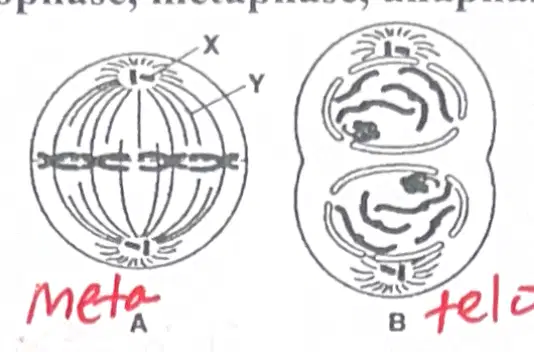
Identify the mitosis phase shown in image A. Choose one: prophase, metaphase, anaphase, or telophase.
Prophase
Metaphase
Anaphase
Telophase
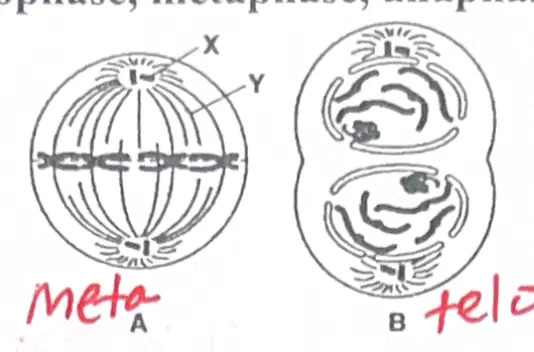
Identify the mitosis phase shown in image B. Choose one: prophase, metaphase, anaphase, or telophase.
Prophase
Metaphase
Anaphase
Telophase
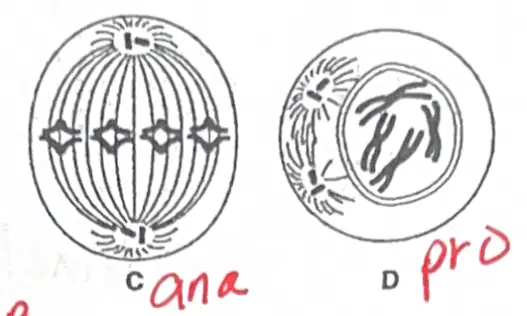
Identify the mitosis phase shown in image C. Choose one: prophase, metaphase, anaphase, or telophase.
Prophase
Metaphase
Anaphase
Telophase
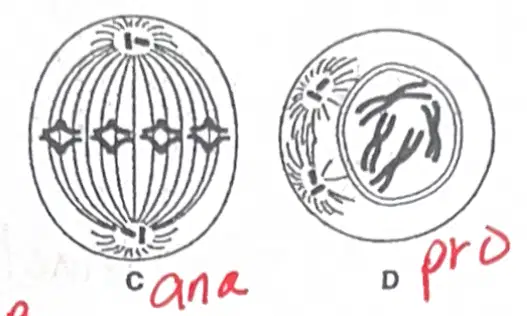
Identify the mitosis phase shown in image D. Choose one: prophase, metaphase, anaphase, or telophase.
Prophase
Metaphase
Anaphase
Telophase
Put the phases of mitosis in order from start to finish.
Prophase → Metaphase → Anaphase → Telophase
Metaphase → Prophase → Telophase → Anaphase
Anaphase → Telophase → Prophase → Metaphase
Telophase → Anaphase → Metaphase → Prophase
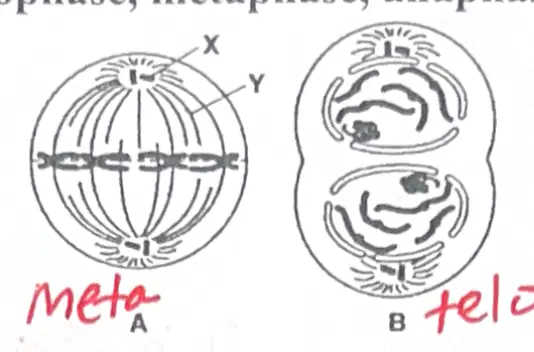
In the top-left cell diagram, what is structure Y?
Spindle fibers
Centromere
Centriole
Chromatid
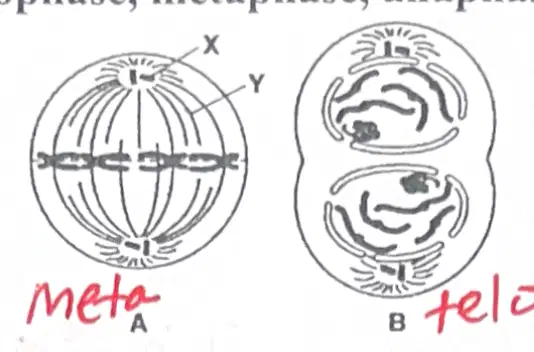
In the top-left cell diagram, what is structure X?
Centriole
Chromosome
Nucleolus
Cell plate
What is the longest phase of the cell cycle?
Interphase
Metaphase
Anaphase
Telophase
Select the phase that should be drawn as a cell with an intact nucleus, uncondensed chromatin, and DNA replication occurring.
Interphase
Prophase
Metaphase
Anaphase
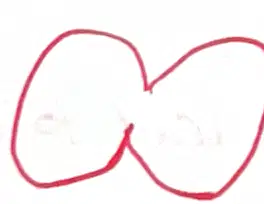
How is cytokinesis different in animal cells versus plant cells?
Animals pinch the membrane; plants form a cell plate
Animals form a cell plate; plants pinch the membrane
Both form a cell plate
Both pinch the membrane
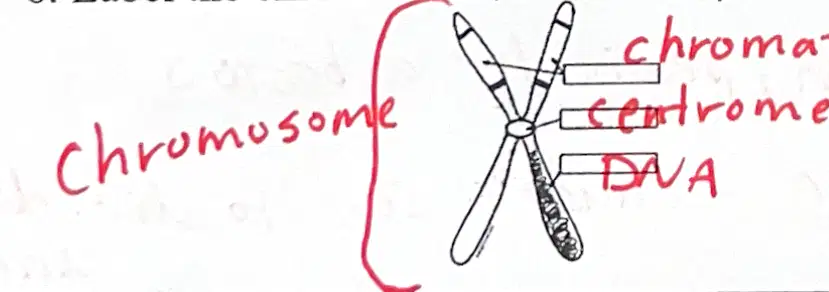
Which term names the whole X-shaped structure formed by two sister chromatids?
Chromosome
Centromere
Chromatid
DNA
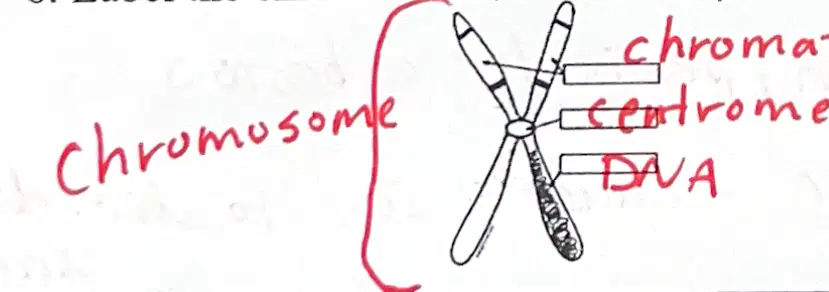
Which term names the region that joins sister chromatids together?
Centromere
Chromatid
Chromosome
DNA
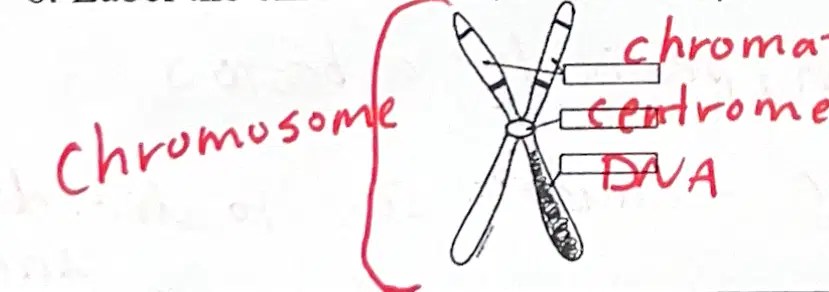
Which term names one arm of the X-shaped structure (a single copy in a pair)?
Chromatid
Chromosome
DNA
Centromere
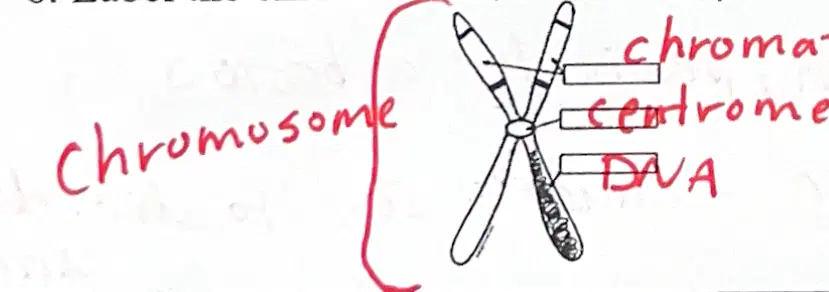
Which term names the genetic material that composes chromosomes?
DNA
Centromere
Spindle fiber
Cell plate
Match the function to the phase: chromosomes gather at the ends of the cell and the nuclear membrane and nucleolus return.
Prophase
Metaphase
Anaphase
Telophase
Match the function to the phase: chromosomes line up in the middle of the cell.
Prophase
Metaphase
Anaphase
Telophase
Match the function to the phase: chromosomes separate and move to opposite ends of the cell.
Prophase
Metaphase
Anaphase
Telophase
Match the function to the phase: growth occurs and chromosomes replicate.
Interphase
Prophase
Metaphase
Anaphase
Identify the phase described: the nuclear membrane and nucleus disappear, chromatin condenses to form chromosomes, centrioles separate, and spindle fibers form.
Prophase
Metaphase
Anaphase
Telophase
Name the process that completely divides the cells at the end of the cell cycle.
Cytokinesis
Mitosis
Meiosis
Apoptosis
Name the process that divides the nucleus.
Mitosis
Cytokinesis
Binary fission
Apoptosis
Cells that have a full set of chromosomes are called what?
Diploid
Haploid
Polyploid
Aneuploid
How many chromosomes do humans have in their body cells?
46
23
44
48
Which are examples of diploid cells? Select all that apply.
Skin cells
Stomach cells
Liver cells
Sperm cells
At the end of mitosis, how many cells are produced and how alike are they?
Two identical cells
Two different cells
Four identical cells
Four different cells
If a cell has 46 chromosomes, how many chromosomes will each new cell have after mitosis?
46
23
92
44
Where are chromosomes found in the cell?
Nucleus
Cytoplasm
Ribosome
Golgi apparatus
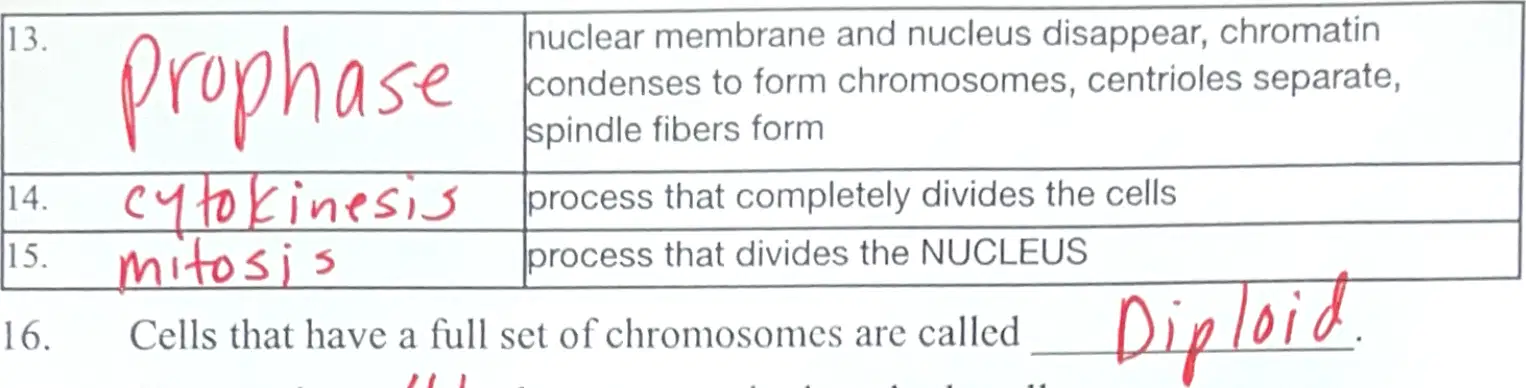
How does the chromosome number change throughout the cell cycle (IPMATC), according to the provided graph?
It doubles before mitosis and returns to the original number after cytokinesis.
It stays constant and never changes.
It decreases by half during interphase and then doubles in telophase.
It quadruples during metaphase and remains elevated.
What is a checkpoint in the cell cycle?
A control that verifies processes are proceeding correctly before the cell advances
A location where chromosomes attach to spindle fibers
A phase when DNA is replicated
A time when cells permanently stop dividing
What is apoptosis?
Programmed cell death
Uncontrolled cell division
DNA replication
Spindle formation
Why do cells become cancer cells?
Mutations or changes in DNA/genes lead to loss of control over division
Normal checkpoint activity increases
Spindle fibers become longer
Centromeres strengthen
Why do errors in the cell cycle occur?
Exposure to carcinogens damages DNA
The cell is in interphase
Cytokinesis starts too early
Chromosomes are made of RNA
Which are examples of carcinogens? Select all that apply.
Smoking
UV radiation
Pesticides
Asbestos
How does HPV cause cancer?
It disrupts the cell cycle, causing cells to divide uncontrollably
It increases oxygen in the cytoplasm
It strengthens nuclear membranes
It decreases spindle fiber formation
Which are treatments for cancer? Select at least three.
Chemotherapy
Radiation
Surgical tissue removal
Antibiotics
What is a stem cell?
A cell that can develop into other specialized cell types
A cell that only performs photosynthesis
A cell that cannot divide
A cell that forms spindle fibers
Define cell differentiation.
The process by which a cell becomes different types of specialized cells
The separation of chromosomes during mitosis
The replication of DNA during interphase
The movement of vesicles through the Golgi apparatus

