
 Worksheets
HHA Ch 9
Total questions: 100
Worksheet time: 50mins
List eleven ways diseases are carried.
Through air, water, food, insects, direct contact, animals, contaminated objects, blood, sexual contact, mother to child, and droplets.
Through only air and water.
Only by direct contact and insects.
Only through food and contaminated objects.
Standard precautions are measures used to prevent the spread of infection. When are standard precautions used?
They are used with all patients at all times.
They are only used with patients known to have infections.
They are only used during surgery.
They are only used in emergency situations.
Describe the three types of transmission-based precautions and when used.
Contact, Droplet, and Airborne precautions are used for patients with infections that can be spread by direct contact, respiratory droplets, or airborne particles.
Standard, Universal, and Isolation precautions are used for all patients regardless of infection status.
Hand hygiene, PPE, and environmental cleaning are the three types of transmission-based precautions used for all hospital procedures.
Contact, Droplet, and Protective precautions are used for patients with non-infectious diseases.
Which of the following lists five requirements of OSHA and CDC that affect home health aides?
Use of personal protective equipment, proper hand hygiene, safe disposal of sharps, reporting exposures, and maintaining clean environments.
Providing medication, cooking meals, driving patients, and shopping for groceries.
Scheduling appointments, managing finances, performing physical therapy, and gardening.
Administering vaccines, diagnosing illnesses, prescribing medication, and performing surgery.
Which of the following lists both signs/symptoms and appropriate nursing care for a client with tuberculosis?
Persistent cough, night sweats, weight loss; provide respiratory isolation, administer medications, monitor for side effects
Fever, rash, joint pain; encourage high-protein diet, restrict fluids, provide bed rest
Chest pain, blurred vision, nausea; administer painkillers, encourage ambulation, restrict visitors
Shortness of breath, itchy skin, diarrhea; provide oxygen therapy, encourage exercise, limit fluid intake
Three types of hepatitis and their differences are:
Hepatitis A, B, and C; differ in transmission, severity, and chronicity.
Hepatitis A, D, and E; all are transmitted only through blood.
Hepatitis B, C, and E; all cause only mild symptoms.
Hepatitis A, B, and D; all are prevented by the same vaccine.
Discuss how a person can become infected with HIV.
By sharing needles with an infected person
By shaking hands with an infected person
By breathing the same air as an infected person
By sharing food with an infected person
The three different stages of HIV/AIDS are:
Acute infection, clinical latency, AIDS
Primary infection, secondary infection, recovery
Early stage, middle stage, late stage
Initial phase, chronic phase, terminal phase
Symptom-specific nursing care for clients with AIDS includes which of the following interventions?
Providing pain management, infection control, and nutritional support
Administering only antiviral medications
Encouraging complete isolation from family and friends
Focusing solely on psychological counseling
Name the single most effective precaution to prevent the spread of infections.
Hand washing
Wearing gloves
Using face masks
Taking antibiotics
Which of the following lists five examples of when aides must wash their hands?
Before and after patient contact, after using the restroom, after removing gloves, before eating, after handling contaminated items.
Only after using the restroom, before eating, and after removing gloves.
Before patient contact, after eating, and after handling clean items.
Only after patient contact and before eating.
Explain the purpose of each procedure: Handwashing, Gloving, Putting On and Removing Personal Protective Equipment, Collecting Specimen from Client on Transmission-Based Precautions.
To prevent the spread of infection and protect both healthcare workers and clients.
To improve the comfort of healthcare workers during procedures.
To speed up the process of patient care.
To reduce the need for medical documentation.
What is an infection?
An infection is the invasion of body tissue by disease-producing organisms.
An infection is the process of healing wounds.
An infection is the growth of healthy cells in the body.
An infection is the removal of toxins from the body.
What is inflammation?
Inflammation is a response to injury or infection, characterized by swelling, redness, pain, and warmth.
Inflammation is a type of virus that spreads through the air.
Inflammation is a process of cell division in the body.
Inflammation is a hormone released during sleep.
What is a susceptible host?
A susceptible host is a person who is at risk of infection due to weakened immune system or other factors.
A susceptible host is a type of bacteria that causes disease.
A susceptible host is a medical instrument used in surgery.
A susceptible host is a vaccine that prevents infection.
What is a nosocomial infection?
A nosocomial infection is an infection acquired in a hospital.
A nosocomial infection is an infection acquired from contaminated food.
A nosocomial infection is an infection acquired from animals.
A nosocomial infection is an infection acquired at home.
What is the first step in the chain of infection?
The first step is that there is a source such as a pathogen or germ.
The first step is that the host develops symptoms.
The first step is that the infection is treated with antibiotics.
The first step is that the immune system responds.
What is a reservoir in the chain of infection?
A reservoir is a place where the germ can live and thrive.
A reservoir is a type of disinfectant used to kill germs.
A reservoir is the process of transmitting germs from one person to another.
A reservoir is a symptom caused by an infection.
What are microorganisms?
Microorganisms are so small that they can be seen only under a high-powered microscope.
Microorganisms are large organisms visible to the naked eye.
Microorganisms are only found in plants.
Microorganisms are animals that live in water.
What are microorganisms that are capable of causing disease called?
Germs or pathogens
Bacteria
Viruses
Fungi
The time between the entry of germs into the body and the appearance of the first sign of disease is called the ________ period.
incubation
recovery
infectious
convalescent
Which of the following is a type of microorganism that multiplies rapidly?
Bacteria
Protozoa
Virus
Fungi
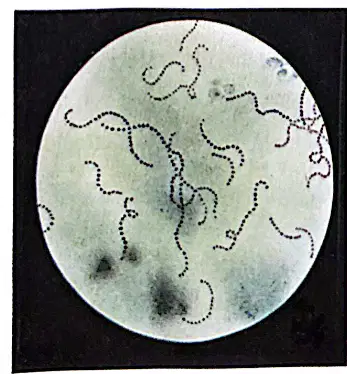
Match the following microorganisms with their images:
Figure 9-1
Streptococcus hemolyticus
Figure 9-2
Staphylococcus aureus
Figure 9-3
Neisseria gonorrhoeae
Figure 9-4
Clostridium tetani
Viruses can live only by feeding on living cells.
True
False
Name two diseases caused by viruses.
Flu, colds, HIV, hepatitis (any two)
Malaria, typhoid
Tuberculosis, cholera
Scurvy, rickets
Which group of organisms includes yeast and molds that live normally in the body?
Fungi
Bacteria
Viruses
Protozoa
What is the name of the microorganism that can cause disease and lives on lice, ticks, fleas, mites, and other insects?
Rickettsiae
Bacillus
Streptococcus
Amoeba

Match the following diseases with their mode of transmission:
Airborne (float on air currents)
Airborne (float on air currents)
Animal Carried
Animal Carried
Insect or Vector Carried
Insect or Vector Carried
Direct Contact
Direct Contact
Food Carried
Food Carried
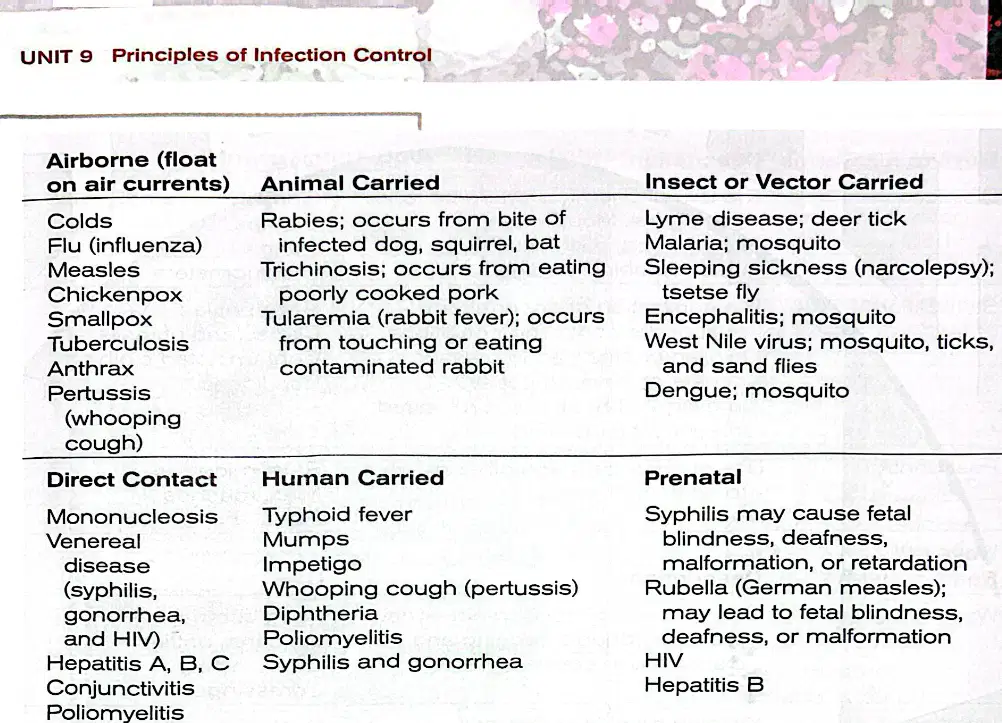
Which of the following diseases is carried by insects or vectors?
Malaria
Typhoid fever
Botulism
Influenza
Fill in the blank: Articles that are free of all living organisms are called _______.
sterile
contaminated
infected
pathogenic

Tuberculosis is an airborne disease.
True
False

Which of the following is NOT a method by which diseases are carried?
Airborne
Water Carried
Soil Carried
Magnetic Carried
Fill in the blank: The process of _______ completely destroys microorganisms on objects.
sterilization
disinfection
pasteurization
sanitization

Which disease is carried by water?
Typhoid fever
Tetanus
Influenza
Rabies
Disinfection is the process of completely destroying microorganisms on objects.
True
False
Match the following terms with their definitions:
Contaminated
Possibility of the presence of germs (pathogens) on an article
Sterile
Free of all living organisms
Aseptic techniques
Used to prevent the spread of germs
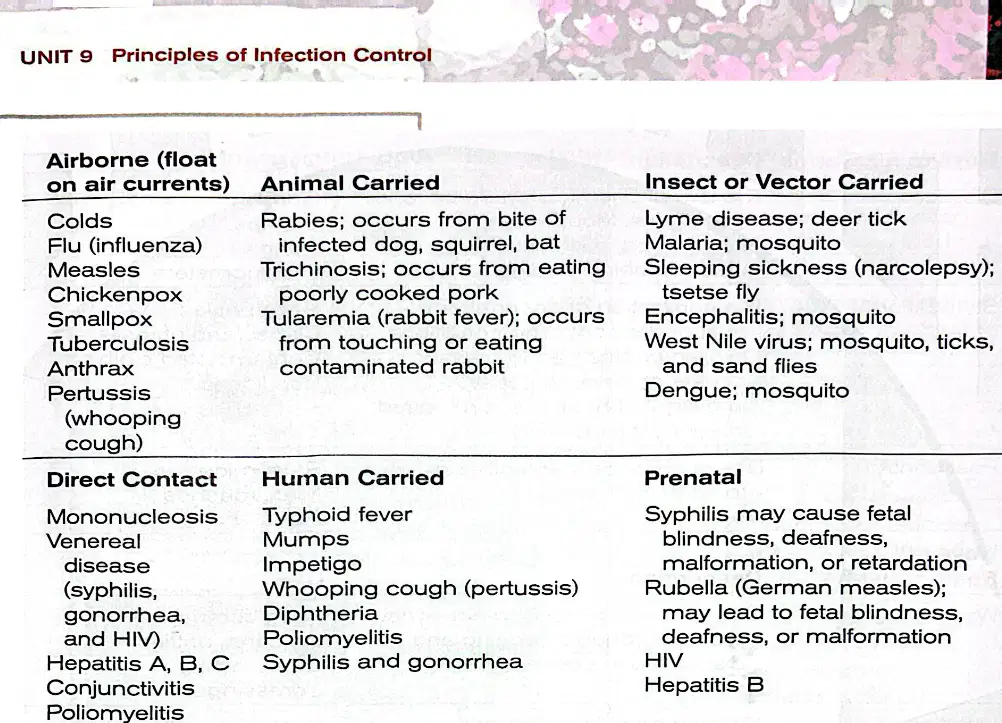
Which of the following diseases is carried by direct contact?
Mononucleosis
Sleeping sickness
Botulism
Norwalk virus
What is the use of disinfection in preventing the spread of infectious diseases?
Household items, Clothes, Hands, Thermometers
Only food items
Only water sources
Only outdoor surfaces
Only air conditioning units
Which method involves the application of dry or steam heat under controlled conditions to kill germs?
Sterilization
Pasteurization
Disinfection
Filtration
Pest control is used to rid areas of pests. Which of the following are targeted by pest control?
Rats, mice
Flies, roaches
Fleas, mosquitos
All of the above
What items should be disposed of daily to prevent the spread of germs?
Food scraps, Tin cans, bottles, Contaminated dressings
Clean towels, Unused soap, Sealed water bottles
Fresh fruits, Unopened snacks, Clean utensils
Newspapers, Magazines, Books
What items should be restricted to prevent the spread of germs?
Client's mobility, Contaminated dishes, Contaminated linen, Body discharges, Personal and household items
Only personal items
Only contaminated linen
Only body discharges
Only contaminated dishes
What is the purpose of using a damp cloth for dusting and mopping in infection control?
To remove germs and dust from surfaces and prevent raising germs into the air where they can be spread easier.
To make the floor shiny and slippery.
To add fragrance to the room.
To save water during cleaning.
Match the following methods to their uses:
Disinfection
Household items, Clothes, Hands, Thermometers
Sterilization
Baby bottles, Dishes and utensils, Contaminated clothing, Bed linens
Pest control
Rats, mice, Flies, roaches, Fleas, mosquitos
Which of the following are common practices to control the spread of illness?
Handwashing
Bathing, brushing teeth, shampooing hair
Both A and B
None of the above

Which disease enters the body through mouth/intestinal tract and leaves through feces?
Hepatitis A
Tuberculosis
Malaria
Chickenpox
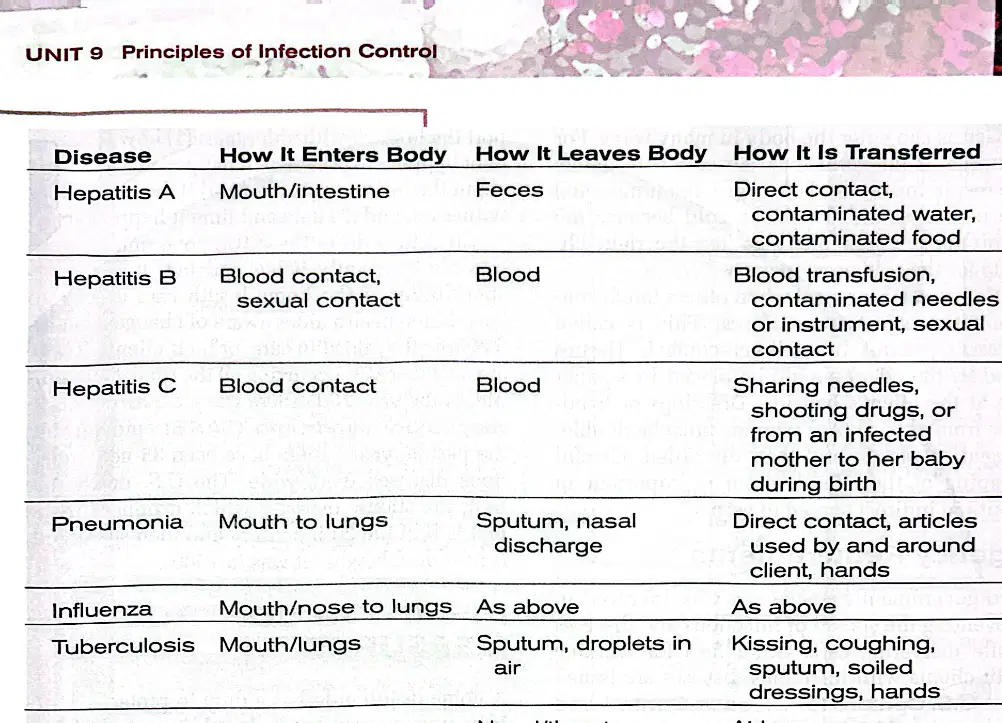
How is Hepatitis B transferred?
Direct contact, contaminated water, contaminated food
Blood transfusion, contaminated needles or instrument, sexual contact
Airborne, transplacentally
Kissing, coughing, sputum, soiled dressings, hands
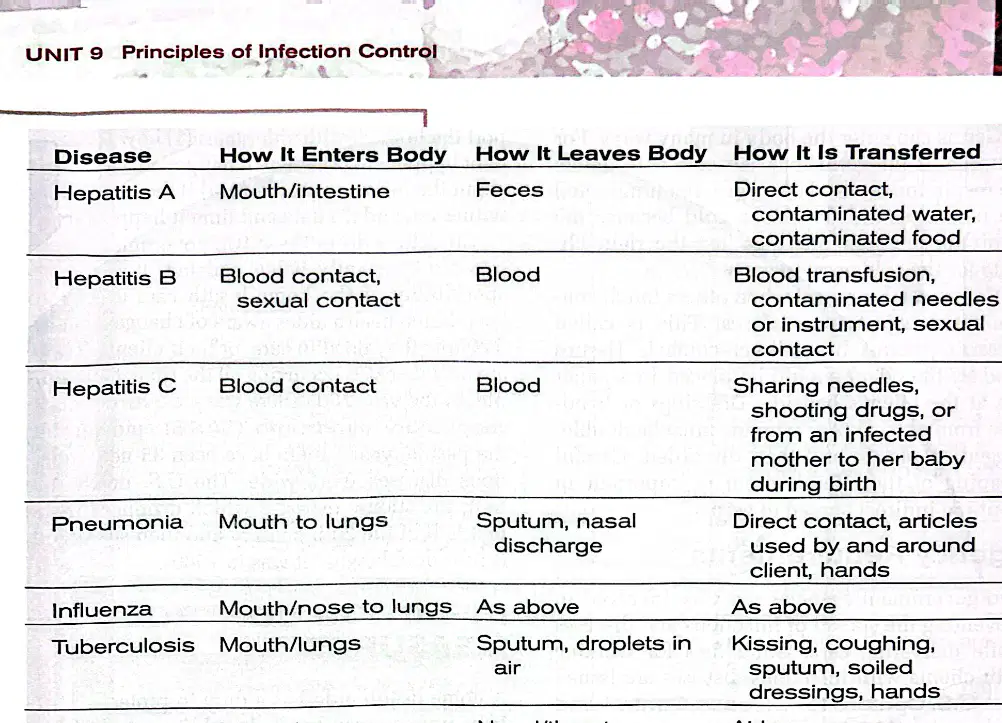
Which disease is transferred by sharing needles, shooting drugs, or from an infected mother to her baby during birth?
Hepatitis C
Diabetes
Asthma
Arthritis
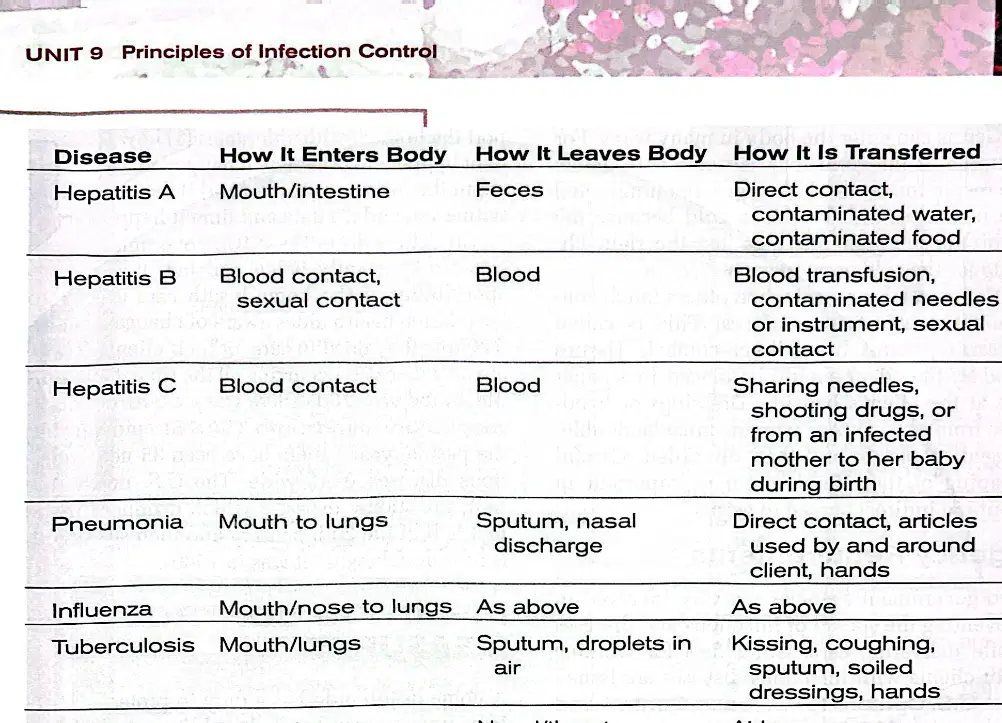
Pneumonia enters the body through the mouth to lungs. How does it leave the body?
Sputum, nasal discharge
Through sweat
Through urine
Through tears

Influenza is transferred in the same way as Pneumonia.
True
False
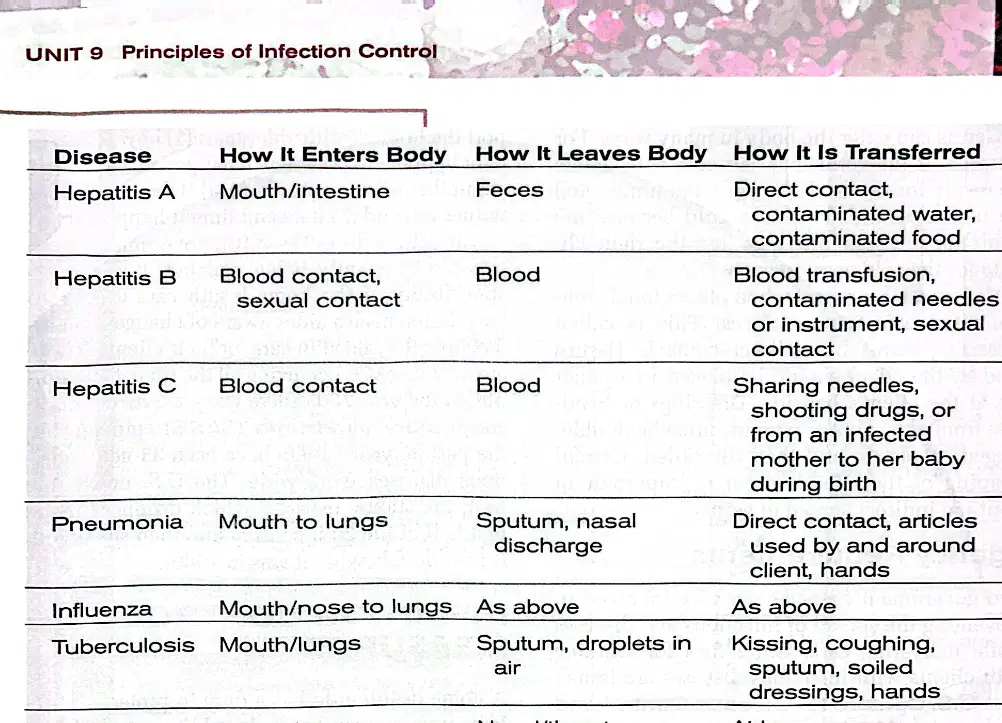
Which disease is transferred by kissing, coughing, sputum, soiled dressings, and hands?
Tuberculosis
Diabetes
Hypertension
Arthritis

How is rubella (German measles) transferred?
Airborne, transplacentally (through the placenta)
By contaminated water
By direct contact with animals
Through insect bites

What type of body discharges does it leave the body through?
Body discharges, lesions
Sweat and tears
Saliva and urine
Blood and mucus
Hair and nails
Syphilis can be transferred by direct contact, kissing, and sexual intercourse.
True
False
HIV can be transferred by sexual intercourse (anal, oral, and vaginal), needles and syringes, and transplacentally.
True
False
Name one hygiene practice that helps prevent the spread of germs.
Changing clothing regularly
Sharing towels with others
Avoiding handwashing
Not covering mouth when sneezing
Why is it important to cover your nose when coughing or sneezing?
To prevent the spread of germs
To keep your hands warm
To avoid making noise
To look polite
When illness is present, why must added care be taken to prevent the spread of germs?
An ill person's body is producing germs and is weak, making it harder to resist other germs.
Because germs only spread when people are healthy.
Because germs cannot survive in a sick person's body.
Because illness makes germs less dangerous.
Germs can enter the body in many ways. For example, if the germ that causes a cold enters the respiratory system (the nose, the lungs, etc.), the person would develop a cold because the respiratory system provides just the right climate for the cold germ to grow.
True
False
Careful cleaning of the client’s room is important in stopping indirect spread of germs.
True
False
Which two government agencies are very involved in preventing the spread of infections and diseases while delivering care?
U.S. Centers for Disease Control and Prevention (CDC) and Occupational Safety and Health Administration (OSHA)
World Health Organization (WHO) and Red Cross
Food and Drug Administration (FDA) and Environmental Protection Agency (EPA)
National Institutes of Health (NIH) and American Medical Association (AMA)
Fill in the blank: The employer must provide the home health aide with training on working with protective care equipment (e.g., ________, goggles, mask).
gloves
aprons
shoes
hats
Fill in the blank: The employer must provide immunization against ________ B with no cost to the home health aide.
hepatitis
influenza
measles
tuberculosis
Fill in the blank: The employer must provide ________ testing yearly with no cost to the home health aide.
tuberculosis
diabetes
cholesterol
vision
Fill in the blank: The home health aide is required to fill out an ________ report if accidentally pricked by a contaminated needle or sharp instrument.
incident
inventory
expense
attendance
Which of the following is NOT a situation when a home health aide should wash their hands?
After using the bathroom
Before preparing food
After reading a book
After handling soiled items such as linens, clothing, or garbage
Fill in the blank: Hands should be washed before and after each ________ contact.
client
meal
shift
procedure
Fill in the blank: Hands should be washed after blowing the nose or ________.
sneezing
reading
sleeping
walking
Fill in the blank: Hands should be washed after contact with items contaminated with blood, feces, or other ________ fluids.
body
metal
plastic
wood
What should you do after touching blood, body fluids, secretions, excretions, and contaminated items according to the standard precautions for infection control?
Wash your hands with plain soap.
Wear gloves for the rest of the day.
Rinse your hands with water only.
Clean your hands with a dry towel.

When should clean gloves be put on according to the standard precautions for infection control?
After touching noncontaminated items
Just before touching mucous membranes and nonintact skin
After removing a gown
After washing hands
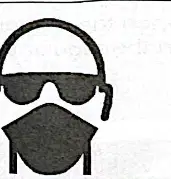
According to standard precautions for infection control, you should wear a mask and eye protection or face shield during procedures that are likely to generate splashes or sprays of blood, body fluids, secretions, or excretions.
True
False
What is the purpose of wearing a gown during procedures that are likely to generate splashes or sprays of blood, body fluids, secretions, or excretions according to standard precautions for infection control?
To protect skin and prevent soiling of clothing.
To improve visibility during procedures.
To identify the healthcare worker's role.
To provide comfort to the patient.
How should used client care equipment soiled with blood, body fluids, secretions, or excretions be handled according to standard precautions for infection control?
In a manner that prevents skin and mucous membrane exposures and contamination of clothing.
By rinsing with water only before reuse.
By storing in a clean area without cleaning.
By wiping with a dry cloth and reusing immediately.
According to standard precautions for infection control, what should you do if blood gets on the floor or other surfaces?
Wash the area with a solution of 1 part bleach to 10 parts water.
Wipe the area with dry paper towels only.
Clean the area with plain water.
Cover the area with a cloth and wait for it to dry.
According to the passage, what is the most important procedure involved in controlling the spread of disease? Fill in the blank: The aide should keep in mind that ______ is the most important procedure involved in controlling the spread of disease.
handwashing
wearing jewelry
using scented lotions
keeping long nails
Which of the following are considered standard precautions to prevent the spread of infection?
Handwashing
Use of personal protective equipment (PPE)
Environmental care
All of the above
Fill in the blank: Standard precautions must be used at ______ for all clients to prevent the spread of infection.
all times
some times
night only
during emergencies
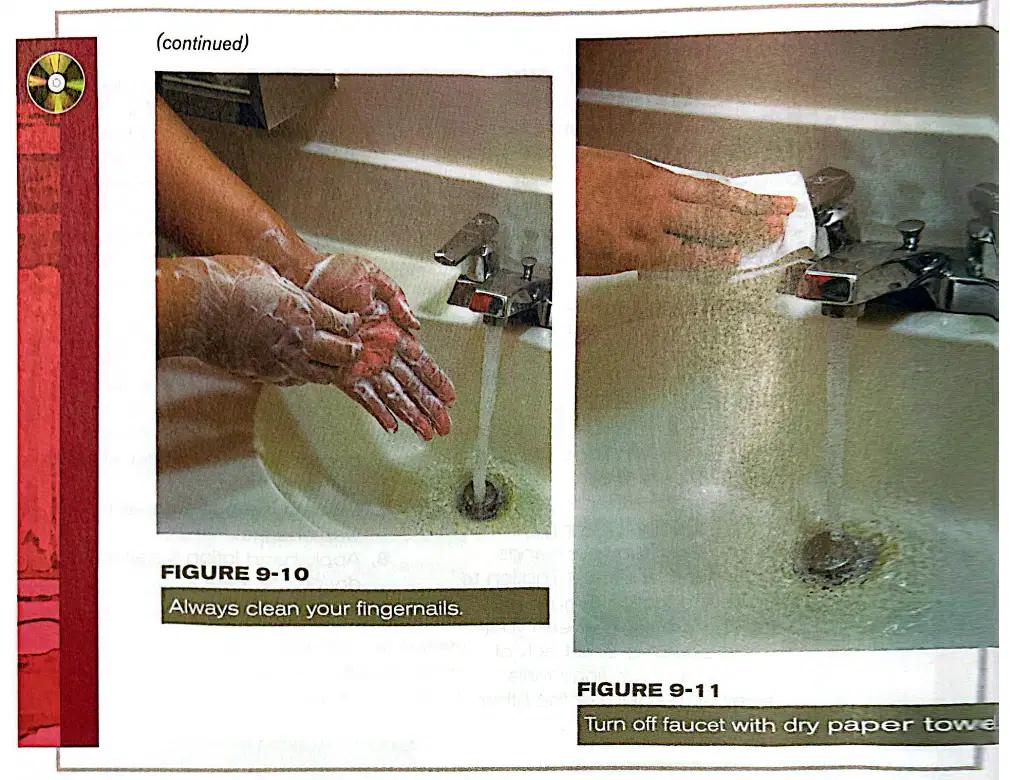
What should you use to turn off the faucet after washing your hands, according to Figure 9-11?
Bare hands
Dry paper towel
Wet cloth
Elbow
Transmission-based precautions are taken in addition to standard precautions when the pathogen causing the infection is highly contagious.
True
False
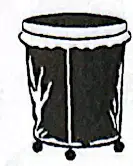
What should be used to discard soiled linens that are contaminated with blood, body fluids, secretions, or excretions?
Regular trash can
Large plastic bag
Biohazard container
Laundry basket
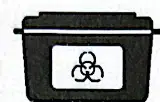
What is the correct procedure for disposing of used needles after a medical procedure?
Throw in regular trash
Place in a puncture-resistant sharps container
Bend or break needles before disposal
Wash and reuse needles
Fill in the blank: The second type of extra precautions used when caring for a client with an infectious disease such as influenza is called ________ precautions.
droplet
airborne
contact
isolation
Which of the following is NOT a special measure to be taken for contact precautions?
Wear gloves at all times
Wash hands with antimicrobial soap
Take special care when disposing of equipment
Ignore gown or apron when entering room
Fill in the blank: Diseases such as conjunctivitis, impetigo, and staphylococcal wound infection are highly ________.
contagious
hereditary
benign
nutritious
Regular soap is effective in removing VRE from hands.
True
False
What does MRSA stand for?
Methicillin-resistant Staphylococcus aureus
Multi-resistant Staphylococcus aureus
Methicillin-reactive Staphylococcus aureus
Methicillin-resistant Streptococcus aureus
Fill in the blank: Gloves should be worn when caring for clients with ________ to prevent the spread of infection.
VRE
Diabetes
Hypertension
Asthma
What is the main purpose of wearing gloves according to the procedure described in the worksheet?
To prevent the spread of infections.
To keep hands warm during work.
To improve grip on slippery objects.
To protect hands from chemicals.
Why is it important to use the correct size gloves?
If the glove is too small, it will break or tear easily and if the glove is too large, germs can enter easily.
It makes your hands look bigger.
It helps you work faster.
It makes the gloves last forever.
Which material is most commonly used for gloves today due to latex allergies?
Vinyl
Latex
Nitrile
Polyethylene
If a home health aide is allergic to both latex and vinyl, what type of gloves can be used?
Hypoallergenic gloves
Latex gloves
Vinyl gloves
Powdered gloves
Arrange the steps for putting on gloves in the correct order:
Interlace your fingers to make the gloves comfortable and adjust the top of the gloves to stay flat.
Wash your hands.
With your dominant hand pull out one glove and slide it onto your other hand.
With the gloved hand, pull out another glove and slide your dominant hand into it.
Which of the following is the first step in the removal of contaminated gloves?
Wash your hands
Use your dominant hand to grasp the opposite glove on the palm side, about 1 inch below the wrist
Drop both soiled gloves together into waste receptacle
Pull the glove down and off so that it is removed inside out
Gloves should be worn for most personal care procedures to maintain aseptic conditions.
True
False
What is one purpose of wearing personal protective equipment according to the procedure?
To look professional
To prevent contaminating the aide's clothing
To make work easier
To prevent fatigue
Fill in the blank: The first piece of equipment to apply is the _______.
mask
gloves
gown
cap
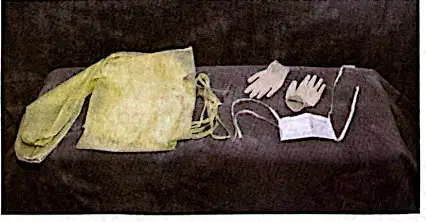
Fill in the blank: Protective barriers used in standard precautions include gloves, disposable gown, goggles, and _______.
disposable mask
stethoscope
thermometer
bandage
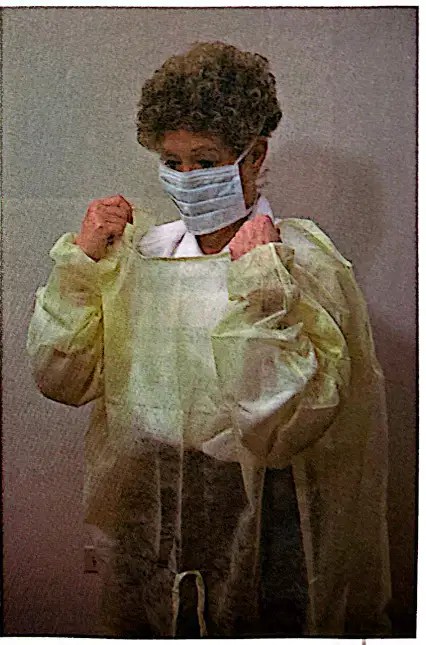
Fill in the blank: After unfolding and opening the gown, you should slip the fingers of both hands inside the _______ of the gown.
neckband
sleeves
cuffs
hem
The mask must always be dry so that droplets are not absorbed into the paper of the mask.
True
False

