
 Worksheets
Unit 5 TEST
Total questions: 16
Worksheet time: 8mins
Name
Class
Date
1.
Name and Period
4 lines
2.
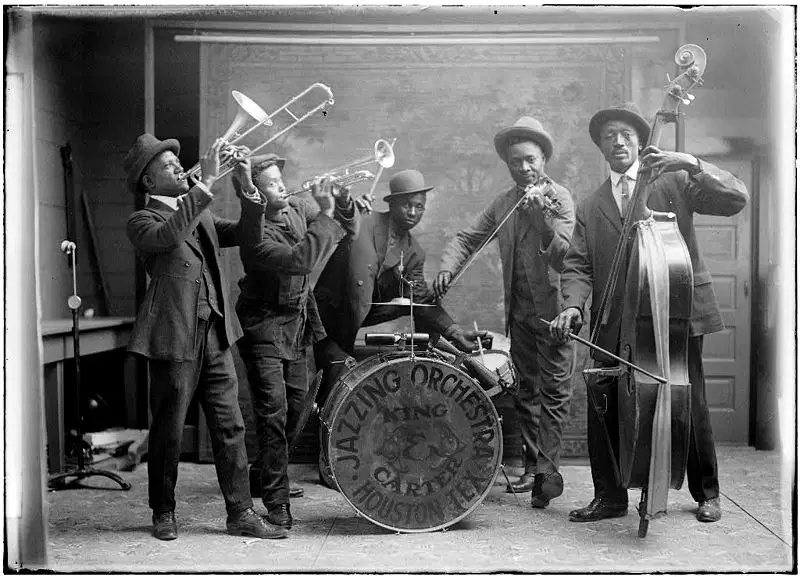
This photograph shows the King and Carter Jazzing Orchestra.
Which era is most associated with this photograph?
a)
The Roaring Twenties
b)
The Gilded Age
c)
The Civil Rights Era
d)
The Progressive Era
3.
What effect did installment plans have on the U.S. economy during the 1920s?
a)
Consumers purchased products they could not afford.
b)
U.S. citizens bought fewer goods and services.
c)
Congress passed new regulations for private businesses.
d)
Agriculture production decreased across the South.
4.
As wealth increased in the 1920's people began purchasing more items. To help Americans purchase items stores offered -
a)
A. Installment plans so people could take things home that day and pay for them over time
b)
B. Discounts to those who served in World War I as a token of their appreciation
c)
C. Coupons to get consumers to think they were saving money when they bought items
d)
D. Money back guarantees to give consumers confidence in their purchase
5.
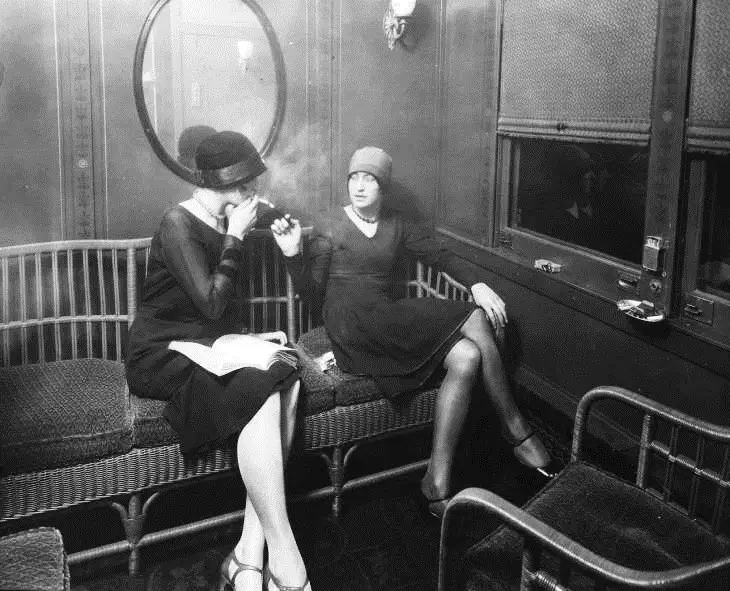
The women in this photograph represents the -
a)
A. Communist Party in America
b)
B. Comforts allowed to women due to economic prosperity
c)
C. The flappers who didn't adhere to social norms
d)
D. Tin Pan Alley music culture of the 1920s
6.
The goal of the Ku Klux Klan was to -
a)
A. Allow members of all social classes to participate in government
b)
B. Prevent women from holding positions of power in society
c)
C. Use violence to keep African Americans and other minorities from being an equal part of society
d)
D. Limit the spread of Communism across America
7.
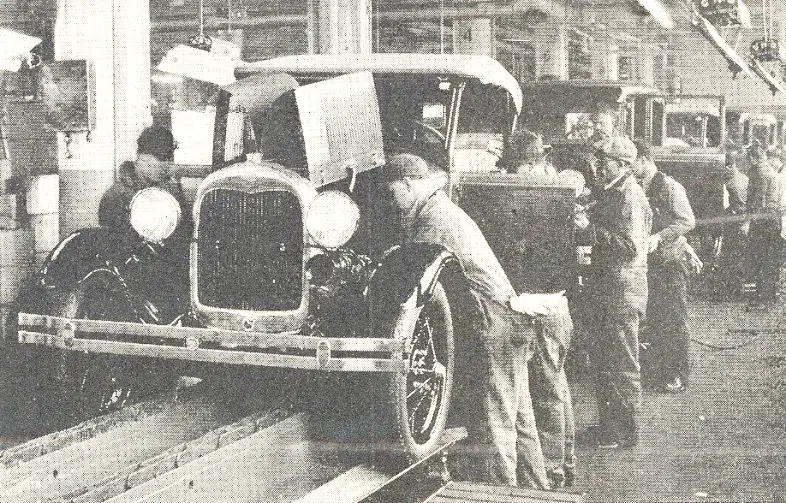
The production technique used in this photograph was implemented by companies to -
a)
A. Provide better paying jobs for workers
b)
B. Decrease the daily hours worked by laborers
c)
C. Make the daily work tasks easier for employees
d)
D. Increase production
8.
What contributed to the passing of the 21st Amendment?
a)
A. Women formed anti-prohibition groups and protests
b)
B. Politicians desired to drink alcohol again
c)
C. An increase in crime after the 18th Amendment
d)
D. Women desiring the right to vote
9.
Mass-manufacturing techniques resulted in -
a)
A. Labor unions fighting for better pay
b)
B. Women taking jobs as machine operators
c)
C. A decrease in prices for goods
d)
D. An increase in job satisfaction among factory workers
10.
Which statement describes why the Scopes Trial was significant?
a)
A. It revealed the growing conflict between traditional and modern principles.
b)
B. It allowed the teaching of Darwin’s theory of evolution in public schools.
c)
C. It resulted in the imprisonment of Tennessee schoolteacher John Scopes.
d)
D. It helped reduce the tension between urban and rural communities.
11.
During the 1920s, what was one result of innovations in U.S. transportation technology?
a)
A. Commercial airplanes replaced ocean liners as the primary means of travel to Europe.
b)
B. Mass-produced automobiles made travel more affordable for many people.
c)
C. Cable cars provided a comfortable means of quick travel to any city within a state.
d)
D. Container ships delivered agricultural goods to ports along the Pacific coast.
12.
The Roaring 20s were characterized by -
a)
A. internment camps, the rationing of goods, and the first use of the atomic bomb
b)
B. bank failures, the New Deal, and bread lines
c)
C. installment plans, Prohibition, and flappers
d)
D. brinkmanship, McCarthyism, and a policy of containment
13.
Which of these resulted from the prohibition of alcohol during the 1920s?
a)
A. A decline in immigration rates
b)
B. A growing fear of Communism
c)
C. The expansion of the consumer economy
d)
D. The rise of organized crime
14.
Which of the following was a major contribution of the Harlem Renaissance to U.S. culture?
a)
A. It led to the increased popularity of vaudeville stage performers.
b)
B. It brought the most significant beat poets together.
c)
C. It established jazz as a prominent musical form.
d)
D. It focused attention on the antiwar literary genre.
15.
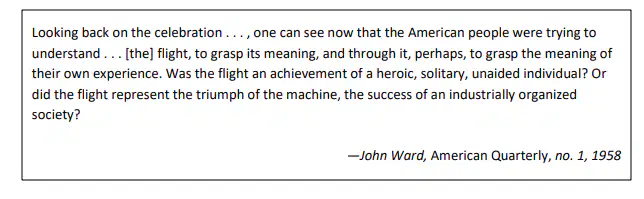
Which person is referenced in the excerpt?
a)
A. Charles Lindbergh
b)
B. Henry Ford
c)
C. Theodore Roosevelt
d)
D. F. Scott Fitzgerald
16.
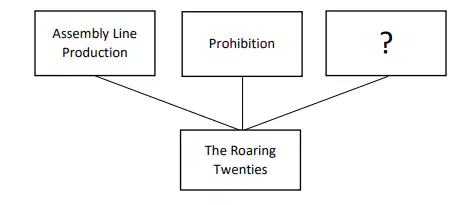
Which response correctly replaces the question mark on this chart?
a)
A. Trench Warfare
b)
B. Pure Food and Drug Act
c)
C. Great Migration
d)
D. Andrew Carnegie
100 %

