
 Worksheets
Chemistry PASA
Total questions: 40
Worksheet time: 3600secs
Where is the position of proton in the structure of an atom?
In the nucleus
In the neutron
In the shell
—
Which of the following is the similarities between isotopes of an element?
I Number of protons
II Number of neutrons
III Physical properties
IV Chemical properties
I and III
I and IV
II and III
II and IV
Which of the following is the chemical formula of copper(II) oxide?
CuO
CuO2
Cu2O
Cu2O2
The following information shows the properties of element X. Which of the following is the group for element X?
• Soft metal
• Dissolves in water and produces hydroxide solution X
Group 18
Group 17
Group 1
Transition element
Which of the following statements describes the change of properties of the elements from the left to the right across a period of the Periodic Table of Elements?
The elements change from non-metals to metals
The number of shells occupied with electrons increases
Electronegativity element increases
The valence electron of an atom decreases
Which of the following substances has the lowest pH value?
Vinegar
Bleach
Baking soda
Soap solution
Which of the following salts produce a brown gas upon heating?
Ammonium nitrate
Potassium nitrate
Copper(II) nitrate
Sodium nitrate
Which of the following molecules have covalent bonds only?
Magnesium oxide
Calcium carbonate
Sodium chloride
Water
Which property of ceramics makes them suitable to be used in cutting tools?
Ductility
Hardness
Elasticity
Flexibility
Which of the following is an application of reinforced concrete in construction?
Paving roads
To make flooring tiles
Building bridges
Manufacturing water pipes
Which of the following is the use of argon gas?
I and II
I and IV
II and III
III and IV
The statements below are about subatomic particle X. Which of the following is the relative charge of X?
• Relative mass = 1
• Located in the nucleus
• Discovered by James Chadwick
0
-1
+1
—
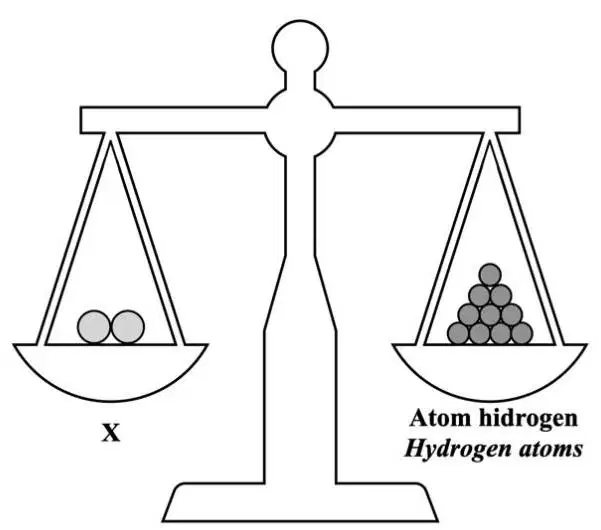
Diagram 1 shows the mass of X atoms compared to hydrogen atoms. What is the relative atomic mass of X?
2
5
10
12

Which of the following elements can conduct electricity and acts as catalyst in industrial process?
A
B
C
D
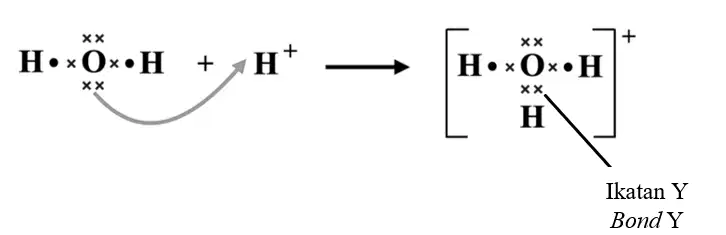
Diagram 2 shows the formation of hydroxonium ion, H3O+. Which of the following statements is correct about bond Y?
Electron transfer occurred
Two pairs of electrons are shared
The electrons shared comes from one atom only
Formed from the electrostatic force of attraction between sea of electrons and metal ions
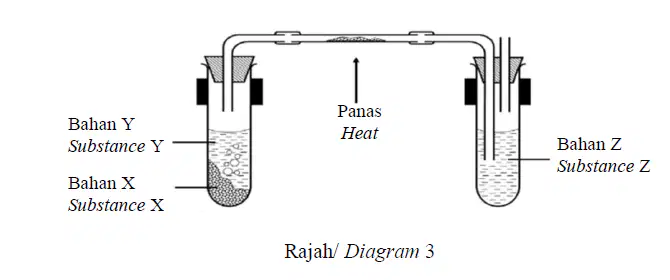
Diagram 3 shows the arrangement of the apparatus used to determine the empirical formula of a metal oxide. What is substance X, Y and Z?
Magnesium / Water / Sulphuric acid
Zinc / Hydrochloric acid / Water
Lead / Sodium hydroxide / Nitric acid
Copper(II) oxide / Ethanoic acid / Water
Which of the following is the special characteristic of transition metals?
Soft metal
Soluble in water
Low melting point
Form coloured ions
Which of the following statements explains why the reactivity of Group 17 elements decreases when going down the group?
Atomic size of the element increases
The melting point and boiling point increases
Attraction force between nucleus and electrons become weaker
The physical state changes from gas to liquid then to solid at room temperature
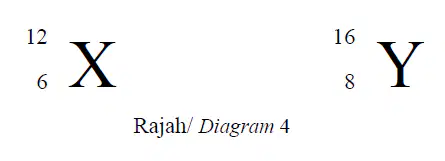
Diagram 4 shows the standard representation of atom X and atom Y. What is the chemical formula and type of compound formed between atom X and Y?
XY / Ionic
X2Y / Covalent
XY2 / Covalent
X2Y / Ionic
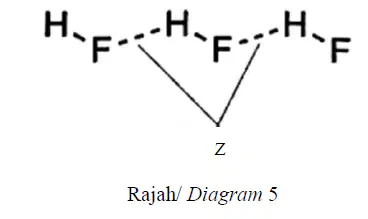
Diagram 5 shows a compound with bond Z. What is Z?
Hydrogen bond
Covalent bond
Metallic bond
Dative bond
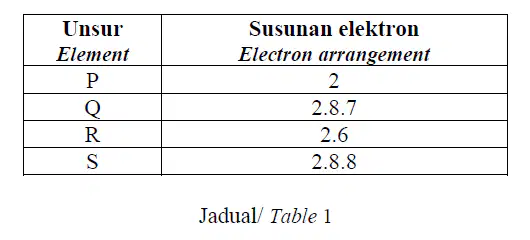
Table 1 shows the electron arrangements of four elements P, Q, R and S. Which of the following elements cannot form a chemical bond with atom of another element?
R and S
P and R
P and S
R and Q
Which of the following is correct about a strong acid?
Solution that reacts with alkali to produce salt and hydrogen gas
Partially ionised in water to produce low concentration of hydrogen ions
Completely ionised in water to produce high concentration of hydrogen ions
A solution that has high concentration of acid

Table 2 shows steps in the preparation of 100 cm3 of 0.1 mol dm-3 sodium carbonate solution from 1.0 mol dm-3 of sodium carbonate solution. Which is the correct order of steps for preparing the solution?
P, Q, R, S
P, S, Q, R
P, R, S, Q
R, S, P, Q
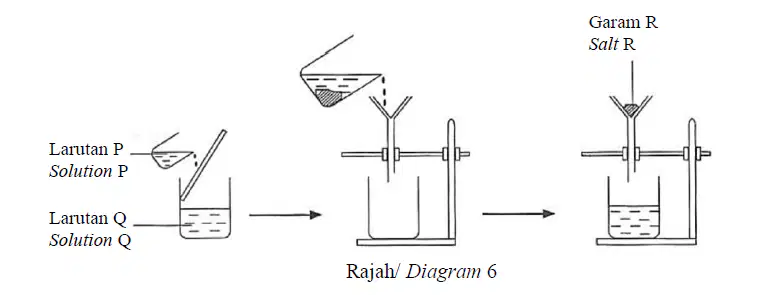
Diagram 6 shows the apparatus set-up to prepare salt R. What is solution P, solution Q and salt R?
Magnesium nitrate / Barium chloride / Magnesium chloride
Lead(II) nitrate / Silver chloride / Lead(II) chloride
Barium nitrate / Sodium chloride / Barium chloride
Lead(II) nitrate / Potassium chloride / Lead(II) chloride
In an experiment, which of the following will increase the rate of reaction?
Add 20 cm3 of water into the mixture
Use a bigger conical flask
Use 40 cm3 of 1.0 mol dm-3 sodium thiosulphate
Sodium thiosulphate solution is mixed with sulphuric acid at 30 °C
All types of glass have the same basic properties. Which of the following is a property of the glass added with lead?
Fragile
High refractive index
Good light transmission
High mechanical strength
Epsom salt is often used in foot care. Why?
It helps absorb excess water in the body
It can relieve pain and inflammation
It can increase the body's resistance
It is used to moisturise the skin
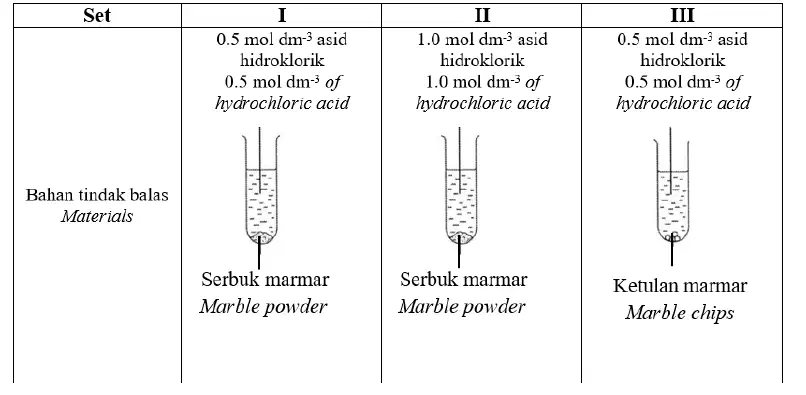
Table 3 shows the reaction between 2.0 g of marble and hydrochloric acid at different conditions. Which of the following is the factors that affect the rate of reaction?
Concentration and catalyst
Temperature and concentration
Concentration and size
Size and catalyst

Diagram 7 shows the curve obtained when calcium carbonate reacts with nitric acid. Which of the following describes curve I and curve II?
Total surface area of reactants in set I larger than set II
Number of hydrogen ions per unit volume in set I higher than set II
Frequency of effective collision of set II higher than set I
Kinetic energy of particles of set I higher than set II
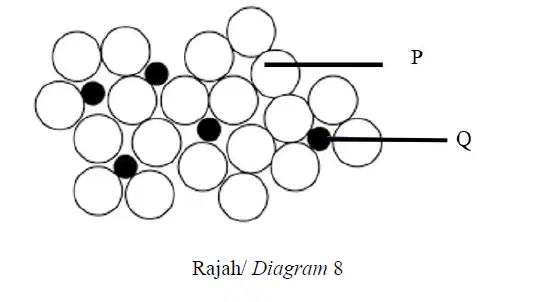
Diagram 8 shows the arrangement of atoms in brass. Which of the following are atom P and atom Q?
Copper / Zinc
Zinc / Copper
Copper / Tin
Tin / Copper
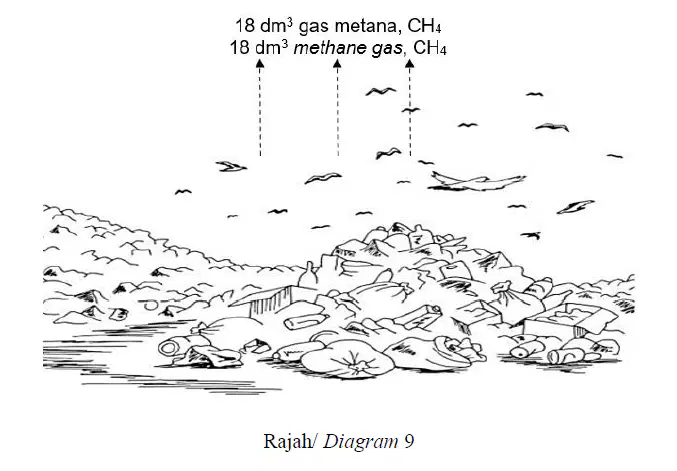
Diagram 9 shows a waste disposal site. What is the mass of methane gas produced?
12 g
16 g
21 g
27 g
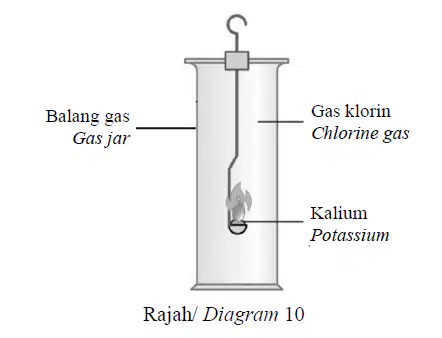
Diagram 10 shows the set-up of an experiment to study the chemical properties of element in Group 1. Which of the following shows the chemical equation for the reaction that happens in the gas jar?
K + Cl2 → KCl2
2K + Cl2 → 2KCl
2K + 2Cl2 → 2KCl2
4K + Cl2 → 2K2Cl
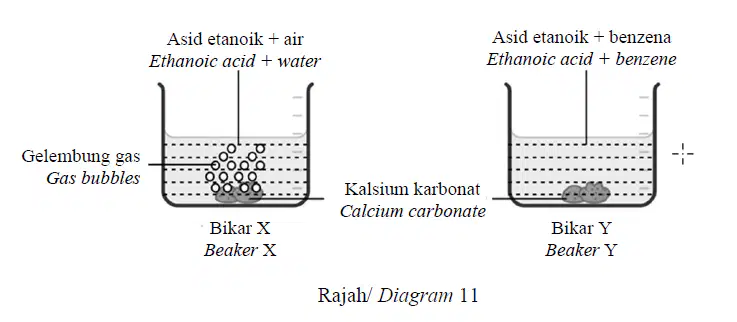
Diagram 11 shows the reaction between calcium carbonate and ethanoic acid in two different solvents. Which of the following statements is true about the observation in beaker X and beaker Y?
I and II
I and IV
II and IV
III and IV

Table 4 shows three tests conducted on solution P. What is P?
Zinc sulphate
Zinc chloride
Magnesium chloride
Lead(II) chloride
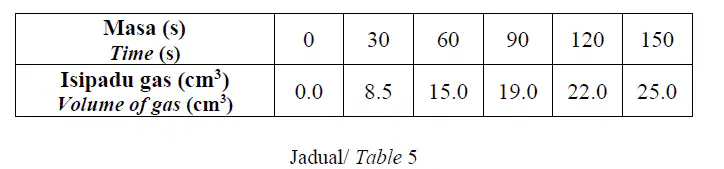
Table 5 shows the volume of gas released. What is the average rate of reaction in the second minute?
0.06 cm3 s-1
0.12 cm3 s-1
0.37 cm3 s-1
7.00 cm3 s-1
1.9 g of MgY2 is dissolved in 100 cm3 of water to produce a solution with a molarity of 0.2 mol dm-3. What is the relative atomic mass of Y?
16
32
35.5
71

The equation represents the complete combustion of pentane. Which of the following pairs of m and n is correct?
FORMAT= m / n
5 / 6
6 / 8
8 / 6
6 / 5
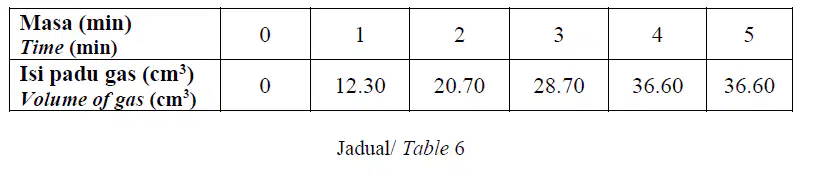
Table 6 shows the total volume of oxygen gas collected in the decomposition of hydrogen peroxide. What is the average rate of reaction for the overall reaction?
0.12 cm3 s-1
0.13 cm3 s-1
0.14 cm3 s-1
0.15 cm3 s-1
Which of the following solutions contains the lowest number of hydrogen ions?
10 cm3 of 1.0 mol dm-3 nitric acid
10 cm3 of 1.0 mol dm-3 ethanoic acid
10 cm3 of 1.0 mol dm-3 sulphuric acid
10 cm3 of 1.0 mol dm-3 hydrochloric acid
The number of protons of the X atom is 19 while the number of protons of the Y atom is 8. Which of the following is correct about compound Z?
Soluble in organic solvent
White solid at room condition
Low melting and boiling point
Can conduct electricity in solid and aqueous state

