
 Worksheets
TLE5 - Concept and Importance of Vegetable Gardening
Total questions: 95
Worksheet time: 48mins
It is not necessary to wear an appropriate working outfit when gardening or working in the field.
True
False
You should protect yourself from the harmful effects of chemical pesticides, insecticides, and fertilizers.
True
False
Washing your hands thoroughly after working in the garden/field is not necessary.
True
False
Mixing different types of pesticides together is generally safe and can save time during application.
True
False
You don't need to clean the garden tools after use and can leave them in any place.
True
False
Vegetable gardening is:
the practice of growing vegetables for personal or commercial use
the process of planting only fruit trees
the act of buying vegetables from the market
the cultivation of flowers in a garden
Knowledge about vegetable gardening can help your family have healthier and more sustainable meals every day by:
Growing your own vegetables, ensuring fresh and nutritious food.
Buying only processed foods from the store.
Eating out at fast food restaurants regularly.
Avoiding vegetables in your meals altogether.
Which of the following is a type of vegetable that can be grown easily in the community?
Leafy Vegetables
Legumes
Fruit Vegetable
All of the above
has dark green leaves similar to regular spinach but with green-purple stems
lettuce
Alugbati
Malunggay
Mustard
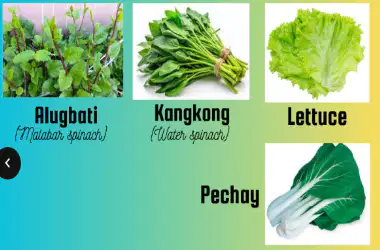
Kangkong is a short vining, water-loving plant that is a good source of vitamins B and C, and ________.
calcium.
iron.
sodium.
potassium.
Which leafy vegetable is most often grown and sometimes used for its stem and seeds?
Alugbati
Kangkong
Lettuce
Pechay
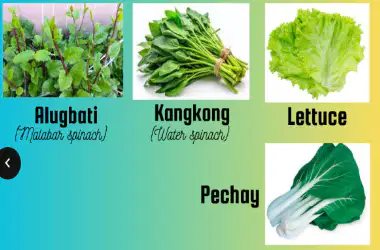
Pechay leaves are green and mild-flavored and less crisp than other cabbages.
True
False
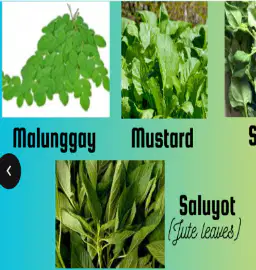
Malunggay is scientifically known as ________ and is popular in the Philippines as a 'superfood'.
Moringa.
Spinacia.
Brassica.
Capsicum.
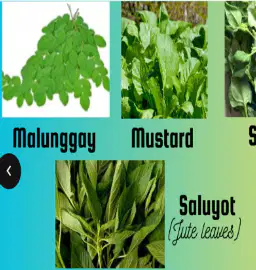
Mustard is rich in ________ and vitamin A.
calcium.
iron.
potassium.
magnesium.
is a widely cultivated, edible Asian plant of the goosefoot family.
Spinach
mustard.
Saluyot
Kangkong
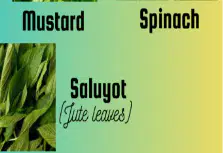
Saluyot is a leafy vegetable that is rich in beta-carotene for good eyesight, iron for healthy RBC, calcium for bones and teeth, and vitamin C for ________.
fast wound healing
strong immune cells
smooth, clear skin
all of the above
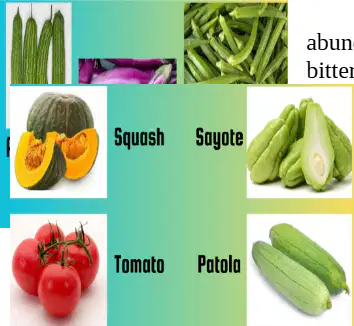
Ampalaya is also called ________ and is famous for its bitter taste and medicinal uses in the Philippines.
bitter gourd or bitter melon.
sweet potato
eggplant
okra
It's skin is typically dark purple, but the skin of certain cultivated varieties is white or yellow.
Eggplant
Okra
tomato
Ampalaya
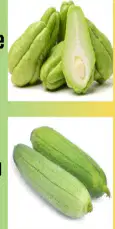
Okra is a flowering plant in the ________ family and is valued for its edible green seed pods.
mallow.
rose.
lily.
mint.
Complete the table by writing an example of vegetables according to the given classification.
Leafy vegetable: Alugbati Legumes: Lima beans (Patani) Fruit vegetable: Tomato Root crop vegetable: Gabi (Taro)
Leafy vegetable: Carrot Legumes: Potato Fruit vegetable: Cabbage Root crop vegetable: Tomato
Leafy vegetable: Tomato Legumes: Gabi (Taro) Fruit vegetable: Lima beans (Patani) Root crop vegetable: Alugbati
Leafy vegetable: Cabbage Legumes: Tomato Fruit vegetable: Alugbati Root crop vegetable: Lima beans (Patani)
Fill in the blank: Squash is a very good source of _______, _______, and _______.
vitamin A, calcium, and phosphorus
vitamin C, iron, and zinc
vitamin D, potassium, and magnesium
vitamin B12, sodium, and iodine
Fill in the blank: Tomato is a good source of vitamins _______, _______, and _______.
A, C, and iron
B, D, and calcium
E, K, and magnesium
B12, D, and zinc
It is grown where the soil is nearly always moist, as it needs plenty of water
Gabi
Carrot
Onion
Sweet Potato
It has a crisp texture when fresh. It is a highly nutritious root crop. It is an excellent source of ______. Its seeds are planted directly into the ground plot.
vitamin A
vitamin C
calcium
iron
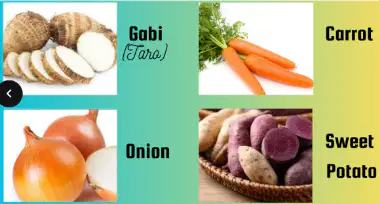
Fill in the blank: Onion is a good source of _______ and _______.
dietary fiber and folic acid
vitamin C and calcium
protein and iron
carbohydrates and vitamin D
It is the most cultivated root crop in the Philippines. Its large, starchy, sweet-tasting, tuberous roots are a root vegetable.
Sweet Potato
Carrot
Squash
Onion
It has a strong-smelling. pungent-tasting bulb, used as flavoring in cooking and in herbal medicine. It is a relatively good source of calcium, phosphorus, and potassium. Its leaves are sources of protein and vitamins A and C.
garlic
ginger
onion
gabi
It thrives in well-drained, friable, loamy soil rich in organic matter or humus. It is used as a spice and also as a medicine. It can be used fresh, dried, powdered, or as juice or oil.
gabi
carrot
ginger
onion

Complete the graphic organizer below. Identify what is being asked for when planning a garden. Apply what you have learned in the lesson.
Site selection: A good location for a garden is in a space where plants can be reached with good sunlight and air, and has access to water supply. Soil condition: Vegetable production is best achieved when planted on a well-drained, sandy-loam soil. Other factors: Water supply and quality, crop and variety selection, climate/season.
Site selection: Choose a location with minimal sunlight and poor air circulation. Soil condition: Use clay soil with poor drainage. Other factors: Ignore water supply and crop selection.
Site selection: Any location is suitable regardless of sunlight or water access. Soil condition: Rocky soil is preferred. Other factors: Climate and season do not matter.
Site selection: Select a shaded area with no water access. Soil condition: Plant in compacted soil. Other factors: Only plant one type of crop regardless of season.
Which of the following is NOT a factor to consider in planning a vegetable garden?
Sunlight
Soil
Water supply
Fertilizer type
What is the best soil for vegetable crops?
Sandy soil
Clay loam soil
Rocky soil
Peaty soil
Some vegetables need water on a regular schedule and a source of water should be nearby.
True
False
Name two types of fertilizers that farmers can use.
1. Commercial fertilizers 2. Organic fertilizers
1. Sand and gravel 2. Water
1. Pesticides 2. Herbicides
1. Rocks 2. Clay
Which of the following is a commercial fertilizer?
Prepared at home
Prepared chemically
You can only prepare compost if you have a wide space in your backyard.
True
False
You may prepare compost from the kitchen scraps.
True
False
Composts can be made into rich humus soil.
True
False
Chemical fertilizers are better than organic fertilizers.
True
False
Chemical fertilizers are safe to use.
True
False
The advantage of organic fertilizers over commercially-prepared fertilizers is:
They improve soil structure and fertility naturally.
They provide nutrients instantly but may harm the soil.
They are always cheaper than commercial fertilizers.
They contain only synthetic chemicals.
is a type of fertilizer derived from plant and animal wastes
organic fertilizer
commercial fertilizer
province fertilizer
Metal cans

Identify the gardening tool shown in the image.
Axe
Shovel
Rake
Hoe
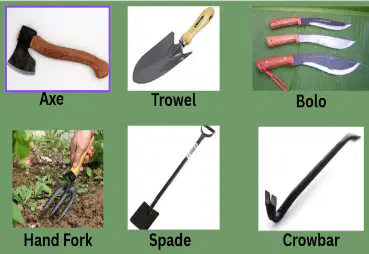
Identify the gardening tool shown in the image.
Trowel
Hoe
Rake
Pruning Shears

Identify the gardening tool shown in the image.
Bolo
Hoe
Rake
Trowel
Identify the gardening tool shown in the image.
Hand Fork
Garden Hoe
Pruning Shears
Watering Can
Identify the gardening tool shown in the image.
Spade
Rake
Hoe
Trowel

Identify the gardening tool shown in the image.
Crowbar
Pruning Shears
Garden Trowel
Rake
What is the tool used for cutting big branches of trees?
Axe
Hammer
Screwdriver
Plier
What is the tool used for disintegrating the soil surrounding the plant?
Hand fork
Pruning shears
Watering can
Garden hose
What is the tool used for removing soil or trash?
Spade
Hammer
Paintbrush
Screwdriver
What is the tool used for shallow digging, transferring, or planting small plants?
Trowel
Hoe
Rake
Pruning Shears
Bolo - It is a large, heavy, single-edged knife used for cutting woods, woods, and grasses. What is the tool used for cutting woods and grasses?
Bolo
Plow
Rake
Hoe
What is the tool used for digging big holes?
Crowbar
Hammer
Screwdriver
Wrench
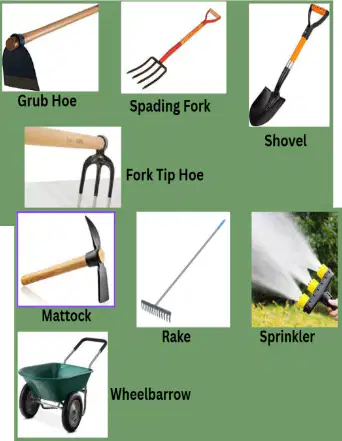
What is the tool used for digging up roots and stumps?
Grub hoe
Sickle
Pruning shear
Spade
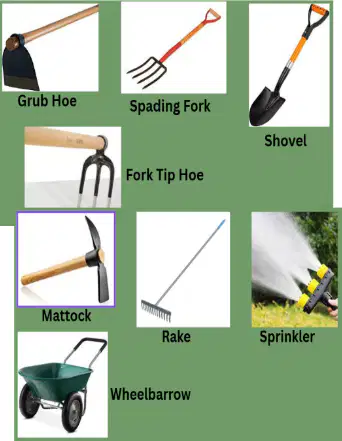
What is the tool used for loosening, lifting, and turning over soil in gardening and farming?
Fork Tip Hoe
Pruning Shears
Watering Can
Garden Trowel
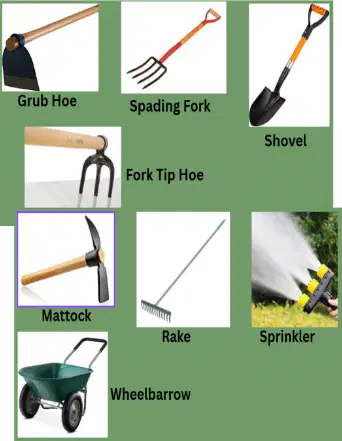
What is the tool used for digging loamy, sandy, or loose soil?
Spading fork
Hoe
Rake
Trowel
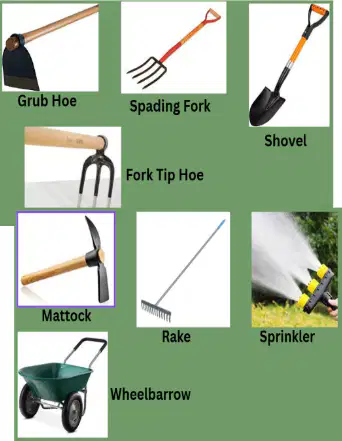
What is the tool used for removing soil and weeds and transferring the soil or fertilizer?
Shovel
Rake
Hoe
Trowel
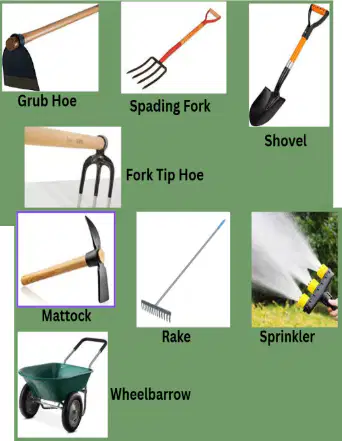
What is the tool used for digging hard top soil and for digging canal or ditches?
Mattock
Hoe
Spade
Rake
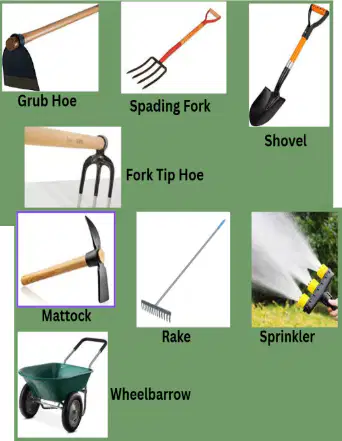
What is the tool used to gather leaves and pulverize soil?
Rake
Shovel
Hoe
Watering Can
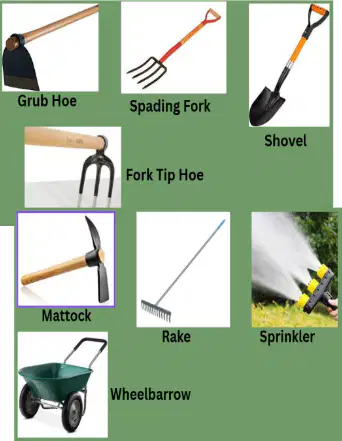
What is the tool used for watering the plants?
Sprinkler
Hammer
Broom
Screwdriver
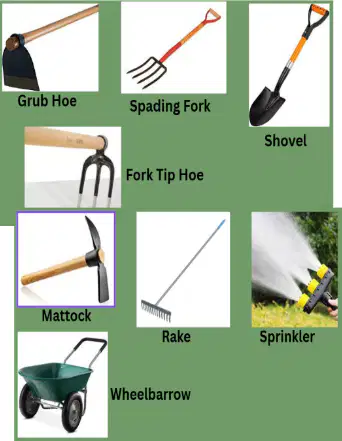
What is the tool used for hauling or transporting plants, sand or stones, and fertilizer?
Wheelbarrow
Rake
Hoe
Pruning Shears
It is important to take care of gardening tools and equipment because:
they last longer and work more efficiently.
they look more attractive in the garden.
they are easier to lose if not maintained.
they become heavier when cleaned.
Using the right gardening tool for the right job means _____________________.
tasks are done efficiently and safely
plants grow slower than usual
tools get damaged quickly
gardening becomes more difficult
Caring for plants is important because _____________________.
it helps plants grow healthy and strong
it makes plants sing songs
it turns plants into animals
it helps plants fly in the sky
Watering plants regularly is important because _____________________.
it prevents plants from wilting and keeps them hydrated
it makes the leaves turn blue
it helps plants grow in the dark
it attracts more insects to the plant
Removing weeds, grass, and leaves around the plant makes _____________________.
plants healthier and prevents diseases and pests
plants grow slower and attract more pests
soil less fertile and plants weaker
plants more likely to wilt and die
Which type of insect feeds on the underside of cabbages, lettuce, spinach, beets, peas, and tomatoes, chewing irregular holes through the leaves?
Cabbage looper
Corn Earworm
Potato Tuberworm
Locust and Grasshoppers
Squash Bugs
Which type of insect does most damage to corns and tomatoes?
Cabbage looper
Corn Earworm
Potato Tuberworm
Locust and Grasshoppers
Squash Bugs
Which type of insect attacks the vines, buds, and leaves of tomatoes, potatoes, and other related plants?
Cabbage looper
Corn Earworm
Potato Tuberworm
Locust and Grasshoppers
Squash Bugs
Which insects attack as a group, eat very fast, and can attack a rice plantation?
Cabbage looper
Corn Earworm
Potato Tuberworm
Locust and Grasshoppers
Squash Bugs
Which insects prefer to attack squash and pumpkins by sucking their sap?
Cabbage looper
Corn Earworm
Potato Tuberworm
Locust and Grasshoppers
Squash Bugs
Which insect sucks the juices or sap and injects saliva into the plants, usually feeding in clusters and causing plant diseases?
A) Aphids or Plant Ice
B) Potato Leafhopper
C) Mole Cricket
D) Thrips
What is the effect of the saliva injected by the Potato Leafhopper on plants?
Causes holes in leaves
Causes the deadening and upcurling of plant tissues
Causes yellowing from bottom to tip
Causes powdery stuff on leaves
Fungi are caused by the development of a low form of Plant life. They may be present in poor soil or develop from previously planted ones before the new vegetables are planted.
True
False
Which insect burrows in the soil and causes major damage by uprooting the plants?
Aphids
Mole Cricket
Thrips
Spider Nuts
Thrips appear as:
Clusters on leaves
White flicks or streaks on leaves
Holes in leaves
Powdery stuff on leaves
Which type of pest sucks the plant juices of beans, tomatoes, eggplants, cucumbers, and celery?
A) Aphids
B) Spider Nuts or red spiders
C) Slugs
D) Thrips
Slugs are similar to snails, but they lack the snail’s hard, protective shell.
True
False
Name one symptom of plant manifestation that indicates the plant may be infected with a disease.
There are black spots on the leaves; there are dead or dry areas and a powdery stuff appears on the plants.
The plant grows faster than usual and produces more flowers.
The leaves become extra shiny and thick.
The plant starts to smell sweet and attracts more bees.
What should be done to the soil before planting to help sterilize the plot?
Expose cultivated soil to full sunlight, several days prior to planting.
Add fertilizer to the soil immediately before planting.
Water the soil heavily for a week before planting.
Mix fresh compost into the soil right before planting.
List one step to treat the soil before planting.
Prepare the soil well. Make sure that the soil is treated with pesticides before planting.
Water the soil with salt water before planting.
Plant seeds without checking the soil.
Add sugar to the soil before planting.
Why is it important to remove and burn infected weeds before planting?
Because they may infect the new plants.
Because it improves soil fertility.
Because it increases water retention in soil.
Because it attracts beneficial insects.
What is one example of a plant with a strong odor that drives insects away, suitable for intercropping?
Oregano
Lettuce
Spinach
Carrot
How many grams of tobacco leaves should be chopped to prepare an organic pesticide mixture?
About 300 grams
About 100 grams
About 500 grams
About 50 grams
What are the three needed materials for the mixture to drive away sucking insects?
Eucalyptus oil, vegetable oil, liquid detergent
Tobacco leaves, water, soap
Oregano, water, detergent
Pesticide, fertilizer, water
Describe the process of preparing tobacco leaves as a pesticide against chewing insects.
Chop about 300 grams of tobacco leaves, put these in a gallon of water and mix well, let the mixture stay overnight, on the following day, remove the remnants of the tobacco leaves, use a fine sprinkler to spray the mixture to the plants, give time for the water solution to drive away the pests, do not water the plants right after spraying with tobacco mix.
Boil 300 grams of tobacco leaves in a liter of oil, let it cool, then pour directly onto the soil.
Grind tobacco leaves into powder and sprinkle directly onto the leaves without mixing with water.
Soak tobacco leaves in vinegar overnight and spray the undiluted solution on the plants.
1.Know when to harvest each kind of vegetable by consulting the planting calendar.
True
False
Harvest early in the morning.
True
False
3. Use any containers for any kind of vegetables.
True
False
What does Animal Production refer to?
The breeding, raising and management of livestock to produce food products such as meat, milk and egg, and to ensure their productivity and well-being.
The process of growing vegetables.
The packaging of farm products.
The pricing of farm harvests.
Which of the following is NOT a type of poultry mentioned in the passage?
A) Chicken
B) Duck
C) Quail
D) Sheep
Fill in the blank: Poultry Production is a branch of animal production focusing on raising and managing farm birds for meals and eggs such as ________, ducks and quail.
chicken
goat
sheep
cow
Which bird is known for its long neck, large body, and strong migratory instinct, and is raised for its meat, eggs and feathers?
Turkey
Goose
Quail
Chicken
Ducks are adaptable to various environments like pond and farmland.
True
False
It is used raw in salads, served as a cooked vegetable, used as an ingredient of various prepared dishes, and pickled.
Okra
Tomato
Chayote
Patola

