
 Worksheets
Weathering, Erosion, and Deposition Introduction
Total questions: 42
Worksheet time: 21mins
What is weathering?
The breakdown of rocks into smaller fragments
The movement of rocks from one place to another
The dropping of sediment in a new location
The melting of rocks due to heat
Which of the following is NOT an example of weathering?
Wind blowing
Water flowing
Freeze/thaw cycles
Melting of ice
What force is involved in all erosion?
Magnetism
Gravity
Electricity
Friction
Which of the following causes most erosion?
Water
Sunlight
Plants
Heat
What is erosion?
The removal of weathered rock from one location and transporting to another
The breakdown of rocks into smaller fragments
The dropping of sediment in a new location
The melting of rocks due to heat
What is deposition?
Occurs when sediment that has eroded is dropped in a new location
The breakdown of rocks into smaller fragments
The removal of weathered rock from one location to another
The melting of rocks due to heat
Explain how gravity is related to the process of erosion.
Gravity pulls weathered rock and sediment downhill, aiding in erosion
Gravity causes rocks to break into smaller fragments
Gravity melts rocks, causing erosion
Gravity prevents erosion from occurring
A river carries sediment downstream and drops it at the mouth of the river. Which process is this an example of?
Deposition
Weathering
Erosion
Melting
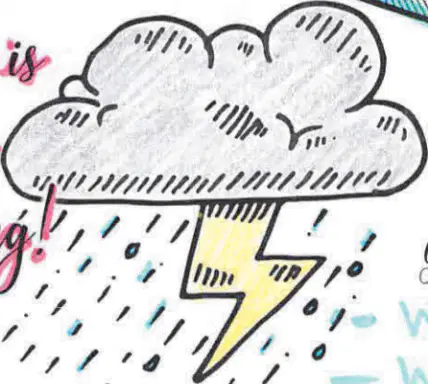
A rock cliff is exposed to wind, rain, and freezing temperatures. Over time, the cliff breaks into smaller pieces. Which process is primarily responsible for this change?
Weathering
Erosion
Deposition
Melting
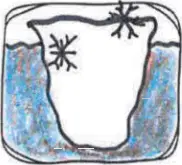
A glacier moves across land, picking up rocks and soil, and then drops them as it melts. Which two processes are illustrated in this scenario?
Erosion and Deposition
Weathering and Melting
Gravity and Weathering
Deposition and Melting
Which of the following is a reason why tectonic plates move?
Gravity pulls them directly
Wind pushes them
Thermal convection in the mantle
Ocean currents move them
What are tectonic plates?
Small pieces of rock found on beaches
Giant pieces of the Earth's crust that move over long periods of time
Layers of air in the atmosphere
Large bodies of water on Earth's surface
Which of the following is NOT one of the major tectonic plates labeled in the diagram?
North American Plate
African Plate
Eurasian Plate
Antarctic Plate
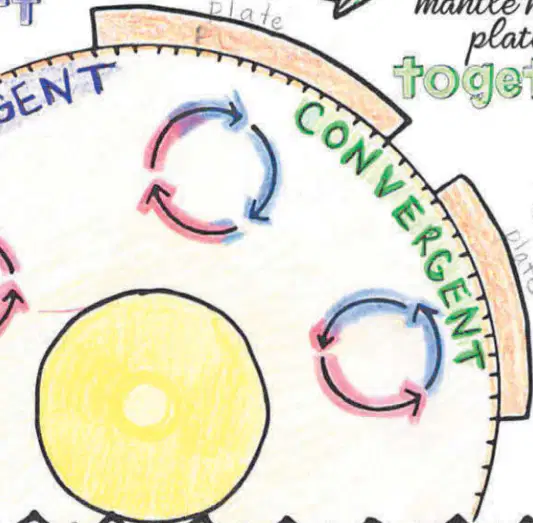
What happens to hot rock in the Earth's mantle during thermal convection?
It rises, cools, and then sinks
It stays in one place
It evaporates
It turns into water
How does convection in the mantle affect tectonic plates at divergent boundaries?
Moves plates apart
Moves plates together
Melts the plates
Stops plate movement
How does convection in the mantle affect tectonic plates at convergent boundaries?
Moves plates apart
Moves plates together
Breaks plates into pieces
Makes plates float
Explain how thermal convection in the Earth's mantle leads to the movement of tectonic plates. Use evidence from the process described in the material.
Hot rock rises, cools, and sinks, creating convection currents that move plates
Wind blows across the surface, pushing plates
Water currents in the ocean drag plates along
Magnetic fields pull plates in different directions
Which of the following best describes a convergent plate boundary?
The place where two tectonic plates are moving toward each other.
The place where two tectonic plates are moving apart from each other.
The place where tectonic plates slide horizontally past one another.
The place where tectonic plates do not interact.
Which of the following is NOT a type of convergent boundary?
Ocean / Continent
Ocean / Ocean
Continent / Continent
Ocean / Magma
What is a possible result of a divergent plate boundary?
Mid-ocean ridges form.
Earthquakes occur.
Mountains are formed.
Volcanoes erupt.
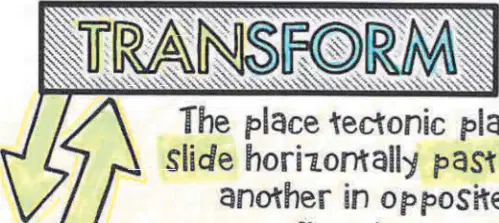
At which type of plate boundary do tectonic plates slide horizontally past one another in opposite directions?
Convergent boundary
Divergent boundary
Transform boundary
Subduction boundary
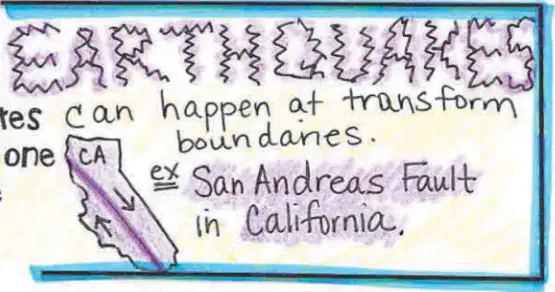
Earthquakes can happen at which type of plate boundary?
Convergent boundary
Divergent boundary
Transform boundary
All of the above
Explain why mid-ocean ridges form at divergent plate boundaries.
Because plates move apart, allowing magma to rise and create new crust.
Because plates collide, pushing up mountains.
Because plates slide past each other, causing friction.
Because plates remain stationary, allowing sediment to build up.
Why are earthquakes common at transform boundaries such as the San Andreas Fault in California?
Because plates move apart, causing tension.
Because plates slide past each other, causing stress and sudden release of energy.
Because plates collide, causing compression.
Because plates melt, causing volcanic eruptions.
Which of the following is a natural feature of Earth's surface created by plate tectonics, weathering, erosion, and/or deposition?
Landform
Atmosphere
Ocean current
Fossil
Which of the following is a landform that rises high above its surroundings, often with steep slopes?
Plateau
Mountain
Canyon
Valley
Name the highest mountain peak listed in the material and its location.
Mount Rainier, Washington State, USA
Mount Everest, Nepal
Mount Whitney, California, USA
Mount Kilimanjaro, Tanzania
What process is mainly responsible for forming river canyons?
Volcanic eruptions
Water pressure and erosion
Earthquake activity
Glacial movement
Which landform is described as a deep valley with steep sides?
Plateau
Mountain
Canyon
Hill
How do most plateaus form according to the material?
By water erosion carving out the land
By magma pushing up but not breaking through the crust
By folding of the Earth's surface
By glacial movement
A plateau is best described as:
A flat area of land that is higher than surrounding land
A steep-sided valley
A mountain peak
A low-lying plain

Which of the following is NOT a famous mountain peak listed in the material?
Mount Rainier
Mount Everest
Mount Whitney
Mount Kilimanjaro
Explain how moving water contributes to the formation of canyons.
It deposits sediment to build up land
It carves out and carries sediment away, leaving a canyon shape
It causes volcanic eruptions
It lifts flat rock above the surface
Which process is NOT involved in the formation of landforms according to the material?
Plate tectonics
Weathering
Erosion
Photosynthesis
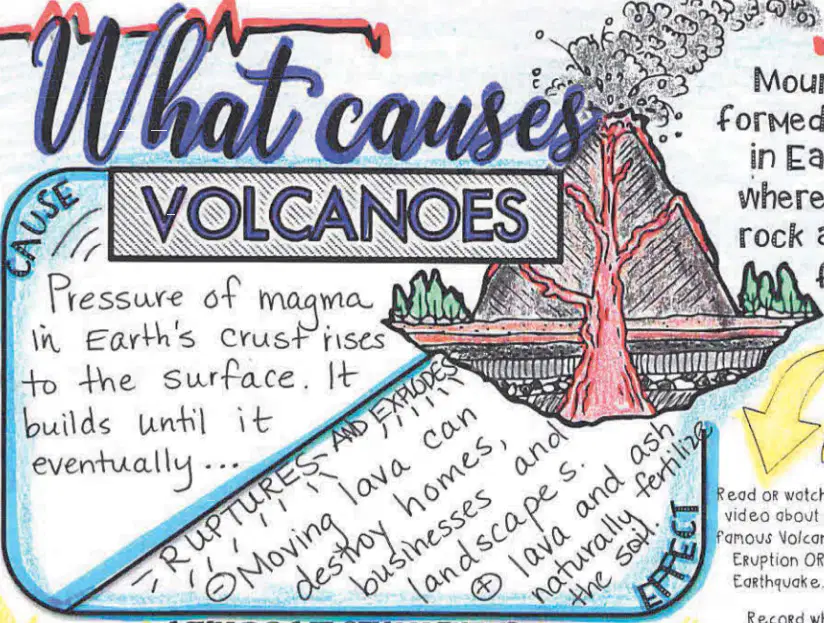
What causes a volcano to erupt?
Pressure of magma in Earth's crust rises to the surface until it erupts
Movement of clouds in the sky
Heavy rainfall on mountains
Growth of plants on hills
Which of the following is an effect of a volcanic eruption?
Lava and ash can destroy homes and businesses
Increase in rainfall
Formation of new rivers
Growth of forests
What is the main cause of earthquakes?
Tectonic movement of Earth's plates or volcanic activity
Strong winds blowing across the land
Heavy snowfall
Solar flares from the sun
Which of the following is a possible effect of an earthquake?
Damage to buildings, bridges, and dams
Increase in temperature
Formation of new lakes
Growth of crops
Why is it important to study volcanoes and earthquakes?
To predict their behavior and potentially save human lives
To increase rainfall in dry areas
To grow more plants on mountains
To make the Earth cooler
What happened during the May 1980 eruption of Mt. St. Helens?
An earthquake shook the volcano causing a massive avalanche and 57 people died
A flood destroyed the city and 100 people died
A tornado hit the mountain and 20 people died
A forest fire burned the area and 10 people died
Which statement best describes a volcano?
A mountain or hill formed by an opening in Earth's surface where lava or liquid rock and gas erupt from the Earth's crust
A hill covered with trees and plants
A mountain formed by wind and rain
A valley filled with water
What is a sudden shaking of the Earth's surface caused by the movement of rock underground called?
Earthquake
Tornado
Flood
Landslide

