
 Worksheets
Technology Coaches and Ethical AI Worksheet
Total questions: 92
Worksheet time: 46mins

Who are the Technology Coaches mentioned in the image?
Devon Berry & Amy Hurst
John Smith & Jane Doe
Alex Johnson & Maria Lee
Chris Brown & Emily White

What is the main topic shown in the image?
Using A.I. Ethically and Intelligently
Building Robots for Fun
Learning About Space Travel
Cooking Healthy Meals
What is research literacy?
The ability to synthesize research using responsible and ethical practices for gathering information and writing products suitable for their audience and purpose.
The ability to memorize facts quickly.
The ability to write stories for entertainment.
The ability to solve math problems.
When integrating information for research, how many sources of varying types should you use at minimum?
At least three sources
Only one source
At least ten sources
No sources are needed
Which of the following is NOT a proper practice when using information from sources?
Copying without quoting or paraphrasing
Proper quoting
Paraphrasing
Summarizing
What does evaluating arguments involve?
Delineating and evaluating arguments and specific claims, including the validity of the reasoning and the relevance and sufficiency of the evidence.
Ignoring the evidence and making assumptions.
Only agreeing with the author.
Writing a summary without analysis.
What does "research literacy" mean?
Knowing how to find good, reliable information and using it honestly to create something new
Being able to write stories without any help
Memorizing facts without understanding them
Only using information from one source
When integrating sources, what is one way to show you are borrowing someone else's ideas?
Using their exact words as a quote
Ignoring their ideas completely
Changing the topic
Making up your own facts
How many different helpers (sources) should you use when integrating sources?
At least three
Only one
As many as possible without checking them
None
What does it mean to evaluate arguments?
To figure out the main point and check if the reasons and evidence are strong and make sense
To agree with everything you hear
To ignore the evidence
To only listen to your friends
Which of the following is NOT listed as an A.I. platform in the image?
ChatGPT
Gemini
Claude
Python
Which A.I. platform in the list has a name that starts with the letter "G"?
Grok
Claude
NotebookLM
ChatGPT

How many A.I. platforms are mentioned in the image?
Three
Four
Five
Six
Which of the following is an example of A.I. technology you might use every day?
Facial recognition
Reading a book
Riding a bicycle
Planting a tree
What is Alexa/Siri an example of?
A virtual assistant powered by A.I.
A type of fruit
A sports team
A musical instrument
Which A.I. feature helps you get movie suggestions on Netflix and Amazon?
Personalized recommendations
Weather forecast
Online shopping cart
Video games
What is a chatbot?
A computer program that can talk to people
A type of car
A kitchen appliance
A kind of animal
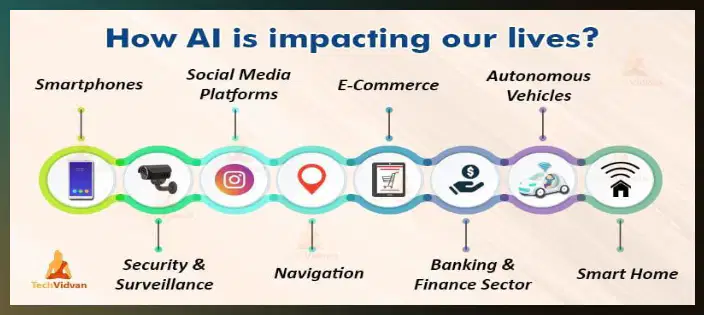
Which of these is NOT listed as a way A.I. impacts our lives?
Playing board games
Smartphones
Banking & Finance Sector
Navigation
Which of the following is a known issue mentioned in the image?
Hallucinations
Perfect accuracy
Unlimited memory
No privacy concerns
What does the term "Bias" refer to as a known issue?
Fair and equal treatment
Making decisions without favoritism
Unfair preference or prejudice
Always being correct
Which issue is related to information not being current?
Hallucinations
Out dated info.
Privacy concerns
Bias
What is a concern when personal information is not kept safe?
Privacy concerns
Hallucinations
Bias
Out dated info.
Who is "Alex the AI" described as in the story?
A robot that cleans the library
A friend who is an amazing storyteller
A pirate captain
A pizza chef
What does Alex the AI do when asked about pirates?
Talks about treasure chests, talking parrots, and sea battles
Talks about pizza recipes
Talks about astronauts
Says "I don't know"
What happens if you ask Alex a question about something not found in any book?
Alex refuses to answer
Alex makes up a creative answer by connecting information it knows
Alex asks you for help
Alex reads a new book
Which of the following is NOT something Alex knows about?
Pirates and their love for gold
Space and astronauts eating freeze-dried food
Pizza and popular toppings
How to build a spaceship
Is the statement "Space pirates eat 'Golden Nugget' pizza with freeze-dried pepperoni and cheese that floats right off the slice if you're not careful!" a real fact?
Yes, it's a true fact
No, it's completely made up
Yes, astronauts eat this pizza
No, pirates only eat gold
What is AI bias?
When an AI makes choices based on unfair patterns it has learned
When an AI always gives the right answer
When an AI never makes mistakes
When an AI creates random pictures
If you ask an AI app to show you a picture of a person building a castle with LEGOs, what might you notice in the pictures it creates?
All the people are boys
All the people are girls
The pictures are all of animals
The pictures are all of cars
When you ask the AI to show you a doctor, what does it mostly show?
Pictures of men
Pictures of women
Pictures of children
Pictures of animals
What does the "learning diet" of an AI refer to?
The pictures and information the AI studies from the internet
The food the AI eats
The games the AI plays
The music the AI listens to
Why does the AI show biased pictures, like mostly boys building LEGOs or men as doctors?
Because it learned from biased examples on the internet
Because it wants to be mean
Because it can think for itself
Because it doesn't know how to draw
What should you never share with public AI models like ChatGPT?
Sensitive student information
Your favorite color
The weather forecast
A list of movies
Why should you avoid inputting confidential school documents into public AI models?
Because it is not private and could become public
Because AI models are slow
Because it is fun
Because it makes the AI smarter
How should you treat any information you give to a public AI?
Like a public forum
Like a secret diary
Like a private phone call
Like a classroom discussion
What is the bottom line when sharing information with AI?
Always assume it could become public
Always share everything
Never use AI
Only share jokes
Why might some AI models give outdated answers?
Because their knowledge is limited to the data they were trained on, which can be several years old.
Because they are always connected to the live internet.
Because they can predict the future.
Because they update themselves every day.
What is the "outdated" problem with AI models?
AI's knowledge has a "cut-off" date and won't know about recent events, discoveries, or news.
AI always knows the latest information.
AI can only answer questions about math.
AI never makes mistakes.
What should you do when using AI answers for current events, science, or statistics?
Always double-check facts and treat AI answers as a starting point, not a final source.
Trust everything the AI says without checking.
Ignore other sources of information.
Only use AI for entertainment.
Why is it important to be a fact-checker when using AI tools?
Because AI can sometimes give incorrect information
Because AI always gives the right answer
Because AI is slow at answering questions
Because AI cannot help with homework
What should you do if an AI tells you something surprising or a "fact" you've never heard before?
Double-check it with a trusted source
Believe it immediately
Ignore it completely
Share it with everyone without checking
Which of the following is an example of a trusted source?
A school textbook
A random comment online
A rumor from a friend
A fictional storybook
What does the passage suggest about information that sounds confident?
It is not always correct
It is always true
It should never be trusted
It is always from a teacher
What is the "blank page" problem described in the material?
When you stare at your screen and your brain feels empty
When your computer crashes
When you lose your homework
When you forget your password
According to the material, what is your brain compared to when facing the "blank page" problem?
Your wallet after last weekend
A full backpack
A busy classroom
A crowded bus
What is tempting to do when you face the "blank page" problem?
Ask an AI to "do the work" for you
Go outside and play
Call a friend for help
Take a nap
What is plagiarism?
Copying someone else's work and claiming it as your own.
Writing your own original essay.
Asking your teacher for help.
Reading a book for research.
Why might a teacher know if you copied and pasted an AI-generated essay?
Because it sounds like a robot and not your writing style.
Because it is handwritten.
Because it is very short.
Because it has pictures.
What is the result of turning in an essay that you copied and pasted from AI?
You learn nothing and commit plagiarism.
You get extra credit.
You win a prize.
You get to skip homework.

What is an ethical way to use AI when researching interpretations of the green light’s symbolism in The Great Gatsby?
Use AI to get ideas and then find real, human-authored sources.
Copy everything the AI says without checking sources.
Only use AI and ignore other sources.
Make up your own ideas without any research.
According to the text, what are some interpretations of the green light’s symbolism in The Great Gatsby?
Hope, the American Dream, money
Friendship, travel, sports
Science, technology, health
Family, education, food
What should you do after AI provides a list of ideas for your research?
Find real, human-authored sources that discuss those ideas
Ignore the ideas and write your own story
Use only the AI’s list without further research
Ask your friends for their opinions instead
What does the phrase "You've used the AI to start your brain's engine, not to drive the whole car" mean?
AI helps you begin thinking, but you must do the rest of the work yourself
AI does all the work for you
You should never use AI for research
AI is only for playing games
What is the main problem with using an AI to summarize a long article for a school assignment instead of reading it yourself?
You get a summary but miss the author's detailed arguments.
The AI always gives wrong information.
You will always get a bad grade.
The teacher will not notice.
What does it mean when the text says, "You've outsourced your comprehension"?
You let someone or something else understand the material for you.
You read everything yourself.
You memorize every word.
You write your own summary.
Why might you struggle to answer a teacher's specific question after using an AI summary?
Because you never actually read the original source.
Because the AI summary is too long.
Because the teacher did not explain the topic.
Because you forgot to print the summary.
What is the "Study-Buddy" method described in the image?
Using AI to help you understand a difficult concept after you have tried to learn it yourself
Letting AI do all your homework for you
Ignoring AI and never using it for studying
Copying answers from a friend without reading the material
According to the image, what should you do before asking AI to rephrase a complex paragraph?
Read the article and take your own notes
Ask the AI first before reading anything
Skip reading and just use the AI
Let someone else read the article for you
What is the main benefit of using AI as described in the "Study-Buddy" method?
It helps you understand difficult concepts and strengthens your own learning
It does all your work for you
It makes studying unnecessary
It gives you the answers without any effort
Why is it a problem to trust AI without questioning the information it provides?
Because AI can sound confident even when it is making things up.
Because AI always tells the truth.
Because AI never makes mistakes.
Because AI is always more reliable than humans.
What is the main issue described in the "AI-says-it-so-it's-true" trap?
Believing AI without checking the facts or citing a source.
Always using books for research.
Ignoring all information from AI.
Only using statistics from newspapers.
What can happen if you use a statistic from AI without questioning it or citing a source?
Your argument may fall apart because the statistic could be inaccurate or unreliable.
Your paper will always be correct.
Your teacher will give you extra credit.
The statistic will always be true.
What is the "Verify-and-Vanquish" method described in the text?
Asking the AI for a statistic and then checking the original source yourself.
Copying and pasting information from the AI without checking.
Ignoring the AI's answer completely.
Making up your own statistics.
According to the text, what should you do after the AI provides the name of a research paper or organization?
Go to the actual source to verify the claim yourself.
Trust the AI without checking.
Ask a friend if it is correct.
Ignore the information.
What is the main goal of following the "Verify-and-Vanquish" method?
To become a fact-checker, not just a copy-paster.
To save time by copying information.
To avoid using statistics.
To make up your own facts.
What is the main problem with asking an AI to write a powerful opening argument for a debate on censorship?
The AI gives you a well-written but generic argument.
The AI provides specific evidence and counterpoints.
The AI refuses to help with debates.
The AI always wins the debate for you.
In the scenario described, what does the other side of the debate have that makes their argument stronger?
Specific evidence and counterpoints
A generic argument
No evidence at all
Only emotional statements
What is the result of relying on AI to prepare your debate argument, according to the scenario?
You sound like a human-shaped AI-Bot.
You win the debate easily.
You have the best evidence.
You impress everyone with your creativity.
What is the "Master-of-the-Universe" approach to using AI described in the text?
Using AI to become an expert, not to replace one.
Using AI to do all your work for you.
Ignoring AI and doing everything yourself.
Using AI to replace experts in every field.
According to the text, what should you do after AI gives you a balanced list of talking points?
Use the list as a roadmap to find your own sources and prepare for arguments.
Copy the list and submit it as your own work.
Ignore the list and make up your own arguments.
Ask the AI for more lists without doing any research.
What does the text suggest is the ethical way to use AI in learning?
To help you become knowledgeable and prepared.
To do all your homework for you.
To avoid learning and let AI do everything.
To never use AI for any reason.
What is the minimum number of sources you must integrate information from according to the standard?
One source
Two sources
Three sources
Four sources
Which of the following is NOT mentioned as a practice to use when integrating sources?
Quoting
Paraphrasing
Summarizing
Drawing
What type of information must be integrated according to the standard?
Ethically-acquired information
Random information
Unverified information
Personal opinions only
What is the main problem mentioned in the learning material?
How to write essays
Where does AI fit into integrating sources and citation practices
How to find sources
How to summarize information
What is the "Ghostwriter" offense described in Scenario 5?
Asking an AI to write a paragraph, copying it, and then finding sources to match what the AI wrote, and citing those sources.
Writing your own essay and citing all your sources correctly.
Asking a friend to proofread your essay.
Using only books from the library for your research.
What is the result of committing the "Ghostwriter" offense?
It is a sneaky form of plagiarism.
It is a good way to save time.
It is a recommended research method.
It is a way to improve your writing skills.
Why is the "Ghostwriter" offense considered unethical?
Because you are fraudulently attributing someone else's work (the AI's) to legitimate sources.
Because you are using too many sources.
Because you are writing too much on your own.
Because you are not using enough technology.
What does the "Full-Disclosure" policy suggest when using AI to help with your work?
You should copy everything the AI writes without changing it.
You should use the AI to brainstorm ideas, write the paragraph yourself, and cite sources correctly.
You should never use AI for any schoolwork.
You should only use human-authored sources and ignore AI completely.
If your teacher has a specific policy, how can you cite the AI as a source?
By writing the AI's name at the top of your paper.
By including the AI in an appendix or footnote and explaining how you used it.
By not mentioning the AI at all.
By only telling your friends about it.
What should you do after reading a human-authored source according to the ethical policy?
Copy the source word for word.
Summarize a key point in your own words and cite it correctly.
Ignore the source and use only AI.
Ask your friend to write it for you.
What is a warning sign that a website might be an unreliable source?
The site has no author or institutional affiliation listed.
The site has many citations and footnotes.
The site is recommended by your teacher.
The site is from a well-known university.
If a website uses loaded language like "clearly" or "ridiculous" instead of evidence, what is it likely trying to do?
Persuade you, not inform you.
Give you scientific facts.
Show original research.
Provide a bibliography.
What does it mean if a website has no citations, footnotes, or links to original research?
It is a huge red flag and may not be a good source.
It is definitely a trustworthy source.
It is a government website.
It is a news website.
What is the "Troll" Test when checking if a website is reliable?
Seeing if the website name sounds like a joke.
Checking if the website has a search bar.
Looking for advertisements on the website.
Seeing if the website loads quickly.
What does the "C" in the CRAPP Test stand for?
Currency
Creativity
Clarity
Curiosity
Which of the following is NOT a part of the CRAPP Test?
Relevance
Authority
Accuracy
Popularity
What is the last word in the CRAPP Test?
Purpose
Accuracy
Authority
Relevance
Which of the following is an online library of academic journals, books, and primary sources that is often peer-reviewed by experts?
JSTOR
Wikipedia
YouTube
What is the Gale Literature Resource Center mainly used for?
Literary research, criticism, author biographies, and full-text works
Streaming movies and TV shows
Online shopping
Social networking
Which source is described as the academic version of Google Search and indexes scholarly articles and books?
Google Scholar
JSTOR
Gale Literature Resource Center
Why are the sources listed as "Reliable Sources (The Academic Avengers)" considered trustworthy?
Because they are curated and verified
Because they are popular websites
Because anyone can edit them
Because they are free to use