
 Worksheets
Unit Revision #2: Financial Goals, Taxation, Business Adaptation
Total questions: 56
Worksheet time: 28mins
What are some things you may have to go without to afford items/experiences achieved through goal-setting?
Luxuries and non-essential purchases
Basic necessities like food and water
Access to public services
Opportunities for free entertainment
What is a short-term goal?
Saving for something in the next week, month, or year (e.g. saving up to go out with friends)
Saving for two or more years for something substantial (e.g. saving for a car or house)
The alternative you have to go without when choosing between variables
Goals about saving and spending
Fill in the blank: Long-term goals involve saving for ________ for something substantial (e.g. saving for a car or house).
two or more years
less than six months
one month
six to twelve months
What is opportunity cost?
The alternative you have to go without when choosing between variables
Saving for something in the next week, month, or year
Goals about saving and spending
Saving for two or more years for something substantial
Financial goals are goals about ________ and ________.
saving and spending
earning and borrowing
investing and donating
budgeting and lending
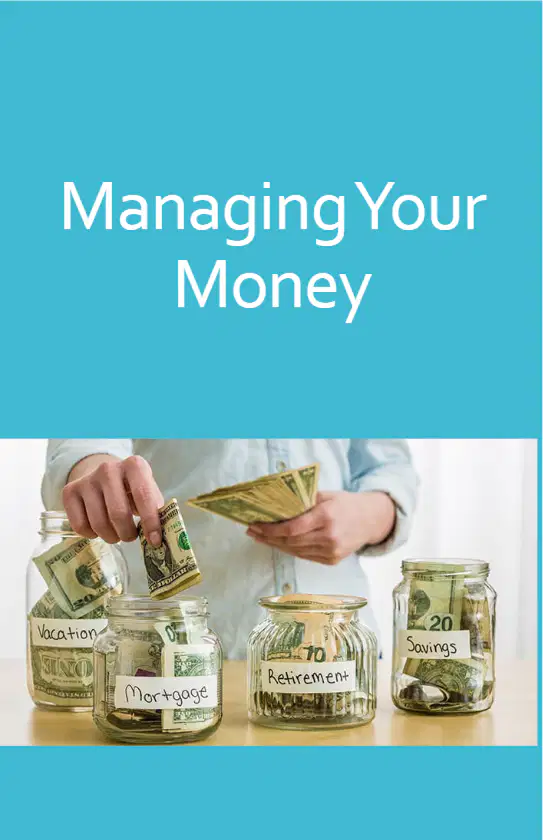
What is a budget?
A card that allows a consumer to buy something on credit
A record of income coming in and money going out for an individual
A long-term savings plan
A type of loan
What is a credit card?
A card that allows a consumer to buy something on credit
A record of income and expenses
A savings account
A budgeting tool
Tips when creating a budget include setting realistic goals, seeing how much money you can put into savings and reducing your expenses.
True
False
Budgets often fail because people set ______ goals.
unrealistic
easy
short-term
financial
Saving for a long-term goal often involves sacrificing in the ______-term.
short
medium
late
future
Keeping a budget may allow someone to pay off a credit card.
True
False
Based on the definition above, what is interest?
Interest is the cost of borrowing money or the reward for saving money, calculated as a percentage of the amount lent or saved.
Interest is the total amount of money you have in your bank account.
Interest is a type of tax paid on income.
Interest is the fee charged for using a credit card.
What is the total credit card debt in Australia?
$45 million
$32.2 billion
$4282
$1472
What is the average debt per credit card holder in Australia?
$4282
$737
$1472
$1108
When you get a loan, what do you have to pay?
Tax
Interest
Deposit
Insurance
It makes more financial sense to save up for what you want rather than spend money that you do not have.
True
False
Why are you encouraged to get a larger deposit for a house when getting a mortgage?
You will pay less in interest if the amount you need to borrow is smaller.
It will make the house more expensive.
It will increase your monthly payments.
It will reduce the value of the property.
It is important for a business to have a business plan because:
it provides direction and helps set goals.
it guarantees immediate success.
it eliminates all risks.
it removes the need for marketing.
What is one type of information that a business plan generally contains?
Overall ideals and goals of the business
Personal hobbies of the owner
Favorite movies of the employees
Weather forecast for the next year
List of popular vacation spots
What is one type of information that a business plan generally contains?
Information about the business
Recipes for cooking
Lyrics of popular songs
Travel itineraries
What is one type of information that a business plan generally contains?
A marketing plan
A weather forecast
A travel itinerary
A recipe for soup
A list of movie reviews
What is one type of information that a business plan generally contains?
A financial plan
A weather forecast
A recipe for soup
A list of movie reviews
Which type of financial record is a document showing evidence of a cash sale?
Cash receipts
Cash payments
Budgets
Income statements
Cash flow statements
Which type of financial record is a document showing evidence of an item purchased?
Cash receipts
Cash payments
Budgets
Income statements
Cash flow statements
Fill in the blank: __________ is a type of financial record that helps businesses plan their income and expenses.
Budgets
Invoices
Receipts
Loans
Why is it important for small businesses to monitor their financial position?
It is important so they are clear about their financial position.
So they can avoid paying taxes.
To ensure they never have to borrow money.
Because it is required by law for all businesses.
The number of business failures in Australia has risen sharply in the past few years. This has been impacted by a number of different aspects, such as increased business rates and the poor global economic conditions. Therefore, it is important that all businesses monitor their financial situation.
True
False
Fill in the blank: The focus of short-term profit goals is ________.
Making as much money as possible quickly.
Building long-term customer relationships.
Investing in employee development.
Focusing on sustainable growth.
Fill in the blank: The focus of long-term sustainable business practices is ________.
Making money while being responsible for the environment and society.
Maximizing short-term profits at any cost.
Ignoring environmental and social impacts.
Focusing only on rapid business expansion.
Which type of business practice may cut costs and take risks for fast profits?
Short-term profit goals
Long-term sustainable business practices
Which type of business practice invests in responsible practices and community engagement?
Short-term profit goals
Long-term sustainable business practices
Fill in the blank: The risks of short-term profit goals are ________.
Can lead to quick gains but might harm the business later.
Always beneficial for long-term growth.
Guaranteed to improve employee morale.
Unlikely to affect future business outcomes.
Fill in the blank: The risks of long-term sustainable business practices are ________.
May have lower short-term profits but fewer long-term risks.
Higher than traditional business practices in all aspects.
Completely eliminated by adopting sustainability.
Unpredictable and always increasing.
Investor expectations for long-term sustainable business practices attract ________.
patient investors who care about ethics and long-term growth
speculators seeking quick profits
investors focused solely on short-term returns
those uninterested in ethical considerations
Sustainability in short-term profit goals often doesn't prioritize ________.
environmental and social responsibility
increasing quarterly sales
reducing operational costs
expanding market share
Sustainability in long-term sustainable business practices prioritizes ________.
being good for the environment and society
maximizing short-term profits
ignoring environmental concerns
focusing only on shareholder returns
Fill in the blank: __________ refers to the ability of a business to adjust and change its strategies, operations, products, or services in response to changing circumstances, market conditions, or customer needs. It involves being flexible and responsive to the dynamic business environment.
Adaptation
Stagnation
Diversion
Isolation
Fill in the blank: __________ refers to the process of creating new ideas, products, services, or processes that are novel, valuable, and improve upon existing solutions. It can be small or disruptive (entirely new approaches) and is about finding better ways to do things or offering unique solutions to problems.
Innovation
Tradition
Imitation
Stagnation
Which of the following best describes 'Adaptation' in a business context?
Creating new ideas, products, or services that are novel and valuable
Adjusting and changing strategies, operations, products, or services in response to changing circumstances
Offering unique solutions to problems
Disrupting existing approaches
Which of the following best describes 'Innovation' in a business context?
Adjusting and changing strategies, operations, products, or services in response to changing circumstances
Being flexible and responsive to the business environment
Creating new ideas, products, services, or processes that are novel, valuable, and improve upon existing solutions
Responding to customer needs
The move to digitise the Yellow Pages was made due to the rapid growth of ______.
A) Print media
B) Digital and social media
C) Television
D) Radio
What is the term for the benefit that both adaptation and innovation give a business by helping it stay relevant and stand out in the market?
Competitive Advantage
Market Saturation
Operational Risk
Brand Dilution
Which reason for adaptation and innovation ensures that a business remains relevant and doesn't become obsolete?
Relevance
Profit Maximization
Cost Reduction
Market Saturation
Which reason for adaptation and innovation is described as enhancing customer satisfaction by responding to feedback and changing needs?
Customer Satisfaction
Cost Reduction
Market Expansion
Technological Advancement
Which reason for adaptation and innovation is associated with driving long-term growth and expanding product lines, entering new markets, and attracting a broader customer base?
Long-Term Growth
Short-Term Profit
Cost Reduction
Risk Avoidance
Which reason for adaptation and innovation describes businesses that can pivot quickly and find new opportunities even during challenging times?
Resilience
Compliance
Tradition
Routine
What is the term for the benefit of innovation that leads to more sustainable practices and products, attracting environmentally conscious consumers and investors?
Sustainability
Profit Maximization
Market Saturation
Brand Dilution
Fill in the blank: ________ may require minimal change according to the reasons why adapting in business is unnecessary.
Stable niche businesses
Rapidly growing startups
Highly competitive markets
Industries facing disruption
Fill in the blank: ________ or dominant businesses can resist adaptation according to the reasons why adapting in business is unnecessary.
Monopolies
Startups
Nonprofits
Small businesses
Fill in the blank: Extremely ________ businesses resist change due to regulations according to the reasons why adapting in business is unnecessary.
risk-averse
innovative
aggressive
flexible
In Australia, ______ is a financial contribution that individuals and businesses are required to pay to the government to fund public services and government activities.
tax
loan
grant
fine
Taxes are like money that people and businesses give to the government. The government uses this money for important things. Fill in the blank: Taxes can help make sure that rich people pay more in taxes than those with less money. This way, it's fairer for everyone. This is called ________.
Sharing Money Fairly
Tax Avoidance
Budgeting
Spending Wisely
Fill in the blank: Taxes pay for services like schools, hospitals, police, and firefighters. When you need help from these services, they're there because of taxes. This is called ________.
Paying for Public Services
Personal Savings
Private Investment
Charitable Donations
Fill in the blank: Some of the tax money goes to help people who might be struggling. This can include things like food and housing support. This is called ________.
Helping People in Need
Paying Bills
Building Roads
Collecting Taxes
Fill in the blank: Taxes also help fix and build things like roads and bridges so that everyone can use them safely. This is called ________.
Fixing Roads and Buildings
Paying Salaries
Buying Groceries
Saving Money
Some tax money goes toward taking care of the environment, like cleaning up pollution and using clean energy. This is called ________.
Protecting the Environment
Building Roads
Funding Sports Events
Supporting the Military

