
 Worksheets
Lesson 12.1: Cooking Techniques
Total questions: 40
Worksheet time: 23mins
Which of the following is a reason food is cooked?
To make food safer to eat by killing harmful microorganisms
To make food colder and preserve it for longer periods
To reduce the nutritional value of food
To prevent food from changing its texture
What is one effect of cooking on food?
Cooking can change the texture and flavor of food
Cooking always makes food less nutritious
Cooking prevents food from being digested
Cooking makes food taste bland
Match each cooking method to its primary process of heat transfer.
Boiling
Convection
Grilling
Radiation
Baking
Conduction
Which of the following is considered a basic cooking method?
Steaming
Freezing
Fermenting
Dehydrating
Which of the following is the most important reason for cooking food?
Food safety
Making food look more attractive by changing its appearance
Adding variety and interest to meals
Making food easier to digest
Match each reason to cook food with its correct description.
Safer to Eat
Heat kills microorganisms that cause spoilage and illness.
More Digestible
The cooking process makes it easier for the body to extract nutrients from many foods.
Improved Appeal
Food products take on different appearances, flavors, aromas, and textures based on how they are cooked.
Which of the following is a possible effect of overcooking food?
Texture is destroyed; foods become mushy and disintegrate, or tough and stringy
Foods become more flavorful and retain moisture
Vegetables become more colorful and appealing
Proteins remain tender and do not curdle

Match each effect of overcooking with its correct description.
Moisture is lost
Foods become mushy and disintegrate, or tough and stringy
Texture is destroyed
Proteins become tough or separate
Proteins may curdle or toughen
Foods become dry
Vegetables change or lose color
Foods taste bitter
Sugars burn
Vegetables become unappealing

Select all the effects that can result from overcooking food.
Nutrients are lost or destroyed
Vegetables change or lose their color
Foods become more moist
Sugars burn, causing foods to taste bitter
Which method of heat transfer involves the transfer of heat energy through direct contact?
Conduction
Convection with movement through liquids
Radiation through waves
Convection with movement through gases
Match each method of heat transfer to its correct description.
Conduction
Transfer of heat energy through waves
Convection
Transfer of energy through
direct contact
Radiation
Manner in which heat energy
moves
through
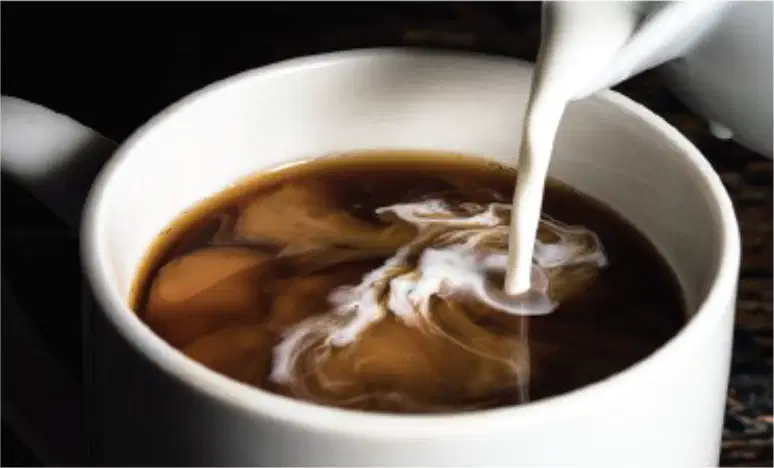
The image shows milk being poured into a cup of coffee. Which method of heat transfer is most likely occurring as the milk mixes with the coffee?
Convection
Conduction
Radiation
Evaporation

Which of the following is NOT a way that heat can be transferred during cooking?
Absorption
Conduction
Convection
Radiation

Match each cooking method type to its description:
Dry-heat methods
Use little or no liquid to cook food
Moist-heat methods
Use water or steam to cook food
Combination methods
Use both dry and moist heat
during
cooking
Which of the following is the main reason dry-heat cooking methods begin with a high temperature?
To achieve browning of the food
To cook food slowly and evenly
To break down tough fibers
To add moisture to the food
Compared to moist cooking methods, what is a characteristic of dry-heat cooking methods regarding fibers and tissues in food?
They do not break down fibers or tissues as well as moist methods
They break down fibers and tissues more effectively than moist methods
They add moisture to fibers and tissues
They make fibers and tissues tougher
Dry-heat cooking methods are most often used with which type of food products?
Tender products
Tough products
Frozen products
Processed products
Which cooking method involves cooking an item in a small amount of fat over high heat?
Sauteing
Panfrying with food covered completely in fat
Sweating with food in a large amount of fat
Boiling in water
What is the main difference between sweating and sauteing?
Sweating uses low heat, while sauteing uses high heat
Sweating uses more fat than sauteing
Sauteing is only for vegetables, while sweating is for meat
Sweating requires food to be cut into large pieces
Which statement best describes panfrying?
Cooks food in enough hot fat to cover it halfway
Cooks food in a small amount of fat over high heat
Cooks food in boiling water
Cooks food in fat that completely covers the food
When panfrying large pieces of meat, fish, or poultry, what is the recommended next step after panfrying?
Finish cooking in the oven
Serve immediately
Cut into small pieces before serving
Cool rapidly before serving
Which of the following best describes the process of deep-frying?
Cooking food in enough hot fat to fully cover the item
Cooking food in a small amount of oil on a pan
Boiling food in water until it is soft
Steaming food above boiling water
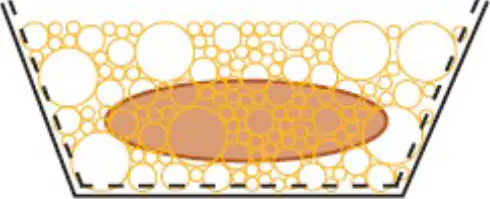
What is the recommended temperature range for deep-frying foods, as shown in the diagram?
325°F–375°F (163°C–191°C)
200°F–250°F (93°C–121°C)
400°F–450°F (204°C–232°C)
100°F–150°F (38°C–66°C)
Match each deep-frying step to its correct description.
Dredge, bread, or batter foods
Heat moves through the oil to cook food
Transfer heat by convection
Recommended equipment for best results
Use a deep-fat fryer
Coat foods before frying
Which of the following is the first step in the dredging method for coating foods for deep-frying?
Place food in a dish containing seasoned flour and coat with flour.
Dip food into an egg mixture before coating.
Shake off excess batter before frying.
Place food in breading and coat.
Match each deep-frying coating technique to its correct sequence of steps.
Dredging
Coat food in seasoned flour, then gently pat or shake to remove excess flour.
Breading
Dredge in flour, dip in egg mixture, coa
Battering
Dip food into batter, coat completely, gently shake off excess batter, place in fryer.
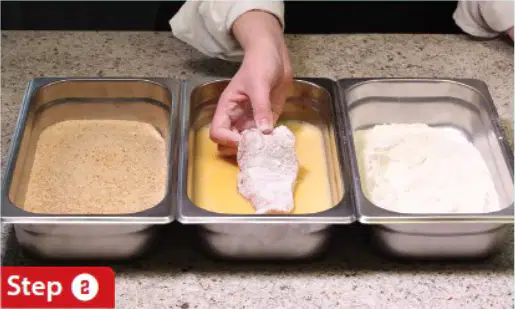
Which ingredient is used in both the dredging and breading methods for coating foods before deep-frying?
Seasoned flour
Egg mixture
Batter
Bread crumbs

Select all steps that are part of the breading method for coating foods for deep-frying.
Dredge food in flour.
Dip food into egg mixture.
Coat food with batter.
Place food in container of breading and coat.
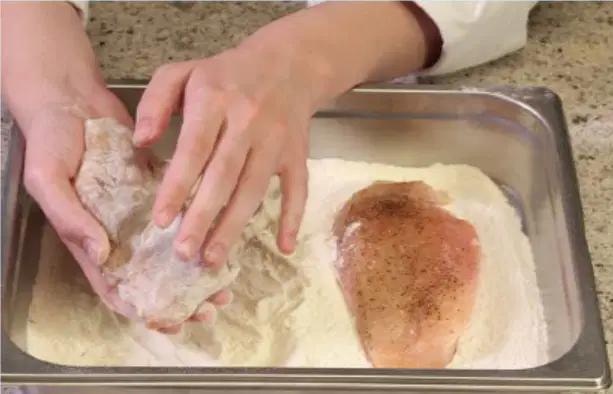
What is the purpose of gently patting or shaking food after coating it in flour or batter during deep-frying preparation?
To remove excess coating and ensure even frying.
To add more flavor to the food.
To make the coating thicker.
To cool the food before frying.
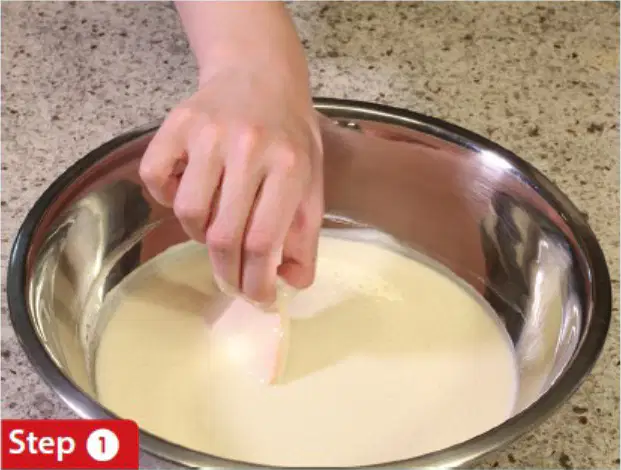
In the battering method for deep-frying, what should be done after dipping food into batter and coating it completely?
Gently shake off excess batter and place food in fryer.
Dip food into egg mixture.
Coat food with bread crumbs.
Pat food with flour.
Which cooking method uses radiation from a heat source located below the food?
Grilling
Broiling
Steaming
Poaching
Which of the following is a common heat source for grilling?
Charcoal
Microwave
Steam
Boiling water
What effect does smoke have on food during grilling?
It adds flavor to the food
It makes the food soggy and bland
It removes nutrients from the food
It cools the food down
What does the term 'gratiner' mean in cooking?
To steam a food product
To brown a food product
To freeze a food product
To boil a food product
Which cooking method involves surrounding food with hot air and leaving it uncovered so moisture evaporates?
Simmering with a cover
Boiling with a lid on
Steaming in a closed container
Roasting
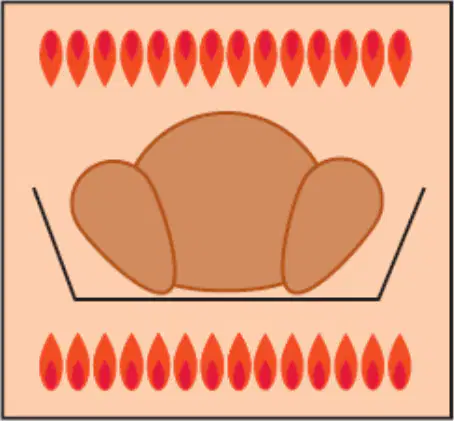
What is the typical temperature range for roasting food, as shown in the diagram?
500°F–600°F (260°C–316°C)
100°F–200°F (38°C–93°C)
400°F–425°F (160°C–219°C)
200°F–250°F (93°C–121°C)
Match each cooking method to its description.
Roasting
Surrounds food with hot air and leaves it uncovered so moisture evaporates
Boiling
Cooks food in water at 212°F (100°C)
Steaming
Uses steam to cook food in a closed container
Why is food left uncovered during roasting?
To allow moisture to evaporate
To keep moisture inside the food
To prevent browning
To cook food faster by trapping steam
Which of the following best describes the process of roasting?
Cooking food by surrounding it with hot air, leaving it uncovered so moisture evaporates
Cooking food by immersing it in boiling water with a lid on
Cooking food by steaming it in a closed container
Cooking food by frying it in oil at high temperatures
Name four techniques that we learned to ensure that our fried food remains crispy without being oily?

