
 Worksheets
UC/S and UA quiz in 240-324 2.2025
Total questions: 10
Worksheet time: 6mins
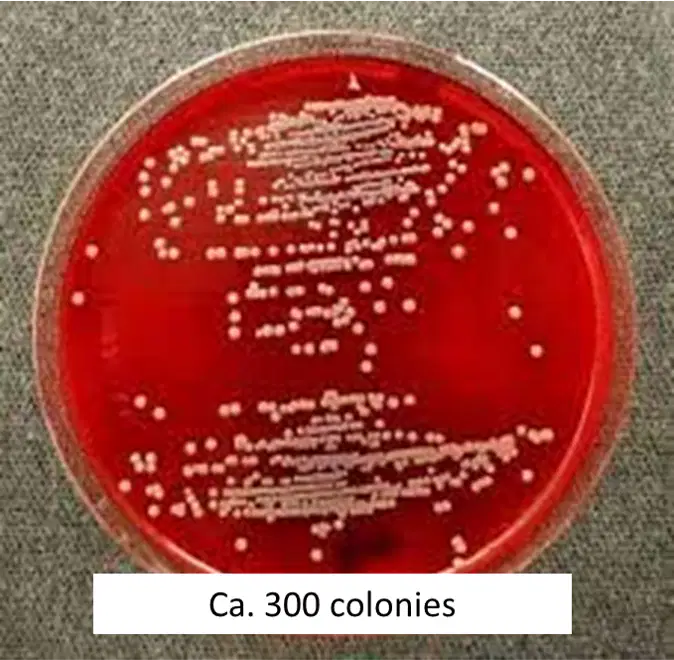
This urine C/S was done on blood agar by using 0.001 ml (1 ul) calibrated loop. What is this urine colony count?
300 CFU/ml
10^5 CFU/ml
10000 CFU/ml
3 x 10^5 CFU/ml
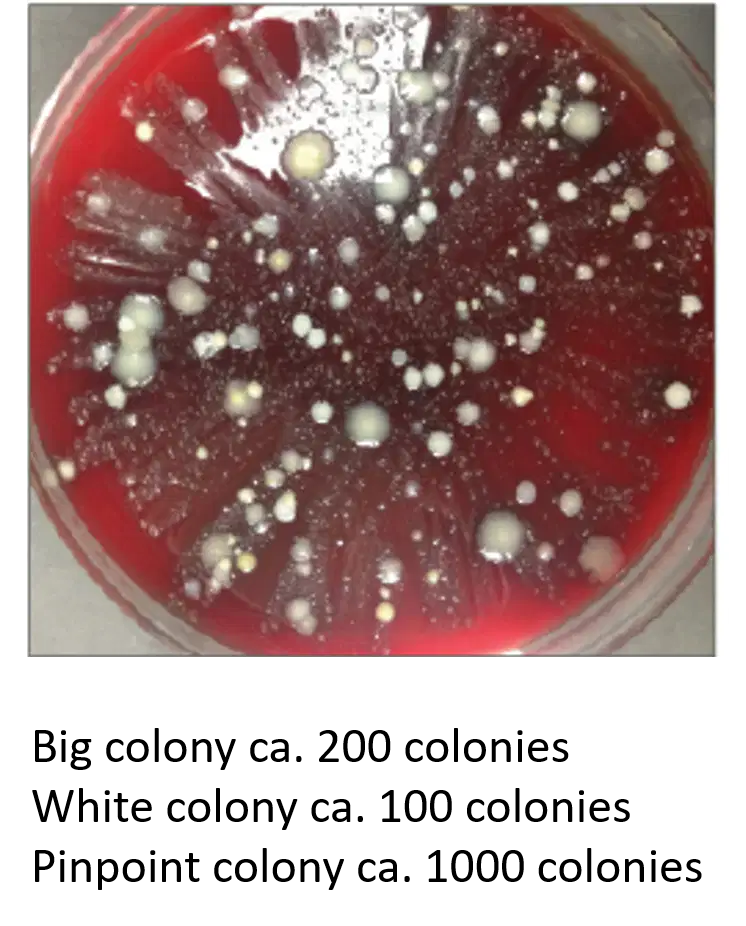
Counting result:
Big colony ca. 200 colonies
White colony ca. 100 colonies
Pinpoint colony ca. 1000 colonies
Should lab worker perform culture identification and AST?
Perform for white and Pinpoint colonies
Perform for all colony types
Not perform
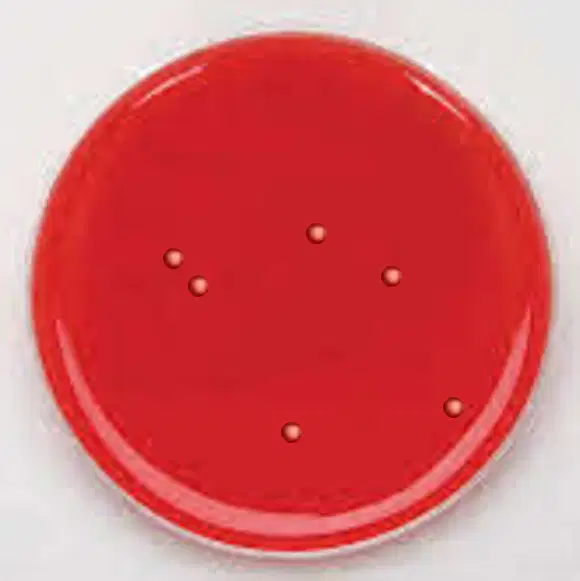
Urine culture from suprapubic aspirate
What lab results will you get?
Pathogen name
Pathogen name + AST
Urine gram stain + Pathogen name + AST
What is the most appropriate container for urine when suspect UTI?
Clean plastic cup with cap
Sterile plastic cup with cap
Amies Transport Media
The urinalysis from symptomatic inpatient: yellow and slightly turbid, leukocyte esterase 1+, nitrite negative.
What is the most likely pathogen?
Corynebacterium spp.
Klebsiella pneumoniae
Pseudomonas aeruginosa
E. coli
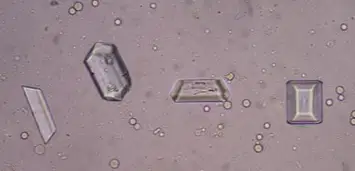
Which one is related to this kind of crystal in bloody & cloudy urine?
Urine pH 6.5
Salicylic acid intoxication
Leukemia
repeated UTI from urease-producing bacteria
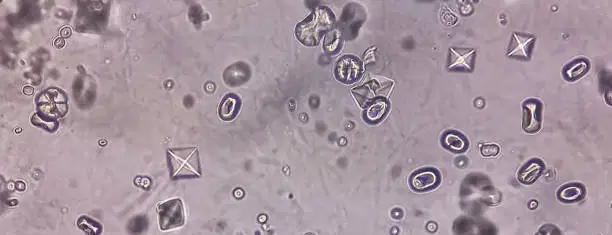
Which one is related to this kind of crystal in bloody & cloudy urine?
Excess ascorbic acid consume
Salicylic acid intoxication
Leukemia
repeated UTI from urease-producing bacteria
Which of the followings is most related to patient with discoid rash, generalized edema, hypoalbuminemia, heavy proteinuria and hypercholesterolemia?


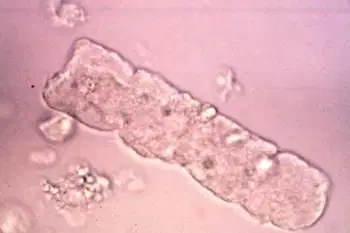
This type of urinary cast is associated with which specific kidney conditions?
Acute glomerulonephritis
Acute tubular necrosis
End-stage renal disease
Nephrotic syndrome
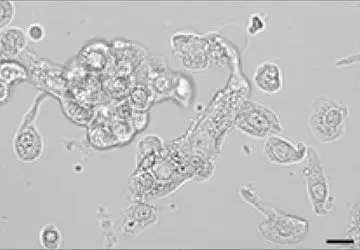
This type of urinary cast is associated with which specific conditions?
Acute glomerulonephritis
Acute tubular necrosis
End-stage renal disease
Toxigenic C. diphtheriae infection

