
 Worksheets
Common Injuries of the Shoulder
Total questions: 90
Worksheet time: 45mins
Fill in the blank: To prevent shoulder injuries, it is important to develop body and specific regions relative to _______.
sport
age
weather
diet
Fill in the blank: Strengthen through a full _______ to help prevent shoulder injuries.
ROM (Range of Motion)
rest period
body weight
cool down
Fill in the blank: Warm-up should be used before _______ arm movements are attempted to prevent shoulder injuries.
explosive
gentle
slow
static
Fill in the blank: Contact and collision sport athletes should receive proper instruction on _______ to prevent shoulder injuries.
falling
running
jumping
stretching
Fill in the blank: Protective equipment that _______ properly helps prevent shoulder injuries.
fits
breaks
shrinks
loosens
Fill in the blank: Proper mechanics helps decrease _______ injuries in the shoulder.
overuse
acute
chronic
traumatic
Which of the following activities require proper mechanics to help prevent shoulder injuries?
Throwing
Spiking
Tackling
Overhead serving
All of the above
What is a common cause of clavicle fractures?
Fall on outstretched arm
Fall on tip of shoulder
Direct impact
All of the above
Clavicle fractures occur primarily in which part of the clavicle?
Outer third
Middle third
Inner third
None of the above
Which of the following is a sign or symptom of a clavicle fracture?
A. Supporting of arm
B. Head tilted towards injured side with chin turned away
Both A and B
D. None of the above
What is the Percussion Test for clavicle fractures?
Press along the length of the clavicle
Tap the distal end of the clavicle
Apply ice to the clavicle
Immobilize with a brace
What is the Compression Test for clavicle fractures?
Tap the distal end of the clavicle
Press along the length of the clavicle
Apply heat to the clavicle
Refer to physician
For how many weeks should a figure 8 brace be used to immobilize a clavicle fracture according to management guidelines?
6-8 weeks
2-4 weeks
10-12 weeks
1-2 weeks
What is the etiology of scapula fractures?
Result of direct impact or force transmitted up through humerus
Result of infection
Result of poor nutrition
Result of aging
Which of the following is a sign or symptom of scapula fractures?
A) Pain during shoulder movement
B) Swelling
C) Point tenderness
D) All of the above
Fill in the blank: The special test for scapula fractures involves ________ - lightly press with the hand on the scapula.
Compression
Percussion
Distraction
Rotation
A sling should be used immediately and follow-up with X-ray is recommended for scapula fractures.
True
False
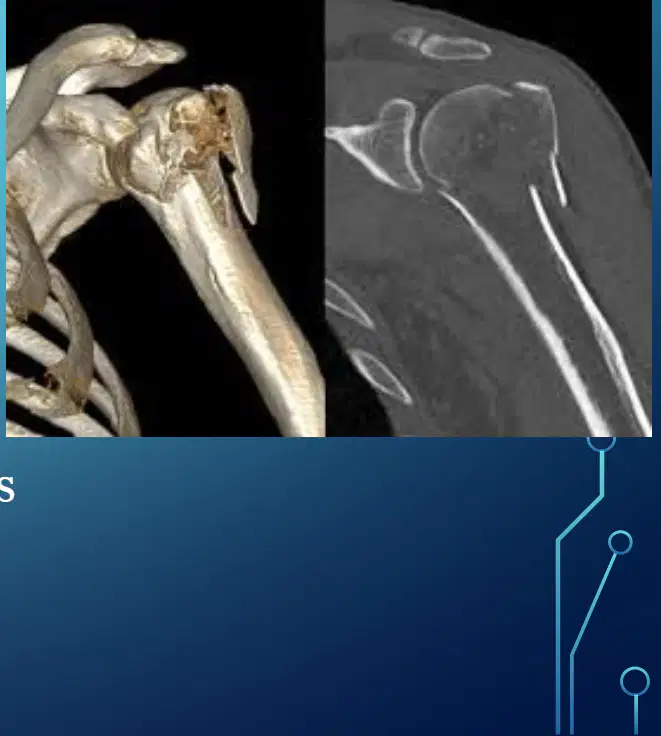
What is a common cause of fractures of the humerus?
Direct blow
Fall on outstretched arm
Stretching of the ligaments
None of the above
Fractures of the humerus may pose danger to which of the following?
Nerve and blood supply
Muscle
Skin
Ligament
Fill in the blank: Signs and symptoms of humerus fractures include pain, swelling, point tenderness, and decreased _____
ROM (Range of Motion)
appetite
hearing
vision
What is the special test used to identify a humerus fracture if there is no obvious deformity?
Compression
Extension
Rotation
Flexion
The compression test for humerus fracture should be performed only if there is no obvious deformity.
True
False
What is the immediate management for a humerus fracture with obvious deformity?
Immediate application of vacuum splint, treat for shock and refer
Immediate reduction of the fracture at the scene
Apply heat pack and massage the area
Encourage movement to prevent stiffness

What is the management for a humerus fracture with no obvious deformity?
Application of sling, treat for shock and refer
Immediate surgical intervention
Apply ice pack and massage the area
Encourage active movement of the arm
What is a possible cause of Sternoclavicular (SC) Sprain?
Which of the following is a sign or symptom of Grade 1 Sternoclavicular (SC) Sprain?
A) Pain and slight disability
B) Pain, subluxation with deformity
C) Gross deformity, pain, swelling
D) Possibly life-threatening
Fill in the blank: Grade 2 Sternoclavicular (SC) Sprain is characterized by pain, subluxation with deformity, swelling and point tenderness, and decreased _____
ROM (Range of Motion)
BP (Blood Pressure)
HR (Heart Rate)
Temperature
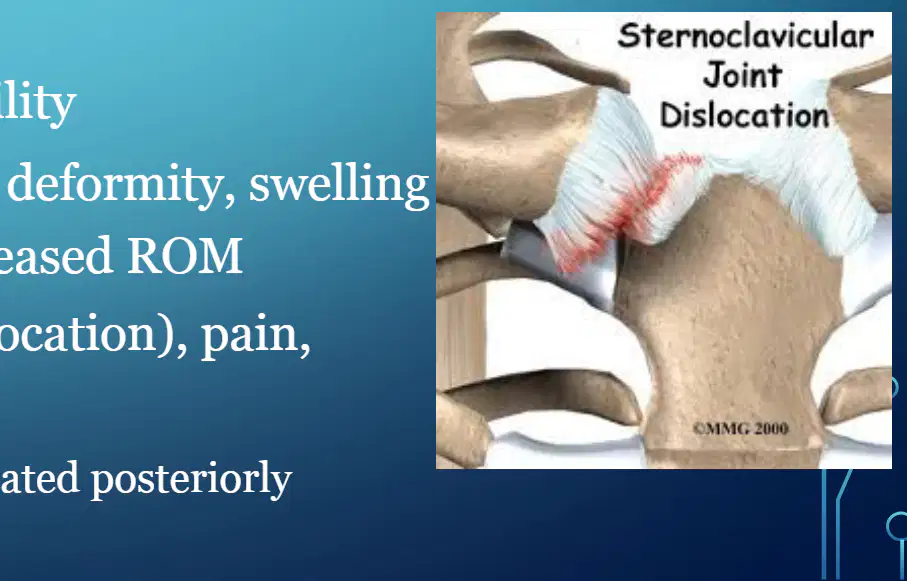
Which grade of Sternoclavicular (SC) Sprain may be possibly life-threatening if dislocated posteriorly?
Grade 1
Grade 2
Grade 3
None of the above
What is the SC Spring Test used for in the diagnosis of Sternoclavicular (SC) Sprain?
A) Apply anterior pressure to the distal end of the clavicle
B) Apply posterior pressure to the proximal end of the clavicle, compare to other side
C) Apply lateral pressure to the scapula
D) Apply downward pressure to the sternum
What does the acronym RICE stand for in the management of Sternoclavicular (SC) Sprain?
Rest, Ice, Compression, Elevation
Rest, Immobilize, Compress, Elevate
Reduce, Ice, Compress, Elevate
Rest, Ice, Cast, Elevate
How long should a patient with Sternoclavicular (SC) Sprain be immobilized according to management guidelines?
1-2 weeks
3-5 weeks
6-8 weeks
10-12 weeks
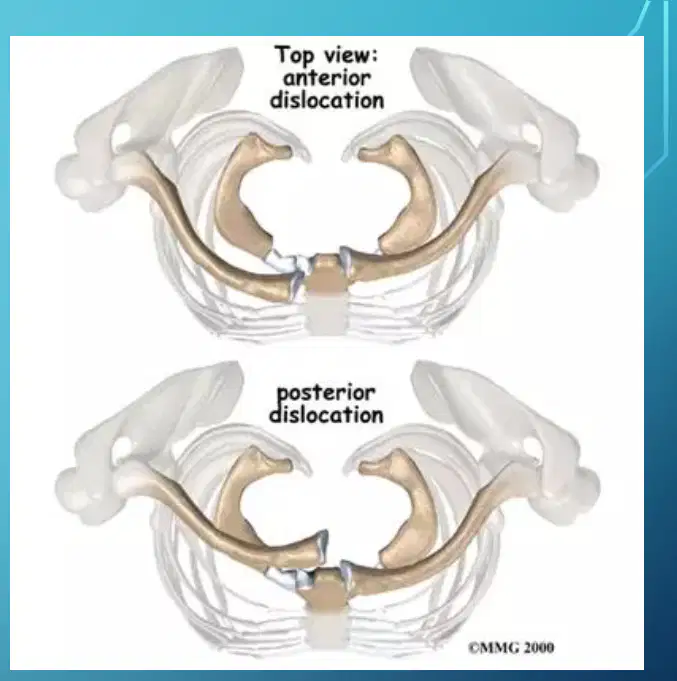
Refer to the diagram showing anterior and posterior dislocation of the sternoclavicular joint. Which type of dislocation is shown in the top view?
A) Anterior dislocation
B) Posterior dislocation
What is the result of a direct blow (from any direction) in relation to Acromioclavicular (AC) Sprain?
Fracture of the humerus
AC Sprain
Dislocation of the elbow
Sprain of the wrist
How many grades can Acromioclavicular (AC) Sprain be classified into depending on severity?
3
4
6
8
Fill in the blank: Grade 1 AC Sprain is characterized by point tenderness and pain with movement; no disruption of ____ joint.
AC
SC
GH
TC
Which grade of AC Sprain involves tear or rupture of AC ligament, partial displacement of lateral end of clavicle, pain, point tenderness and decreased ROM (abduction/adduction)?
Grade 1
Grade 2
Grade 3
Grade 4
Fill in the blank: Grade 3 AC Sprain involves rupture of ____ and ____ ligaments.
AC and CC
AC and SC
CC and SC
AC and TC
Which grade of AC Sprain is characterized by posterior dislocation of clavicle?
Grade 2
Grade 3
Grade 4
Grade 5
Fill in the blank: Grade 5 AC Sprain involves loss of AC and CC ligaments, tearing of deltoid and trapezius attachments, gross deformity, severe pain, and decreased ____.
ROM
blood flow
temperature
sensation
Which grade of AC Sprain involves displacement of clavicle behind the coracobrachialis?
Grade 4
Grade 5
Grade 6
Grade 3
What is the special test used to diagnose an Acromioclavicular (AC) Sprain?
Spring Test or 'Piano Key' - apply pressure with finger on the clavicle
Lachman Test
McMurray Test
Thompson Test
What is the first step in the management of an Acromioclavicular (AC) Sprain?
Surgery
Ice, stabilization, referral to physician
Aggressive rehab
Padding and protection
Grades 1-3 (non-operative) AC sprains will require ______ days and ______ weeks of immobilization respectively.
3-4 days and 2 weeks of immobilization respectively
1-2 days and 1 week of immobilization respectively
5-6 days and 3 weeks of immobilization respectively
7-8 days and 4 weeks of immobilization respectively
Grades 4-6 AC sprains will require ______.
surgery
rest and ice
physical therapy
compression wraps
Aggressive rehab is required with all grades of Acromioclavicular (AC) Sprain.
True
False
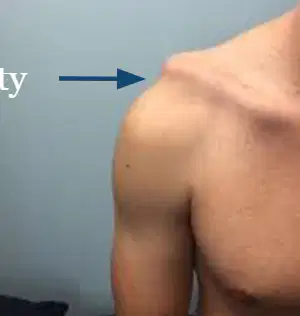
What does the image show in relation to Acromioclavicular (AC) Sprain?
Step-off Deformity
Bruising
Swelling
Dislocation
What is subluxation? Fill in the blank: Subluxation involves excessive translation of humeral head without complete separation from joint. This is also known as _________?
Partial Dislocation
Complete Dislocation
Fracture
Sprain
What is dislocation? Fill in the blank: Dislocation occurs when the humeral head is forced completely out of the ________ cavity.
glenoid
acetabular
orbital
thoracic
Which of the following directions can a dislocation occur?
A) Anteriorly
B) Posteriorly
C) Inferiorly
D) All of the above
Dislocation will have a high recurrence of chronic instability.
True
False
What are the signs and symptoms of an anterior dislocation?
Severe pain and disability; prominent acromion and coracoid process; limited external rotation and elevation
Flattened deltoid, prominent humeral head in axilla; moderate pain and disability
Swelling and bruising only
No visible symptoms
What are the signs and symptoms of a posterior dislocation?
Flattened deltoid, prominent humeral head in axilla; moderate pain and disability
Severe pain and disability; prominent acromion and coracoid process; limited external rotation and elevation
Swelling and bruising only
No visible symptoms
Label the following parts as shown in the clinical appearance of glenohumeral dislocation diagram: Match each label to its correct anatomical location.
Top of shoulder
Acromion prominent
Lateral aspect of shoulder
Shoulder flattened
Below acromion, upper arm
Humeral head prominent
Arm away from body
Arm in slight abduction
Elbow bent
Elbow flexed
Look at the diagram labeled 'Normal anatomy'. What type of shoulder condition is shown in this diagram?
Normal anatomy
Anterior dislocation
Posterior dislocation
What type of shoulder condition is shown in this diagram?
Normal anatomy
Anterior dislocation
Posterior dislocation
Look at the diagram labeled 'Posterior dislocation'. What type of shoulder condition is shown in this diagram?
Normal anatomy
Anterior dislocation
Posterior dislocation
What is the permanent anterior defect of labrum called in shoulder dislocations?
Bankart Lesion
Hill-Sachs Lesion
SLAP Tear
Rotator Cuff Tear
Which lesion is caused by compression of cancellous bone against anterior glenoid rim creating a divot in the humeral head?
Hill Sachs Lesion
Bankart Lesion
SLAP Lesion
Reverse Hill Sachs Lesion
What is the defect in superior labrum that begins posteriorly and extends anteriorly impacting attachment of long head of biceps on labrum called?
SLAP Lesion
Bankart Lesion
Hill-Sachs Lesion
Rotator Cuff Tear
Which nerves and vessels may be compromised as a possible complication of shoulder dislocations?
Brachial nerves and vessels
Femoral nerves and vessels
Radial nerves and vessels
Sciatic nerves and vessels
What type of injuries may occur as a possible complication of shoulder dislocations?
Rotator cuff injuries
Ankle sprain
Tennis elbow
Carpal tunnel syndrome
What tendon subluxation and ligament rupture may occur as a possible complication of shoulder dislocations?
Bicipital tendon subluxation and transverse ligament rupture
Supraspinatus tendon subluxation and coracoacromial ligament rupture
Infraspinatus tendon subluxation and glenohumeral ligament rupture
Subscapularis tendon subluxation and acromioclavicular ligament rupture
What are the possible etiologies of Chronic Recurrent Instabilities?
Traumatic, repetitive use
Congenital
Neuromuscular
All of the above
Which sign or symptom is associated with anterior instability in Chronic Recurrent Instabilities?
Possible impingement
Clicking and pain posteriorly
Laxity and pain with arm at side
Increased laxity and pain
Posterior instability in Chronic Recurrent Instabilities may present with ________ and pain.
possible impingement, increased laxity
muscle hypertrophy, decreased mobility
joint fusion, reduced sensation
bone fracture, swelling
Multidirectional instability in Chronic Recurrent Instabilities is characterized by:
Laxity
Pain and clicking with arm at side
Both A and B
None of the above
Which of the following is a conservative treatment for Chronic Recurrent Instabilities?
Strengthening of rotator cuff and scapula stabilizers
Surgical stabilization
Use of harnesses and restraints
All of the above
Surgical stabilization may be required to improve function and comfort in Chronic Recurrent Instabilities.
True
False
Fill in the blank: Strengthening should be continued for a ________ time before surgery is considered in Chronic Recurrent Instabilities.
reasonable
short
immediate
minimal

What is the mechanical cause of Shoulder Impingement Syndrome?
Compression of supraspinatus tendon, subacromial bursa, and long head of biceps tendon due to decreased space under coracoacromial arch
Fracture of the humerus
Dislocation of the shoulder
Tear of the rotator cuff
Shoulder Impingement Syndrome is commonly seen in which type of activities?
Over head repetitive activities where repetitive stresses lead to inflammation
Sedentary desk work with minimal arm movement
Walking and running without arm elevation
Swimming in shallow water without arm use
Name one sign or symptom of Shoulder Impingement Syndrome.
Diffuse pain, pain on palpation of subacromial space
Swelling of the fingers
Numbness in the lower leg
Blurry vision
Decreased strength of external rotators compared to internal rotators is a sign of Shoulder Impingement Syndrome.
True
False
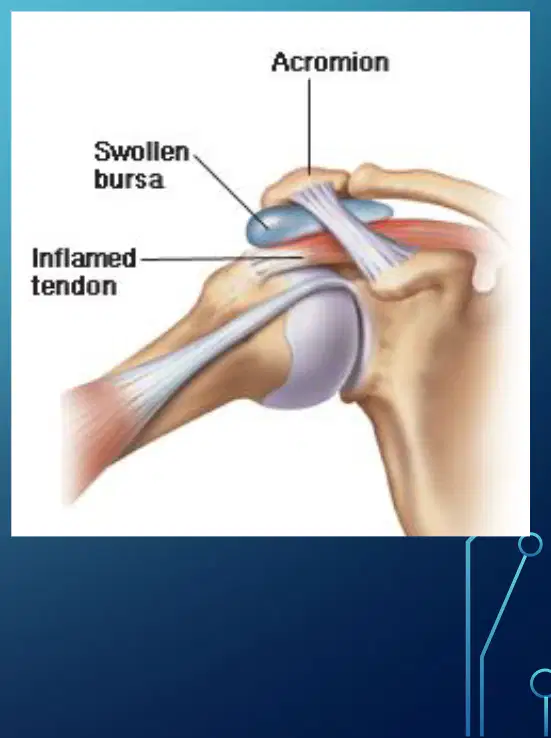
Which anatomical structure is shown as swollen in the diagram related to Shoulder Impingement Syndrome?
Bursa
Rotator cuff tendon
Acromion
Glenoid cavity
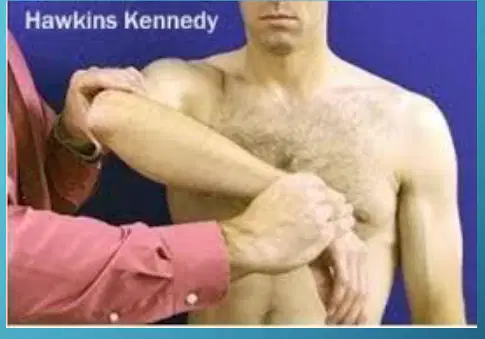
Which special test is used to identify impingement of the Subacromial Bursa in Shoulder Impingement Syndrome?
Neer's Test
Hawkins-Kennedy Test
Drop Arm Test
Empty Can Test
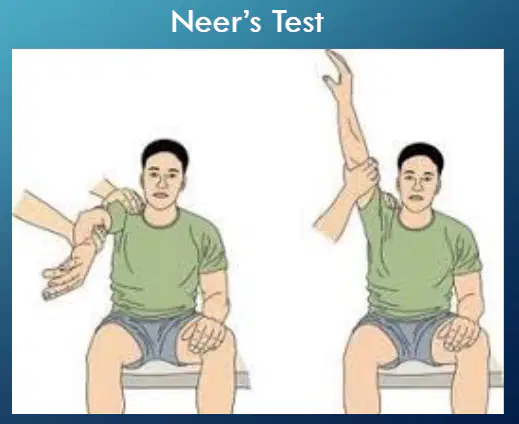
Which special test is used to identify impingement of the Supraspinatus in Shoulder Impingement Syndrome?
Neer's Test
Hawkins-Kennedy Test
Yergason's Test
Speed's Test
Fill in the blank: One management strategy for Shoulder Impingement Syndrome is to ________ appropriate mechanics.
restore
ignore
worsen
limit
Fill in the blank: Strengthening the ________ cuff helps to depress and compress the humeral head to restore space in Shoulder Impingement Syndrome.
rotator
deltoid
biceps
triceps
Fill in the blank: Strengthening the lower extremity and trunk helps to reduce ________ on the shoulder in Shoulder Impingement Syndrome.
stress
pain
weight
pressure

Refer to the diagrams of the shoulder. Which tendon is shown as being impinged in Shoulder Impingement Syndrome?
Biceps tendon
Supraspinatus tendon
Triceps tendon
Deltoid tendon
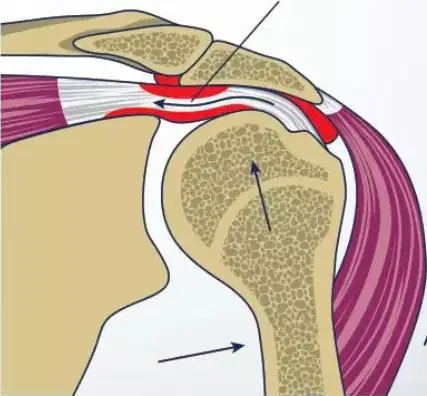
In the diagram, what is the name of the space that is reduced in Shoulder Impingement Syndrome?
Sub-acromial space
Glenoid cavity
Coracoid process
Rotator cuff interval
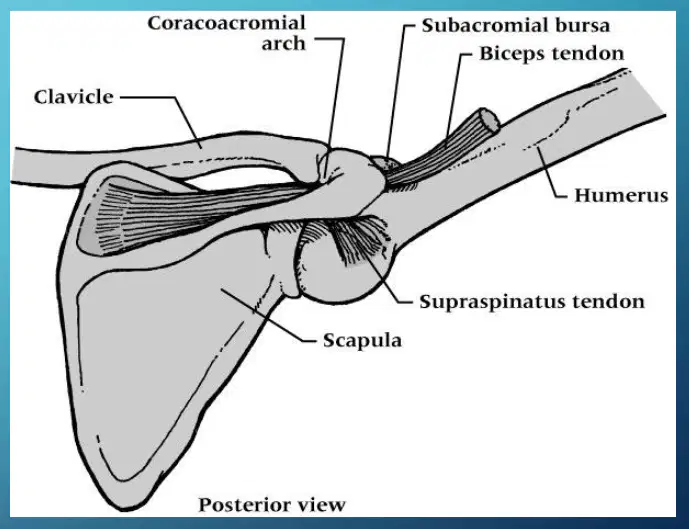
Match the following anatomical terms to their correct locations in the shoulder diagram:
Uppermost bone above the shoulder
Clavicle
Bone forming the back of the shoulder
Scapula
Long bone of the upper arm
Humerus
Tendon running above the humerus
Supraspinatus tendon
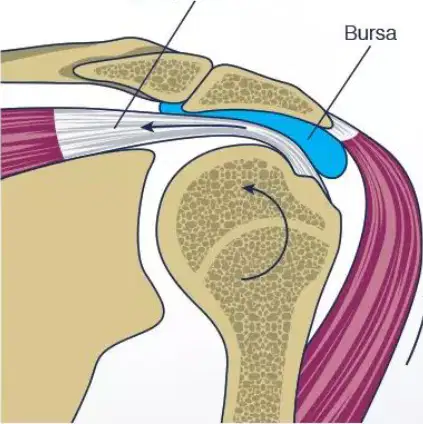
The bursa is located above the supraspinatus tendon in the shoulder diagram.
True
False
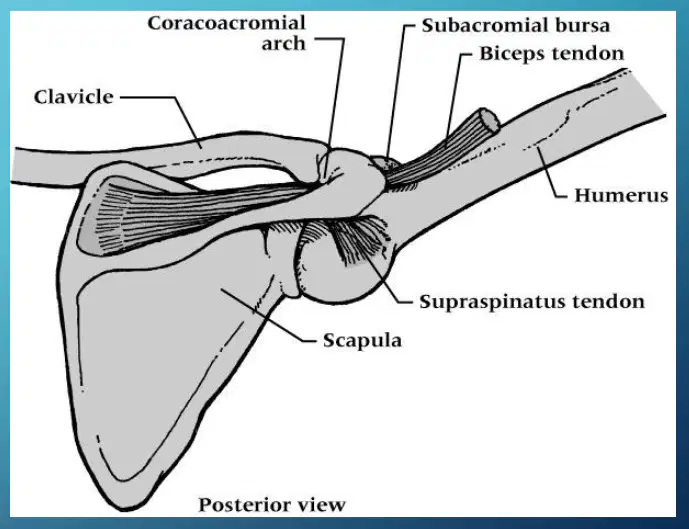
Fill in the blank: The ________ arch is labeled in the shoulder anatomy diagram and is involved in shoulder impingement syndrome.
Coracoacromial
Subacromial
Glenohumeral
Scapular
Where does a rotator cuff tear usually occur?
Near insertion on greater tuberosity
Near insertion on lesser tuberosity
At the biceps brachii tendon
At the acromion
Rotator cuff tears can be partial or complete thickness tears.
True
False
Full thickness rotator cuff tears usually occur in athletes with a long history.
True
False
What is the primary mechanism for rotator cuff tears?
Chronic overuse
Acute trauma or impingement
Infection
Genetic predisposition
Rotator cuff tears involve the supraspinatus or rupture of other rotator cuff tendons.
True
False
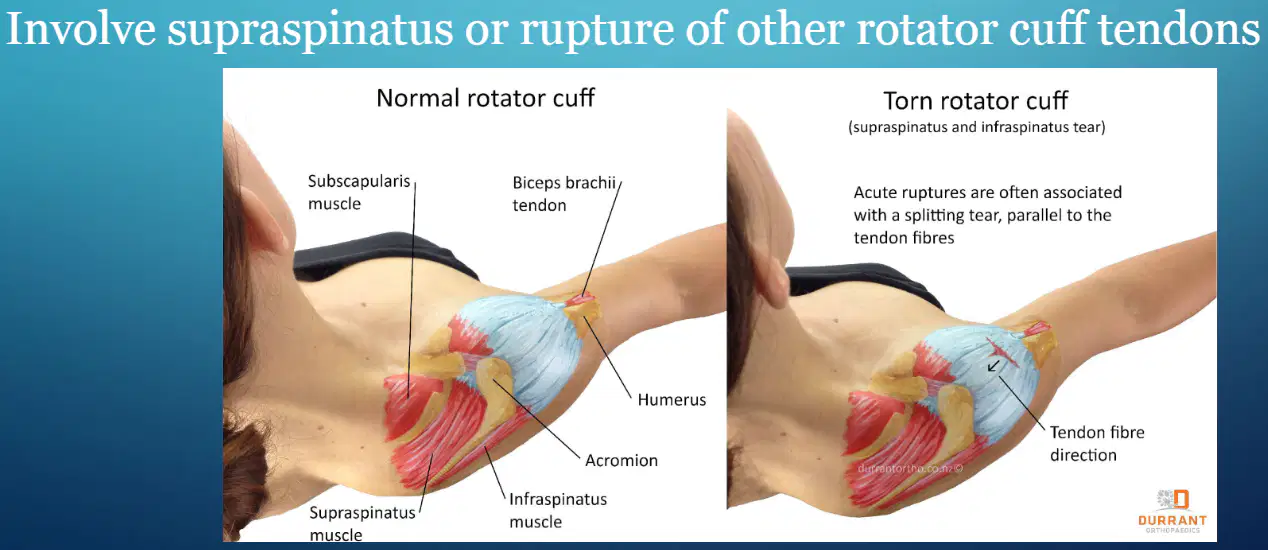
Label the following parts in the diagram of a normal rotator cuff:
Subscapularis muscle, Supraspinatus muscle, Infraspinatus muscle, Biceps brachii tendon, Humerus, Acromion.
Deltoid muscle, Trapezius muscle, Clavicle, Scapula, Radius, Ulna.
Pectoralis major, Latissimus dorsi, Teres major, Triceps brachii, Femur, Patella.
Gluteus maximus, Sartorius, Tibia, Fibula, Sternum, Mandible.

