
 Worksheets
Construction Site Safety Quiz
Total questions: 20
Worksheet time: 10mins
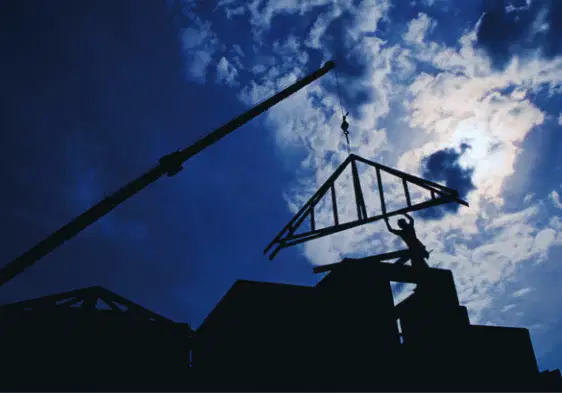
Imagine you are working on a construction site and need to work off the ground. What steps would you plan to take to make sure you and others are safe while using access equipment?
Make sure the equipment is used, maintained, and checked regularly.
Ignore safety rules and work quickly.
Only use equipment without checking it.
Let anyone use the equipment without training.
You have a fibreglass stepladder that has a damaged tread. What should you do, and why is it important to follow this step?
Dispose of the ladder because damaged fibreglass cannot be repaired.
Try to fix the ladder with glue and keep using it.
Paint over the damage and use it carefully.
Ignore the damage and use the ladder as normal.
If you find a fault while checking a stepladder, what is the best plan of action to keep everyone safe?
Take it out of use, report it, and attach a warning notice.
Use the ladder anyway and hope it is safe.
Hide the ladder so no one else can find it.
Only tell your friend and keep using the ladder.
Why is it important to ensure there is at least a four-rung overlap on each extension section of a ladder? Use reasoning to explain your answer.
It makes the ladder stronger and safer by providing extra support.
It makes the ladder look longer.
It helps the ladder to be lighter.
It makes the ladder easier to carry.
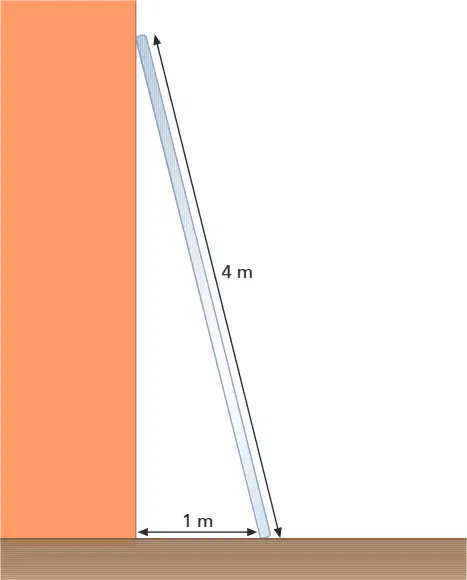
Imagine you are planning to use a ladder to reach a height of 8 meters on a wall. Using the recommended ratio for ladder placement, how far should the base of the ladder be from the wall? Explain your reasoning.
2 meters
4 meters
1 meter
8 meters
If you are using a ladder to reach a roof with a plastic gutter, how can you plan to protect the gutter from damage?
Place the ladder directly on the gutter.
Use a ladder stand off to prevent the ladder from bearing onto the plastic gutter.
Remove the gutter before using the ladder.
Use a wooden plank instead of a ladder.
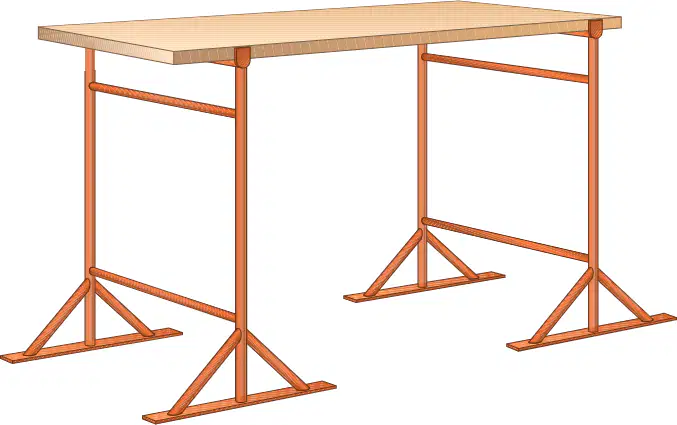
You need to choose between steel trestles and A-frame trestles for a painting job. What reasons would make you select steel trestles, and how would you set them up safely?
I would choose steel trestles because they are sturdier, adjustable in height, and can provide a wider platform. I would set them up on a flat scaffold board on firm, level ground, and make sure they are not placed more than 1.2 m apart.
I would choose steel trestles because they are lighter and can be placed anywhere, even on uneven ground.
I would choose steel trestles because they look nicer, and I would place them as far apart as possible.
I would choose steel trestles because they are cheaper, and I would set them up without checking the ground.
Before using scaffold boards for a working platform, what checks would you do to make sure they are safe, and why are these checks important?
I would check that the boards are not split, not twisted or warped, and have no large knots, because these problems can make the boards weak and unsafe.
I would use any boards without checking, because all boards are strong.
I would only check if the boards are clean, because dirt is the main problem.
I would use boards with large knots, because knots make them look interesting.
If you need to choose between an independent scaffold and a putlog scaffold for a building project, how would you decide which is more suitable?
Consider if you need a free-standing scaffold or one that attaches to the building for extra support.
Always choose the independent scaffold, no matter the situation.
Pick the scaffold that is the cheapest.
Use both types at the same time without planning.
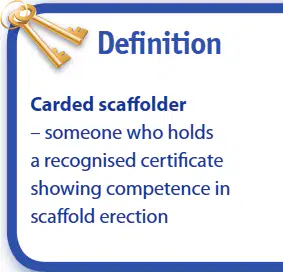
Why is it important that only a qualified carded scaffolder erects or alters scaffolding, and how would you use evidence to support this rule?
Because they have a recognised certificate showing competence, which helps ensure safety.
Because anyone can build scaffolding safely without training.
Because it is faster if unqualified people do it.
Because certificates are not important for safety.
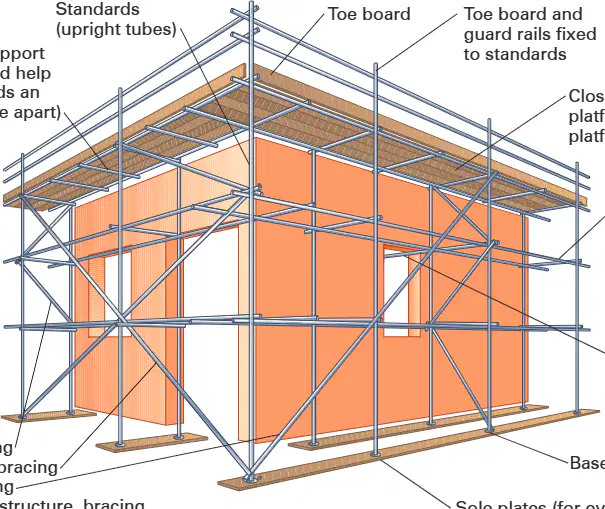
Imagine you are building a scaffold for painting a house. You need to make sure the scaffold is safe and stable. Which part of the scaffold would you use to keep the upright tubes (standards) an equal distance apart and support the boards?
Toe board
Transom
Sole plate
Guard rail
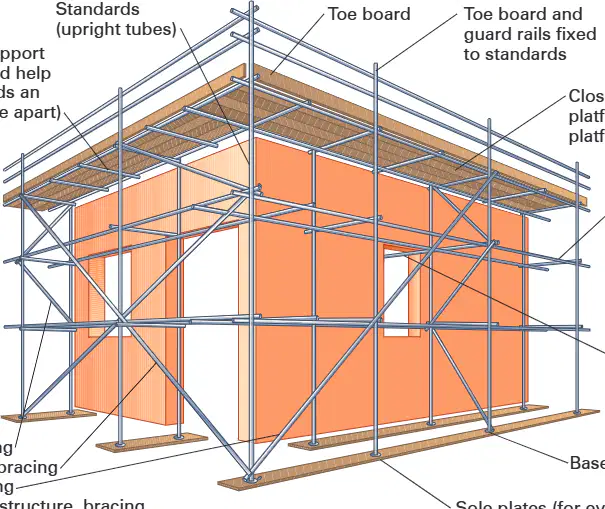
You notice that the scaffold you are working on is wobbly. Using your reasoning skills, which part should you check or add to make the structure firmer and more stable?
Toe board
Ledger bracing/Longitudinal bracing
Close boarded platform
Base plates
If you see a problem with the safety of the scaffold, what is the best thing to do to prevent serious injury or even death?
Ignore it and keep working
Report your doubts about safety
Wait for someone else to notice
Try to fix it yourself without telling anyone
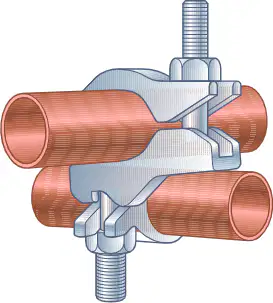
You need to join two scaffold tubes at a right angle to make the structure strong. Which fitting should you use?
Swivel coupler
Adjustable base plate
Right angle coupler
Sole plate
You are planning to increase the height of a tower scaffold. What should you do to make sure the tower remains stable, and why?
Increase the area of the base proportionally, because stability depends on the base size compared to the height
Add more workers to the scaffold, because more weight makes it stable
Use lighter materials, because lighter scaffolds are always stable
Paint the scaffold, because color affects stability
You are working on a tower scaffold platform that is 2.5 meters high. What safety features must you ensure are in place, and why?
Guardrails and toe boards must be fitted, because they prevent falls from the platform
Only toe boards are needed, because guardrails are not important
No safety features are needed at this height
Only guardrails are needed, because toe boards are for higher platforms
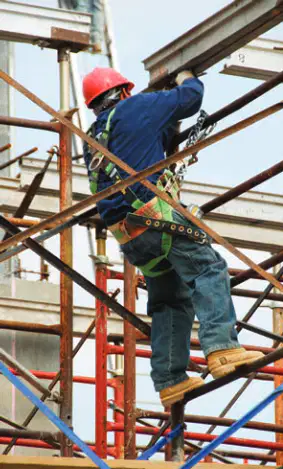
If you are using a harness and lanyard system while working at height, how does it help you if you slip? Explain your reasoning.
It stops you from falling all the way to the ground by keeping you hanging from the cord/lanyard.
It makes you fall faster to the ground.
It does not help at all if you slip.
It only works if you are on the ground.
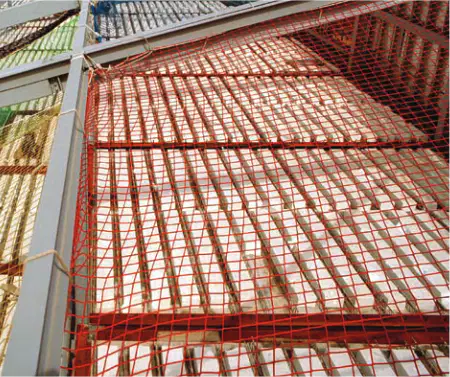
You are asked to choose the best fall protection for workers installing a roof on a building with fragile surfaces. What would you recommend and why?
Safety netting, because it can catch workers who may slip or fall on fragile roofs.
Harness and lanyard, because it works best on fragile roofs.
Air bags, because they are always used for roofing.
No protection, because fragile roofs do not need safety measures.
Pete needs to plan his work on the fascia boards. What are some things he should consider to keep himself and others safe while working at height?
Egress and exit points, if the area is closed off to the public, and how long he will be working at height.
The type of paint he will use.
The number of trees nearby.
The time of day only.
Before using scaffolding, what are some important questions you should ask yourself to make sure it is safe to use? Explain why asking these questions is important.
Ask if the scaffold is stable, if guardrails are in place, and if it is on level ground; these questions help prevent accidents.
Ask if the scaffold is colorful, if it looks new, and if it is tall enough; these questions are about appearance.
Ask if you can jump on the scaffold, if it is fun, and if it is shiny; these questions are not about safety.
Ask if the scaffold is heavy, if it is made of wood, and if it is old; these questions do not ensure safety.

