
NEW
Font size
 Worksheets
HSP3U Understanding the Brain
Total questions: 20
Worksheet time: 10mins
What percentage of people remembered information when it was presented in the form of a narrative?
13%
50%
93%
75%
What percentage of our memories change in a year?
25%
50%
75%
100%
What is one reason teens may misread emotions or facial expressions?
Their hippocampus is overactive
Their prefrontal cortex (PFC) is still developing
Their synaptic pruning is incomplete
Their cerebellum is underdeveloped
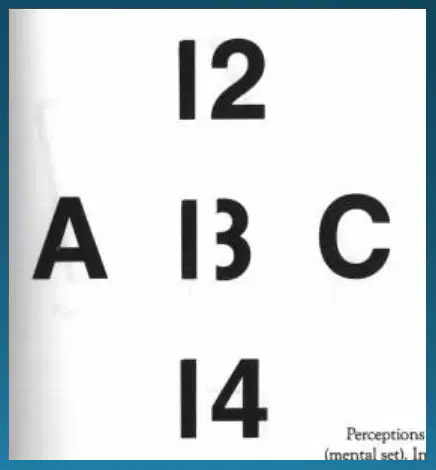
How do perceptual sets affect the way we view the world?
They make us focus on irrelevant details.
They influence our perception based on prior experiences and expectations.
They eliminate biases in our perception.
They enhance our ability to multitask.
Which part of the brain is responsible for short-term and long-term memory as well as the emotional system?
Cerebellum
Hippocampus
Medulla Oblongata
Hypothalamus
Where are memories stored in the brain?
In one specific place
In multiple places
In the hippocampus only
In the cerebellum only
What hormone is released by the brain during sleep to aid in growth?
Cortisol
Melatonin
Growth hormones
Adrenaline
At what age is it believed that humans start forming their first memories?
Around the age of 1
Around the age of 3
Around the age of 5
Around the age of 7
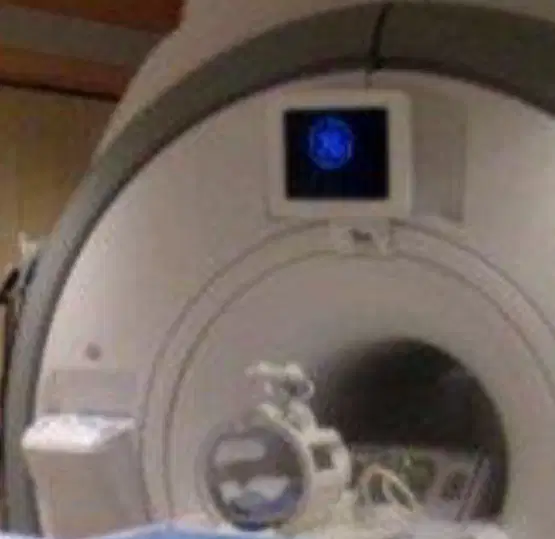
What does an fMRI measure in different regions of the brain?
Electrical activity in neurons
Blood flow
Hormone levels
Temperature changes
Which part of the brain is responsible for problem solving and planning?
Occipital lobe
Frontal lobe
Temporal lobe
Parietal lobe
What does EEG (Electroencephalogram) measure in the brain?
Blood flow in the brain
Electrical activity in the brain
Oxygen levels in the brain
Brain temperature
Which part of the brain is responsible for behavioral control and emotion?
Frontal lobe
Temporal lobe
Parietal lobe
Occipital lobe
What functions are associated with the right cerebral hemisphere?
Communication, language, and logic
Facial recognition, spatial awareness, and visual imagery
Controlling heart rate and breathing
Mathematical abilities and reasoning
Which lobe of the brain is associated with word production?
Frontal lobe
Parietal lobe
Occipital lobe
Temporal lobe
What is the primary function of fMRI (Functional Magnetic Resonance Imaging)?
To measure brain temperature
To detect electrical signals in the brain
To visualize brain activity in real time
To analyze brain structure only
Which of the following is an example of perceptual constancy?
A car appearing smaller as it moves away.
A tree changing color during autumn.
An object seeming bigger as it moves closer, but you know it remains unchanged.
A shadow changing shape as the light source moves.
What does the term "neuroplasticity" refer to?
The brain's ability to remain static and unchanging
The idea that the brain is plastic and malleable
The brain's inability to adapt to new activities
The concept of brain degeneration over time
Which of the following technologies is used to understand where brain activity is coming from?
EEG
CT scan
Ultrasound
PET scan
Which of the following is an example of perceptual sets?
Optical illusions.
Mathematical equations.
Scientific experiments.
Historical events.
At what time do teenagers typically release melatonin later in the night?
10-11 PM
12-1 AM
1-2 AM
3-4 AM

