
 Worksheets
Periodic Table, Microscopes, Water and Carbon Cycle
Total questions: 45
Worksheet time: 30mins
Drew is helping his younger sibling with their chemistry homework. He asks, "Can you tell me which period and group Carbon belongs to on the periodic table?"
Period 2, Group 14
Period 3, Group 15
Period 2, Group 16
Period 1, Group 1
Lei is organizing her science notes and wants to correctly label the position of Oxygen in the periodic table. What period and group does Oxygen belong to?
Period 2, Group 16
Period 3, Group 14
Period 2, Group 15
Period 1, Group 18
What period and group do glucose belong to?
Glucose is a compound, not an element; it does not belong to any period or group on the periodic table
Period 3, Group 6
Period 2, Group 1
Period 4, Group 14
What period and group do Hydrogen belong to?
Period 1, Group 1
Period 2, Group 1
Period 1, Group 18
Period 2, Group 17
Find what is wrong with this statement: Photosynthesis occurs only at night when plants absorb moonlight to produce oxygen and sugar.
Photosynthesis requires light energy from sunlight and primarily occurs during the daytime; moonlight is not its energy source.
Photosynthesis happens only in the roots and never in leaves.
Photosynthesis produces only oxygen and no sugars.
Photosynthesis uses nitrogen gas as its main reactant.
Find what is wrong with this statement: Evaporation happens only when water reaches its boiling point at 100°C.
Evaporation can occur at many temperatures below the boiling point when molecules escape from the liquid’s surface.
Evaporation cannot occur at sea level.
Evaporation happens only in a vacuum.
Evaporation requires condensation first.
Find what is wrong with this statement: Glucose is a protein made up of amino acids that plants use to build their cell walls.
Glucose is a carbohydrate (a simple sugar), not a protein; plant cell walls are primarily cellulose
Glucose is a lipid found in cell membranes
Glucose is a nucleic acid storing genetic information
Glucose is a mineral deposited in xylem vessels
Find what is wrong with this statement: Precipitation only happens when the sun is shining brightly, because raindrops form from sunlight itself.
Precipitation forms from condensed water vapor in clouds and can occur regardless of sunshine; raindrops do not come from sunlight.
Precipitation only happens at night.
Precipitation is caused by wind turning into water.
Precipitation requires volcanic ash to create raindrops.
Find what is wrong with this statement: Carbon emissions only come from volcanoes, and human activities have no role in producing them.
Human activities such as burning fossil fuels and deforestation are major sources of carbon emissions.
Only oceans emit carbon, while volcanoes do not.
Plants are the sole source of carbon emissions.
Carbon emissions occur only during earthquakes.
Find what is wrong with this statement: The carbon cycle only happens in forests, and the ocean has no role in storing or releasing carbon.
The carbon cycle involves the atmosphere, oceans, land, and living things; the ocean is a major carbon sink and source.
The carbon cycle happens only in deserts.
Only animals participate in the carbon cycle.
Carbon cycles exclusively through rocks and never through water.
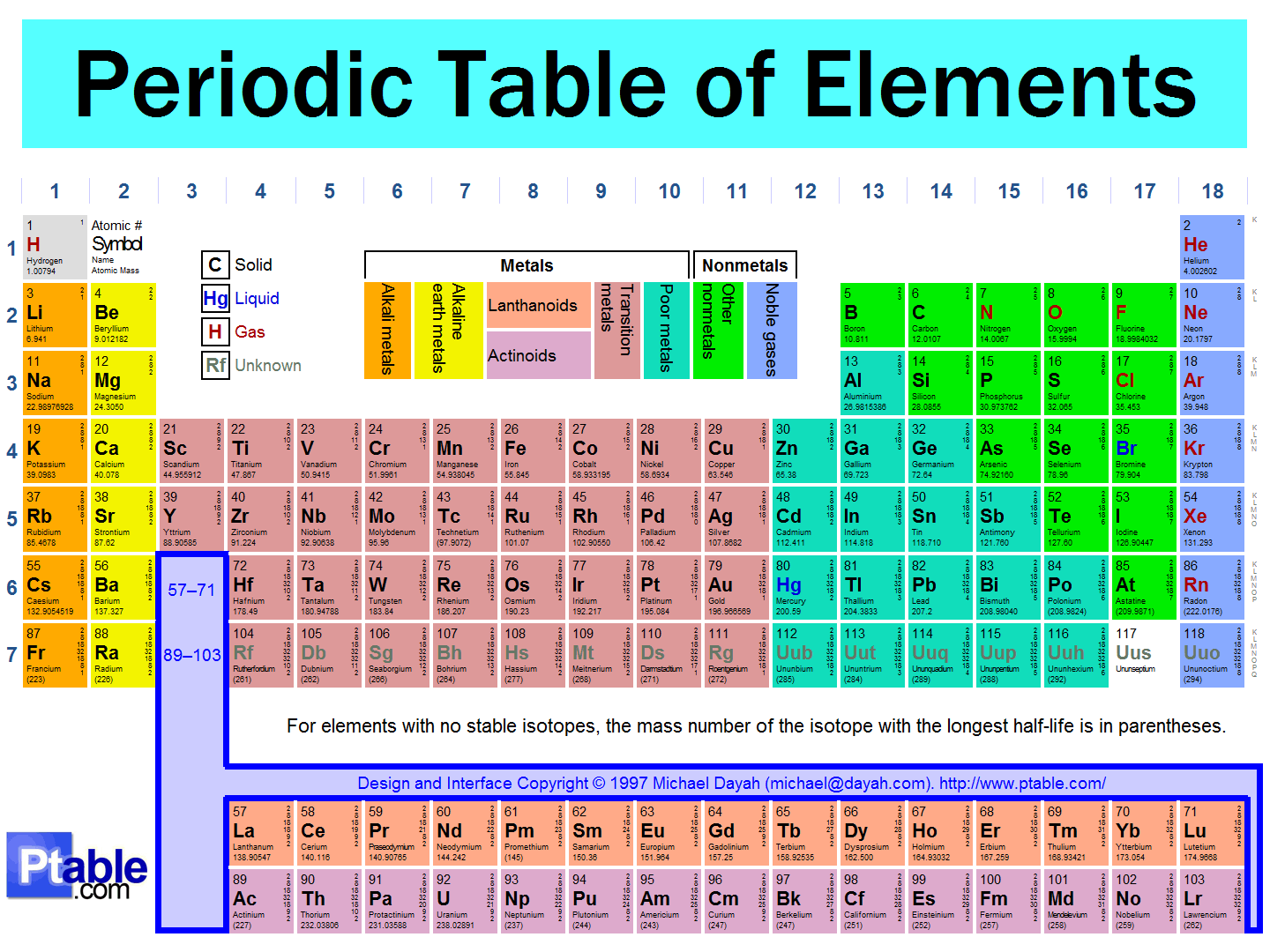

Which element is in period 1 group 18?
Helium
Hydrogen
Neon
Lead

Which element is in period 3 and group 14?
Silicon
Helium
Mercury
Neon

Sodium (Na) is found in which period?
1
2
3
4

Which element is in period 4 family 11
Mercuy
Copper
Silver
Gold

The element sodium appears like this in the periodic table. Which is its chemical symbol?
11
Na
sodium
22.990

Which of the following is NOT true about the periodic table?
Atomic mass is equal to the number of neutrons.
Elements listed by their (increasing) atomic mass.
Groups are the elements listed in columns.
Periods are the elements listed in rows of 8 (for most rows).

Which element is in period 4 group 18?
Bromine
Neon
Krypton
Argon


What do plants need for photosynthesis?
Sunlight and C02
Oxygen and fertilizer
Which of the following equations represents the overall chemical reaction for photosynthesis?
6O2+ 6H2O → C6H12O6+ 6O2
C6H12O6 + 6H2O→ 6O2+ 6O2
6CO2+ 6H2O→ C6H12O6+ 6O2
6O2 + 6H2O→ C6H12O6 + 6CO2
When humans EXHALE, we release ____________________.
Oxygen
Nitrogen
Water
Carbon Dioxide

How does carbon get from the atmosphere into organisms?
Decomposition
Respirataion
Photosynthesis
Deposition
Which of the following is the biggest carbon store?
Plants
Ocean
Atmosphere
Soil

How does carbon get from living organisms into the sediment?
Decomposition
Respiration
Photosynthesis
Deposition
What is the primary energy source that drives the Earth’s water cycle between the atmosphere, oceans, and land?
Wind
Sunlight
Ocean currents
Rotation of Earth
Water gains energy during evaporation. During what process in the water cycle is this energy released?
Infiltration/percolation through the soil
Transpiration from plants
Runoff into the lake and ocean
Condensation that forms clouds
The four stages of the water cycle are...
Precipitation, evaporation, condensation, & transpiration
Precipitation, heat energy, atoms released into the air, & atmosphere
Atmosphere, lithosphere, biosphere, & evaporation
Evaporation, condensation, atomic energy, thermal energy
Biosphere is the
the earth's water
the global ecosystem composed of living and non-living organisms
the hard layer of earth on the surface
the air surrounding earth
Hydrosphere is the...
The gas around earth
The air above earth
The land on earth
Water on earth

Which element is found in group 2, period 6?
Oxygen (O)
Barium (Ba)
Selenium (Se)
Carbon (C)
Which element is found in group 2, period 3?
magnesium
boron
scandium
lithium

Fossil fuels were formed from ancient remains that were buried for
a few decades.
millions of years.
just a few years.
less than a thousand years.

Lono is learning about energy sources in school. His teacher tells the class that fossil fuels are not unlimited and can run out one day. Is there a limited amount of fossil fuels?
true
false

Coal, oil, and natural gas are examples of _______________________.
renewable resources
nonrenewable resources
unknown resources
new resources

Bella notices that when cars and factories burn fossil fuels in her city, large amounts of _______________ are released into the air.
oxygen
carbon dioxide
nitrogen
carbon monoxide

Griffin is researching energy sources for a school project. He finds a pie chart showing how the United States gets its energy. According to the chart, about what percentage of the country's energy comes from fossil fuels?
30%
45%
60%
80%
Which part of a light microscope is responsible for magnifying the specimen?
Stage
Coarse focus knob
Eyepiece lens
Mirror
Which of the following is NOT a type of microscope?
Compound microscope
Telescope
Electron microscope
Scanning probe microscope


arm

