
 Worksheets
Unit 6 - The Roaring 20s
Total questions: 65
Worksheet time: 1hrs 14mins
Match the following vocabulary term with its definition
Someone who buys or uses goods or services.
Consumer
To produce many things at once, usually with machinery.
Mass Production
The large-scale demand for goods.
Mass Consumption
The movement of African Americans from farming areas in the South to big cities in the North.
Great Migration
Match the following vocabulary term with its definition
The condition of being out of work.
Unemployment
Central location where people buy and sell stocks in companies.
Stock Market
Borrowed money.
Credit
A tax on imports.
Tariff
A financial share of ownership of a company.
Stock

The economic boom and the financial speculation of the 1920’s were caused in part by
installment buying and an unregulated stock market
the expansion of civil rights to women and minorities
the mobilization of the economy for war
increased government restrictions on big business
Which statement explains why the 1920s were called the “Roaring 20s”?
The United States went through an economic downturn and prosperity brought changes to popular culture
The United States went through an economic boom and hardship brought changes to popular culture.
The United States went through an economic downturn and hardship brought changes to popular culture
The United States went through an economic boom and prosperity brought changes to popular culture.
Which group of immigrants poured into the United States between 1890 and 1920?
Scandinavians and Germans
Irish, Spanish, and Italian
English, Scottish, and Welsh
Immigrants from southern and eastern Europe
Which 1920 event resulted in the deportation of over 5000 suspected anarchists and leftists?
The Red Scare
The Palmer Raids
The Espionage Act
The Communist Purge
All of these terms are associated with which era?
Palmer Raid
Red Scar
Harlem Renaissance
Sacco and Vanzetti Trial
1910s
1920s
1930s
1940s
The creation of Prohibition had the unintentional effect of
Increasing the popularity of television and motion pictures.
Causing increased popularity of radical groups such as the Ku Klux Klan.
Causing people to turn to “harder” drugs such as heroin and cocaine.
Creating a network of organized crime that illegally supplied people with alcohol.
All of these terms are associated with what era in American history?
Gangsters
Eighteenth Amendment
bootleggers
speakeasies
Prohibition
World War II
Civil Rights
Women’s Suffrage
Which amendment gave women the right to vote in 1920?
Twentieth Amendment
Eighteenth Amendment
Nineteenth Amendment
Twenty-first Amendment
In the era after World War I and before the Great Depression, American suburbs began to grow rapidly because of
Increased use the airplanes.
Invention of electric lights.
Mass production of automobiles.
Greater availability of information.
Which decade was marked by the emergence of “mass production” and “mass consumption”?
The 1890’s
The 1920’s
The 1950’s
The 1970’s
Who is generally considered the “Father” of the modern assembly line?
Henry Ford
Samuel Gompers
Andrew Carnegie
John D. Rockefeller

This photograph, taken in an automobile factory in 1913, BEST represents which aspect of specialized labor?
Factory owners planning to expand business.
Workers bargaining at a labor union meeting.
Workers at an assembly line creating car parts.
Consumers selecting a wide variety of products.
It can be argued that radio’s MOST important contribution to American life in the 1920s was
Broadcast updates about the growing “Dust Bowl”
It helped to create a common culture in the United States.
People could keep posted on all news about the war with Japan.
Those in the city could hear Broadway plays instead of attending them.
The 1920s saw immense changes in popular culture because of the two new technologies of
Telephones and telegraphs.
Motion pictures and radios
Microphones and antennas
Phonographs and televisions.

Al Jolson’s movie The Jazz Signer was important culturally because
Sound was introduced to film for the first time.
It was the first movie widely distrusted across the country.
It was the first American motion picture shot entirely in color.
It portrayed the plight of African-Americans in the most realistic way ever seen.

Which term would BEST go along with this image?
Flapper
Hippy
Prohibition
Suffrage

Name of the first mass produced automobile in the picture is
Brown Bessie
Model F
Model T
Sudan

Louis Armstrong was called “the first important soloist to emerge in jazz, and he became the most influential musician in the music’s history’ according to Billboard magazine. Why is Armstrong considered influential in the history of jazz?
The music he played was improvised and creative, setting the standard for future jazz musicians.
He found the House of Blues in Chicago, where many emerging jazz artist learned jazz.
Although he made only a few records, his record sales exceeded those of Michael Jackson.
He was a master at replication other artist’ songs from the previous century.
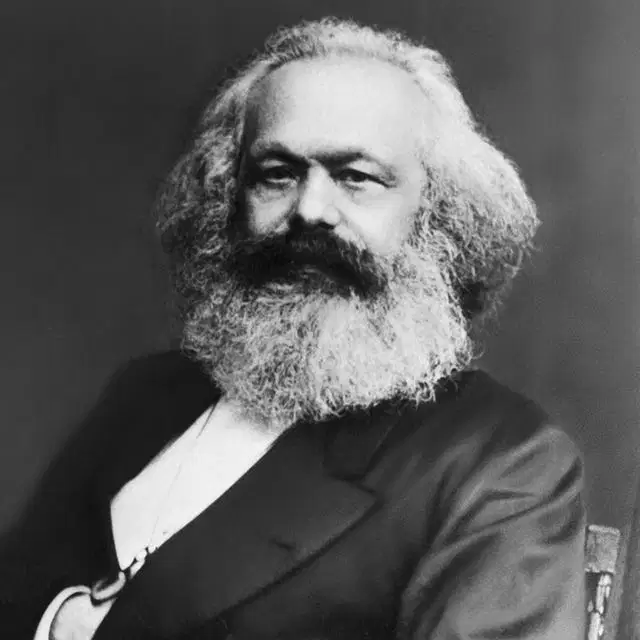
German philosopher who combined history and economics to develop the theory of communism.
Eugene Debs
Herbert Hoover
Karl Marx
Irvin Berlin

Communist revolutionaries that overthrew the czar in Russia and established the Union of Soviet Socialist Republics (USSR)
Palmer's Raiders
Czars
Bolsheviks
Flappers

Leader of the Bolshevik Revolution and later head of the new government. He called for the worldwide revolution to destroy capitalism.
Joseph Stalin
Vladimir Lenin
Karl Marx
Eugene Debs

The belief in no government or any laws.
Anarchy
Socialism
Communism
Aplagothy
What effect did anti-immigrant sentiment have on domestic policy in the early twentieth century?
The government placed quotas on immigration
The government restricted job opportunities for immigrants
The government required immigrants to attend public schools
The government insisted on more immigration for economic growth
Many people viewed Sacco and Vanzetti with suspicion because they were
German immigrants and anarchists
German immigrants and socialist
Italian immigrants and anarchists
Italian immigrants and socialists
In the Teapot Dome scandal, a government official received bribes for
Allowing private interests to lease and drill land containing U.S. Navy oil reserves
Allowing private interests to build industrial sites in national parks
Allowing lumber companies to cut trees in national forests
Promising immunity for businessmen who overcharged the U.S. Navy
What helped earn Greenwood the nickname Black Wall Street?
It was the home of Tulsa's banking industry
The stock market got its start there
Many blacks for successful and prosperous
This is where oil was discovered
What did the existence of the “flapper” reveal about the 1920s?
that women’s roles in society were changing
that Americans were tired of high rates of immigration
that discrimination against African Americans continued
that the belief in Social Darwinism remained strong

Based on this chart, what effect did the passage of immigration laws have on immigration in the U.S.?
They ended all immigration to the U.S.
They had little effect on the flow of immigrants entering the U.S.
The number of immigrants from Southern and Eastern Europe and Asia declined
The number of immigrants from Northern and Western Europe increased
The prohibition of alcoholic beverages, the Scopes Trial, and the passage of the National Origins Act all occurred during the 1920’s. These events are evidence that during this decade -
The reform spirit of the Progressive movement was as strong as ever.
Relations between different ethnic groups began to improve.
There was a conflict between old and new American ideals.
The country was more receptive to socialist ideas.
During the 1920s, Clarence Darrow and William Jennings Bryan were most closely identified with the -
Increased use of credit by U.S. consumers
Development of new forms of popular entertainment
Decline of public support for Progressive reforms
Conflict between modernism and traditionalism
A major reason for the emergence of a “consumer culture” in the 1920’s was that
The Federal Government encouraged labor to unionize.
Enforcement of anti-trust laws resulted in higher prices.
Minimum-wage laws expanded buying power.
Advertising and installment payments encouraged buying.
Improved mass-production techniques affected the American economy of the 1920’s by
Reducing prices of consumer goods.
Lowering the quality of most products.
Causing higher unemployment.
Decreasing the quantity of manufactured products.

These post-World War I headlines are most closely associated with the
Volstead Act
Ku Klux Klan
Scopes Trial
Red Scare
In the 1920s, what did Marcus Garvey’s movement advocate to millions of African Americans?
It advocated advancement of African Americans through integration in white American society
Advocated continued growth of emerging African American middle class through business.
Advocating separation and independence from whites and the establishment of an African homeland
Advocated violent African American uprisings in order to gain political power
The establishment of speakeasies in the 1920s was an unintended consequence of which federal action?
The taxation of imported luxury goods
The deportation of suspected communist sympathizers
The prohibition of the sale of alcoholic beverages
The implementation of immigration restrictions

Which African-American leader had these characteristics?
Booker T. Washington
W.E.B. Du Bois
Marcus Garvey
Martin Luther King, Jr.

What was a primary reason for the demographic shift described in this excerpt?
Increased demand for sharecroppers in the North
Limited economic opportunities for African Americans in the South
Increased availability of manufactured goods in the North
A lack of educational institutions for African Americans in the South
Which best shows the cause-and-effect relationships of nativism in the 1920s?
Ku Klux Klan > Prohibition > Palmer Raids
Quota System > Social Darwinism > Prohibition
Red Scare > Palmer Raids > Quota System
Social Darwinism > Red Scare > Ku Klux Klan
What President had a corrupt-ridden administration at the start of the 1920s?
Coolidge
Roosevelt
Wilson
Harding
What activity saw radicals being rounded up all over America by government agents in the early 1920s?
Palmer Raids
Sedition Act
Espionage Acts
Coolidge Raids
What group got stereotyped as being "extremist or radical" in the 1920s?
Immigrants
Women
Minorities
Nativists

Which phrase best completes the diagram?
Prohibition
Isolationism
Red Scare
National Suffrage
Which of the following was a major contribution of the Harlem Renaissance to U.S. culture?
It led to the increased popularity of vaudeville stage performers
It brought the most significant members of the beat generation together
It was literary, artistic, and intellectual movement that sparked a new black cultural identity
It focused attention on the anti-war literary genre

Cartoons such as this one took the position that deportation was necessary because --
assimilation programs in the United States had been unsuccessful
economic decline had increased the competition for jobs
communist were infiltrating the US
political machines had too much power in urban areas
A type of music; it made African-American musicians popular in the 1920’s.
Pop
Country western
Jazz
Hip Hop
In the early 20th century, what was the primary cause of the large-scale migration of African Americans out of the rural South?
supply of new housing in the suburbs
opportunities for jobs in northern factories
availability of cheap land on the frontier
absence of racial discrimination in northern states
What movements during the 1920s believed that some people were inferior and should not reproduce.
Eugenics & Social Darwinism
Red Scare & Nativism
Social Gospel & Muckrakers
Tin Pan Alley & Harlem Renaissance

A “return to normalcy” after World War I meant….
Increased US involvement in Europe
No longer selling alcohol in the United States
Going back to life as it had been before the war
Limiting immigration
What was the event known as the 'Bombing of Black Wall Street'?
A bombing during World War II that targeted a predominantly African American neighborhood.
Racially motivated attack on the Greenwood District of Tulsa, Oklahoma in 1921
A terrorist attack on a major financial district in New York City.
A bombing in Chicago that led to the destruction of several businesses and homes.
What was the main cause of the 'Bombing of Black Wall Street'?
Political unrest and dissatisfaction with local government.
Religious conflicts and tensions between different communities.
Economic competition between African Americans and white residents.
Racial tensions and resentment towards African American economic success
1922 new tariff (tax on imported goods) that was significantly higher than before – theory was it would protect U.S. manufacturers and their workers. Other countries raised their tariffs on U.S. goods – causing a negative impact on world trade.
Fordney-McCumber Act
Dawes Plan
Teapot Dome Scandal
Quota System
Organized on a national scale devoted to “100% Americanism”. Grew larger than they were after the Civil War – dominated state politics in many states. Against African Americans, Jews, Roman Catholics, unions, immigrants, and voting rights for women.
KKK Revival
Rosewood Incident
National Association for the Advancement of Colored People (NAACP)
Harlem Renaissance
African-American community in Florida that was burned to the ground and some of its residents killed by white residents from neighboring towns. In the 1980s, Rosewood survivors and their descendants were compensated by the Florida state government – first time a state had ever voted to compensate victims of racial violence.
KKK Revival
Rosewood Incident
National Association for the Advancement of Colored People (NAACP)
Harlem Renaissance
Founded in 1909 to urge African Americans to protest racial violence and fight for legislation to protect African American rights. W.E.B. Du Bois is a founding member.
Back to Africa Movement
National Association for the Advancement of Colored People (NAACP)
Tuskegee Institute
Congress of Racial Equality
Believed that African American should push for full equality and should not be content with an inferior social and economic status. Launched the “Niagara Movement” calling for equal economic opportunities and the right to vote. Founding member of the NAACP.
W.E.B. Du Bois
Booker T. Washington
Marcus Garvey
Malcolm X
Born into slavery, later founded the Tuskegee Institute in Alabama. In 1895, he proposed the “Atlanta Compromise” – the idea that African Americans would accept segregation and white rule in the South as long as they were given free vocational training and enjoyed basic legal rights.
W.E.B. Du Bois
Booker T. Washington
Marcus Garvey
Malcolm X
Believed that African Americans should build a separate society. Promoted African American businesses, and encourage followers to return to Africa to help the natives build a mighty nation. Started the Universal Negro Improvement Association (UNIA) in 1914.
W.E.B. Du Bois
Booker T. Washington
Marcus Garvey
Martin Luther King Jr
Direct negotiations with several major powers to promote world peace. Held instead of joining the League of Nations.
U.S. proposed partial disarmament
(reducing the number of weapons).
Washington Naval Conference
Four-Power Treaty
Kellogg-Briand Pact
Dawes Plan
Agreement between the U.S., Britain, France, and Japan to respect each other’s territories in the Pacific and to submit any disputes to a joint conference of all four nations.
Agreement was worked out at the same time as the Washington Naval Conference.
Washington Naval Conference
Four-Power Treaty
Kellogg-Briand Pact
Dawes Plan
In 1927, 15 nations pledged to not use war as an instrument of policy.
Permitted nations to engage in a defensive war and had no means of enforcement.
Washington Naval Conference
Four-Power Treaty
Kellogg-Briand Pact
Dawes Plan

