
 Worksheets
Gilded Age/ Progressive Era
Total questions: 64
Worksheet time: 1hrs 8mins
Between 1848 and 1920, suffragists protested for women to have the right to vote.
Which amendment guaranteed women this right in the United States?
16th
17th
18th
19th

Founder of the NAACP
Pushed for the "Talented Tenth"
Attended Harvard University
Ida B Wells
Booker T Washington
W E B DuBois
Martin Luther King Jr.
Key Reforms of the Progressive Era
· Initiative
· Referendum
· Recall
· Direct Primary
· 17th Amendment
How did the reforms listed above impact the US?
A system of separate schools for new immigrants
They gave citizens a greater voice in the democratic process of government
More sources of revenue and taxes in state governments.
They successfully brought economic relief to the urban working class

Prohibition banned the making, selling, buying, or drinking of alcohol. Which amendment made this possible?
17th Amendment
18th Amendment
19th Amendment
21st Amendment
Reporters, journalists, photographers, and authors who used the media to raise concerns about the negative effects of industrialization were known as
muckrakers
suffragists
immigrants
abolitionists
____________?____________
A period of time when social, economic and political problems caused by rapid industrialization were exposed and in some cases reformed.
What is the most likely title for this?
Industrialization
Progressive Era
Reconstruction
Prohibition
The purpose of the Sherman Anti-Trust Act was to
break up monopolies
give equal rights to women
help people living in poverty
end racism

The campaign to stop abuse in the homes by urging people and the government to stop alcoholism was called
Women Suffrage
Temperance Movement
Alcoholics Anonymous
Fair Weather Fan
Which idea of Theodore Roosevelt’s Square Deal led to the creation of National Parks?
Meat Inspection Act
Preservation
Conservation
Intimidation
Between 1860 and 1910, the U.S. population tripled in size.
This is most likely due to...
The Baby Boom
Immigration
The Homestead Act
Better Healthcare

What was the immediate response to the practices mentioned in this excerpt?
Monopolies formed to control competition in the meat-processing industry.
Meat packers developed refrigerated railroad cars to ship meat nationwide
Congress passed legislation to protect consumer health and safety.
Farmers demanded government regulation of livestock sales and distribution.

How did the concerns depicted in this cartoon affect the food industry?
The food industry increased the cost of products in order to pay for chemical additives.
The federal government regulated the food industry in order to protect the health of the public
The food industry imported more goods from Europe in order to offer customers more choices.
The federal government passed antitrust legislation in order to increase competition in the food industry.

What were photographs such as this one taken by Lewis Hine primarily intended to accomplish?
Encourage leaders to make segregation in schools illegal
Document labor conditions during an economic crisis
Depict the evils of capitalism in communist propaganda
Focus attention on the need for child labor reforms
What was the purpose of the Pure Food and Drugs Act of 1906?
To protect consumers by regulating the food and drug industry
To lower the cost of essential foods and drugs for consumers
To prevent shortages by regulating the supply of food and drugs
To reduce production costs for food and drug manufactures

Main goal of most muckraking journalists?
Gain fame through articles of high popular interest
Expose social and economic problems in need of political attention
Increase public awareness of America's great potential
End corrupt relationships between politicians and big business
Nativists are against...
Corruption
African Americans
Railroads
Immigrants
18th Amendment
Prohibits Women's Suffrage
Prohibits Alcohol
Prohibits Child Labor
Prohibits immigrants from entering the country
What period in American history is known as the Gilded Age?
1920s to 1940s
1900s to 1920s
1870s to 1890s
1850s to 1870s
Who were the Progressives?
Politicians who supported political bosses
Journalists who exposed corruption
Reformers who wanted to improve American life
Businessmen who profited from the Gilded Age
Regulation
Working as part of the government in a non-elected position
Power of an authority to enforce rules
To save resources of the environment
A political party, not one of the two dominant parties in American politics
To save resources of the environment
Conservation
Tariff
Independent candidate
Third party
What is the significance of the Battle of Wounded Knee?
It was the first major conflict of the "Indian Wars"
It is better known as "Custer's Last Stand," where George Custer's cavalry regiment is wiped out by the Sioux
It was a decisive victory by the Sioux over their Cheyenne neighbors, leaving them the dominant power over the Great Plains
It was a massacre of Sioux men, women, and children by the US army that marked the symbolic end of the "Indian Wars"
Refer to the cartoon titled 'The Bosses of the Senate.' What message is the cartoonist sending by portraying the monopolists as larger in size than the senators?
A. The monopolists have more power than the senators to influence the government
B. The monopolists represent the majority of the population and therefore are helping to initiate change
C. The monopolists are able to voice the concerns of the people more effectively than the elected leaders
D. The monopolists are successful based on Social Darwinism and should therefore be running the government
Capitalism is BEST defined as a...
system that allows people to use private property to make profits within a free market
system in which people give parts of their wealth back to the community or to those less fortunate
system in which the government controls all of the levels of production to do what is best for all
system in which the government controls major industries but allows private citizens to own property
Which term best describes the approach taken by Congress towards passing laws related to business in the Gilded Age?
"laissez faire" - in which the government does not create or enforce regulations on business
"interventionism" - in which the government strictly regulates the actions of businesses to protect consumers and workers
"free trade" - in which the government encourages US companies to invest in foreign countries
"open door" - in which the government attempts to sell US products in new markets around the world
Which of the following describes the general effect of a monopoly on prices in a market?
prices increase
prices decrease
prices stay the same
In the late 1800s, the federal government used which three (3) of the following practices to encourage the growth of the economy?
open immigration
protective tariffs
subsidies
support of labor unions
Which of the following was a consequence of the Homestead Act?
A. A drop in the populations of major East Coast cities
B. The overcrowding of western territories with arriving pioneers
C. The displacement of Native Americans from their ancestral lands
D. Mass arrival of Chinese immigrants to the United States
Which of the following statements most accurately describes the impact of white settlement on Native American tribes in the late 1800s?
It empowered the Plains tribes, who suddenly could use land and resources to make beneficial bargains with the US government.
It destroyed tribes through forcible displacement and death so that white settlers could obtain land and minerals.
It enriched many tribes who were well compensated for their lost land and resources.
It had little effect on the tribes, as the government turned most of their existing tribal land into permanent reservations.
Industrialization is most accurately described with which of the following statements?
mass movement of people into cities
creation of a mass production economy based on using assembly lines
the shift from an agricultural economy to a mechanized economy
preparations made before a country goes to war
Identify the three (3) natural resources that proved vital to industrialization in the United States in the late 1800s.
coal
iron
gold
oil
Match the monopolist on the left with the correct industry which they dominate in the Gilded Age.
John D. Rockefeller: Oil, Andrew Carnegie: Steel, Cornelius Vanderbilt: Railroads, J. P. Morgan: Banking
John D. Rockefeller: Steel, Andrew Carnegie: Oil, Cornelius Vanderbilt: Banking, J. P. Morgan: Railroads
John D. Rockefeller: Railroads, Andrew Carnegie: Banking, Cornelius Vanderbilt: Oil, J. P. Morgan: Steel
John D. Rockefeller: Banking, Andrew Carnegie: Railroads, Cornelius Vanderbilt: Steel, J. P. Morgan: Oil
Which of the following BEST defines the term "monopoly?"
person or company that owns all the real estate in a given area
person or company that controls nearly all of the supply of a product
person or company that controls nearly all of a country's currency
person or company that wields the power of a government
What two (2) methods did the US government use to fund the Transcontinental Railroad?
taking loans from European governments
providing subsidies to private rail companies
raising new tariffs on foreign goods
grants of western land
What was the US government's PRIMARY motivation for having a transcontinental railroad built?
To move freedmen out of the South
To connect the Great Lakes with the Atlantic Ocean
To provide the Union army with consistent supply lines during the Civil War
To connect newly settled Western territories with Northern industry
The 19th-century philosophy of Social Darwinism maintained that...
the government should have control over the means of production to protect worker and consumers
all social class distinctions in American society should be eliminated
economic success comes to those that are the hardest working and most competent
wealth and income should be more equally distributed among all people
As evidenced in the image, the Gilded Age was an economic period known for which of the following?
Widespread government ownership of businesses
The rise of monopolies and trusts
Complete economic equality
The absence of large corporations
Which statement best describes the process of vertical integration?
buying out raw material producers, manufacturers, and distributors to control the supply of resources and cut costs
several companies giving control of their company to one person who is allowed to make business decisions
buying nearly all of the companies at one level of production in order to control the market and dictate prices
direct involvement of the government seizing control of a group of industries to control wages and prices
What did the Temperance Movement believe was contributing to the moral decline of the United States?
Drugs
Alcohol
Relgion
All of the above
The primary goal of the 1848 convention at Seneca Falls was to...
work to end injustices women faced
end slavery
encourage NY to leave the US and start a new country
The document written at the Seneca Falls Convention was the....
Declaration of Independence part 2
Emancipation Proclamation
Declaration of Sentiments
Women's suffrage means that women...
have the right to vote
have the right to go to law school
have the right to own land

What explanation below explains why railroad companies were able to charge high prices to farmers to ship their crops in the late 1800s?
There was a great deal of competition between various railroad companies
The railroads foreclosed on many farms and took the farmers’ properties
The railroad companies had essentially no competition.
They were able to charge high prices because the railroad companies owned the Grange.
Who wrote The Jungle?
Jane Addams
Charles Darwin
Upton Sinclair
Chester Arthur
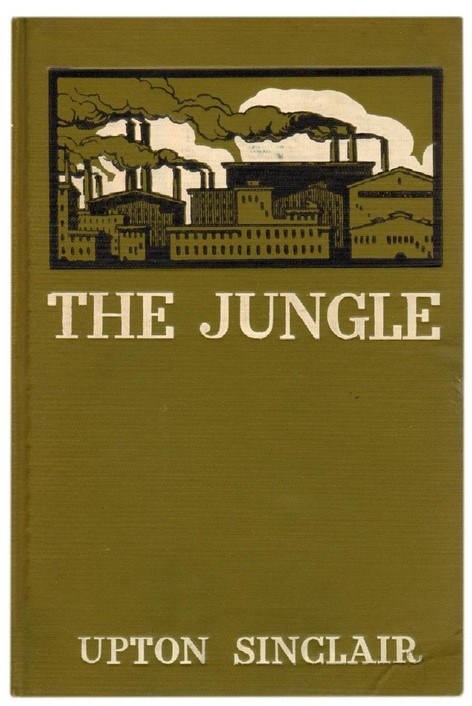
What government change occurred because of The Jungle?
Regulation of cash crops used for food for cattle
Unionization of meat industry
Creation of a federal health department
Federal Meat Inspection Act

This political cartoon would most support the idea that President Theodore Roosevelt was a
Imperialist
Really good President
Trust-buster
Father of the National Park System
Which statement best summarizes President Theodore Roosevelt’s “Square Deal?”
Conserve natural resources.
Protection for workers.
Control monopolies.
All of the above.
Which Progressive-era law allowed the Federal Government to regulate the railroads?
Interstate Commerce Act
Sherman Antitrust Act
Clayton Antitrust Act
19th Amendment
Which of the following occurred as a result of the Sherman Anti-trust Act?
workers secured a greater share of company profits
the influence of labor unions on factory owners was reduced
the federal government could dissolve business monopolies
Businesses were required to pay fees to open overseas locations
Taft won the election of _______
1904
1908
1912
1916
The FED manages the amount of ______ in circulation.
money
loans
credit
banks
The FED acts as the bank for _______.
the federal government
local governments
businesses and individuals
Beyonce
What did Alexander Graham Bell invent?
Light bulb
Telephone
Peanut production
Radio
Thomas Edison created the electric
Telephone
Airplane
Toilet
Lightbulb
Why was the invention of the telephone important during that time?
It improved communication between businesses and people.
It allowed people to call their families every day.
It started a new way for people to make money.
It allowed people to make reservations from their own home.
Why are Thomas Edison’s inventions important to remember during today’s time?
They helped bring indoor plumbing to all households.
They helped people travel to new locations faster.
They helped set the stage for modern electric world.
They helped set the stage for the future of transportation.

Who used the assembly line to mass produce the first automobiles?
Thomas Edison
Henry Ford
Nikola Tesla

Which of these BEST describes how Alexander Graham Bell’s invention impacted the world?
It made long distance travel faster and easier.
It helped mail reach people much more quickly.
It led to the creation of the motion picture industry.
It allowed people to talk to one another over greater distances.
What did American have to offer immigrants?
jobs
ability to own land
hope for a new life
all choices are correct

