
NEW
Font size
S
M
L
XL
 Worksheets
Imperialism Test
Total questions: 10
Worksheet time: 5mins
Name
Class
Date
1.
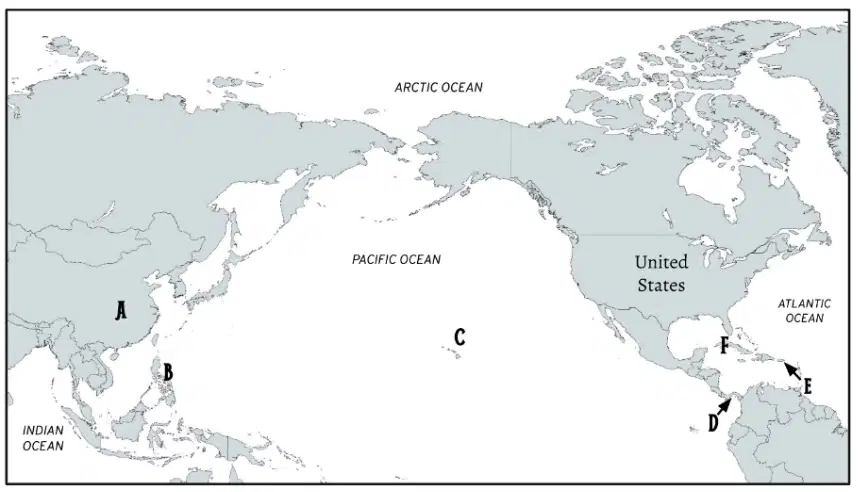
Which of the following areas were taken over by the United States after the Spanish-American War?
a)
B, C, and D
b)
B, F, and E
c)
D and E
d)
C and E
2.

Which of the following areas was NOT annexed by the United States?
a)
A
b)
B
c)
C
d)
D
3.
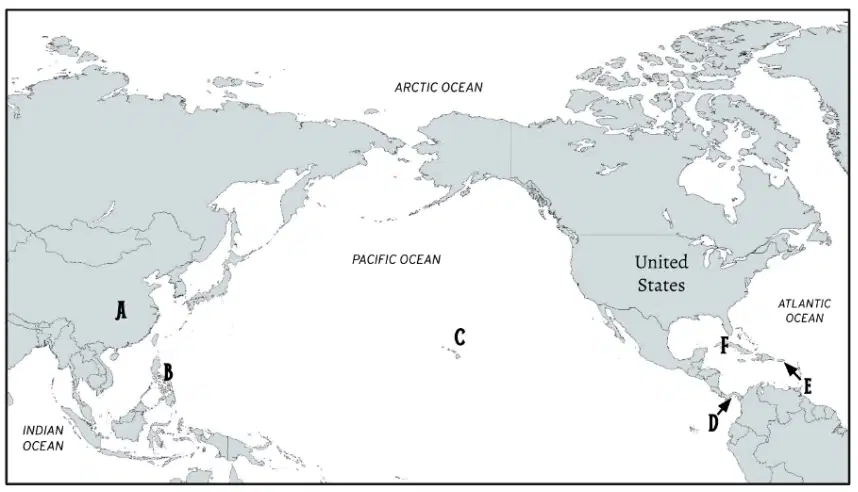
In which of the following areas did the United States NOT utilize troops or the navy to take control?
a)
A
b)
B
c)
F
d)
None of the above
4.
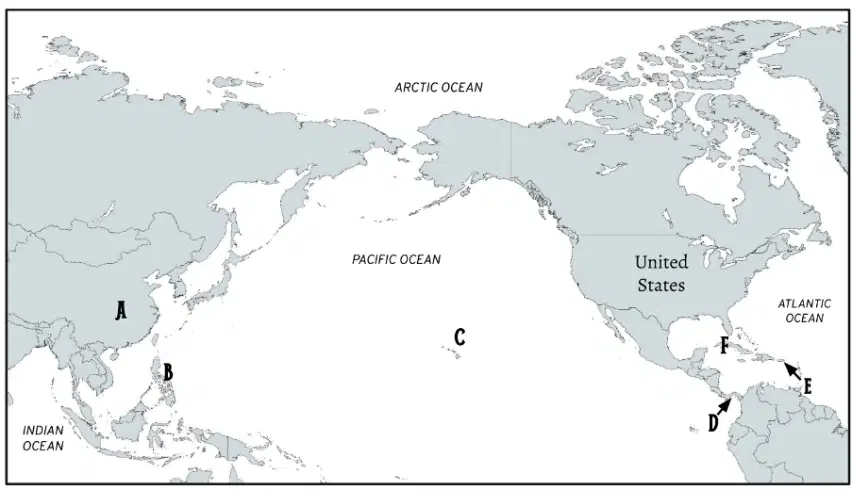
Which of the following areas led a rebellion for independence against a U.S invasion?
a)
F
b)
B
c)
C
d)
D
5.
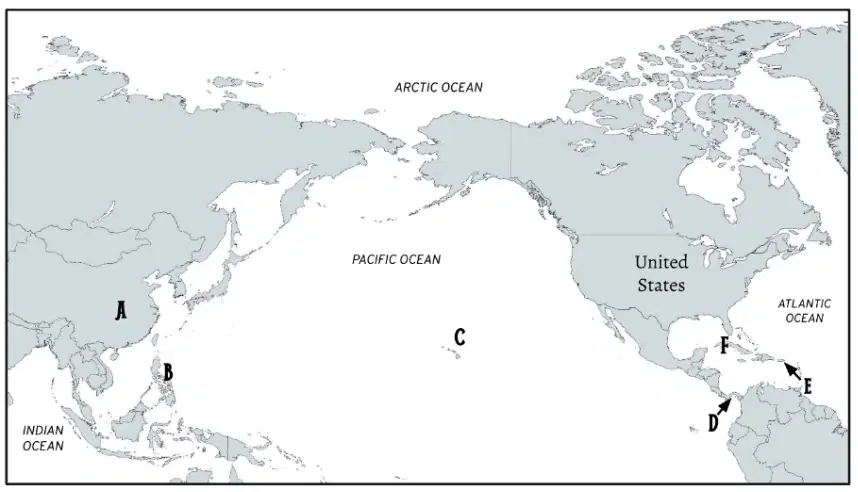
Which of the following areas is most closely associated with the Open Door Policy?
a)
A
b)
B
c)
C
d)
D
6.
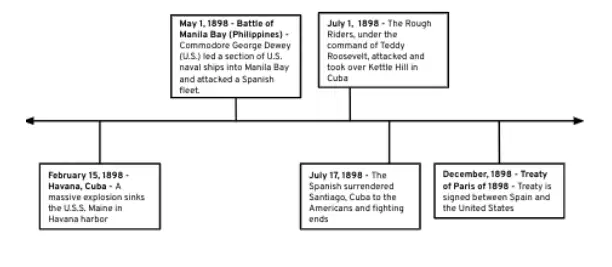
What historical event contributed most directly to the events described in the timeline above?
a)
The Panama Canal was built.
b)
Hawaii was annexed by the United States.
c)
Teddy Roosevelt became president.
d)
The Spanish required many Cuban people to move to Reconcentration Camps.
7.
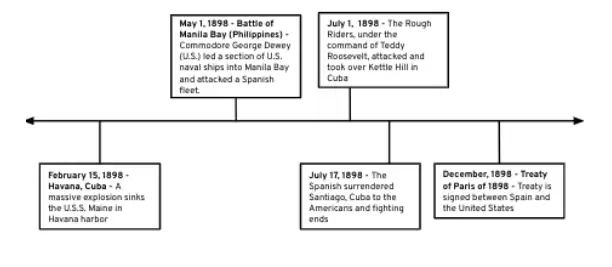
Which statement is supported by the timeline above?
a)
Cuba was annexed by the United States.
b)
Fighting during the Spanish-American war took place in more than one country.
c)
The Spanish-American War was won by the United States.
d)
Most fighting related to the Era of Imperialism took place in the Caribbean.
8.
What was one direct result of the Spanish-American War?
a)
Teddy Roosevelt created his “Big Stick” policy.
b)
The United States built the Panama Canal.
c)
Cuba and Puerto Rico were acquired (gained) by the United States.
d)
The United States established the Open Door Policy.
9.
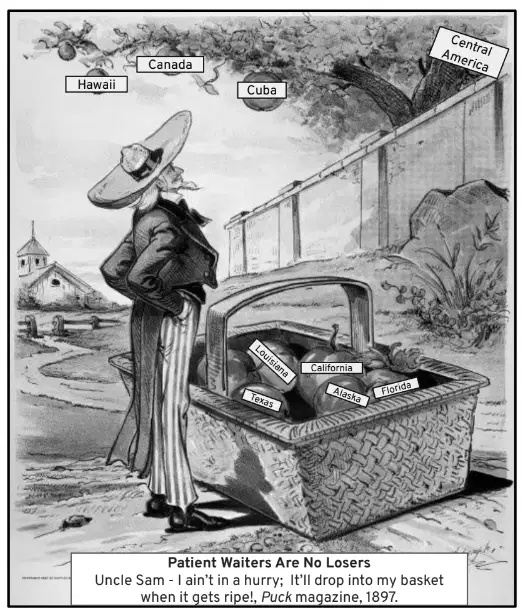
Which goal of imperialism does the cartoon best represent?
a)
The building of a interconnected navy throughout the Pacific.
b)
The expansion of U.S. territories.
c)
The expansion of U.S. trade.
d)
The expansion of Christianity.
10.
Theodore Roosevelt once said, "Speak softly and carry a big stick." How did this philosophy apply to his foreign policies during US Imperialism?
a)
He believed the United States should avoid all foreign conflicts and reduce the size of the military.
b)
He promoted peaceful diplomacy while maintaining a strong military to enforce U.S. interests when necessary.
c)
He focused on expanding trade with Europe and limiting U.S. involvement in Latin America.
d)
He encouraged imperial powers to take control of weaker nations so the U.S. would not need to get involved.
Reset

