
 Worksheets
Introduction to Memory & The Multi-Store Model
Total questions: 73
Worksheet time: 37mins
Define cognitive psychology as introduced in this section.
The study of brain anatomy and neural firing patterns only
The branch of psychology focusing on mental processes used to acquire, store, retrieve, and use knowledge
The clinical treatment of mental illness through medication
The study of social behaviors and group dynamics
According to the exam requirements summarized here, which model describes central executive, phonological loop, visuo-spatial sketchpad, and episodic buffer?
Multi-Store Model of Memory
Levels of Processing Model
Working Memory Model by Baddeley and Hitch
Dual-Process Theory of Thinking
Which two memory models are specified as essential to know?
The Multi-Store Model by Atkinson and Shiffrin
The Working Memory Model by Baddeley and Hitch
The Procedural Memory Model
The Depth of Processing Model
In the Multi-Store Model of Memory (Atkinson and Shiffrin, 1968), which three stores are included?
Sensory register
Short-term memory (STM)
Long-term memory (LTM)
Episodic buffer
Within memory research, what does coding refer to?
The number of items that can be held in a memory store
The transformation of sensory input into a form that allows storage, such as acoustic, visual, or semantic
The length of time information remains in memory
The physical location of memories in the brain
Which statement best describes capacity in memory?
The way information is changed so it can be stored
The amount of information that can be held in a memory store, often measured in bits or chunks
The processes used to retrieve information from LTM
The sequence of stages from encoding to retrieval
Duration, as defined in this section, is most closely related to which idea?
The number of sensory modalities represented
The length of time that a memory lasts
The depth of processing applied to information
The emotional valence of a memory
According to the Multi-Store Model description here, what determines whether information from the sensory register enters STM?
Rehearsal in LTM
Focused attention to a small fraction of sensory input
Emotional arousal during encoding
Semantic processing at the point of perception
What are the three possible outcomes for information that has entered STM, as described in the text? Select all that apply.
Maintenance rehearsal keeps it in STM
Elaborative rehearsal transfers it to LTM
It is not rehearsed and is forgotten
It is instantly stored permanently without rehearsal
Which features characterize the memory stores in the MSM according to this material?
They are unitary and the model is linear
They are composed of multiple interacting subsystems and the model is cyclical
They are dynamic networks with unlimited capacity
They are hierarchical modules controlled by the amygdala
Which coding type is associated with the sensory register according to the text?
Primarily semantic coding
Relatively unanalyzed coding such as iconic (visual) and echoic (auditory)
Motor coding based on procedural sequences
Olfactory semantic coding
Based on the summary table, which pairing is correct for STM?
Capacity: very large; Duration: less than ½ second; Coding: visual
Capacity: about 7 chunks; Duration: about 18 seconds; Coding: mainly acoustic
Capacity: unlimited; Duration: lifetime; Coding: mainly semantic
Capacity: 3–4 items; Duration: several minutes; Coding: mainly visual
Which statement about LTM aligns with the MSM summary provided?
LTM has very limited capacity and lasts about 18 seconds
LTM is mainly acoustic and decays within minutes without rehearsal
LTM is thought to have potentially unlimited capacity and mainly semantic coding
LTM codes information only visually and has a fixed duration of one year
According to the Sensory Register description, what is the typical duration of information there if not attended to?
About 18 seconds
Less than half a second
Between 2 and 3 seconds
Approximately one minute
Which terms correctly identify visual and auditory coding in the sensory register?
Semantic and episodic
Iconic and echoic
Procedural and declarative
Phonological and visuospatial

In the MSM flow, which process is directly linked to transferring information from STM to LTM?
Attention
Retrieval
Rehearsal
Interference
Sperling briefly presented arrays of letters and then used a partial report procedure with high, medium, and low tones to cue specific rows. What did he find about sensory register capacity and duration based on the average percentage recalled from cued rows?
Large capacity with very long duration, shown by near-perfect recall of all rows
Large capacity but very short duration, shown by about 75% recall of cued rows
Small capacity and short duration, shown by recall of only 25% of cued rows
Small capacity but long duration, shown by 75% recall after several minutes
According to Jacobs (1887), what were the approximate mean digit spans for numbers and letters in short-term memory?
Numbers ≈ 7; Letters ≈ 9
Numbers ≈ 9; Letters ≈ 7
Numbers ≈ 5; Letters ≈ 7
Numbers ≈ 9; Letters ≈ 9
Miller suggested that STM capacity is 7 ± 2 chunks and introduced chunking. Which statement best reflects chunking as described?
Chunking reduces STM capacity by splitting items into smaller units
Chunking groups items (e.g., letters into words) so more can be remembered, though larger chunks are harder to retain
Chunking eliminates the need for rehearsal because groups are self-maintaining
Chunking works only for numbers, not for words or letters
Peterson and Peterson (1959) investigated STM duration using trigrams with an interference task of counting backwards by 3s. What was the main conclusion when rehearsal was prevented?
STM information can be retained for several minutes without rehearsal
STM duration is around 18 seconds, with rapid decline in recall as delay increases
STM recall improves over time due to consolidation during distraction
STM duration is identical for rehearsed and non-rehearsed items
Which recall percentages matched Peterson and Peterson’s findings at the listed delays when rehearsal was prevented?
About 80% recall at 3 seconds
About 60% recall at 6 seconds
About 40% recall at 6 seconds
About 10% recall at 18 seconds
Evaluate a strength and a weakness of Peterson and Peterson’s study, based on the instructional text. Which option correctly pairs them?
Strength: naturalistic stimuli increase ecological validity; Weakness: controlled lab setting prevents causal conclusions
Strength: high control allows cause-and-effect; Weakness: artificial trigrams limit ecological validity
Strength: use of rehearsal tasks mirrors everyday memory; Weakness: lack of control of the IV
Strength: field setting enhances realism; Weakness: no measured DV
Baddeley (1966) explored coding in STM. When tested immediately after presentation, which type of word list produced more recall errors, and why?
Semantically similar lists, because meaning-based confusion dominates STM
Acoustically similar lists, because sound-based confusion dominates STM
Lists of unrelated words, because lack of schema impairs encoding
Emotionally charged lists, because arousal disrupts phonological processing
Which statements about STM capacity and methods are supported by Jacobs and Miller? Select all that apply.
STM capacity is limited to around seven items
Digit span tasks can estimate STM capacity
Chunking can allow more information to be remembered within capacity limits
STM capacity is unlimited for letters

Sperling’s partial report used tones to indicate rows of a briefly presented 3×4 letter array. Based on this, what did participants report when not cued versus cued?
Without cues, they recalled all 12 letters; with cues, recall dropped to 25%
Without cues, they recalled 4–5 letters and sensed more; with cues, they recalled about 75% of a signaled row
Without cues, they recalled none; with cues, they recalled 100% of the array
Without cues, they recalled 9 letters; with cues, recall was unchanged
Which practice increases the amount of information held in STM according to the duration section, and which practice is used to prevent it during certain experiments?
Elaboration increases retention; articulation suppresses it
Rehearsal increases retention; backward counting prevents rehearsal
Chunking increases retention; semantic priming prevents chunking
Imagery increases retention; forward counting prevents imagery
According to the material, what is the main coding style of Long-Term Memory (LTM) identified by Baddeley (1966)?
Primarily acoustic, based on how words sound
Primarily semantic, based on the meaning of words
Primarily visual, based on the appearance of letters
Primarily procedural, based on learned actions
Which finding from Baddeley’s (1966) study supports the claim about LTM coding?
Participants confused acoustically similar words in LTM tests
Participants confused semantically similar words when recalling in order
Participants recalled visually similar letters with fewer errors
Participants forgot procedurally learned tasks more easily
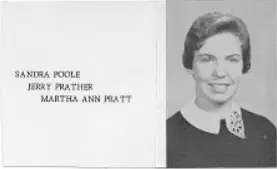
In Bahrick’s (1975) study on the duration of LTM, which procedure belonged to the photo recognition condition?
Participants freely recalled classmates’ names without prompts
Participants sorted 50 photos into those that were or were not in their class
Participants matched names to faces using a yearbook index
Participants described classmates’ personalities from memory
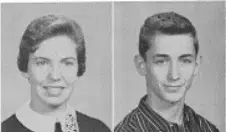
What accuracy was found for photo recognition 15 years after leaving school in Bahrick’s (1975) study?
60% accurate recognition
75% accurate recognition
90% accurate recognition
30% accurate recognition
What result best supports the claim that LTM can last for many years without major distortion, based on Bahrick’s findings?
Free recall remained at 90% accuracy after 48 years
Photo recognition remained at 60% accuracy after 48 years
Photo recognition fell to 30% accuracy after 15 years
Free recall rose to 75% accuracy after 48 years
Which evaluation point is identified as a strength of Bahrick’s (1975) study?
High control over contact with yearbooks, increasing internal validity
Use of artificial stimuli, increasing standardization
High external validity due to testing real-life memories of classmates
Measurement focused on semantic memories across topics
Which limitation of Bahrick’s (1975) study reduces generalisability to other memory types?
It investigated recognition of faces, a specific type with emotional significance and rehearsal opportunities
It only included participants aged under 18
It exclusively measured semantic memory for word lists
It had no consideration of extraneous variables at all
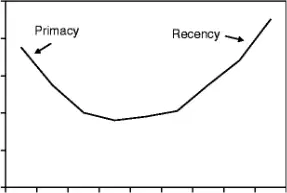
Which pair correctly identifies the primacy and recency effects described by Murdoch (1962)?
Primacy: better recall of middle items; Recency: better recall of first items
Primacy: better recall of first items; Recency: better recall of last items
Primacy: better recall of last items; Recency: better recall of middle items
Primacy: equal recall across all items; Recency: poor recall of first items
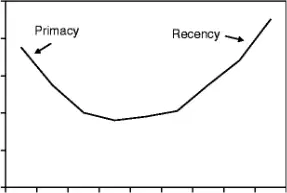
What does the serial position curve support about the Multi-Store Model (MSM)?
Memory consists of one unitary store with no role for rehearsal
STM and LTM are separate unitary stores, and rehearsal aids transfer to LTM
Only LTM exists; STM is an illusion created by testing artifacts
Rehearsal decreases the likelihood of transfer to LTM
Which statement best captures the overall criticism about ecological validity in MSM-supporting studies?
They typically use meaningful personal materials like names and faces
They often use artificial stimuli such as strings of letters or word lists that lack real-life meaning
They rely exclusively on field studies in everyday environments
They only measure procedural memory using skilled tasks
Which case study suggests a distinction within LTM between procedural and declarative memories?
KF, who had intact STM but impaired LTM for faces
Clive Wearing, who could play the piano but could not recognize photographs of his college
HM, who showed improved recall of word lists after hippocampal removal
Murdoch, who displayed both primacy and recency effects
What aspect of KF’s case challenges the MSM’s assumption about information flow between stores?
KF could form new LTM despite severely limited STM, implying LTM can form without normal STM
KF could not perform digit span tasks, implying STM does not exist
KF’s visual memory failed entirely while verbal memory remained intact
KF showed exceptional rehearsal, implying rehearsal is the only route to LTM
What pattern did HM show after hippocampal removal, and what does it imply for the MSM?
Poor STM but intact LTM, supporting a single memory store
Good STM but inability to form new declarative LTM, supporting separate STM and LTM
Inability to learn any new procedural skills, supporting unitary LTM
Enhanced recall across all memory tests, refuting separate stores
Which limitation of the MSM is highlighted regarding rehearsal and incidental learning?
The MSM overestimates incidental learning and ignores rehearsal entirely
The MSM treats rehearsal as the only way to transfer information to LTM, overlooking that some information can enter LTM incidentally
The MSM correctly identifies multiple pathways, making it more flexible than necessary
The MSM focuses only on procedural memory, ignoring declarative memory
Which of the following are supported by evidence as critiques of the MSM being oversimplified? Select all that apply.
Case studies suggest LTM is not a single unitary store
Rehearsal is the sole route from STM to LTM for all information
Different types of LTM (procedural vs declarative) can be dissociated
All MSM-supporting studies have high ecological validity
According to Baddeley and Hitch, which component of the Working Memory Model has a supervisory role, allocates attention to tasks, and can code information from any modality despite having very limited capacity?
Phonological Loop
Visuo-Spatial Sketchpad
Central Executive
Episodic Buffer
Which statement about the Visuo-Spatial Sketchpad (VSSP) is most accurate based on the Working Memory Model description?
It primarily stores semantic meanings of words for up to 2 seconds.
It holds visual and spatial information, uses visual coding, and has a capacity of about 4 objects.
It integrates visual and verbal information into episodes and links to long-term memory.
It supervises and allocates attention across subsystems.
In 2000, Baddeley added the Episodic Buffer to the WMM. Which function is correctly attributed to this component?
A temporary store that integrates visual, spatial, and verbal information, records episodes with time sequencing, and links working memory with LTM
A subsystem that rehearses sounds silently like an inner voice and retains words heard
A controller that directs attention and can code information from any type of source
A store for visual patterns and spatial layouts with a capacity of about 4 objects
Which comparison correctly matches each WMM component to its primary coding and approximate capacity as described?
Phonological Loop: acoustic coding; brief storage (~2 seconds)
Visuo-Spatial Sketchpad: visual coding; ~4 objects/chunks
Episodic Buffer: modality-free coding; ~4 chunks
Central Executive: modality-specific coding; unlimited capacity
Which scenario best illustrates how automated tasks free capacity in working memory according to the extra information provided?
Memorizing a new list of terms while driving for the first time
Practicing gear changes until shifting becomes automatic, allowing attention to focus on deciding when to exit a roundabout
Attempting complex mental arithmetic without note-taking, leading to confusion
Learning to drive by thinking through each step and often forgetting sequences

Baddeley’s dual-task experiment investigated performance when two tasks drew on the same vs. different subsystems. Which pairing produced impaired performance on a visual tracking (pointer) task?
Repeating words while tracking the moving light
Imagining a hollow letter F and judging inside/outside angles while tracking the moving light
Both pairings equally impaired performance
Neither pairing impaired performance
What prediction from the WMM is supported by the dual-task findings?
Two tasks using the same store compete and impair performance, whereas tasks using different stores can be done simultaneously with minimal impairment
Any two tasks done together are more efficient due to divided attention
Verbal tasks always impair visual tasks regardless of store
The central executive has unlimited capacity when coordinating dual tasks
Which research method provides neural evidence that different parts of the brain are active depending on task type, supporting distinct WMM subsystems?
Case study of KF showing impaired digit span for heard letters
Behavioral dual-task performance with pointer tracking
fMRI scans showing frontal lobe activity for executive tasks and occipital lobe activity for visual tasks
Lesion studies indicating damage to the articulatory process
In the case study of KF, which pattern of impairment supports the idea of separate stores within short-term memory as proposed by the WMM?
Poor verbal short-term memory and poor visual short-term memory
Normal verbal short-term memory but poor visual short-term memory
Poor sound-based short-term memory (phonological loop) but normal visual short-term memory (visuospatial sketchpad)
Normal short-term memory across all modalities
Which statement summarizes a key weakness of the WMM regarding the central executive?
Its capacity and coding are well-defined and empirically measured.
It is precisely described as an attention controller with clear mechanisms.
Evidence such as EVR suggests the central executive may have multiple components, and the model’s description is too vague to explain resource allocation adequately.
Dual-task studies prove the central executive is unlimited in capacity.
Considering EVR’s case after cerebral tumour removal, what conclusion about the central executive challenges the original WMM proposal?
EVR’s intact reasoning and decision-making show the central executive is a single, undivided system.
Deficits in real-life decision-making despite intact reasoning suggest the central executive may be more complex than a single entity.
Impaired reasoning with good decision-making supports an unlimited-capacity executive.
No evidence relates EVR’s performance to working memory.
Which statement best defines proactive interference in memory?
Newer memories disrupt the retrieval of older, similar memories
Older memories disrupt the formation or recall of newer, similar memories
Forgetting occurs because cues at retrieval match those at encoding
Information is lost from short-term memory rather than long-term memory
Retroactive interference is most likely when:
A newly learned memory disrupts retrieval of a similar older memory
An older memory prevents learning of a completely different new memory
We recall best when coding and retrieval contexts match
We are drowsy during learning and alert during recall
In McGeoch and McDonald’s study on similarity and retroactive interference, which second list type led to the worst performance on the original list?
Numbers
Unrelated nouns
Synonyms of the first list
Antonyms of the first list
What conclusion did McGeoch and McDonald draw about similarity and interference?
Similarity reduces retroactive interference
Retroactive interference is greatest when later material is more similar
Interference only occurs with nonsense syllables
Context cues eliminate proactive interference
Which limitation of interference research is highlighted regarding ecological validity?
Word lists may not reflect everyday memory like names or episodic events
Laboratory control prevents cause-and-effect conclusions
Similarity effects cannot be replicated
Interference explains all forgetting in daily life

Baddeley and Hitch’s rugby study suggested that poorer recall of earlier games in frequent players was due to:
Context-dependent retrieval failure
Proactive interference from later games played
Decay of long-term memory traces over time
State-dependent effects of physical fatigue
Tulving and Psotka’s cued recall findings imply which limitation of interference theory?
Interference causes permanent loss from long-term memory
Interference effects are temporary and can be overcome with category cues
Interference only applies to visual memories
Proactive interference is stronger than retroactive interference in all cases
According to the encoding specificity principle, for cues to aid recall they should be:
Present at encoding but absent at retrieval
Present at retrieval but not during learning
Present both at encoding and at retrieval
Only external (environmental) rather than internal
Godden and Baddeley’s diver study demonstrated context-dependent forgetting because participants recalled fewer words when:
Learning and testing occurred in the same environment
Learning and testing occurred in different environments (e.g., beach vs underwater)
They took a mild sedative before learning
They were given category cues at recall
In Godden and Baddeley’s results, those who learned and were tested in the same environment recalled approximately how much more than those in different environments?
10% more
25% more
40% more
60% more
Carter and Cassaday’s study on state-dependent forgetting found poorer recall when participants:
Learned and recalled in matching internal states
Learned after taking an anti-histamine and recalled when not drowsy (or vice versa)
Were given category cues at recall
Studied words underwater
Which evaluation of Carter and Cassaday supports internal validity?
It was a naturalistic field study without random allocation
The IV was manipulated and random allocation helped control individual differences
The study relied on observational memory of faces
Participants self-selected conditions based on preference
A key limitation of retrieval failure as a general explanation of forgetting is that:
Context/state differences needed to affect recall may be unrealistically large in everyday life
Cues never influence recall in laboratory tasks
It cannot be tested with word lists
It predicts permanent memory loss from LTM
Which real-world technique counters the limitation about everyday relevance by successfully using context cues to improve recall?
Free recall without prompts
The cognitive interview that reinstates the context of learning
Serial position rehearsal
Suppression of external cues during questioning
Select the statements that correctly match a forgetting type with its description.
Proactive interference: older memories disrupt newer similar memories
Retroactive interference: newer memories disrupt retrieval of older similar memories
Context-dependent forgetting: recall impaired when internal state differs from learning
State-dependent forgetting: recall impaired when external environment differs from learning
Which pair best matches study and finding?
Baddeley & Hitch: category cues restored recall to about 70%
Tulving & Psotka: more similarity produced greater retroactive interference
Godden & Baddeley: same environment led to about 40% better recall
Carter & Cassaday: context differences like beach vs underwater matter most
Which practices exemplify elaborative rehearsal according to the material? Select all that apply.
Copying notes verbatim from a board
Using recalled information to answer applied exam questions
Explaining a topic to a family member
Putting information into a diagram or table
Reading through notes quickly
In the Working Memory Model, why can doing two tasks be effective only when they use separate slave systems?
Because the central executive cannot coordinate any tasks
Because when tasks use the same slave system (e.g., PL), interference occurs, but using different systems (PL vs VSSP) reduces interference
Because long-term memory is not involved in task performance
Because the episodic buffer is only used for visual tasks
When learning purely verbal information, which technique can enhance transfer to long-term memory by engaging additional processing routes?
Dual coding by adding a diagram or image to accompany verbal content
Reverse-order recall of notes
Context reinstatement during initial study
Chunking into 10 or more items
Which strategies are recommended to manage the limited capacity of working memory during study? Select all that apply.
Tackle new information in small amounts
Use chunking into groups of 3–5 items
Attempt to process large volumes of information at once
Engage both visuo-spatial and phonological systems appropriately
How can explanations of forgetting be applied to revision to reduce context-dependent forgetting?
Revise only while lying down to relax
Sit on an upright chair similar to the exam hall or mentally reinstate the revision context
Avoid any context cues while studying
Use cramming the night before without regard to context

