
 Worksheets
French Food Preferences Survey
Total questions: 60
Worksheet time: 29mins

DoK 1 — Which French phrase means “I am hungry” as shown in the image of a boy holding his stomach?
Je suis faim
J’ai faim
Je faim
J’ai le faim

DoK 2 — In French, how would you address a group of children politely to ask if they are hungry, as shown in the image?
Vous avez faim, les enfants?
Tu as faim, les enfants?
Nous avons faim, les enfants?
Ils avez faim, les enfants?
DoK 3 — Choose the best French sentence to complete this mini-dialogue using correct pronoun and avoir form: A: Tu as faim? B: ________
Oui, j’ai faim.
Oui, je suis faim.
Oui, nous avez faim.
Oui, on êtes faim.
Recall: In French, what does the phrase "quelque chose" mean in the question "Tu veux manger quelque chose?"?
nothing
someone
something
somewhere
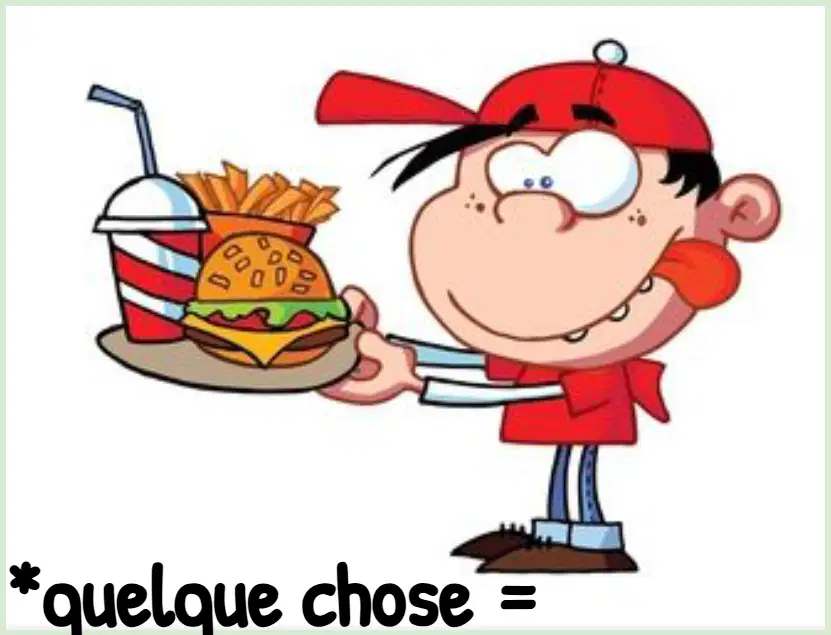
Skill/Concept: Choose the best French question to ask a single friend informally if they want to eat something.
Tu veux manger quelque chose?
Vous voulez manger quelque chose?
Tu voulez manger quelque chose?
Vous veux manger quelque chose?
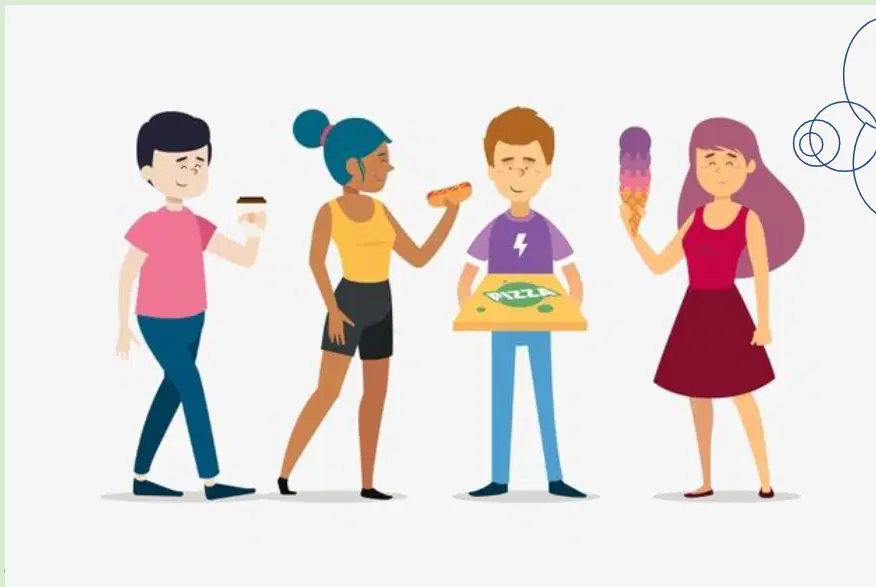
Skill/Concept: You are speaking to a group politely. Which French question correctly asks them if they want to eat something?
Tu veux manger quelque chose?
Vous voulez manger quelque chose?
Tu veux manger quelqu'un?
Vous vouloir manger quelque chose?
Strategic Thinking: Match each situation to the most appropriate French question to ask. A: talking to your best friend; B: addressing your classmates as a group; C: speaking politely to an adult you don’t know well.
A → Vous voulez manger quelque chose?; B → Tu veux manger quelque chose?; C → Tu veux manger quelque chose?
A → Tu veux manger quelque chose?; B → Vous voulez manger quelque chose?; C → Vous voulez manger quelque chose?
A → Tu veux manger quelque chose?; B → Tu veux manger quelque chose?; C → Vous voulez manger quelque chose?
A → Vous voulez manger quelque chose?; B → Vous voulez manger quelque chose?; C → Tu veux manger quelque chose?
Recall: Which French question correctly asks one friend, "What do you want to eat?" Choose the best option.
Qu’est-ce que tu veux manger?
Qu’est-ce que ils veulent manger?
Qu’est-ce que je veux manger?
Strategic choice: In a café, you first talk to your best friend, then turn to a nearby family to ask the same question. Which pair of sentences correctly matches the informal and formal/plural forms?
Tu form: Qu’est-ce que tu veux manger?; Vous form: Qu’est-ce que vous voulez manger?
Tu form: Qu’est-ce que vous voulez manger?; Vous form: Qu’est-ce que tu veux manger?
Tu form: Qu’est-ce que il veut manger?; Vous form: Qu’est-ce que elles veulent manger?
Tu form: Qu’est-ce que je veux manger?; Vous form: Qu’est-ce que nous voulons manger?
Recall: Which French phrase means "I would like" in a polite, conditional form?
Je veux
Je voudrais
Je suis
J’ai
Application: Choose the best French sentence to say "I would like some pizza, some sushi, and some fries."
Je voudrais de la pizza, du sushi, et des frites.
J’aime de la pizza, du sushi, et des frites.
Je veux la pizza, le sushi, et les frites.
J’aimerais la pizza, du sushi, et des frites.
Skill/Concept: Which sentence correctly uses "aussi" to add another item?
J’aimerais aussi un hamburger.
J’aimerais un hamburger aussi je.
J’aime aussi un hamburgerais.
Je voudrais aussi manger je.
Recall: According to the material, "Je veux bien" is best understood as which meaning?
I want well (literal-only)
I would love
I am hungry
I really want to leave
Strategic Thinking: You are ordering at a café and want to be polite. Which option best expresses a courteous desire for chicken in French?
Je veux du poulet.
Je veux bien du poulet.
J’ai du poulet.
Je suis du poulet.
Skill/Concept: To ask someone informally what they like to eat, which question is correct in French?
Qu'est-ce que tu aimes manger ?
Qu'est-ce que vous aime manger ?
Qu'est-ce que tu manges aimer ?
Tu aimes manger quoi est-ce ?
Strategic Thinking: You want to tell a friend your preference and then ask for theirs. Which pair best matches this communicative goal?
Je mange aimer. Et toi, qu'est-ce que tu manges ?
J'aime manger. Et toi, qu'est-ce que tu aimes manger ?
Je suis manger. Et toi, qu'est-ce que tu aimes ?
J'adore manger. Et toi, qu'est-ce que vous aimes manger ?
Which item from the list of favorite dishes would best fit the category of blended beverages?
Pâtes et sauces
Smoothies
Biscuits
Burgers
Select the option that is NOT named among the Québécois teens’ favorite dishes on the list.
Sushis
Poulet au beurre
Tacos
Salades
Based on the list, which pair shows one savory main dish and one sweet treat commonly liked by Québécois teens?
Pizzas and Smoothies
Poulet au beurre and Biscuits
Sushis and Salades
Burgers and Pâtes et sauces
The right-side note says “Place à la créativité / personnalisation” and “Des classiques de restaurants.” Which choice best explains this overall trend in teen preferences?
They only eat traditional home-cooked meals.
They prefer dishes that allow customizing and also enjoy restaurant classics.
They avoid anything from restaurants.
They choose foods solely based on nutritional value.
Vocabulary recall: In French, which verb in the question "Qu’est-ce que tu préfères manger ?" means "to eat"?
préférer
manger
aimer
penser
Grammar focus: Which question asks about what French people like to eat, using the plural subject correctly?
Qu’est-ce que tu préfères manger ?
Qu’est-ce que les Français aime manger ?
Qu’est-ce que les Français aiment manger ?
Qu’est-ce que le Français aime manger ?

Interpreting survey data: According to the chart titled "Ce que les Français aiment manger," which dish has the highest preference percentage?
Steak frites (15%)
Poulet rôti (15%)
Pâtes (12%)
Fruits de mer (20%)

Compare options: Which pair of dishes share the same percentage in the survey?
Pizza and couscous
Steak frites and poulet rôti
Sushis and couscous
Hamburger and pâtes

Apply concept: If a restaurant wants to feature a top-three preference from the survey, which set correctly lists the three highest percentages?
Fruits de mer, steak frites, poulet rôti
Fruits de mer, pâtes, couscous
Steak frites, poulet rôti, pizza
Fruits de mer, sushis, choucroute

Reasoning with data: Which statement is best supported by the survey chart?
Hamburgers are more popular than pizza in France.
Pâtes are preferred by a higher percentage than sushis.
Cassoulet is tied with couscous for preference.
Steak frites ranks below pâtes in popularity.

Recall: According to the material, which food is specifically mentioned as something French teenagers like to eat?
Sushi
Pizza
Escargots
Crêpes
Recall: Choose the list that includes only foods named as popular with French teens.
Pizza, hamburgers, kebab, sandwiches
Sushi, soup, omelette, baguettes
Quiche, ratatouille, salad, yogurt
Crêpes, steak frites, couscous, tartes
Skill/Concept: Match the French food word to its English equivalent based on the material.
Kebab = a grilled meat wrap; Hamburger = a beef patty on a bun; Sandwich = bread with fillings
Kebab = a cheese tart; Hamburger = a seafood roll; Sandwich = a rice dish
Kebab = a sweet pancake; Hamburger = pasta with sauce; Sandwich = a stew
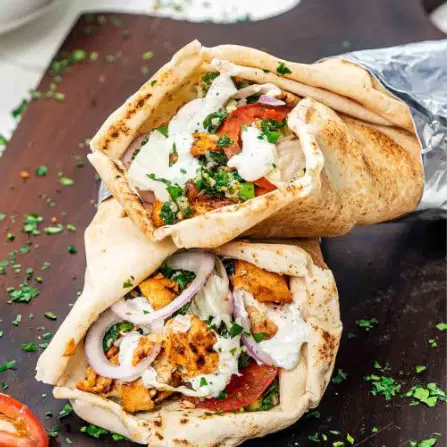
Skill/Concept: If you were ordering like a French teen, which combination best fits the foods highlighted?
Pizza slice and kebab wrap
Soup and salad
Sushi and rice bowl
Quiche and fruit tart

Strategic Thinking: You want to plan a French-teen-themed lunch for four friends. Based on the material, which menu best matches their preferences while keeping items easy to share?
A pizza to share plus a few hamburgers
Escargots with baguette and cheese plate
Sushi platter with miso soup
Ratatouille with roasted vegetables
DoK 1 — Recall: In French, which phrase correctly begins a sentence to express your own food preferences?
Je manges…
J’aime manger…
J’aime mange…
Je aime manger…

DoK 2 — Skill/Concept: Choose the option that best completes the sentence to state a personal preference using the model provided: “J’aime manger ___.”
to play soccer
apple
very quickly
at school

DoK 3 — Strategic Thinking: You are starting a short conversation about food with a classmate. Which opener most closely matches the prompt in the image and invites them to share their preferences?
Tu manges à midi?
Qu’est-ce que tu aimes manger?
Pourquoi manges-tu ça?
Où aimes-tu manger?
Read the mini-dialogue: Pierre: "Tu as faim?" Nathalie: "Oui, j’ai faim." What does "Tu as faim?" mean in English?
Are you hungry?
Do you have food?
Do you like pizza?
Are you full?
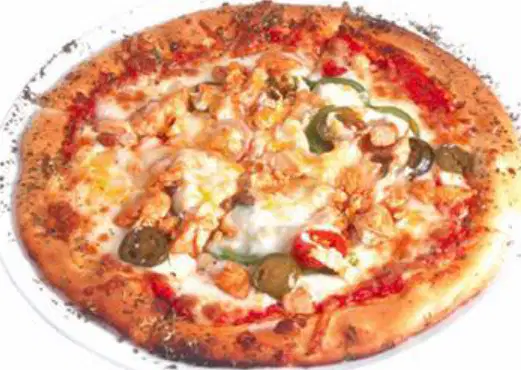
In the dialogue, Pierre asks: "Tu veux un sandwich ou une pizza?" Nathalie replies: "Donne-moi une pizza, s’il te plaît." What does Nathalie politely ask for?
A sandwich, please
A pizza, please
Water, please
Nothing, thank you
Which phrase from the dialogue is used to show gratitude after receiving food?
Voilà
Merci
S’il te plaît
Oh là là
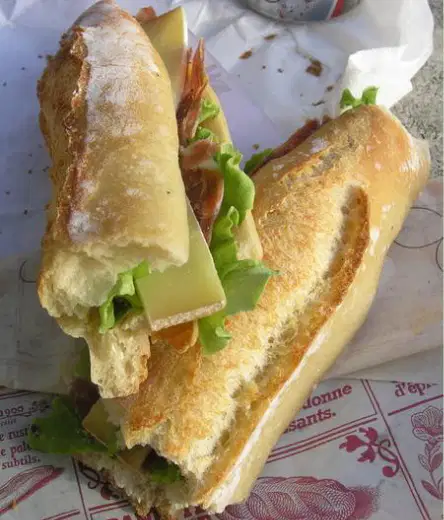
In Scene 2, Philippe says: "Je voudrais un sandwich… euh… et donne-moi aussi une pizza." Based on this, which statement best describes Philippe?
He is not hungry and refuses food.
He wants only a pizza.
He wants a sandwich and a pizza.
He asks for water instead of food.
Pierre responds to Philippe: "Tu as vraiment faim!" What is the best English meaning of "vraiment" in this context?
barely
always
really
already
Which polite request form appears in both scenes when asking someone to hand over food?
Donne-moi…, s’il te plaît
J’ai faim
Voilà
Qu’est-ce que tu veux?
Which French phrase correctly means “I’m hungry”?
Tu veux… ?
J’ai faim.
Je voudrais…
Donne-moi …
Select the best French phrase to offer a choice of foods to a friend:
Qu’est-ce que tu veux ?
Je voudrais…
Donne-moi …
S’il te plaît …
Which expression is used to offer something to someone?
Tu veux … ?
Je voudrais …
J’ai faim.
S’il te plaît …
You want to politely request a pizza from a friend named François. Which French sentence matches this situation?
Tu veux une pizza, François ?
Qu’est-ce que tu veux, François ?
S’il te plaît, François, donne-moi une pizza.
J’ai faim, François.
Choose the French phrase that means “I would like …”
Je voudrais …
Tu veux … ?
Tu as faim ?
Qu’est-ce que tu veux ?
Which sentence correctly offers a sandwich?
Je voudrais un sandwich.
Tu veux un sandwich ?
Donne-moi un sandwich.
Tu as faim ?
You want to say, “Give me a pizza.” Which French phrase is correct?
Je voudrais une pizza.
Donne-moi une pizza.
Tu veux une pizza ?
Qu’est-ce que tu veux ?
Which phrase is most appropriate to begin a polite request in French?
S’il te plaît …
Tu veux … ?
J’ai faim.
Qu’est-ce que tu veux ?
A friend asks, “Qu’est-ce que tu veux?” Which response best fits the model phrases from the section?
J’ai faim.
Je voudrais un sandwich.
Tu as faim ?
S’il te plaît …
Which French phrase best expresses “I’m hungry!” in a casual context?
Je voudrais…
J’ai faim!
Donne-moi… s’il te plaît.
Je suis faim!
Choose the correct French phrase to start an order: “I would like…”
Je voudrais…
Je suis faim…
Donne-moi… s’il te plaît.
J’ai faim…
Which item is correctly paired in French and English?
un hot dog = hamburger
une omelette = omelet
un steak-frites = hot dog with fries
une crêpe = salad
You are at a café. Choose the most polite way to order from a server:
Donne-moi un croissant, s’il te plaît.
Je voudrais un croissant, s’il vous plaît.
J’ai faim un croissant, merci.
Je suis faim! Un croissant, s’il te plaît.
Which option shows the imperative form used for a direct request to a friend?
Je voudrais une crêpe.
Donne-moi une crêpe, s’il te plaît.
J’ai faim! une crêpe.
Je suis faim pour une crêpe.
Pick the correct French for “an ice cream.”
une salade
une glace
une crêpe
une omelette
Identify the phrase that would NOT be used to order food.
Je voudrais…
Donne-moi… s’il te plaît.
J’ai faim!
Je suis faim!
You plan your snack order. Which sentence correctly combines hunger with ordering?
J’ai faim! Je voudrais une pizza.
Je suis faim! Donne-moi une pizza.
J’ai faim! Donne-moi une pizza, s’il vous plaît.
Je voudrais! J’ai faim une pizza.
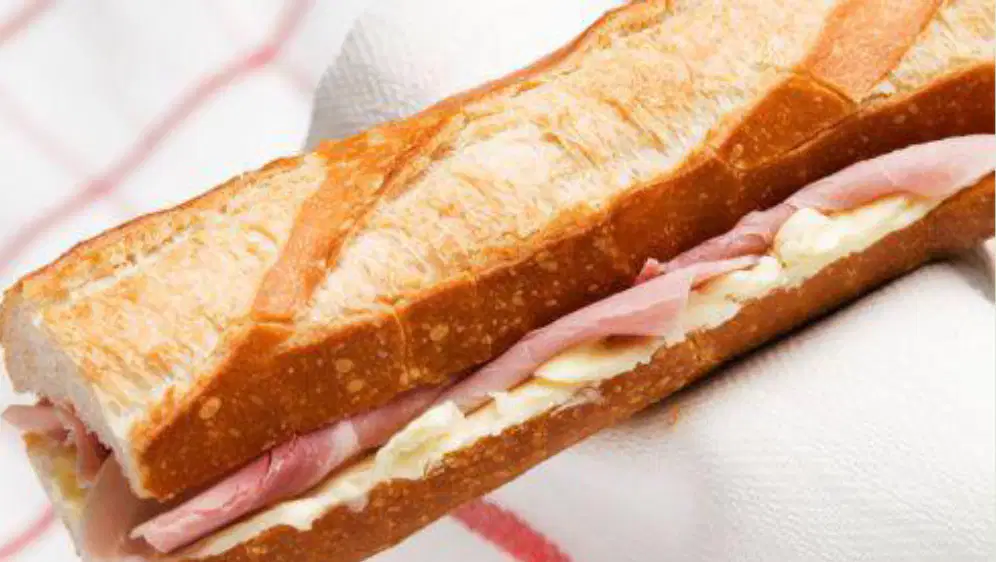
Which option correctly matches the French name to the filling shown: a baguette with slices of ham and butter?
Un sandwich au jambon
Un sandwich au fromage
Un sandwich au saucisson
Un sandwich au pâté
A student points to a baguette with slices of sausage and says, "Voici un sandwich au saucisson." Based on the naming pattern shown, what does "au saucisson" most likely mean?
with ham
with cheese
with pâté
with sausage
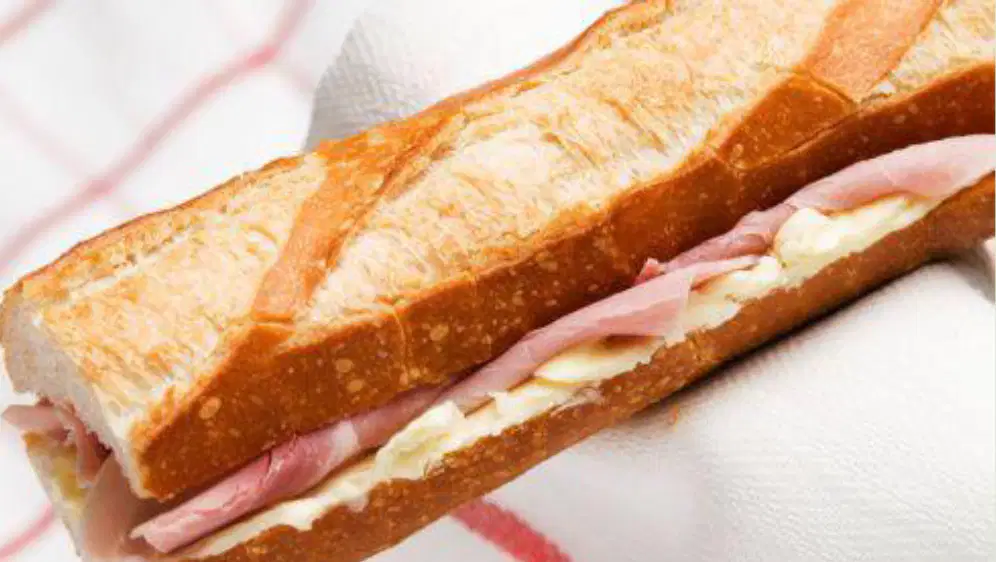
Two signs read: A) Voici un sandwich au fromage. B) Voici un sandwich au jambon. If you want a ham sandwich, which sign should you choose?
Sign A
Sign B
Neither; both are cheese
Both; both are ham

