
Font size
 Worksheets
Evolution Quiz 1.0-1.6
Total questions: 19
Worksheet time: 10mins
What class of antibiotics kills the bacteria by interrupting protein synthesis?
Quinolones
Beta-Lactam
Macrolides
What class of antibiotics kills the bacteria by targeting the cell wall or membrane?
Quinolones
Beta-Lactam
Macrolides
What is an antibiotic resistant bacteria that we have talked about?
(a)

The patient probably has built up a resistance to which antibiotic?
B only
A and C
B and D
D only
Bacteria are found in which of the following places?
In digestive system
In the air
In soil
In all of the above
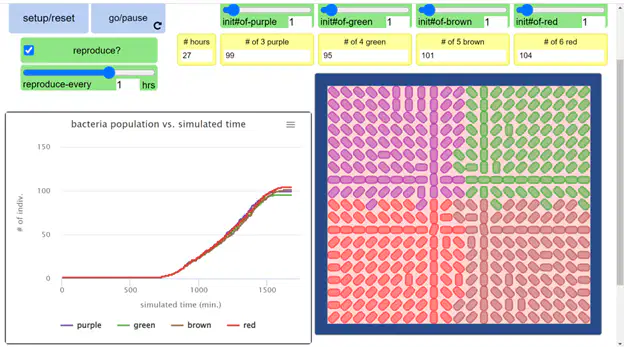
What conclusions can you make based on the data in the picture below?
all of these
all bacteria population sizes were relatively 25% of the total population
all bacteria populations reproduced until they ran out of resources (i.e. space, food)
bacteria populations stopped growing because they reached carrying capacity
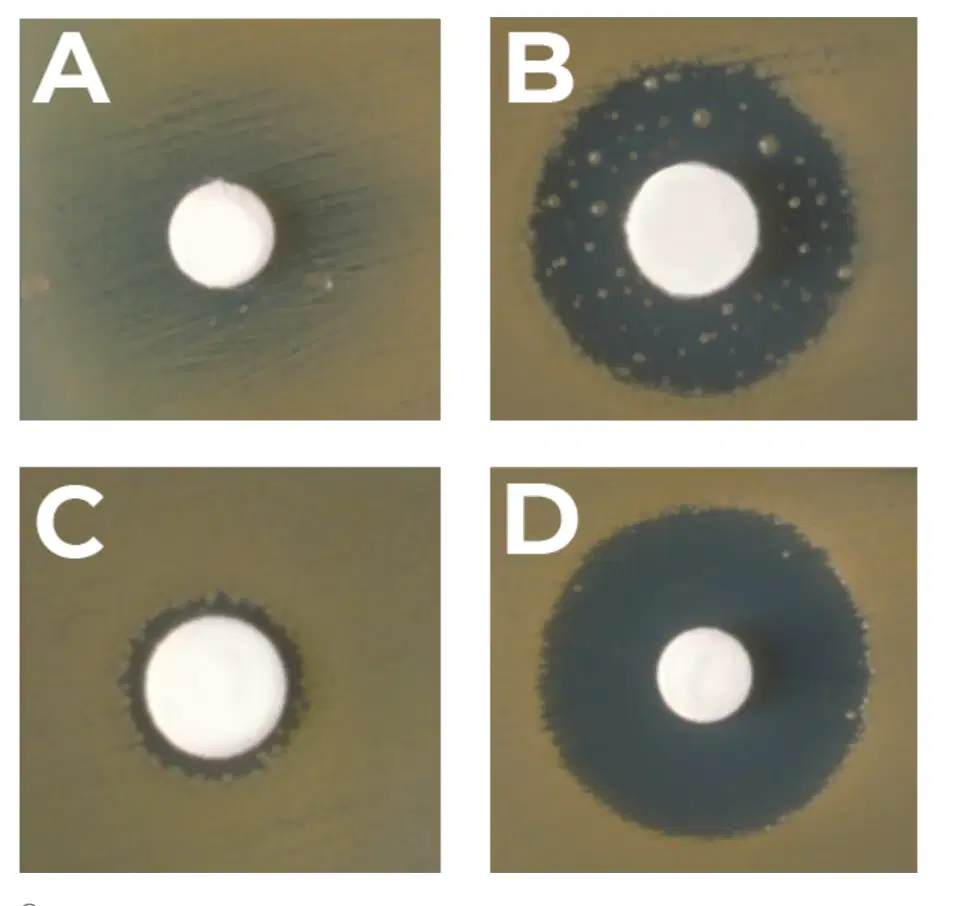
Which antibiotic would you recommend if you saw this Kirby-Bauer ZOI test?
A
B
C
D
gram negatives are resistant to antibiotics because
They have a mutation to multiply rapidly
they have extra armor such as an extra exterior membrane
They secrete proteins that denature antibiotics
they have an adaptation to move quicker than antibiotics
The human body is known to have trillions of bacterial cells
True
False
How do antibiotics work?
all of these
prevent DNA replication for daughter cells
prevent the cell membrane from forming completely
prevent protein synthesis from occurring
What gives superbugs their "edge on survival"?
both of these
neither of these
mutations leading to antibiotic resistance
mutations making them more susceptible
What class of antibiotics kills the bacteria by stopping DNA replication?
Quinolones
Beta-Lactam
Macrolides

THIS IS AN AGAR PLATE WITH BACTERIA GROWTH. THE WHITE DISCS ARE DIFFERENT ANTIBIOTICS. IF THE AREA AROUND IT IS CLEAR, THEN THE ANTIBIOTIC IS EFFECTIVE AT KILLING THE BACTERIA. THIS IS CALLED A ZONE OF INHIBITION (ZOI). A LARGE ZONE MEANS THE BACTERIA IS SUSCEPTIBLE (S) TO THE ANTIBIOTIC. A MEDIUM SIZED ZONE IS INTERMEDIATE (I), WHICH MEANS A HIGHER DOSE IS NEEDED TO BE MORE EFFECTIVE. IF NO ZONE IS SEEN, THEN BACTERIA GROWTH WILL CONTINUE, DESPITE THE ANTIBIOTIC AND THE BACTERIA IS RESISTANT (R).
WHICH ANTIBODY SHOULD THE DOCTORS TRY ON EVA?
A
B
C
D
If bacteria are much too small to see, what is one reason why we can see colonies in the petri dishes that have plenty of food to eat after only a few days?
Because when bacteria split, each new bacterium is twice as big as the old.
none of these
Because of the speed at which bacteria grow and reproduce when they have the resources they need.
Because bacteria only grows in a petri dish.
How does antibiotic resistance happen?
incorrect prescribing practices
bacteria outsmart drugs
overuse
all of these
Can bacteria reproduce in a way such that when you start out with two bacteria, you get five bacteria? Why or why not?
Yes, because bacteria reproduce sexually, and can produce any number of offspring, just as humans do.
No, because bacteria grow at an exponential rate.
none of these
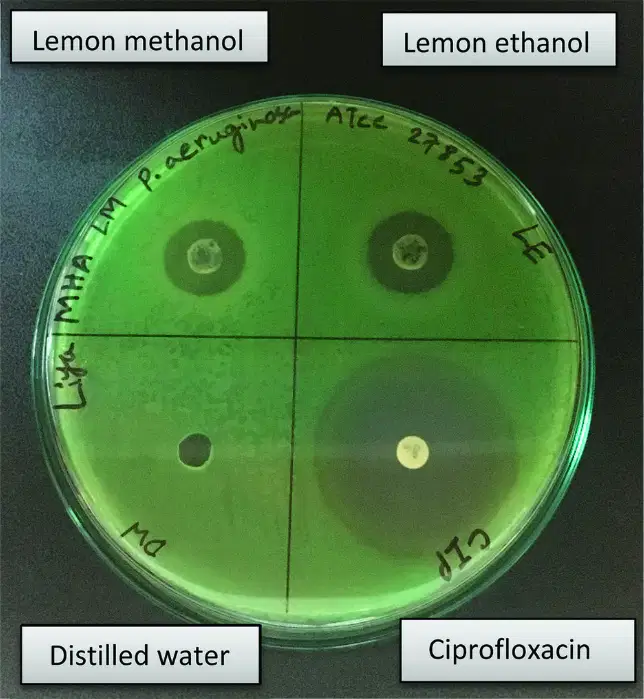
Pseudomonas is a type of bacteria (germ) that is found commonly in the environment, like in soil and in water. Of the many different types of Pseudomonas, the one that most often causes infections in humans is called Pseudomonas aeruginosa, which can cause infections in the blood, lungs (pneumonia), or other parts of the body after surgery.
In 2017, multidrug-resistant Pseudomonas aeruginosa caused an estimated 32,600 infections among hospitalized patients and 2,700 estimated deaths in the United States.
The most at risk include patients in hospitals, especially those:
on ventilators
with devices such as catheders
with wounds from surgery or burns
Eva probably contracted this when she fell off her bike, or in the hospital. Which antibiotic would you recommend?
lemon methanol
distilled water
lemon ethanol
ciprofloxacin
The infection Addie had in her lungs was pan-resistant. This means that the stenotrophomonas was...
susceptible to most antibiotics
susceptible to most antibiotics
resistant to all antiboitics
resistant to only a few antiboitics
Two bacteria produced by binary fission will be genetically identical to each other
True
False

