
 Worksheets
Volcanoes Quiz
Total questions: 39
Worksheet time: 20mins
What is the term used to describe molten rock that flows out of a volcano?
Magma
Lava
Ash
Crust
Which type of volcano is currently erupting or has erupted recently?
Dormant volcano
Extinct volcano
Active volcano
Mid-ocean ridge
What is the name of the underwater mountain range that runs through the Atlantic Ocean?
Mid-Atlantic Ridge
Pacific Ridge
Indian Ridge
Arctic Ridge
Which type of volcano is not expected to erupt again?
Active volcano
Dormant volcano
Extinct volcano
Mid-ocean ridge
What is the term for a volcano that has not erupted for a long time but may erupt in the future?
Active volcano
Dormant volcano
Extinct volcano
Mid-ocean ridge
What are the broken pieces of the Earth's crust called?
Plates
Rocks
Layers
Faults
What causes the plates to constantly move?
Gravity
Continental Drift
Ocean Currents
Wind
What is formed when plates collide?
Mountains
Valleys
Oceans
Plains
What is formed when plates push past one another?
Earthquakes
Volcanoes
Rivers
Glaciers

What is happening to the plates in the diagram?
The plates are colliding and forming mountains.
The plates are moving apart, allowing magma to rise.
The plates are sliding past each other horizontally.
The plates are sinking into the mantle.
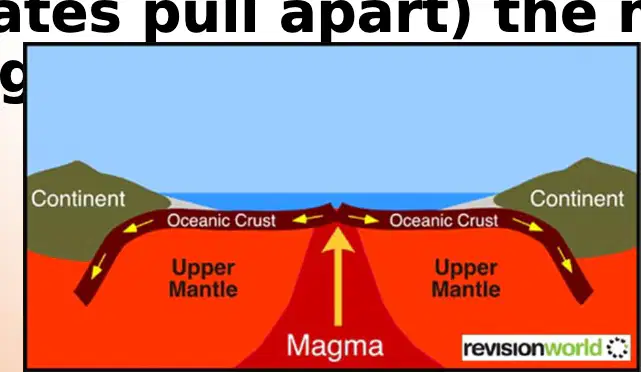
What causes volcanoes to occur?
When two of the Earth's plates pull apart.
When the Earth's plates move closer together.
When the mantle becomes solid.
When magma freezes beneath the crust.
What is the mantle beneath the Earth's crust made of?
Solid rocks.
Semi-molten (melted) rocks called magma.
Frozen magma.
Liquid water.
What is lava?
Magma that has reached the surface of the Earth.
A type of rock found deep underground.
A gas released during volcanic eruptions.
A type of cloud formed near volcanoes.
How does the temperature of lava compare to the boiling point of water in a kettle?
Lava is cooler than boiling water.
Lava is slightly hotter than boiling water.
Lava is much hotter than boiling water.
Lava and boiling water have the same temperature.
Do you think a human could survive a lava flow?
Yes, with protective gear.
No, because lava is extremely hot.
Yes, if the lava is not flowing fast.
No, because lava is made of poisonous gases.
What happens when lava comes out of a volcano and cools?
It forms solid rock, resulting in Mid Ocean Ridges, Volcanic Islands, and Volcanic Mountains.
It evaporates into the atmosphere.
It turns into liquid water.
It forms sand dunes.
Which of the following can be formed when magma cools and solidifies after coming out of a volcano?
Mid Ocean Ridges, Volcanic Islands, and Volcanic Mountains.
Deserts, Rivers, and Lakes.
Plains, Plateaus, and Valleys.
Forests, Grasslands, and Wetlands.

What happens when two plates pull apart under the sea?
Lava rises up to the ocean floor.
The plates form mountains on land.
The ocean floor sinks deeper.
The plates stop moving.
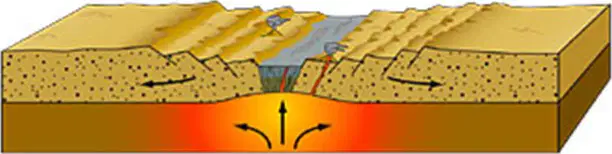
What is formed after many eruptions and layers of new rock build up under the sea?
Mid-ocean ridge.
Rift valley.
Ocean trench.
Continental crust.
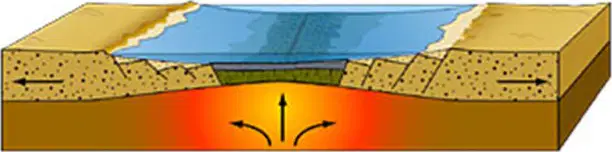
What happens to lava when it touches cold seawater?
It cools quickly into solid rock.
It evaporates into steam.
It forms a gas bubble.
It remains liquid.
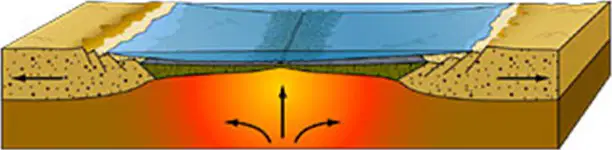
What is a long chain of volcanic mountains under the sea called?
Mid-ocean ridge.
Ocean trench.
Rift valley.
Continental shelf.
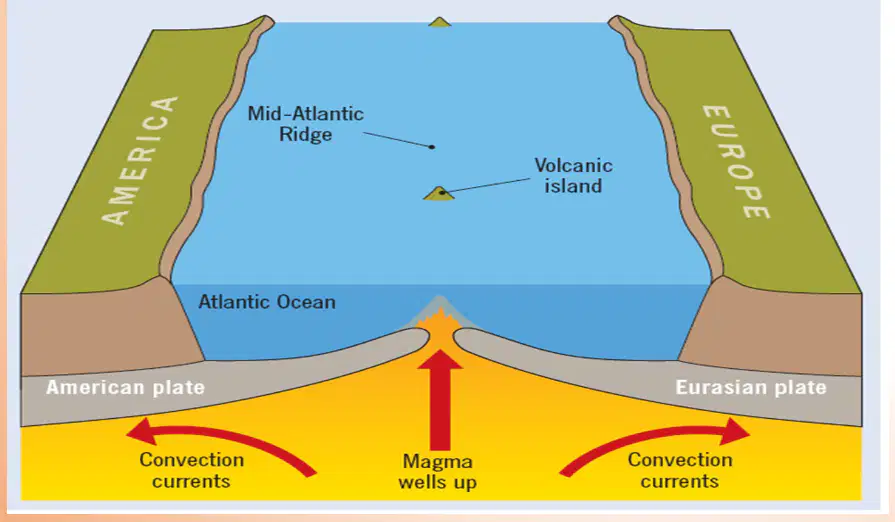
What causes the Eurasian and American plates to move apart, leading to the formation of the Mid-Atlantic Ridge?
Convection currents
Earthquakes
Tsunamis
Volcanic eruptions
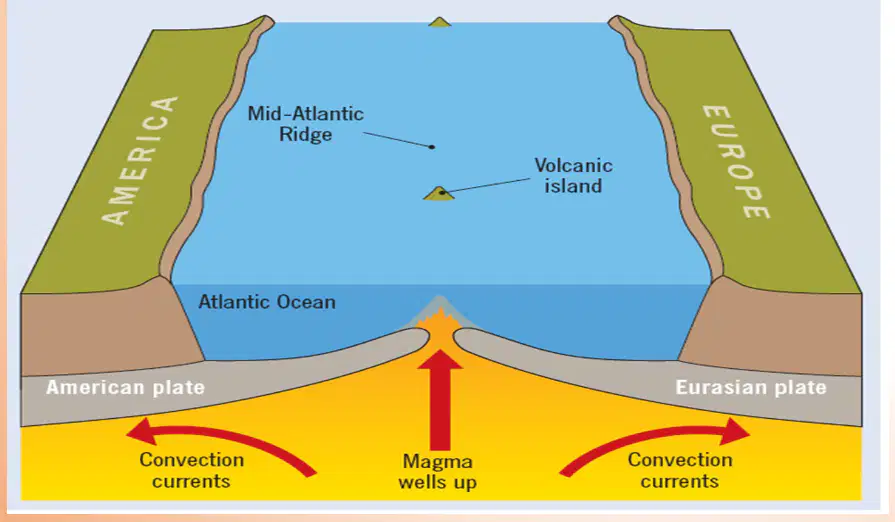
What is created when the Eurasian and American plates are dragged apart?
A long crack
A volcanic island
A mountain range
A deep trench

Where is the Mid-Atlantic Ridge located?
Beneath the Pacific Ocean
Beneath the Atlantic Ocean
Beneath the Indian Ocean
Beneath the Arctic Ocean
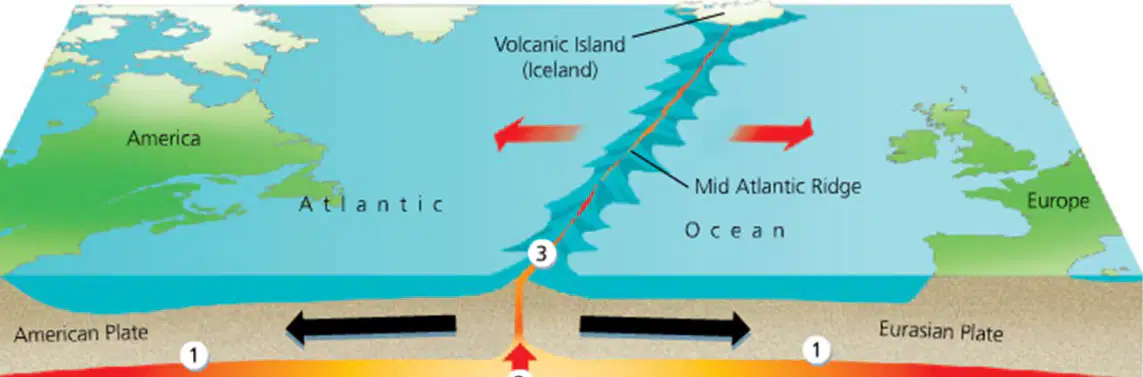
Which plates are involved in the formation of the Mid-Atlantic Ridge?
American Plate and Pacific Plate
Eurasian Plate and Indian Plate
American Plate and Eurasian Plate
African Plate and Antarctic Plate
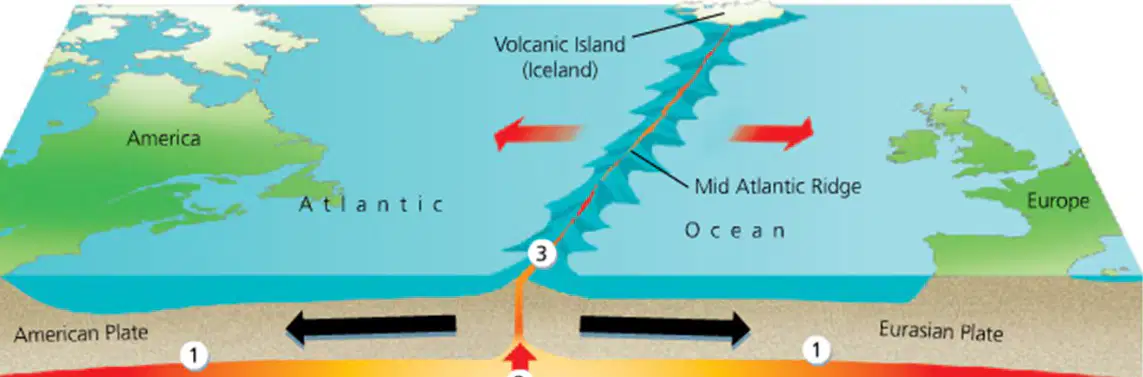
Which volcanic island is located along the Mid-Atlantic Ridge?
Hawaii
Iceland
Madagascar
Greenland
What are the three stages in the life cycle of a volcano?
Active, Dormant, Extinct
Active, Dormant, Erupting
Dormant, Extinct, Erupting
Active, Erupting, Sleeping
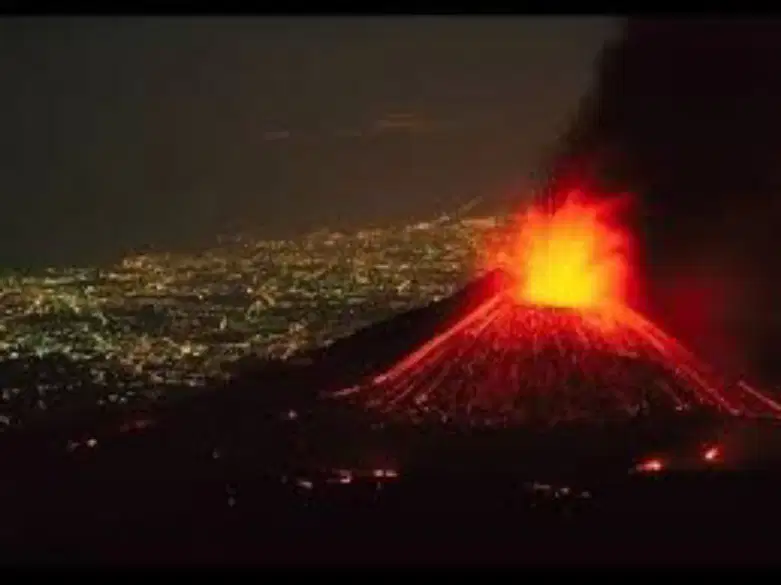
What is an example of a volcano that is still erupting regularly?
Mount Everest
Mount Etna
Mount Kilimanjaro
Mount Fuji
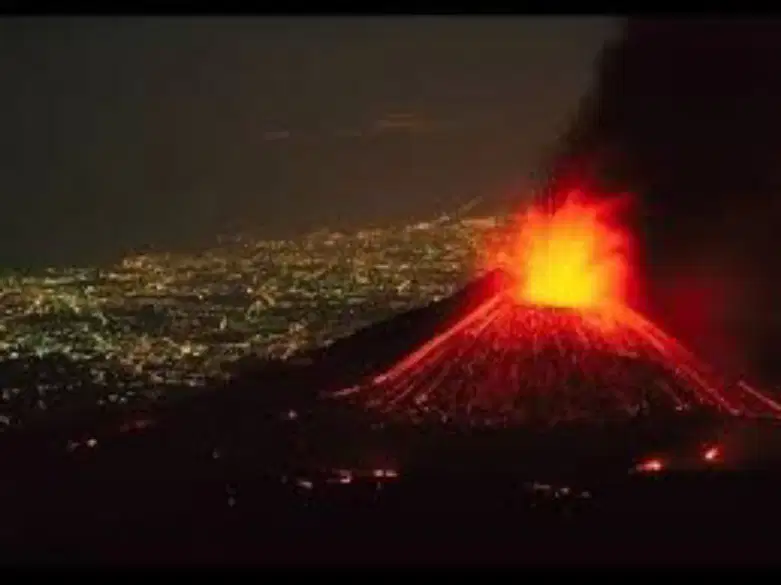
When did Mount Etna last erupt?
May 2015
June 2016
April 2014
March 2013
Where is Mount Vesuvius located?
Japan
Italy
Indonesia
United States
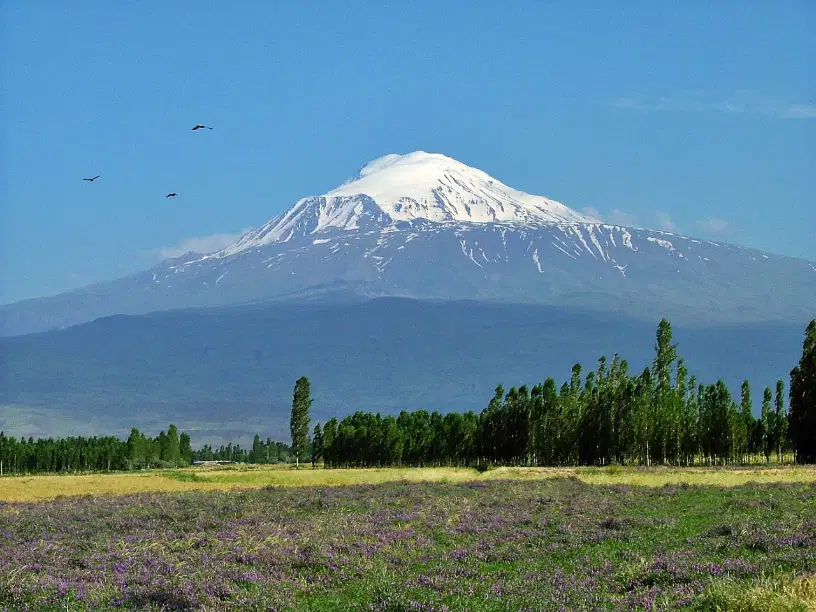
What does the term "Dormant Stage" refer to in relation to volcanoes?
A volcano that has erupted recently and is active.
A volcano that has not erupted for a long time but may erupt in the future.
A volcano that will never erupt again.
A volcano that erupts continuously without stopping.
What is an extinct volcano?
A volcano that has erupted recently and may erupt again.
A volcano that has not erupted in historic times and will not erupt again.
A volcano that erupts continuously.
A volcano that erupts only during specific seasons.
What is magma?
Molten rock beneath the Earth's surface
Solid rock found on the Earth's surface
A type of volcanic ash
A type of sedimentary rock
Where do volcanoes occur?
In deserts
At tectonic plate boundaries
In the middle of oceans only
Only in cold regions
What is the Pacific Ring of Fire?
A region known for frequent volcanic activity
A famous mountain range
A type of ocean current
A historical event
What occurs during Stage 2 of the formation of volcanic mountains?
Hot lava flows out through the vent, cooling and hardening.
Magma erupts explosively from the crater.
Lava flows build up to form a cone-shaped mountain.
Magma remains stored underground in the magma chamber.
What is the result of repeated eruptions and lava flows during Stage 3 of volcanic mountain formation?
A flat plateau is formed.
A cone-shaped mountain is built up.
Lava cools and hardens underground.
Magma remains stored in the magma chamber.
Where is magma stored before it erupts explosively during Stage 1?
In the vent.
In the magma chamber.
In the crater.
In the cone-shaped mountain.
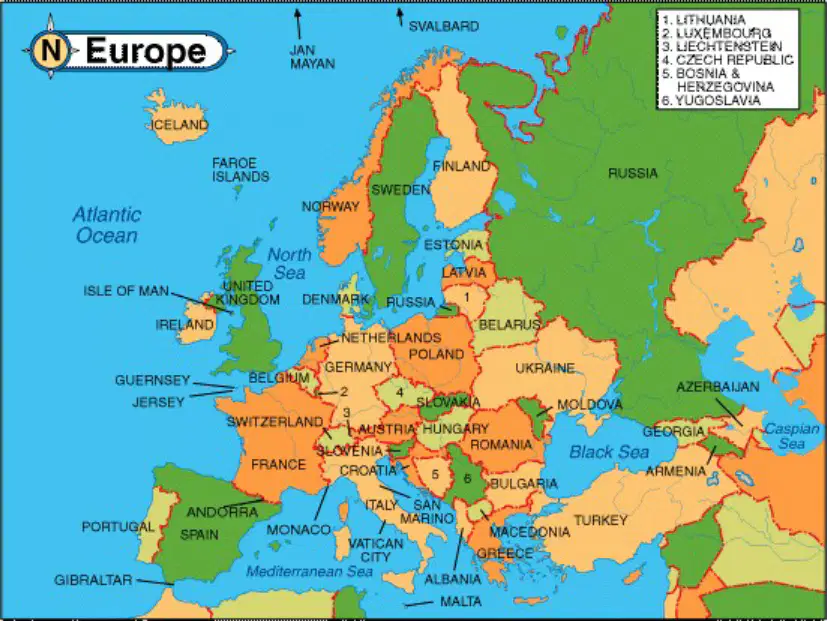
Where is Iceland located?
In North America
In South America
In Europe
In Asia

