
 Worksheets
Exploring Latin America's Geography and Culture
Total questions: 97
Worksheet time: 1hrs 19mins
Maya is planning a hiking trip along the western edge of South America. She wants to know which mountain range she will be exploring. Which mountain range runs along the western edge of South America?
The Alps
The Andes
The Himalayas
The Rockies
Abigail is planning a trip to Latin America and wants to visit the largest river by volume. Which river should she choose?
Nile River
Amazon River
Mississippi River
Paraná River
Priya is planning a trip to Brazil and wants to learn a few basic phrases to communicate with locals. Which language should she focus on learning?
Spanish
Portuguese
French
English
Charlotte is planning a trip to Mexico and wants to visit its capital city. Which city should she travel to?
Lima
Buenos Aires
Mexico City
Santiago
Abigail is researching Latin American countries for her geography project. She wants to focus on a country that is known for its large reserves of oil. Which country should she choose?
Chile
Venezuela
Peru
Costa Rica
Jackson is preparing a report on the cultural practices of Latin American countries for his geography class. He needs to identify the main religion practiced in most Latin American countries. Which religion should Jackson include in his report?
Buddhism
Islam
Roman Catholicism
Hinduism
Maya is planning a trip to see the Amazon Rainforest, which is famous for its biodiversity. Which Latin American country should she visit?
Argentina
Brazil
Uruguay
Ecuador
Anika is studying agriculture in Central America and wants to learn about the region's major crops. Which of the following is a major crop grown in Central America?
Wheat
Coffee
Barley
Rice
Anika is planning a trip along the eastern coast of South America. She wants to know which body of water she will see during her journey. Which body of water lies to the east of South America?
Pacific Ocean
Indian Ocean
Atlantic Ocean
Arctic Ocean
Luna is planning a trip to Argentina and wants to communicate effectively with the locals. What is the official language she should learn?
Spanish
Portuguese
English
French
Abigail is planning a trip to the Caribbean and wants to visit an island shared by two countries. Which two countries share the island of Hispaniola?
Cuba and Jamaica
Haiti and Dominican Republic
Puerto Rico and Bahamas
Trinidad and Tobago
Nora is planning to transport goods across the Amazon region. How does the Amazon River impact her transportation options?
It is a barrier to travel
It provides a major waterway for moving goods and people
It is only used for fishing
It is not navigable
Nora is studying the environmental challenges facing the Amazon Rainforest. She learns that deforestation is a significant issue there. Why is deforestation such a major concern in the Amazon?
It increases rainfall
It leads to loss of biodiversity and affects the global climate
It improves soil fertility
It creates more farmland without consequences
Nora is planning a trip to South America and wants to visit the Atacama Desert. She is researching what kind of climate to expect there. Which of the following best describes the climate of the Atacama Desert?
Tropical and rainy
Cold and snowy
Extremely dry and arid
Humid and temperate
Grace is planning to move to South America and is researching where people tend to settle. She notices that the Andes Mountains run through much of the continent. How have the Andes Mountains influenced settlement patterns in South America?
They have encouraged dense urban development in the mountains
They have limited settlement to coastal and lowland areas
They have no effect on settlement
They have made the region uninhabitable
Sophia is studying how people have managed to live in the high altitudes of the Andes mountains. What is one way that indigenous cultures have adapted to these challenging environments?
By building floating islands
By developing unique agricultural techniques like terrace farming
By living only at sea level
By relying solely on fishing
Evelyn is studying how people in Latin America have changed their environment to improve transportation and trade. Which of the following is an example of this human-environment interaction?
The creation of the Panama Canal
The discovery of Machu Picchu
The naming of the Amazon River
The celebration of Carnival
Jackson is considering starting a farm in the Pampas region. How does the climate of the Pampas benefit his agricultural plans?
It is too cold for crops
It provides fertile soil and moderate rainfall, ideal for farming
It is mostly desert
It is covered in dense forest
Kai is preparing a report on Chile's economy for his geography class. He needs to highlight a major export of the country. Which natural resource should Kai focus on?
Oil
Copper
Timber
Diamonds
Isla is studying the effects of urbanization in Latin American cities for her geography project. She observes that as cities grow, certain environmental changes occur. Based on her research, what impact has urbanization had on the environment in many Latin American cities?
It has reduced pollution
It has led to increased air and water pollution
It has no effect on the environment
It has increased forest cover
In a country where all major decisions are made by a small group of influential business leaders, what type of government does this best represent?
Democracy
Oligarchy
Monarchy
Theocracy
Maya is planning a trip to a Latin American country famous for its unique blend of African, European, and indigenous cultural influences, especially in its music and dance. Which country should she visit?
Chile
Cuba
Paraguay
Bolivia
Jackson is researching the languages spoken in Latin America for a school project. He wants to understand how colonization has influenced the languages people speak there today. What should Jackson conclude?
Colonization had no effect on languages
Colonization led to the dominance of Spanish and Portuguese, replacing many indigenous languages
Colonization increased the use of Asian languages
Colonization made English the main language
Samuel is a shipping company manager in the early 20th century. He needs to decide whether to send his cargo ships around South America or through the newly constructed Panama Canal. Analyze how the construction of the Panama Canal would change Samuel's shipping routes and global trade.
It made no difference to trade
It allowed ships to avoid the long and dangerous route around South America, increasing trade efficiency
It blocked trade between the Atlantic and Pacific Oceans
It only benefited Panama
Luna lives in a small town in the Andes region where mining activities are common. Evaluate the impact of these mining activities on Luna's community and the surrounding environment.
Mining has only positive effects
Mining can provide jobs but often leads to environmental degradation and health problems for local communities
Mining is not practiced in the Andes
Mining improves air quality
Mia is studying the cultures of Latin America for her geography class. She notices that people living in mountain villages, rainforest communities, and along major rivers often have different languages and traditions. How has the physical geography of Latin America contributed to this cultural diversity?
Physical geography has no influence on culture
Mountains, rainforests, and rivers have led to isolated communities, resulting in diverse languages and traditions
The region is culturally uniform
Only climate affects culture
Nora is a government official in a Latin American country. She is tasked with promoting economic development, but she notices that rapid growth is causing deforestation, pollution, and loss of biodiversity. What challenge is Nora facing in her role?
There are no challenges
Economic development often leads to deforestation, pollution, and loss of biodiversity, making it difficult to protect the environment
Economic development always helps the environment
Environmental protection is not a concern
Mia is studying how migration within Latin America has affected urban growth and cultural change in major cities. What has she found?
Migration has no effect on cities
Migration has led to rapid urban growth and the blending of different cultural traditions in cities
Migration only affects rural areas
Migration decreases cultural diversity
Sophia is studying the economies of Latin American countries for her geography class. She notices that many of these countries have an abundance of natural resources. How do these resources influence the economic development of Latin American countries?
Natural resources are not important to the economy
The abundance of resources like oil, copper, and agricultural products has made them key exports and shaped economic development
Only tourism shapes the economy
Natural resources are only used locally
Scarlett is researching how indigenous traditions impact daily life in Latin America. She wants to understand how these traditions are reflected in language, art, food, and festivals in modern society. What should Scarlett conclude?
Indigenous traditions have no influence
Indigenous traditions continue to shape language, art, food, and festivals in modern Latin American societies
Only European traditions are present
Indigenous traditions are only found in rural areas
Priya is preparing for a trip to Latin America and wants to learn one of the main spoken languages there. She is considering Spanish, Portuguese, and Italian. Which is NOT one of the main spoken languages of Latin America?
Spanish
Portuguese
Italian
All of the above
Noah is studying the history of Latin America for his school project. He wants to know which two countries primarily colonized Latin America. Can you help him choose the correct answer?
France and Spain
Spain and Portugal
Portugal and France
Spain and England
Grace is researching the predominant religious denomination in Latin America for her cultural studies class. She wants to know which faith most people in the region adhere to. Which religious denomination should she focus on?
Protestantism
Zapatistaism
Roman Catholicism
Anika is learning about the history of her country. She reads that the people who have lived in the region since ancient times are called ________. What does 'Indigenous' mean in this context?
original or native
descendants of Indians
immigrants
none of the above
Samuel is studying the history of trade routes. He learns about the triangular trade and wants to know: What goods were brought from Africa to Latin America during this trade?
Gold
Slaves
Timber
Tea and spices
Zoe is studying the history of Latin America for her class. She learns that the region's culture is a blend of Natives, Europeans, and Africans. Is this statement true or false?
True
False
Mia is researching why the Roman Catholic religion is the dominant religion in Latin America for her history project. Which of the following best explains this?
African slaves brought new religious traditions to South America
Spanish colonization of South America spread new religious traditions
Incan leaders encouraged people in South America to convert to new religions
Colonial immigrants adopted the beliefs of indigenous people living in South America

Abigail is studying a map of South America for her geography class. She notices a large area shaded in dark green. Which physical feature is shown on the map in dark green?
Andes Mountains
Amazon Rainforest
Strait of Magellan
The Pampas

Zoe is studying a map of South America for her geography class. She notices that Arrow B is pointing to a major physical feature. What is Arrow B pointing to?
the Andes Mountains.
The Amazon River.
The Appalachian Mountains.

Emma is planning a trip to South America and wants to visit the longest river on the continent. Which river should she choose?
Nile River
Mississippi River
Amazon River

Kai is studying a map of Central America for his geography class. He notices that the area labeled '8' is a large water body. Which water body is it?
Pacific Ocean
Gulf of Mexico
Caribbean Sea
Atlantic Ocean
Aria is studying the role of citizens in different countries for her school project. She is researching Cuba and wants to understand how the form of government there affects what citizens can do. What might Aria discover about the role of the citizen in Cuba?
Cuba has a dictatorship, which limits the voting rights of the citizens.
Cuba has a dictatorship, which allows for greater voting rights of the citizens.
Cuba has a federal-republican system, which limits the voting rights of the citizens.
Cuba has a federal-republican system, which allows for greater voting rights of the citizens.
Ethan is studying different government systems in Latin America for his school project. He learns that the Mexican government functions using a democratic system. When he researches Cuba, he discovers that the Cuban government functions using which type of system?
parliamentary
fascist
anarchist
dictatorship
Abigail is studying the political systems of Brazil and Mexico for her school project. She wants to know: What is the title of the political leader with the most power in the countries of Brazil and Mexico?
prime minister
president
king
chairman
Luna is researching how much citizens can participate in their government in different countries. She wants to know: In which of the following countries would citizen participation in government be the LEAST?
Mexico
Cuba
Brazil
United States

After Columbus's voyages, farmers in Europe began growing crops like potatoes and tomatoes that were originally found in the Americas, while people in the Americas started raising animals like cattle and sheep brought from Europe. Diseases, people, and cultural practices also moved between the continents. What is this interchange called?
Columbian Exchange
Cultural Diffusion
Demography
Deforestation
Liam is part of a team that is removing trees from a forest so the land can be used for farming. What is this process called?
Renewable Resources
Cultural Diffusion
Deforestation
Columbian Exchange
Henry is studying the history of Latin America for his school project. He learns about the effects of colonization in the region. All of the following are effects of colonization in Latin America EXCEPT...
Mixed Indigenous and European ethnic groups create a new culture.
Spanish and Portuguese are the dominant languages.
The religion is mainly Roman Catholic.
The Europeans contracted deadly diseases from the indigenous people.
Scarlett is studying the impact of colonization on Latin American culture for her history class. She makes a list of cultural elements and wonders which one was NOT shaped by colonization. Which of the following should she choose?
Spanish Language
Roman Catholic Religion
The Tango
Tamales

Priya is preparing a report on major oil producers in Latin America for her geography class. She needs to identify which of the following countries are major oil producers. Can you help her select all that apply?
Venezuela
Brazil
Uruguay
Mexico

What invention of the Inca is describedHieroglyphics in the passage?
Hieroglyphics
Salsa
Plantations
Terrace Farming
Which major Latin American staple crop spread to Europe due to colonization and trade through the Columbian Exchange?
Pineapples
Potatoes
Olives
Grapes
Determine which statements below can be attributed to the Native American civilizations listed.
Select the correct answer in each row.
Incas
Their ancient ruins and pyramids can be bound in the Yucatan Peninsula
Introduced a system of irrigation to help with farming the land in northern Mexico
Created terrace farming in the Andres Mountains of what is now known as Peru
Discovered chocolate

What theme does the statue above illustrate?
Justice
Economics
Nature
Religion

WHICH OF THE FOLLOWING REPRESENTS THE GULF OF MEXICO?
A
B
C
D

Based on the information in the table, which environmental modification would most likely be common in each of these Latin American countries?
Mining
Ranching
Drilling for Oil
Harvesting for timber
What is one way that the migration of European colonists to South America changed the character of the region?Men and women gained greater social equality.
Men and women gained greater social equality.
Economic practices reverted to traditional methods.
Religion and language patterns changed significantly.
Native groups switched from terrace to field farming.

Which phrase in this excerpt describes the impact of indigenous culture on Latin America?
Select One correct answer.
A
B
C
D
E

Latin America is divided into 3 regions. Select all that apply.
Mexico and Central America
North and South America
Caribbean
South America
Which (native) group has been in the Amazon Rainforest the longest?
Settlers
Loggers
Indigenous
Politicians
South America is located between which 2 oceans?
Arctic and Atlantic
Indian and Pacific
Arctic and Indian
Atlantic and Pacific
South America is located south of _________________.
Asia
Africa
North America
Europe
Which of the following is a major river that flows through Brazil?
Amazon River
Mississippi River
Danube River
Yangtze River
What is one impact of European colonization on the languages spoken in Latin America?
Most people speak indigenous languages only
Spanish and Portuguese became the dominant languages
English is the official language everywhere
Latin is widely spoken
Which of the following best describes the government system in Brazil?
Absolute Theocracy
Federal Republic
Monarchy
Dictatorship

This image represents which basic institution?
A. Government
B. Religion
C. Education
D. Economic
Most widely practiced religion in Latin America
Catholicism
Islam
Hinduism
Buddhism
Traditional Native Religions

What was one major religious feature that was common to all 3 major pre-Columbian, native American civilizations?
monotheism
Catholicism
human sacrifice
baptism

For the image below, what does the building indicate about the civilization that built it?
The Aztecs had advanced mathematical knowledge for their time period.
The Egyptians influenced the Aztecs with their gods and food.
They were an agricultural society.
The Aztecs built the temples to attract rain and lightning for crops.

Which conclusion about Incan society could be drawn from the map?
An extensive road system connected all parts of the Empire for trade.
Their trade depended on many seaports.
Tropical climatic conditions existed throughout the empire.
A similar language unified the Inca civilization.
“. . . (It) brought the potato, the pineapple, the turkey, dahlias, sunflowers, magnolias, maize, chillies and chocolate across the Atlantic. On the other hand, tens of millions died in the pandemics of the 16th century, victims of smallpox, measles and the other diseases brought by Europeans (and don’t forget that the African slave trade was begun by the Europeans, to replace the work force they had decimated).”. . .
— Michael Wood, BBC History (adapted)
Which historical development is being described in this quotation?
Columbian exchange
establishment of the line of Demarcation
creation of the Hanseatic League
Glorious Revolution

Which statement best explains the population trend shown on this graph? (ALL OF THESE ARE TRUE STATEMENTS, WHICH ONE IS SUPPORTED BY THE GRAPH!)
Europeans brought diseases to Latin America.
Native beliefs included human sacrifice.
Tribal warfare raged during this time period.
Native traditions encouraged polygamy.
What was one major religious feature that was common to all 3 major pre-Columbian, native American civilizations?
monotheism
Catholicism
human sacrifice
baptism
For the image below, what does the building indicate about the civilization that built it?
The Aztecs had advanced mathematical knowledge for their time period.
The Egyptians influenced the Aztecs with their gods and food.
They were an agricultural society.
The Aztecs built the temples to attract rain and lightning for crops.
Which conclusion about Incan society could be drawn from the map?
An extensive road system connected all parts of the Empire for trade.
Their trade depended on many seaports.
Tropical climatic conditions existed throughout the empire.
A similar language unified the Inca civilization.
“. . . (It) brought the potato, the pineapple, the turkey, dahlias, sunflowers, magnolias, maize, chillies and chocolate across the Atlantic. On the other hand, tens of millions died in the pandemics of the 16th century, victims of smallpox, measles and the other diseases brought by Europeans (and don’t forget that the African slave trade was begun by the Europeans, to replace the work force they had decimated).”. . .
— Michael Wood, BBC History (adapted)
Which historical development is being described in this quotation?
Columbian exchange
establishment of the line of Demarcation
creation of the Hanseatic League
Glorious Revolution
Which statement best explains the population trend shown on this graph? (ALL OF THESE ARE TRUE STATEMENTS, WHICH ONE IS SUPPORTED BY THE GRAPH!)
Europeans brought diseases to Latin America.
Native beliefs included human sacrifice.
Tribal warfare raged during this time period.
Native traditions encouraged polygamy.

This map offers an overview of the global trade of silver and other commodities in the seventeenth and eighteenth centuries. Review the map and identify all of the products that were purchased with silver.
coffee from Southeast Asia
pepper from India
enslaved people from Lagos
silk from Mexico City
Identify the long-term effects of the Columbian exchange.
Invasive plants and animals significantly altered landscapes and edged out indigenous species.
American foods like corn, potatoes, and chili peppers revolutionized diets in Europe, Africa, and Asia.
Communicable diseases killed as much as 90 percent of the pre-Columbian human population of the Americas.
Indigenous Americans and settlers rejected Old World foods in favor of more efficient local crops.
Which trade item directly escalated violence and political destabilization across the globe?
ceramics: The European and Ottoman demand for Chinese porcelain resulted in widespread fighting in the South Pacific region.
guns: In both North America and Africa, indigenous people made trade decisions with negative long-term consequences in order to acquire weapons;
those weapons, in turn, heightened local conflicts.
silver: The global demand for silver and the increase in the overall money supply destabilized many regions, including China, the Ottoman Empire, and
Europe.
coffee: The trade in coffee led to coffeehouse culture, which was innately rebellious and destabilizing in both Europe and the Ottoman Empire.


Which of the following was a major reason for the flow of the transatlantic slave trade shown on the map?
The economic demands of the plantation system
The construction needs of the railroad
Increased textile manufacturing
Increased western migration
The closeness of the place, and the heat of the climate, added to the number in the ship, which was so crowded that each had scarcely room to turn himself, almost suffocated us. This produced copious perspirations, so that the air soon became unfit for respiration, from a variety of loathsome smells, and brought on a sickness among the slaves, of which many died, thus falling victims to the improvident avarice, as I may call it, of their purchasers. This wretched situation was again aggravated by the galling of the chains, now become insupportable; and the filth of the necessary tubs, into which the children often fell, and were almost suffocated. The shrieks of the women, and the groans of the dying, rendered the whole a scene of horror almost inconceivable.
What was the main result of the conditions described in this piece of writing?
The slaves were in such close confines that diseases were transmitted between slaves quickly.
The poor living conditions of slaves during transportation caused sickness like scurvy and awful aromas, causing many of the slaves to die or kill themselves rather than stay.
There was a shortage of slaves from Africa because so many slaves died during transportation.
Slaves brought new sicknesses to Colonial America.

Match these topics to the correct path as to WHERE THESE THINGS ARE GOING. USE THE MAP.
Cloth and guns
Africa
slaves
America
rice, tobacco and sugar
Europe
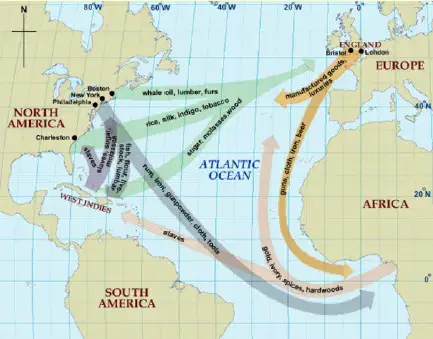
Which of the following most accurately describes the movement of goods and people within the Transatlantic Trade Routes?
Slaves to America, rice, oil and sugar to Africa; guns and rum to Europe
Cloth and guns to Africa; slaves to America; rice, tobacco and sugar to Europe
Sugar, furs, and tobacco to Europe; Slaves to Africa, guns and beets to Europe
Slaves to Europe, cloth, beer, and rice to America; gold, spices, and slaves to Africa
Click on the section that would be labeled the Middle Passage.

Which characteristic is common to the Aztec, Maya, and Inca civilizations?
Direct Democracy
Monotheism
Advancement of scientific knowledge
Christianity
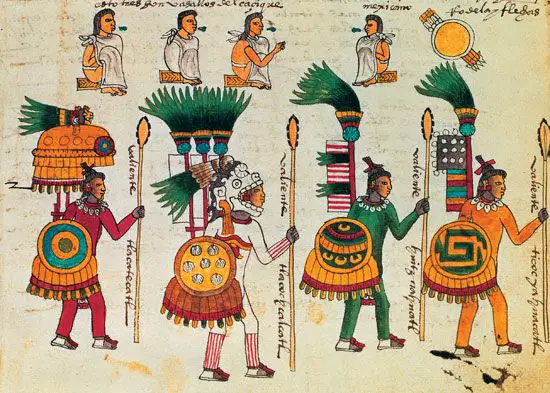
Compared to the Mayan civilization, the Aztec civilization significantly expanded its power through
which means?
alliances
colonization
trade networks
military conquest
Which of the following is one reason that African slaves were sent to the Americas?
There was a need for a cheap labor force to work the sugar plantations and tobacco farms
Native Americans wouldn't listen to instructions.
The number of indentured servants had decreased dramatically and more workers were
needed.
Many Africans were tricked into believing they had been hired as indentured servants for
colonial farmers.
"The Indians living here say that they have been here four years. They have planted corn and
vegetables among the ruins and on some of the terraces. One or two families live in ancient
buildings on which they have built roofs. There are also three huts of recent construction. The
climate seems to be excellent. We noticed growing sweet and white potatoes, maize,
sugar-cane, beans, peppers, tomatoes, and a kind of gooseberry ..
Machu Picchu is Discovered, Hiram Bingham, 1911
Which of the following is highlighted by these pictures?


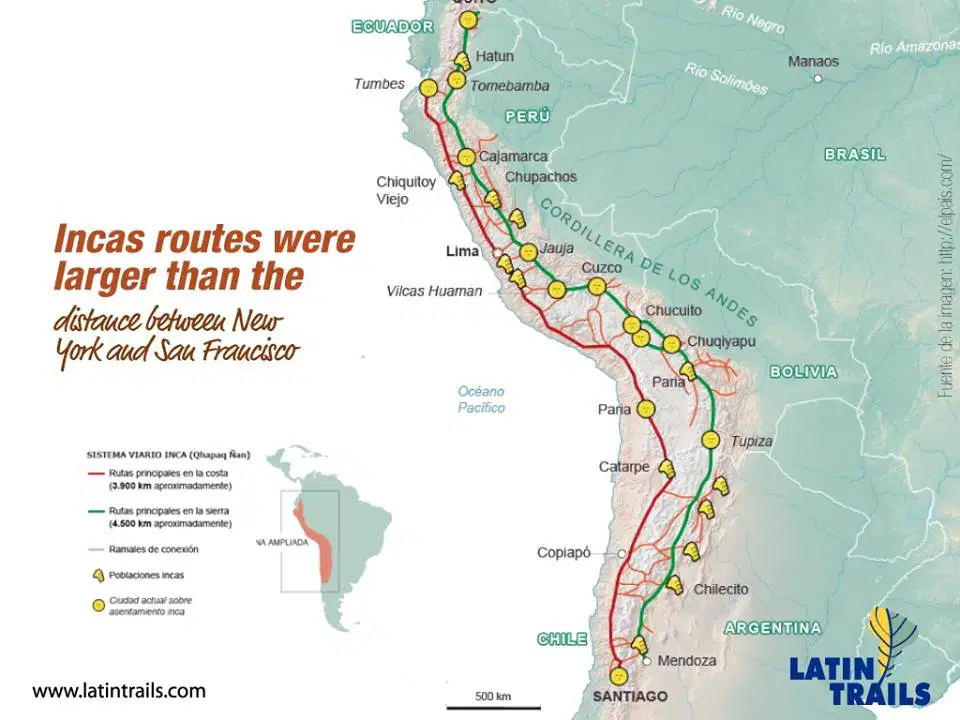
What was a key reason that the Incas were able to control their large empire?
They outlawed human sacrifice.
They formed a democratic government.
They built a road system to connect distant areas and to move armies.
They promoted literacy and mass education programs to teach loyalty to their subjects.
Match these quotes with who would have most likely have said them.
"I watch as more and more people arrive by boat and move onto the land that my tribe has hunted and lived on for years. I wonder how many more will come"
Native American
"I've been in the colonies 4 years now, 3 more of working for my sponsor and I will finally be able to make my own choices"
Indentured Servant
"I feel so hopeless because I'll never gain my freedom"
Slave

Feudalism

Genghis Khan

Columbian Exchange
Put these EVENTS on Columbian Exchange.
Columbus "discovers" America
Natives die of disease.
3. Europeans go to Africa to purchase slaves.
African populations are decimated thanks to the slave trade.

Aztec and Mayan

Allowed for Easier colonization of the Americas

Mercantilism

Inca Terrace Farming

Aztecs & Mayans

Medieval Europe

Islam

