
NEW
Font size
 Worksheets
Symphony Quiz
Total questions: 10
Worksheet time: 5mins
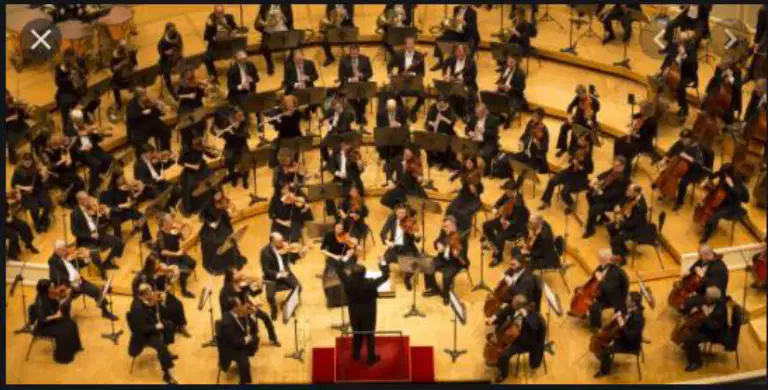
What is a symphony?
A single-movement work for a solo instrument
A large, multi-movement work for orchestra
A short piece of music for a small ensemble
A vocal composition with no instrumental accompaniment
Which composers were instrumental in shaping the symphony as the central instrumental genre of the Classical period?
Haydn, Mozart, and Beethoven
Bach, Chopin, and Liszt
Tchaikovsky, Wagner, and Brahms
Handel, Vivaldi, and Schubert
Which form and structure is typically used in the second movement of a classical symphony?
Sonata Form or A-B-A or Theme & Variations
Minuet & Trio or Scherzo & Trio
Sonata Form
Sonata-Rondo Form (ABA-Dev-ABA)
What is the tempo of the third movement in a classical symphony?
Fast, brisk, lively
Moderate (Minuet) / Fast (Scherzo)
Slow
Fast, lively
Which key relationship is associated with the fourth movement of a classical symphony?
Subdominant (IV/iv), Dominant (V), or Relative minor
Tonic key
Minor key
Dominant key
Who led the Mannheim School and played a major role in shaping the early Classical orchestra?
Ludwig van Beethoven
Johann Stamitz
Wolfgang Amadeus Mozart
Franz Joseph Haydn
What is the term for expressive use of appoggiaturas suggesting a sighing gesture?
Mannheim Birds
Mannheim Sigh
Mannheim Roller
Grand Pause
What does the term "Grand Pause" refer to in the Mannheim style?
A long crescendo over a static bass
A moment where everything stops, creating dramatic silence
A gradual build-up reduced to strings-only passage
A rapidly ascending arpeggio figure
What new techniques did the Mannheim School introduce that shaped the Classical style?
New expressive techniques
Polyphonic textures
Minimalist compositions
Twelve-tone serialism
What was one of the significant contributions of the Mannheim School to later Classical masterpieces?
They created the sonata form.
They developed techniques that made later Classical masterpieces possible.
They introduced the use of electronic instruments.
They focused on improvisation in symphonies.

