
NEW
Font size
 Worksheets
MusicArts 7 5th 2025
Total questions: 40
Worksheet time: 20mins
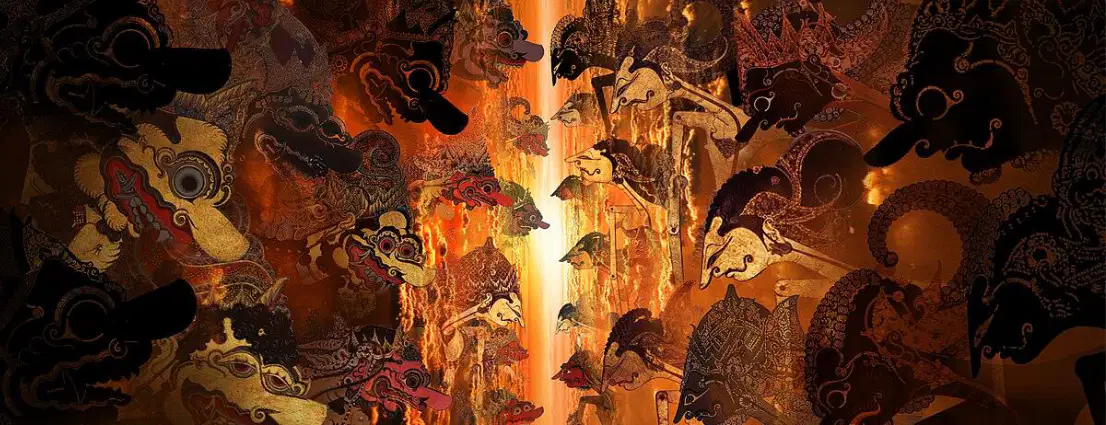
Look at the image of traditional puppets shown above. What is this type of performance called?
Puppet theater
Shadow play
Mime act
Street dance
What is the main purpose of the candles in shadow puppet theater?
To create sound effects
To illuminate the silhouettes
To decorate the stage
To move the puppets

Shadow puppet theater is a fascinating form of storytelling where silhouettes of puppets are projected onto a white screen, illuminated by _________.
candles
flashlights
sunlight
electric bulbs
Fill in the blank: Before performances, ________ and offerings are made.
prayers
songs
dances
costumes
Fill in the blank: The ________ or puppet masters ask for blessings, protection, and pay homage.
Dalang
Wayang
Gamelan
Sindhen
Fill in the blank: Puppet performances re-enact a considerable ________ of stories.
repertoire
repetition
revenue
revelation
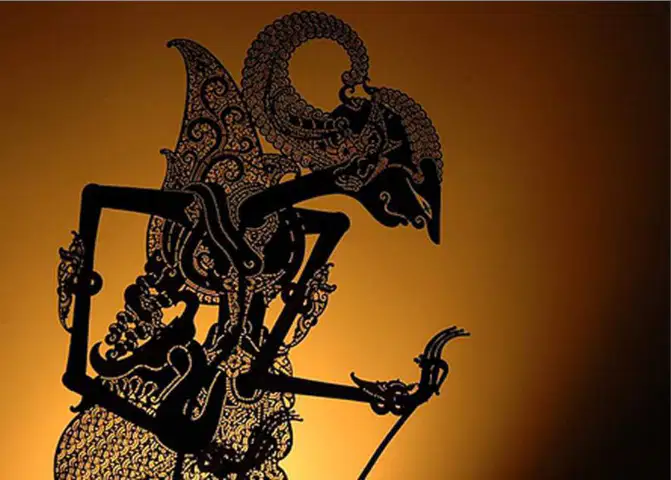
What is the most famous puppetry form from Southeast Asia, particularly in Indonesia?
Bunraku
Wayang Kulit
Punch and Judy
Karagoz

Wayang Kulit had centuries of performance in the folk tradition, making it the strongest traditional theater form in Southeast Asia.
True
False

Fill in the blank: Wayang Kulit is particularly famous in _________.
Indonesia
Thailand
India
Malaysia
Wayang Golek is a puppetry form that uses ________ without a screen.
doll puppets
shadow puppets
string puppets
hand puppets
What is Wayang Topeng in Indonesia also called?
Doll puppetry
Masked dance
Shadow play
Puppet theater
Wayang Topeng has been popular at the Eastern Javanese courts and may be related to ancient animistic masked dances.
True
False
What is analogous to the Javanese wayang orang, but in Balinese form?
Wayang Wong
Kecak
Barong
Legong
In Wayang Wong in Bali, what is worn by the performers and what is the repertoire limited to?
Masks are worn, and the repertoire is limited to Rama plays.
Traditional Balinese costumes are worn, and the repertoire is limited to Mahabharata plays.
No costumes are worn, and the repertoire is limited to folk stories.
Animal masks are worn, and the repertoire is limited to dance performances.
What is the special religious significance of Balinese Shadow Puppetry?
The puppets perform before a screen during the daytime.
The puppets are used to predict the weather.
The puppets are only used in royal ceremonies.
The puppets are believed to bring good luck when touched.
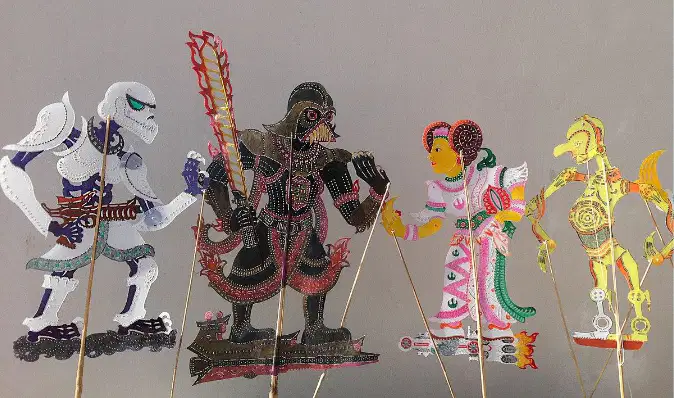
What is the primary form of puppetry traditionally practiced in Malaysia?
Bunraku
Wayang kulit
Punch and Judy
Karagöz

Malaysian Shadow Theatre: What material is used for the screen onto which the puppets are projected?
Silk
White cotton
Paper
Plastic
Wayang Kelantan originated from ________.
Thailand
Indonesia
Malaysia
India
The stories of Wayang Kelantan are Malay adaptations of the ________.
Ramayana
Mahabharata
Journey to the West
Iliad
The form of Wayang Gedek has origins from which country?
Indonesia
Malaysia
Thailand
India
Which puppetry style are both Wayang Kulit Purwa and Wayang Kulit Melayu influenced by?
Chinese puppetry
Javanese puppetry
Indian puppetry
Thai puppetry
Wayang kulit purwa is found in the state of _______.
Johor
Selangor
Perak
Kelantan
Wayang kulit melayu is practiced mainly in which states on the east coast?
Johor and Selangor
Kelantan and Terengganu
Penang and Perak
Sabah and Sarawak
Challenges and Evolution: Visual artists are exploring the translation of traditional puppetry into _________
digital animation
ceramic sculpture
oil painting
wood carving
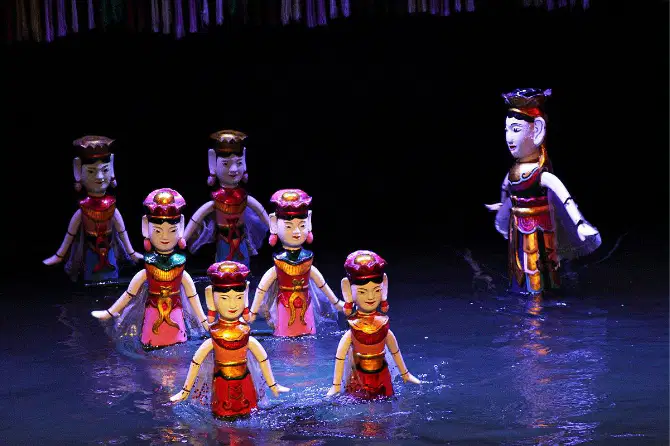
What is Múa Rối Nước (Water Puppetry)?
A modern art form from Vietnam
A unique and traditional art form practiced in Vietnam for centuries
A type of dance from China
A musical performance from Thailand

Múa Rối Nước (Water Puppetry) is believed to have originated in the ______ region of northern Vietnam around the 11th century.
Red River Delta
Mekong Delta
Central Highlands
Saigon
Fill in the blank: In Vietnamese water puppetry, the stage is a pool of ______ that serves multiple purposes.
water
sand
wood
stone
Which material are the puppets in Vietnamese water puppetry crafted from?
Metal
Wood
Plastic
Stone
Fill in the blank: The puppets in Vietnamese water puppetry depict characters from Vietnamese ______, legends, and daily life.
folklore
architecture
cuisine
music
Which of the following do themes and narratives in puppetry revolve around?
Modern technology
Folklore, myths, legends, and scenes from rural life
Urban development
Space exploration
Which of the following statements is true about modern popularity?
It is only popular in Vietnam.
It gained international recognition, with troupes performing worldwide.
It is not recognized internationally.
Only solo performers are popular worldwide.
What is Teatro Anino (Shadow Theatre) used for?
To present performances in the tradition of the carrillo in Nueva Ecija
To teach European languages
To perform musical concerts
To create paintings
Teatro Anino (Shadow Theatre) is influenced by ________ shadow theater.
European
Asian
African
American
Who formed the Anino Shadowplay Collective in the 1990s?
Multimedia artists
Musicians
Painters
Writers

What are the alternative names for Philippine Shadow Puppetry: Carrillo?
potei, kikimut, titire
potei, kariton, titire
potei, karton, titire
potei, kikimut, karton

Philippine Shadow Puppetry: Carrillo consisted of small carts that would circulate presenting shadow plays with figures made of _______.
cardboard
wood
metal
cloth

From which languages do the alternative names potei and titire for Carrillo originate?
potei is from Chinese, titire is from Spanish
potei is from French, titire is from Italian
potei is from Japanese, titire is from Portuguese
potei is from Russian, titire is from German
What year were the first recorded carrillo performances along Calle Magdalena?
1879
1885
1863
1901
What type of tales did carrillo performances often present?
moro-moro
komedya
sarswela
bodabil
Where is carrillo very common?
Calamba, Laguna
Cebu City
Davao City
Baguio City

