
Font size
 Worksheets
Properties and Changes of Matter
Total questions: 19
Worksheet time: 20mins
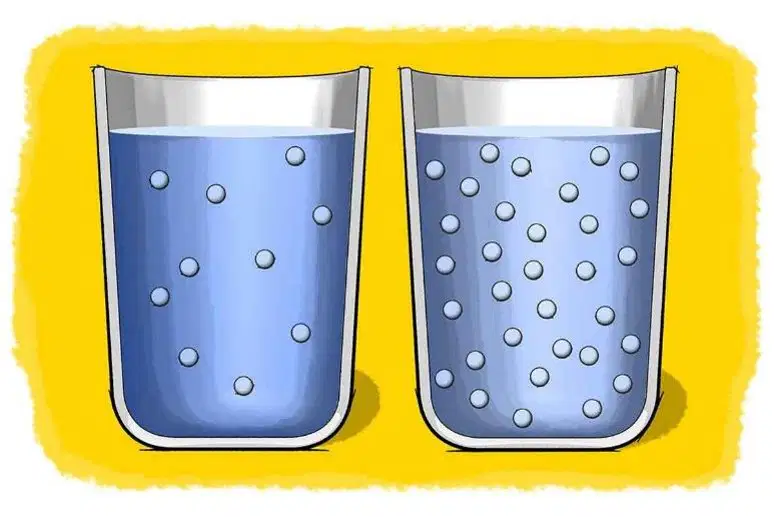
Which substance seems to be more soluble in water?
Left
Right
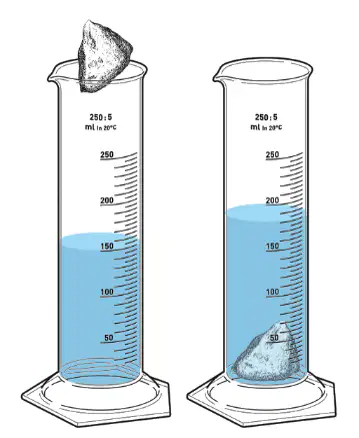
A graduated cylinder is filled with 150 mL of water. A 93 g rock is dropped into the graduated cylinder. The water rises to 180 mL.
What is the density of the rock? d = m/v
3.1 g/mL
0.62 g/mL
0.32 g/mL
2.4 g/mL
Hannah wants to make some toast for breakfast, but she has 3 minutes before she must leave for school. She knows toasting bread is a chemical change so what is the best way for Hannah to increase the rate of this chemical change?
change the type of bread she uses
change the size of bread she uses
increase the temperature of the toaster oven
decrease the temperature of the toaster oven
Solubility is the ability of one substance to dissolve in another. A(n) ___________ is the substance being dissolved in a solution.
solute
suspension
solvent
salt
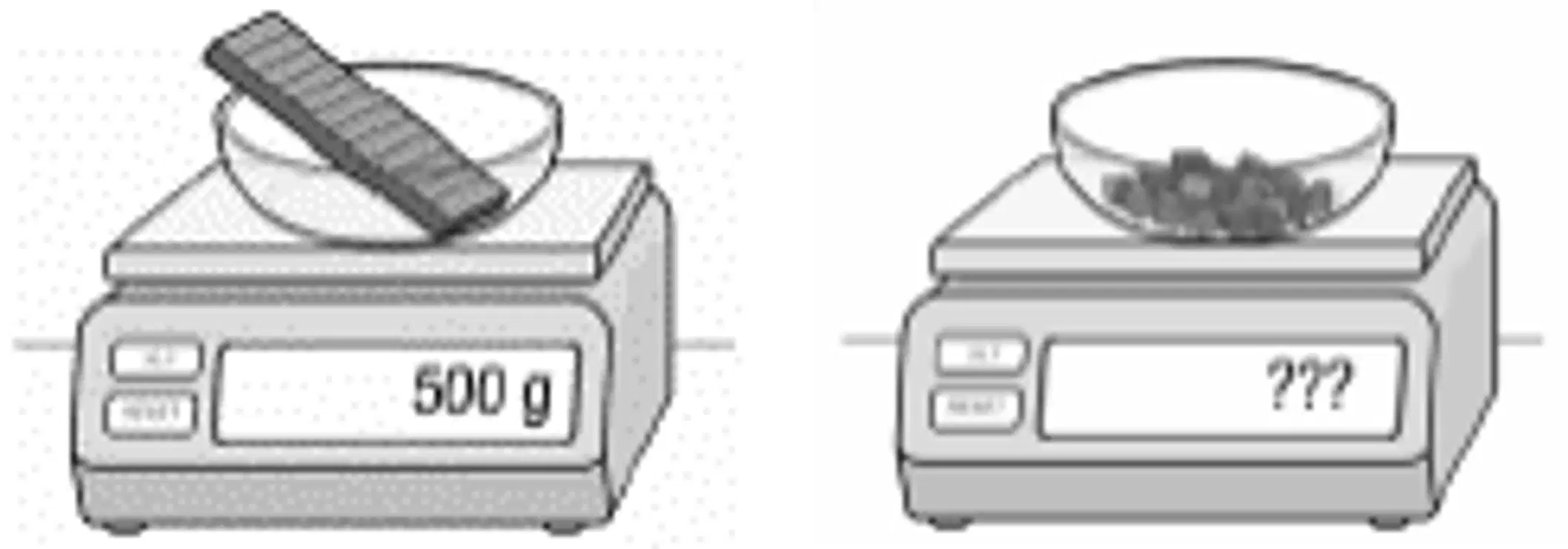
Imagine you have a 500 g bar of chocolate that you chop up to make chocolate chip cookies. After chopping the bar into small pieces, you put all the pieces on a scale. The scale measures . . .
Less than 500 g
More than 500 g
500 g
It is impossible to know
Match the following
solute
the substance being dissolved
solvent
the substance doing the dissolving
solution
homogeneous mixture
solubility
the ability of a substance to dissolve
What happens in all chemical changes?
a change in state of matter
bubbles are produced
a new substance is formed
an explosion
Which of the following is an example of a physical change?
Rusting iron
Burning wood
Baking a cake
Melting ice

Match the following evidence with the observation

Physical Change - because it is melting.

Chemical Change - because it is burned.

Physical Change - because it is bent.

Physical Change - because size changes.

Chemical change - because acids/bases.
Which of the following are ALL considered properties that DO NOT depend on the size or amount of a substance?
Weight, mass, volume
Conductivity, size, volume
Density, magnetism, boiling point
Melting point, mass, weight
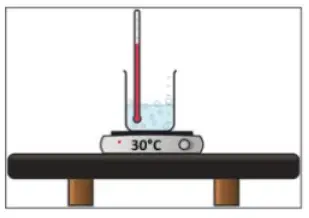
If the temperature of the hot plate was changed to 35°C which of the following would occur?
The chemical change would stop.
The chemical change would speed up.
The chemical change would slow down.
The chemical change would not be influenced.
What will happen to the mass of a closed system if a physical change occurs inside it?
The mass will increase
The mass will decrease
The mass will stay the same
The mass will disappear

Ice cubes melting into water is an example of:
Chemical change
Physical change
The amount of mass in a given volume is defined as . . .
mass
volume
density
matter
When a chemical change occurs, if the temperature drops, what effect will this have on the rate of the chemical reaction?
The rate of reaction would decrease
The rate of reaction would increase
The rate of reaction would be the same
The temperature would increase
When a substance in a closed system changes from a liquid to a gas, which of the following describes the mass of the substance?
The mass increases.
The mass decreases.
The mass becomes zero.
The mass does not change.

Smelting is a process of heating up metal until it becomes molten (like a liquid). If a metal has a melting point of 1000o Celsius, which metal is it?
Brass Red
Cast Iron
Stainless Steel
Titanium

Classify the following as Chemical Change or a Physical Change.

Chopping wood

Heating soup

Steam from a shower

Burning marshmellow

A bike rusting

baking soda and vinegar


