
 Worksheets
Science Ch. 3 Test Review
Total questions: 25
Worksheet time: 13mins
Why are insects considered to be arthropods?
They have jointed legs, body sections, and siphoning mouthparts.
They go through metamorphosis and work together to survive.
They have jointed legs, an exoskeleton, and body sections.
What part of an insect helps protect it from being eaten by a predator?
its exoskeleton
its thorax
its antennae
Insect wings and feet help an insect escape danger mostly by
providing speed
a foul odor
sensing movement
Which stages are found only in complete metamorphosis?
egg and adult
larva and pupa
larva and nymph
What is it called when a harmless insect looks like a harmful insect?
molting
metamorphosis
mimicry
Which structures help an insect gather information about its surroundings?
antenna and stinger
antenna and eyes
eyes and wings
What are two functions of all insect wings?
escaping predators and holding in heat
jumping and finding new food
grasping and hovering
What is the small tube on some insects used to suck liquid called?
chrysalis
piercing tube
proboscis
How does the design of a beehive help bees survive and grow?
collects the pollen and allows for storage
protects the eggs and keeps the honey from spilling out
has a very strong structure and communicates with others
Which social insects communicate mainly by vibrations?
ants
bees
termites
Insects that drink liquid from plant leaves use which kind of mouthparts?
piercing-sucking
chewing
lapping
An insect that drinks nectar from flowers usually has which kind of mouthparts?
chewing mouthparts
siphoning mouthparts
sponging mouthparts
How many pairs of legs do insects have?
three pairs
four pairs
two pairs
Butterflies and moths have different coverings in which stage of metamorphosis?
larva stage
pupa stage
adult stage
Which ants gather food to feed the larvae?
soldier ants
queen ants
worker ants
Which statement best compares compound eyes and simple eyes?
They differ in the number of lenses each has.
They differ in how each goes through metamorphosis.
They differ in the number of pieces the image has.
Which statements might be made by someone without a biblical view of insect structures? Choose the best option.
Insects evolved from animals such as shrimp.
Insect structures show careful creative design.
An intelligent power other than God designed insects.
Which are common characteristics of moths?
thick and feathery antennae
pupa covering is a cocoon
fly and feed at night
Which traits do both butterflies and moths share?
compound eyes
complete metamorphosis
siphoning mouthparts
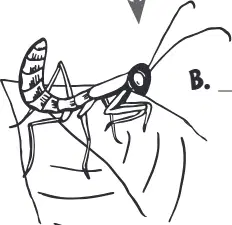
Look at the life cycle diagram of an insect with incomplete metamorphosis. What stage comes between egg and adult?
larva
nymph
pupa
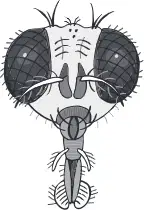
Look at Insect A in the picture. What kind of mouthpart does it have?
Chewing mouthparts used for biting
Sponging mouthparts for liquid food
Piercing mouthparts for sucking
Siphoning mouthparts for nectar
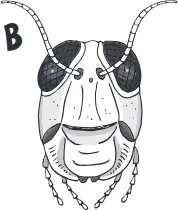
Look at Insect B in the picture. What kind of mouthpart does it have?
Chewing mouthparts for biting food
Sponging mouthparts for liquid food
Siphoning mouthparts for nectar
Piercing mouthparts for blood
Why are termites called decomposers?
They build tall mounds in fields
They break down dead trees into soil
They sting predators to defend
They pollinate flowers for plants
How are social insects different from other insects?
They live alone in small burrows
They change color every season
They live and work together in colonies
They grow larger than all insects
A termite colony needs food moved, tunnels repaired, and babies cared for. Which idea best explains how they do these jobs together?
They learn jobs from watching humans
They follow instincts that guide behavior
They copy birds that build nests
They take turns by voting daily

