
 Worksheets
WEATHER UNIT STUDY GUIDE
Total questions: 19
Worksheet time: 2hrs 35mins
What does an Anemometer measure?
wind speed
temperature
humidity
air pressure
What does a Barometer measure?
atmospheric (air) pressure
temperature
humidity
wind speed
What does a Hygrometer measure?
humidity which is the amount of water vapor in the air
temperature of the air
air pressure
wind speed
What does a Rain gauge measure?
the amount of rainfall
air pressure
wind speed
temperature
What does a Thermometer measure?
temperature
pressure
length
speed
What does a Wind vane show?
wind direction
temperature
humidity
air pressure
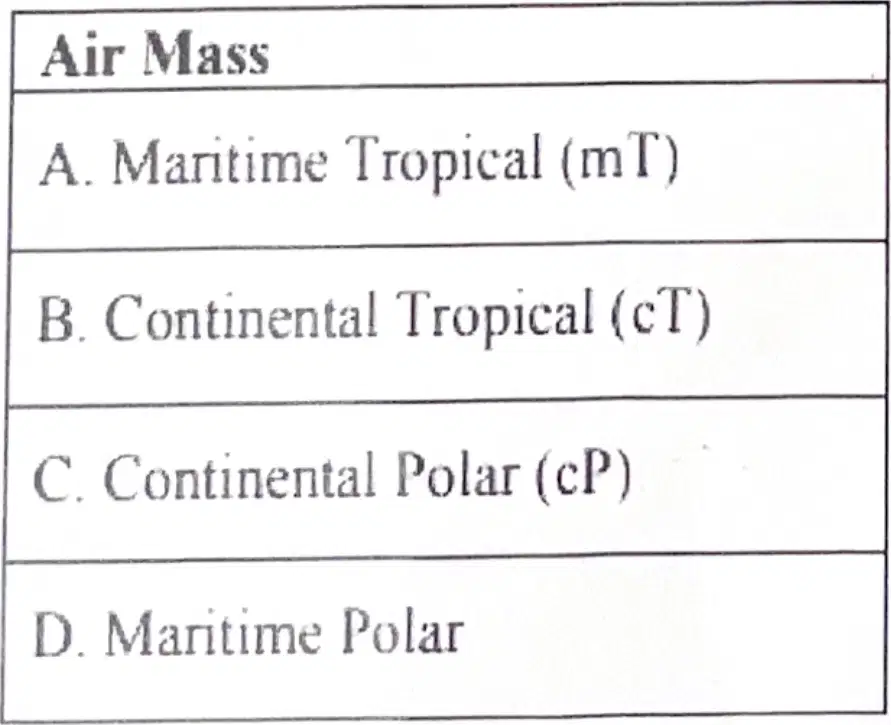
Match the air masses to their characteristic (each letter is used twice):
Maritime Tropical (mT)
Moist and warm
Forms over warm water
Continental Tropic (cT)
Dry and warm
Forms over warm land
Continental Polar (cP)
Forms over cold land
Dry and Cold
Maritime Polar
Forms Over cold Land
Moist and Cold

According to the table, when barometric pressure falls rapidly, which of the following is the most likely outcome?
Sunny, happy skies
Approaching storm with possible thunderstorms, tornadoes, or a hurricane
Less humidity and decreased chance of precipitation
Temperatures decreasing due to sinking air

The chart shows weather data at four locations (W-Z). Which weather prediction is most likely correct?
Location W will have a rainstorm because the air pressure is falling.
Location X will have a rainstorm because the temperature is high.
Location Y will become cooler because the percent humidity is high.
Location Z will become cooler because the wind speed is slow.
Which of the following correctly describe low-pressure air masses?
There is fair, stable weather.
Clouds and condensation form.
They typically have warm temperatures.
They are characterized by cooler temperatures.
Winds blow outward from the area.
Which detail from the text explains why high-pressure systems often lead to clear skies?
A. High pressure warms the ground so clouds evaporate immediately.
B. High-pressure systems contain more water vapor than low-pressure systems.
C. High pressure prevents air from rising, so water vapor cannot condense into clouds.
D. High pressure causes the temperature to increase enough to burn off clouds.

The line graph shows changes in barometric pressure for the town of Clinton for a 10-day period during August 2013. Based on the data in the line graph, on which date did the citizens of Clinton experience rain?
August 10
August 7
August 12
August 15
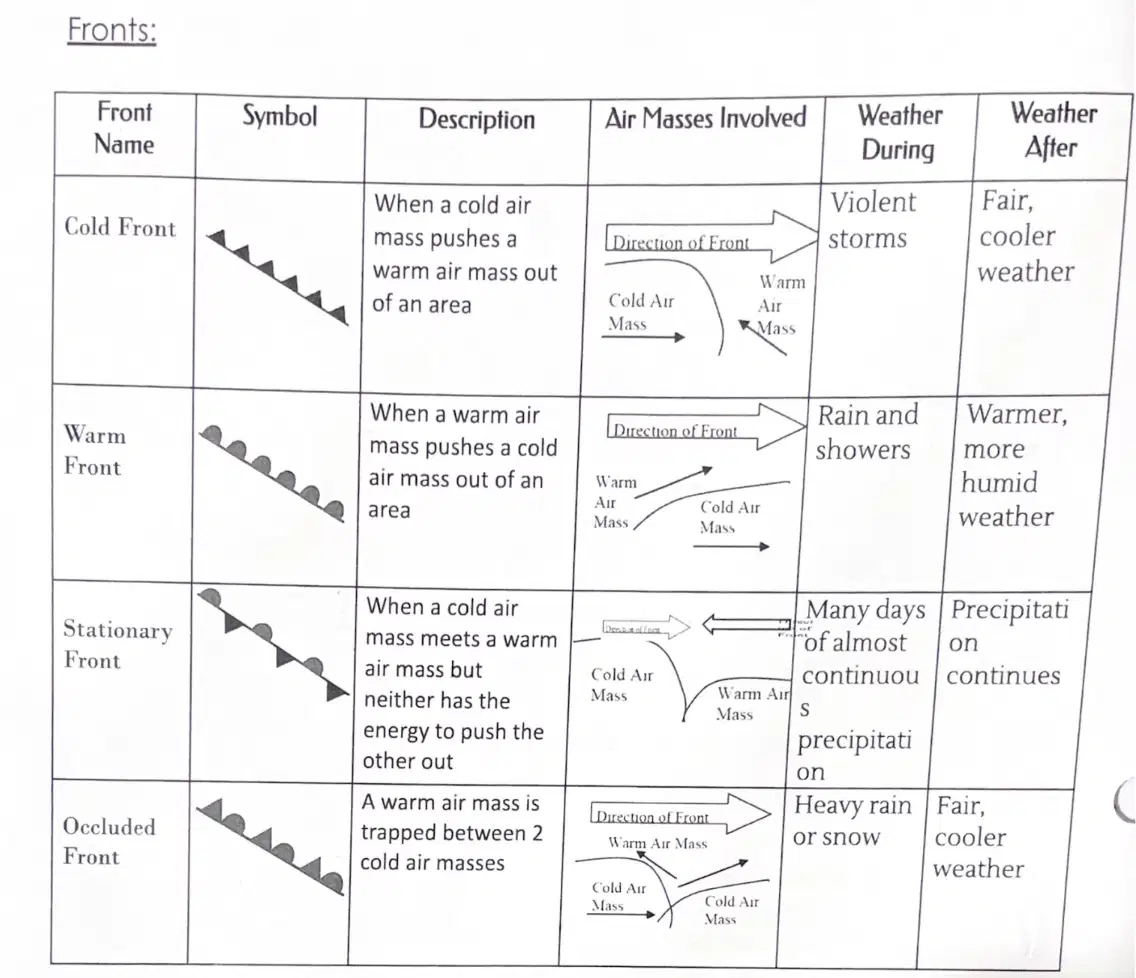
According to the table, what usually happens to the weather during a cold front?
Rain and showers
Violent storms
Many days of continuous precipitation
Fair, cooler weather

Which front is described as occurring when a warm air mass pushes a cold air mass out of an area, and what weather typically follows it?
Cold Front — Fair, cooler weather
Occluded Front — Heavy rain or snow
Warm Front — Warmer, more humid weather
Stationary Front — Precipitation continues
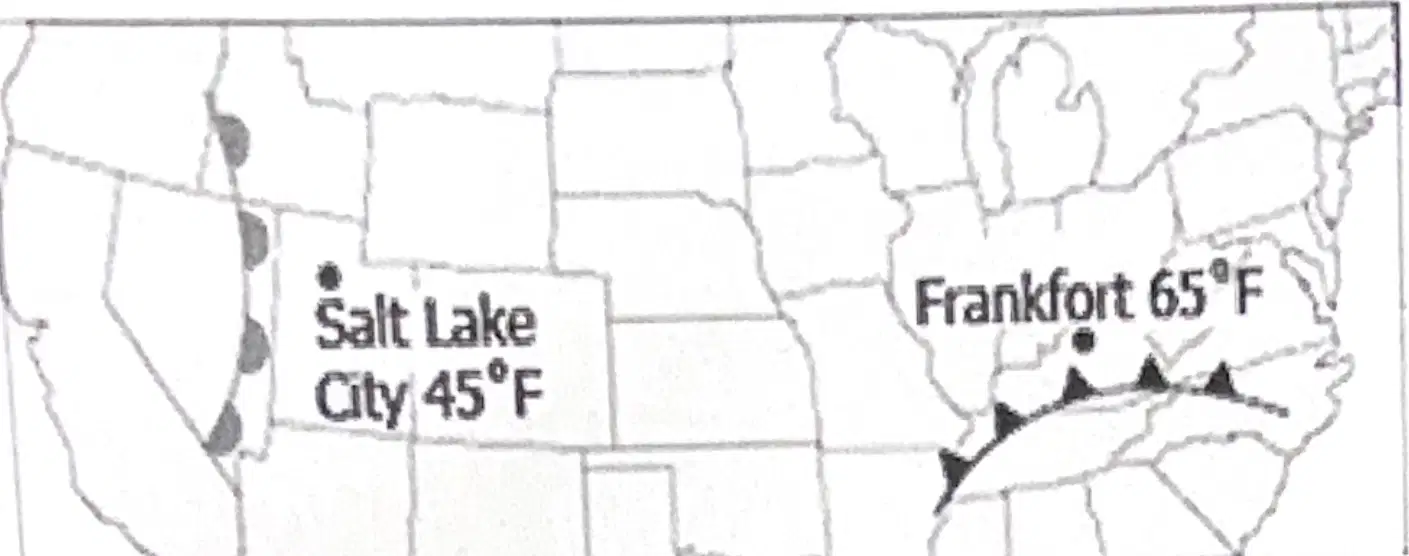
What change in temperatures will these cities likely experience in the next 24 to 48 hours?
The temperature will increase in Salt Lake City and decrease in Frankfort.
The temperature will increase in Salt Lake City and increase in Frankfort.
The temperature will decrease in Salt Lake City and increase in Frankfort.
The temperature will decrease in Salt Lake City and decrease in Frankfort.
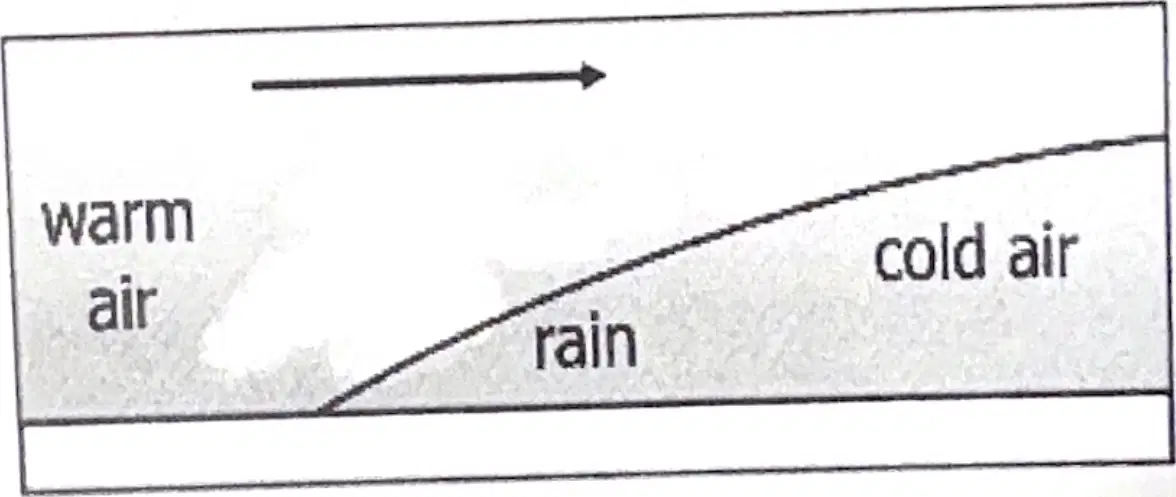
Which statement best explains the weather front that forms at the boundary?
A cold front forms. A cold air mass replaces a warm air mass, resulting in colder weather after the rainfall.
A warm front forms. A warm air mass replaces a cold air mass, resulting in colder weather after the rainfall.
A cold front forms. A cold air mass replaces a warm air mass, resulting in warmer weather after the rainfall.
A warm front forms. A warm air mass replaces a cold air mass, resulting in warmer weather after the rainfall.
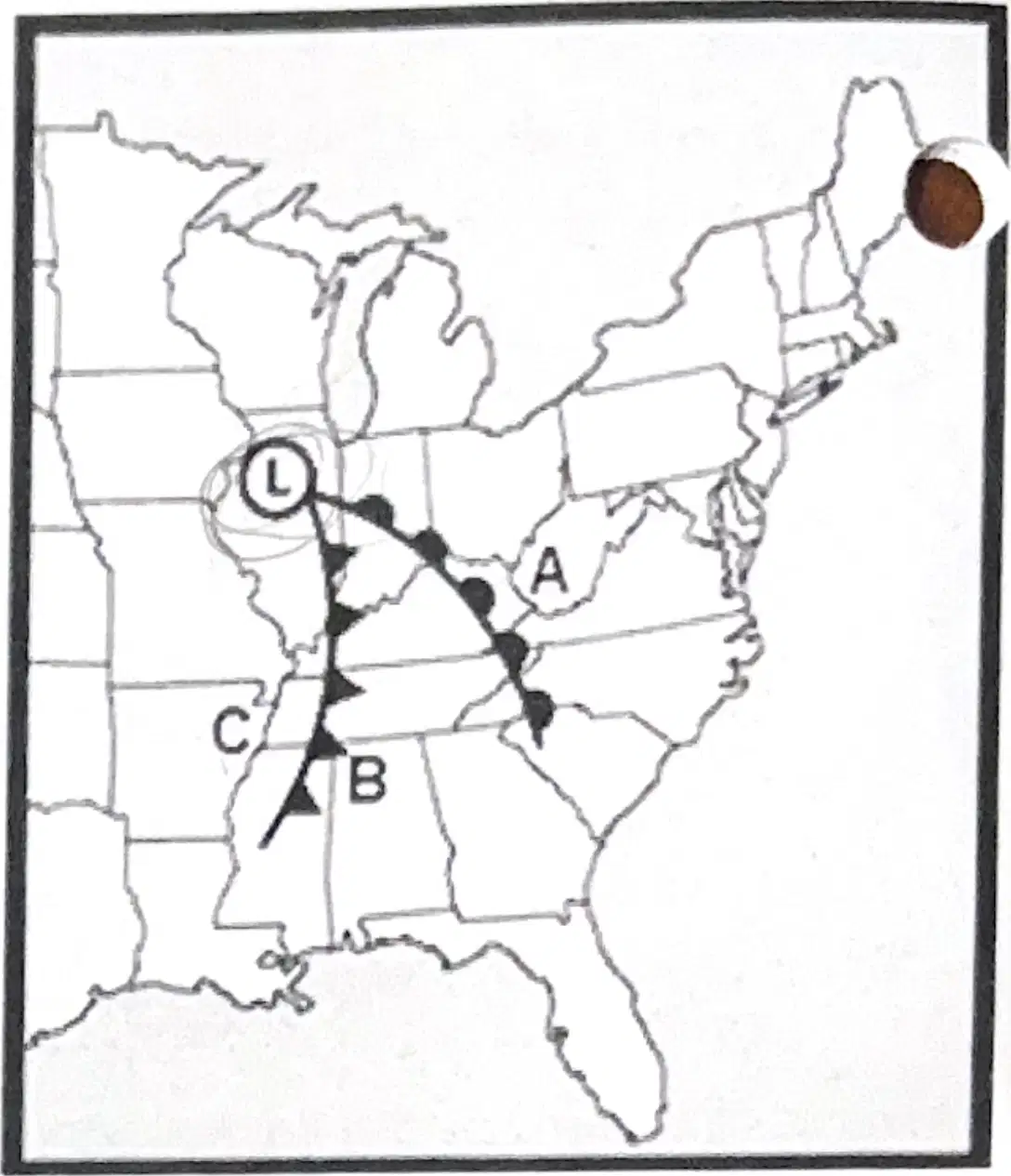
According to the weather map shown above, which city is likely to experience thunderstorms in the next few hours?
City A
City B
City C
None of the above
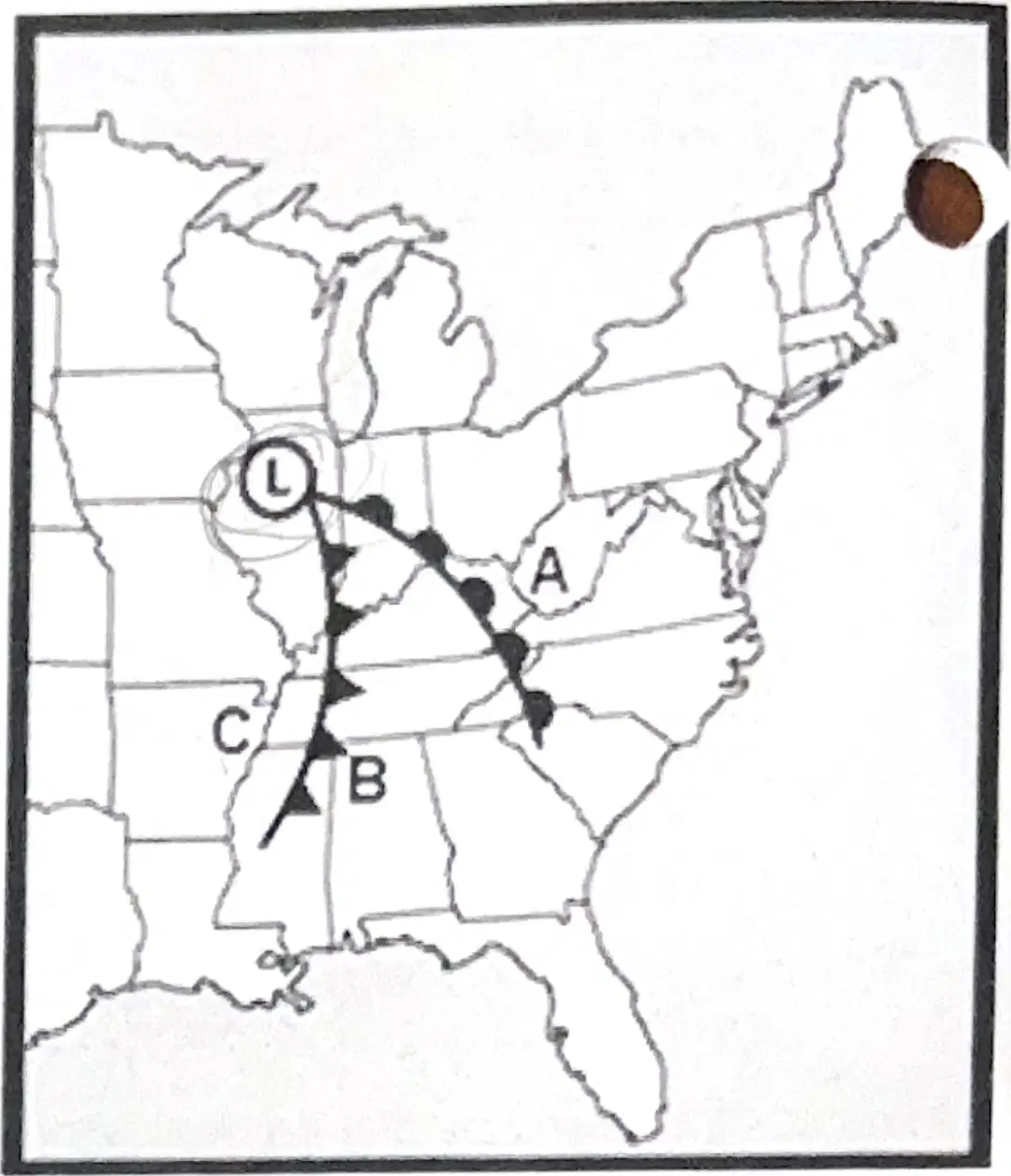
According to the weather map shown, City A will most likely experience which set of weather over the next few days?
An extended warm period
An extended cold period
Warm, moist weather followed by cool, dry weather
Cool dry weather followed by warm, moist weather

The table above shows some weather conditions for a weekend. Based on the data in the table, what is the best explanation for what occurred overnight on Saturday?
A cold front moved through with possible severe weather
A warm front moved through with light rain
A high pressure system has been replaced with a low pressure system
Global winds shifted changing the weather pattern overnight

