
 Worksheets
G5 TLE
Total questions: 88
Worksheet time: 3620secs
Why is sewing important?
It helps save money and gives joy and pride in making things.
It helps you cook better meals.
It helps you learn mathematics.
It helps you write better essays.
How does sewing show creativity?
By helping you design and make your own clothes to show your style.
By teaching you how to draw pictures.
By helping you write stories.
By teaching you how to play musical instruments.
Why is sewing good for bonding?
It builds patience, teamwork, and fun memories.
It helps you learn to work alone.
It teaches you how to read books.
It helps you learn to solve puzzles.
What are the six main sewing tool groups?
Measuring, marking, cutting, pinning, stitching & turning, and storage tools.
Measuring, cutting, folding, ironing, and storage tools.
Measuring, marking, cutting, sewing, and painting tools.
Measuring, pinning, folding, stitching, and cleaning tools.
Why are sewing tools important?
They make sewing easier, faster, safer, and help produce neat results.
They make sewing harder and slower.
They are not necessary for sewing.
They are only used for decoration.
What are measuring tools used for in sewing?
To take body measurements, make patterns, and mark fabric correctly.
To cut fabric into specific shapes and sizes.
To pin fabric pieces together before sewing.
To store sewing supplies neatly.
What is a tape measure used for in sewing?
Measuring the body, fabric, and patterns.
Drawing straight lines on fabric.
Measuring short spaces like hems and seams.
Transferring marks onto fabric.
What does a ruler do in sewing?
Helps draw straight lines and measure fabric accurately.
Measures short spaces like hems and seams.
Transfers marks onto fabric.
Cuts fabric into specific shapes.
What do marking tools do in sewing?
They transfer marks and lines onto fabric for sewing.
They measure short spaces like hems and seams.
They help cut fabric into specific shapes.
They store sewing supplies neatly.
What is tailor’s chalk used for?
To sew fabric pieces together
To mark fabric with a hard, colored wax
To cut fabric neatly
To remove stitches easily
What does a needle threader do?
Helps put thread through the needle’s eye easily
Helps cut thread
Helps measure thread length
Helps clean the needle
What is a thimble used for?
To measure fabric
To protect your finger and help push the needle through fabric
To hold pins and needles
To clean and polish needles
What is thread used for?
To cut fabric
To hold fabric pieces together
To clean needles
To measure fabric
Which of the following is NOT a sewing safety reminder?
Keep tools clean and sharp
Store tools properly
Use the wrong tool for the job
Be careful with sharp tools
Why is it important to get all tools ready before sewing?
To make work faster and easier
To avoid wasting fabric
To create more complex designs
To prevent thread from breaking
What is the importance of knowing how to use every tool before sewing?
To have them ready before starting
To avoid wasting thread
To create colorful designs
To sew faster
What is the benefit of sewing in a well-ventilated area?
It helps you sew faster.
It ensures comfort and safety.
It keeps the fabric clean.
It reduces the need for lighting.
5 kinds of tools
(a)
Guides drawing lines and marking fabric.
tape measure
ruler
sewing gauge
Used for body measurements, pattern drafting, and fabric layout.
tape measure
ruler
sewing gauge
Measures and marks short distances like hems, tucks, and seams.
tape measure
ruler
sewing gauge
Hard, colored wax for marking measurements on fabric.
Tracing wheel
Tailor’s chalk
Tracing paper or dressmaker’s carbon paper
Pressed against tracing paper to transfer pattern marks; make sure to use cardboard under fabric to protect the table if being used.
Tracing wheel
Tailor’s chalk
Tracing paper or dressmaker’s carbon paper
Transfers construction marks from the pattern to fabric using a tracing wheel.
Tracing wheel
Tailor’s chalk
Tracing paper or dressmaker’s carbon paper
Small, pointed metal tools for trimming seams, cutting threads, pattern pieces, and buttonholes.
Seam ripper
Shears
Scissor
Type of scissors over six inches long and is designed for cutting fabric with bent handles and a thumb and finger opening.
Seam ripper
Shears
Scissor
Used for ripping machine-stitched seams.
Seam ripper
Shears
Scissor
A slender metal needle with an eye at the end used to join fabrics by hand. Small, round-eyed needles are for hand sewing,
Hand-sewing needles
Sewing-machine stitching needles
Dressmaker pins
A needle attached to the sewing machine, with a metal pin used for machine stitching. It has a pointed end and a hole for carrying the thread. The needle size depends on the fabric and thread; use size 11 for fine fabrics like georgette, and size 18 or 19 for heavier fabrics.
Hand-sewing needles
Sewing-machine stitching needles
Dressmaker pins
Dressmaker pins have sharp points and will not leave marks on the fabric. This is a sharp needle-like tool with a head used to hold two pieces of fabric together.
Hand-sewing needles
Sewing-machine stitching needles
Dressmaker pins
s used to push a needle through the material, offering protection to the hand. It is worn on the middle finger to hold the needle and protect the finger.
Emery bag
Pincushion
Needle threader
Thimble
Sewing box
Used to hold fabric together
Emery bag
Pincushion
Needle threader
Thread
Sewing box
A container to store sewing tools and equipment. Use partitions to keep tools organized and separated.
Emery bag
Pincushion
Needle threader
Thread
Sewing box
A needle threader makes threading of the needle easier.
Emery bag
Pincushion
Needle threader
Thread
Sewing box
A pincushion filled with sand or ceramic to polish needles and prevent rust.
Emery bag
Pincushion
Needle threader
Thread
Sewing box
A small cushion for storing pins and needles while sewing.
Emery bag
Pincushion
Needle threader
Thread
Sewing box
scisoor
stitching & turning
marking
pinning
cutting
measuring
needle
stitching & turning
marking
pinning
cutting
measuring
thread
stitching & turning
marking
pinning
cutting
measuring
pins
stitching & turning
marking
pinning
cutting
measuring
sewing box
stitching & turning
marking
pinning
cutting
measuring
thimble
stitching & turning
marking
pinning
cutting
measuring
tracing paper
stitching & turning
marking
pinning
cutting
measuring
ruler
stitching & turning
marking
pinning
cutting
measuring
tracing wheel
stitching & turning
marking
pinning
cutting
measuring
tailors chalk
stitching & turning
marking
pinning
cutting
measuring
tape measure
stitching & turning
marking
pinning
cutting
measuring
ruler
stitching & turning
marking
pinning
cutting
measuring
pin cushion
stitching & turning
marking
pinning
cutting
measuring
shears
stitching & turning
marking
pinning
cutting
measuring
emery bag
stitching & turning
marking
pinning
cutting
measuring
5 plain stitches
(a)
4 decorative stitch
(a)

IDENTIFY THE GIVEN PICTURE
SPLIT STITCH
STEM STITCH
CHAIN STITCH
RUNNING STITCH
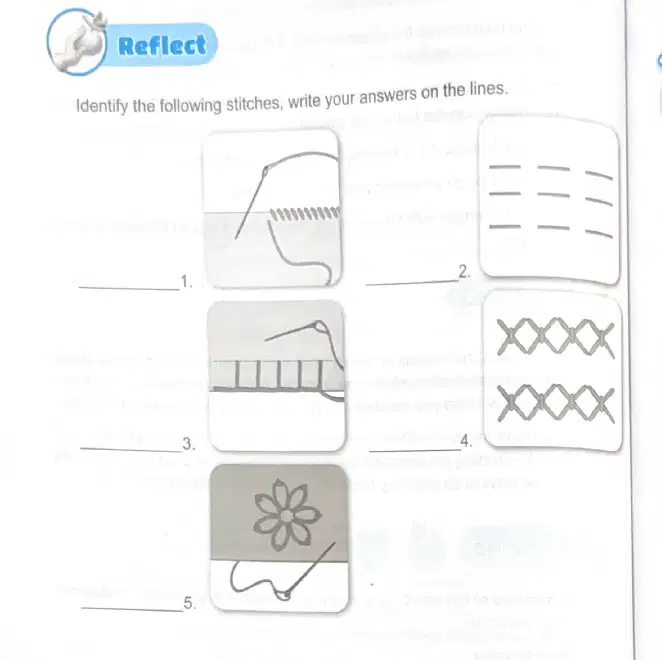
1
(a)
2
(a)
3
(a)
4
(a)
5
(a)
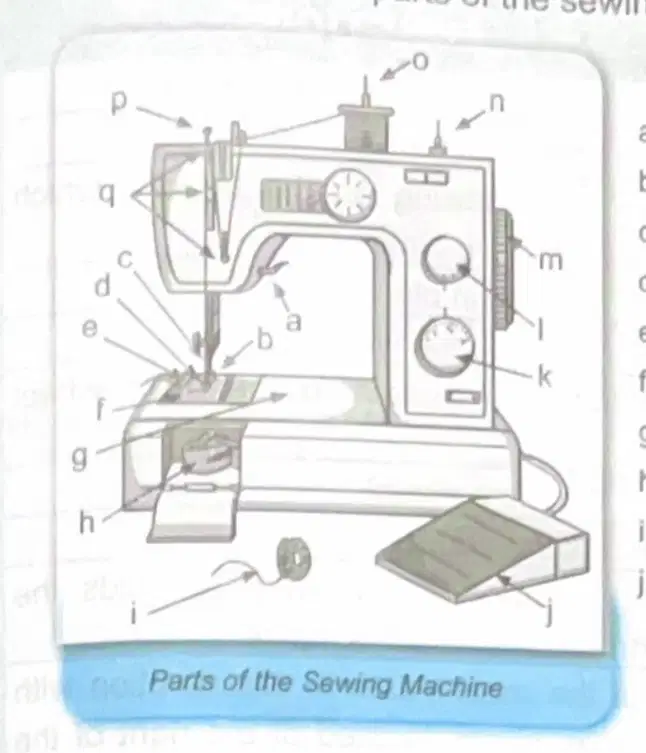
n
(a)
p
(a)
q
(a)
o
(a)
m
(a)
l
(a)
k
(a)
j
(a)
h
(a)
a
(a)
c
(a)
f
(a)
g
(a)
d
(a)
h
(a)
i
(a)
e
(a)
b
(a)
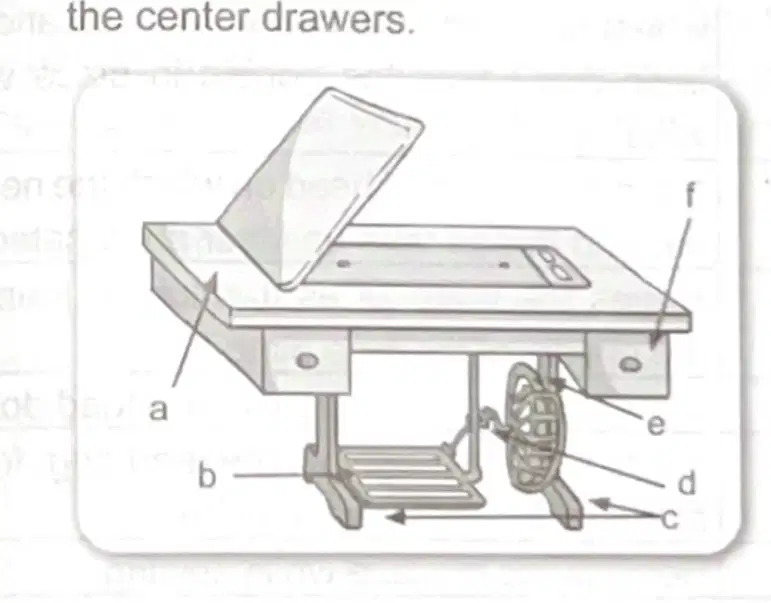
a
(a)
b
(a)
c
(a)
d
(a)
e
(a)
f
(a)
4 types of sewing machine
(a)
Types of Sewing Machines :Manually operated and not powered by electricity
mechanical
computerized
electronic
overlocker
Types of Sewing Machines :Uses a single motor that electronically powers the needle.
mechanical
computerized
electronic
overlocker
Types of Sewing Machines: Have LED display or LCD displays instead of using dials and buttons. Some of these machines have a USB port to enable the sewer to create her own designs on a computer and link it to the machin
mechanical
computerized
electronic
overlocker
Types of Sewing Machines: Used to finish hems and seams. These machines have fewer functions than sewing machines but have the ability to stitch and trim away excess fabric at twice the speed.
mechanical
computerized
electronic
overlocker