
 Worksheets
“PICTUREOPIA”-constitution quiz preparation game
Total questions: 11
Worksheet time: 8mins
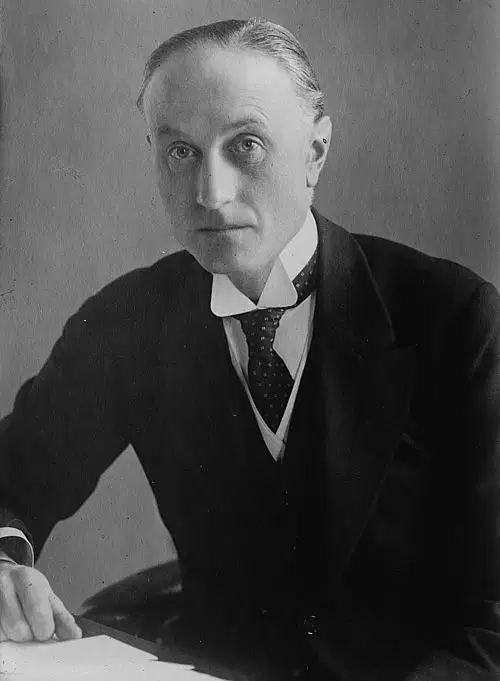
A notable British statesman from the early 20th century led a significant constitutional review body sent to India. This body had no Indian members, leading to widespread protests and the rise of the slogan “India for Indians.” His contributions influenced discussions on self-governance, federal reforms, and future constitutional frameworks in colonial India.
What was the name of the constitutional body he chaired, and who was this statesman?
Hunter Commission,
Clement Attlee
Simon Commission,
Samuel Hoare
Cripps Mission,
George Rankin
Cabinet Mission,
Donald Howard
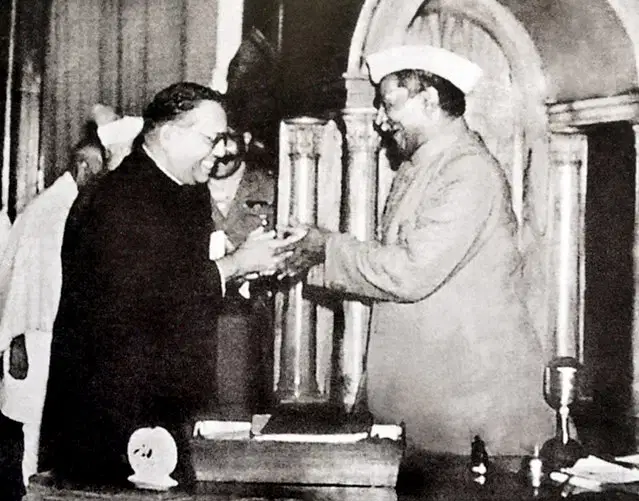
The photograph captures a significant moment in the Constituent Assembly of India, where a senior member is presenting a crucial constitutional document to the presiding authority. This event marked a pivotal point in India's journey from colonial rule to becoming a sovereign republic.
Which constitutional development is most likely depicted in this scene, and NAME THE PERSON ON THE LEFT SIDE OF THE PHOTO?
The adoption of the Objectives Resolution that outlines the Constitution's guiding philosophy, B.R. Ambedkar
The signing of the Poona Pact regarding political representation, Sardar Vallabhbhai Patel
The official presentation of the Constitution's final draft to the Constituent Assembly, Dr. Rajendra Prasad
The announcement of the transfer of power from the British Crown to independent India, Jawaharlal Nehru
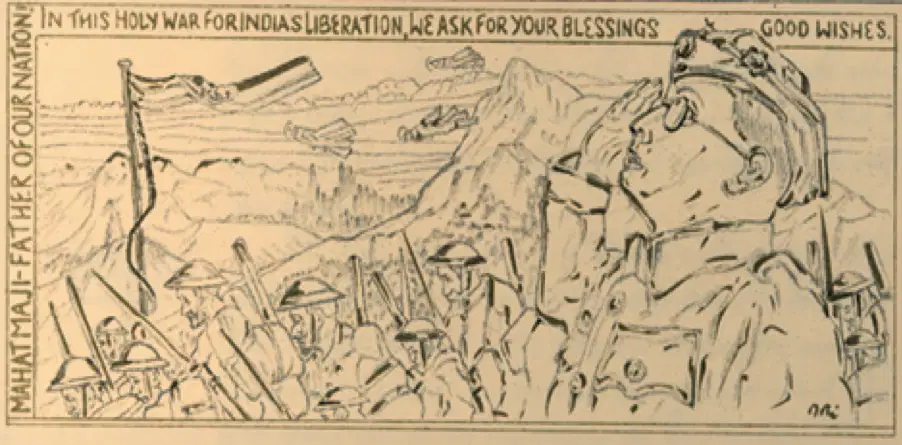
The artwork illustrates a wartime scene featuring a prominent nationalist military leader saluting while commanding an armed force through mountainous terrain. A banner in the image calls upon the “Father of the Nation” for blessings in a “holy war for India’s liberation.”
This depiction represents a phase of the Indian freedom struggle where an armed nationalist movement sought foreign military support to free India. Based on the visual style and historical context, which movement is illustrated, and who is the artist behind this work?
HSRA armed campaign – Artwork by Zainul Abedin
Khilafat–Non-Cooperation phase – Artwork by Nandalal Bose
Quit India Movement – Artwork by Ramkinkar Baij
Indian National Army & Azad Hind Movement – Artwork by Chittaprosad Bhattacharya
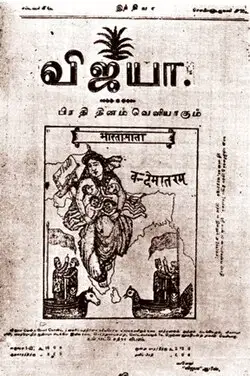
The image shown is the cover of the early 20th-century Tamil periodical Vijaya, featuring the figure of Bharat Mata holding the national flag. Such publications played an important role in shaping nationalist consciousness by blending religious symbolism with anti-colonial messaging.
Which of the following statements best reflects the historical significance of journals like Vijaya in India’s freedom struggle?
They encouraged industrial growth and scientific thinking, steering clear of political discussions due to colonial restrictions.
They often backed constitutional changes suggested by the British and discouraged widespread political engagement.
They acted as nationalist propaganda instruments that utilized cultural and religious symbols to rally public opinion against British domination.
They primarily concentrated on international news and seldom addressed Indian political issues.
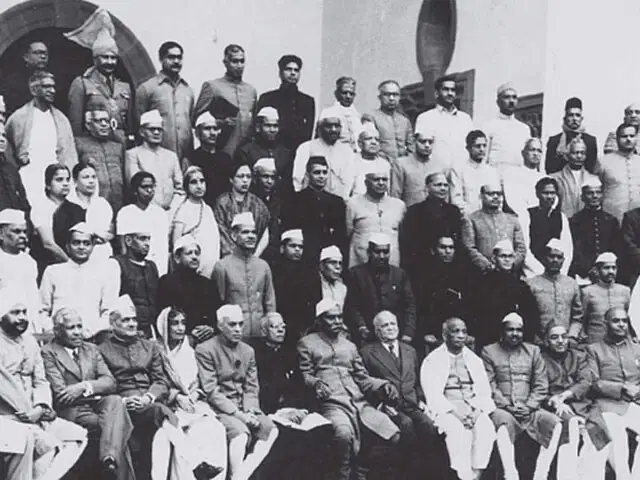
The image depicts a significant assembly of national leaders who were instrumental in formulating the legal framework of independent India. This assembly convened multiple times from 1946 to 1950, playing a vital role in establishing the nation's political and administrative structure. Which of the following key decisions was NOT made by this assembly?
First members of the Legislative assembly
Adoption of the Objectives Resolution
Formation of various committees to draft different parts of the Constitution
Election of the first President of the Constituent Assembly
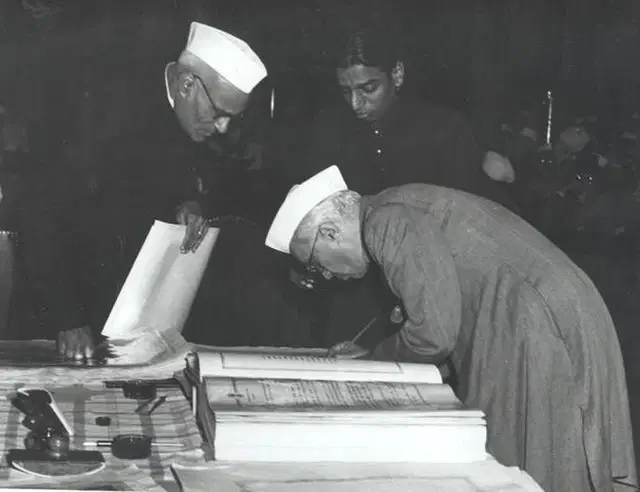
The image depicts members of the Constituent Assembly engaged in a significant event, where they are finalizing the Constitution of India. Can you identify the specific date when this crucial meeting occurred, during which the Constitution was officially signed and ratified?
22 July 1947
26 November 1949
24 January 1950
26 January 1950
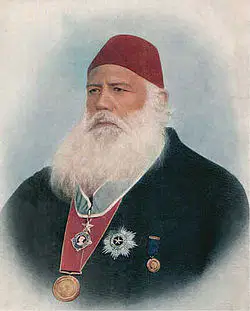
The image shows a 19th-century Indian reformer wearing a fez cap and multiple prestigious medals, suggesting recognition by colonial authorities for contributions to education and social reform. Which of the following achievements is most likely associated with a leader of this kind?
Serving as the first Indian Governor-General after independence
Leading the drafting committee of the Indian Constitution
Establishing one of the earliest scientific societies in India to promote modern education
Founding the first national political party of independent India
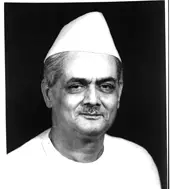
The leader was crucial in India's transition from independence to a stable parliamentary system.
He was responsible for managing the initial legislative sessions after the Constitution was enacted.
He gained recognition for his strict adherence to legislative procedures.
He established lasting standards of neutrality in the legislative process.
Which pair identifies this key parliamentary figure and the office he is most known for?
Hukam Singh – Deputy Speaker of the first elected Parliament
G.V. Mavalankar – Presiding officer of the newly formed lower house of Parliament
M. Ananthasayanam Ayyangar – Successor to the first presiding officer of the lower house
N. Sanjiva Reddy – First Speaker of a state legislative assembly
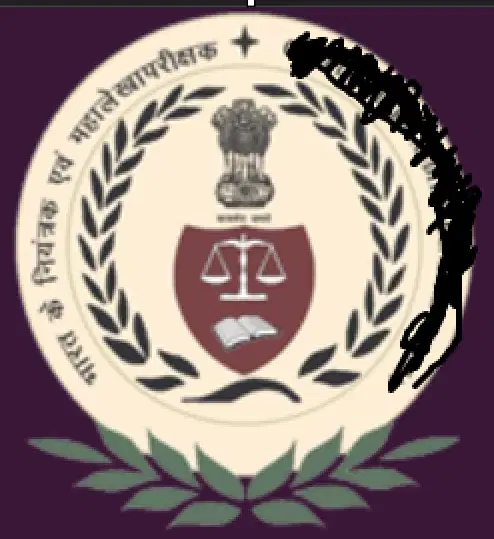
The symbol shown is linked to a constitutional body that does not create laws or implement policies but plays a crucial role in influencing both by reviewing how public funds are generated and utilized. Its reports often initiate legislative debates, and its autonomy is protected by granting its leader the same job security as a Supreme Court judge.
Which institution does this emblem represent?
Comptroller and Auditor General of India
Finance Commission of India
Attorney General of India
Goods and Services Tax Council
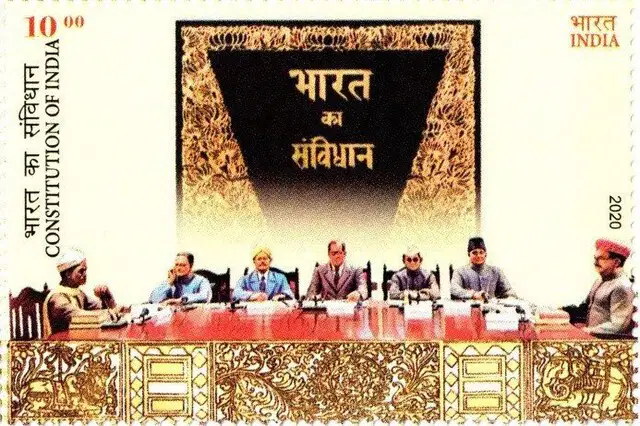
The commemorative stamp shown depicts a key moment from India’s constitutional history, featuring members seated before an ornate backdrop displaying the words “भारत का संविधान”(Bharat Ka Savedhaan). Although the scene seems to highlight the unveiling of the Constitution, the image actually represents a different yet equally crucial phase in its making.
Which of the following most accurately describes the historical event or body symbolized in this stamp?
The formal adoption of the Constitution on 26 November 1949, when the Preamble was finalized
The first sitting of the Provisional Parliament of India after the Constitution came into force
A meeting of the Drafting Committee chaired by B.R. Ambedkar during the preparation of the final draft
A session of the Constituent Assembly deliberating on key provisions before the Constitution was signed in 1950
In the early 2000s, the Eighth Schedule of the Indian Constitution saw a major expansion. Four languages, each from different linguistic traditions, were granted constitutional recognition through the 92nd Constitutional Amendment Act.
Which of the following sets correctly lists the languages added during this amendment?
Sindhi, Kashmiri, Urdu, Punjabi
Konkani, Manipuri, Nepali, Santhali
Bodo, Dogri, Maithili, Santali
Bhojpuri, Tulu, Kodava, Rajasthani

