
 Worksheets
ELS Reviewer (Universe till Origin of Life)
Total questions: 166
Worksheet time: 3hrs 3mins
All stars (and most of the visible universe) are made up of which two elements?
Helium and Lithium
Hydrogen and Helium
Hydrogen and Ferrium
Carbon and Oxygen
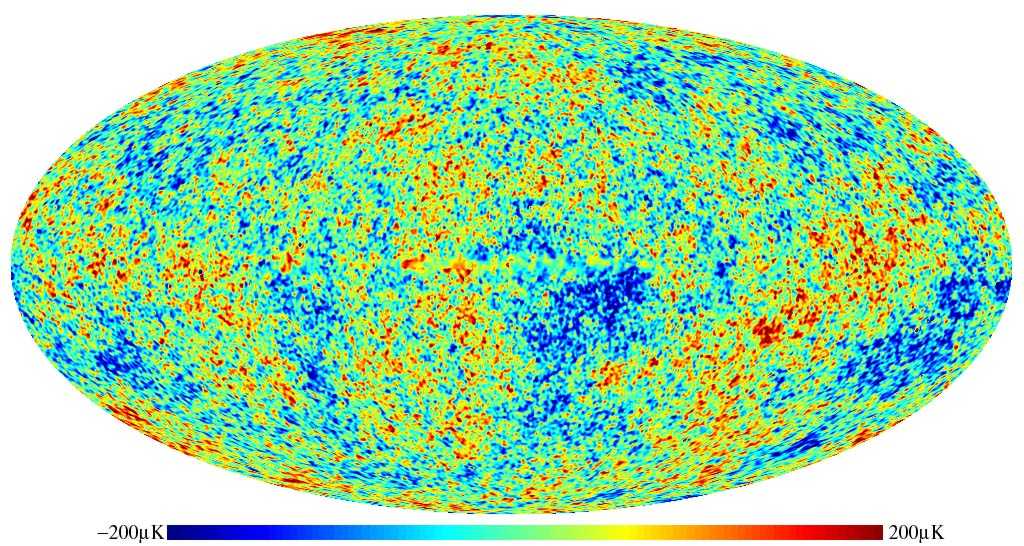
This is a picture of:
The Cosmic Background Radiation
The Milky Way.
The universe in the future.
A redshifted star.
Together a star and all the planets and other object orbiting it form a(n)
asteroid
galaxy
solar system
star
A huge ball of very hot, glowing gases in space that can produce its own hear and light is called a(n)
solar system
asteroid
galaxy
star
A group of solar systems that are held together by gravity and classified by shape is called a(n)
solar eclipse
star
galaxy
asteroid
Which evidence supports the big bang theory?
Planetesimals form in debris disks.
Most galaxies are moving toward us.
Uniform background radiation is detected in every direction
Galaxies spin faster than they should based on visible matter.


Which property makes Earth unique compared to other planets in the solar system?
It orbits the Sun.
It is a rocky planet
It has liquid water
It rotates on its axis.
Which contributes to Earth’s ability to sustain life?
The atmosphere allows all of the sun’s radiation to enter due to Earth’s distance from the sun.
The atmosphere prevents all space debris from reaching the surface due to the ozone layer.
The atmosphere is extremely thin due to the temperatures of the sun.
The atmosphere is breathable due to the unique mixture of gases.
How do galaxies differ?
shape
composition
size
all of the above
How are spiral galaxies and barred spiral galaxies alike?
both have arms that rotate around the center
both have older stars in the center
both have young stars at the center
How are spiral galaxies and barred spiral galaxies different?
They are different shapes
Barred spiral galaxies have a bar-like center
Spiral galaxies have older stars in the center, barred spiral galaxies have young stars at the center
What color star is the hottest?
Red
White
Blue
Which galaxy can shaped like a flattened globe?
Spiral
Irregular
Elliptical
Barred Spiral
How are stars classified?
Size
Shape
Color
Temperature
All of these
Which stars are the brightest?
Blue stars
Red stars
The largest stars
White stars
Which theory does the statement "The Universe has no beginning or end" apply to?
Cosmic Inflation Theory
Big bang Theory
Steady State Theory
Cyclic Model
First Scientist to present observational evidence (the red shift) that supported that the universe is expanding.
Edwin Hubble
Georges Lemaitre
Immanuel Kant
The red-shift in the spectral lines of light, reaching us from other
galaxies implies that these galaxies are _________________________.
in rapid rotation
moving closer to one another
moving farther apart from one another
What are the original two elements in our universe?
Hydrogen & Helium
Helium & Lithium
Hydrogen & Lithium
What is the estimated age of the universe according to current scientific understanding?
10 billion years
4.6 billion years
13.7 billion years
20 billion years
Which is NOT one of the fundamental forces that separated during the early stages of the Big Bang?
Strong force
Centrifugal force
Electromagnetic force
Gravitational force
A theory that states that the universe started in a small mass and then expanded, the expansion cooled down the temperature and that resulted in the formation of matter, energy, space and time.
Big crunch theory
Big bang Theory
Cyclic Model
Oscillating Theory
Which piece/s of evidence supports the Big Bang theory? Choose all that apply.
Galaxies are moving away from us
Galaxies are moving toward us
The discovery of Cosmic Background Radiation- energy/radiation produced from an event like the Big Bang
The two elements hydrogen and helium are in the same proportions throughout the universe.
Our solar system is located on the outer arm of which spiral galaxy?
Andromeda
Orion’s Arm
The Milky Way
The Large Magellanic Cloud
the path one object takes as it revolves around another object in space
orbit
eclipse
satellite
waning
Mars is seen from Earth as a Red planet, this is due to having sulfur dioxide as dust and carried to the atmosphere by storms.
True
False
Which of the following best describes the universe?
expanding
rotating
contracting
revolving
Which theory suggests that the universe is continuously expanding while new matter is being formed?
Big Bang Theory
Big Chill Theory
Big Crunch Theory
Steady State Theory
Which of the following theories believes that the solar system originated from a rotating cloud of dust and gas called nebula?
Big Bang Theory
Protoplanet Theory
Solar Nebula Theory
Capture Theory
What do you call a phenomenon where electromagnetic radiation from an object undergoes an increase in wavelength?
Blueshift
Doppler Effect
Interference
Redshift
What is the central idea of the big bang theory?
All matter in the universe started
at a single point of origin.
As the universe continues to
expand, it will eventually
collapse.
When two or more galaxies
collide, a big bang occurs.
The current universe is at its
original location of the cosmic
explosion.

What is the moon?
A natural satellite that revolves around a planet and reflects the Sun's light
A man-made satellite that revolves around Earth
A natural satellite that revolves around the sun
A small star that is close to Earth
Mars is seen from Earth as a Red planet, this is due to having sulfur dioxide as dust and carried to the atmosphere by storms.
True
False
Because we rarely witness dramatic changes in the Earth, we can conclude that the Earth is not changing very much.
True
False
The motions of the three types of plate boundaries would be described as divergent, convergent and static.
True
False
Sudden shaking or vibration of the Earth's crust is commonly called landslide.
True
False
Endogenic force is the force within the Earth that causes the ground to move.
True
False

What plate boundary is illustrated?
convergent
divergent
static
transform
Volcanism is associated with which of the following types of plate boundaries?
convergent plate boundaries
divergent and convergent plate boundaries
divergent plate boundaries
transform fault plate boundaries
How will you differentiate folding from faulting?
Folding is the degradation of the Earth's surface while faulting is when two forces push towards each other from the opposite sides.
Folding is when there is a fracture and displacement of a more brittle rock strata while faulting is when two forces push towards each other.
Folding is when two forces push towards each other from the opposite sides while faulting is when there is a fracture and displacement of a more brittle rock strata.
Folding is when two forces push towards each other from the opposite sides while faulting is the degradation of the Earth's surface.
It is the break in rock along a vertical or horizontal rock movement.
Epicenter
Fault
Fault line
Focus
A weak spot in the crust where molten material comes to the surface.
Volcano
Mountain
Valley
Stream
A molten mixture of rock-forming substances, gases, and water from the mantle.
Magma
Lava
Groundwater
Hydrothermal Fluid
Which of the following is an example of mechanical weathering?
Carbonation
Hydration
Frost Wedging
Oxidation
What is the classification of mass wasting in which there is a slow gradual movement of soil over time?
Soil Creep
Debris Flow
Earth Flow
Landslide
The following are the agents of erosion EXCEPT:
Water
Wind
Glacier
Soil
How does freezing water cause the weathering of rocks?
Makes the rocks last longer
Expands cracks and breaks rocks
Causes rocks to fall in landslides
Keeps the rocks in place
Erosion is transporting sediments from one place to another as well as weathering.
True
False
Frost wedging is a chemical weathering that occurs when cracks filled with water changes into ice making the rock to pry apart.
True
False
Oxidation occurs when there is a reaction between mineral and oxygen dissolved in water.
True
False
Wind blown sand hitting a rock and slowly wearing it away is an example of ________.
Mechanical Weathering
Chemical Weathering
Mechanical Erosion
Chemical Erosion
Which of the following is an example of
chemical weathering?
The dissolving of limestone by acid rain.
Pulverized rock resulting from a landslide.
A rock broken into chunks after being carried by rapidly flowing water.
Splits in a rock due to tree roots.
In the atmosphere, carbonic acid forms from the reaction of carbon dioxide and ______.
Water
Nitrogen
Helium
Ozone
Which of the following is not a type of Mass Wasting?
Slides
Falls
Solutions
Flows

What is the best idea that is common with the 4 different images?
all of it involves biological weathering
all of it involves digging
all of the pictures show breaking of rocks
all of the pictures involves erosion
Factors influencing the weathering process include
the climate of an area only.
rock composition and structure only.
organic processes only.
rock composition and structure, climate, organic processes, and subsurface water.
Peridotite is the most abundant material that makes up the Earth's core.
TRUE
FALSE
Which condition will initiate the combination of silicon and oxygen to form silica tetrahedra that link together to make chains or to polymerize?
Magma rapidly moving upward towards the Earth's surface while its temperature remains constant.
Magma rapidly moving upward towards the Earth's surface thus increasing its temperature.
Magma slowly moving upward towards the Earth's surface thus increasing its temperature.
Magma slowly moving upward towards the Earth's surface thus decreasing its temperature.
Which one of the following is NOT true for minerals?
They have a specific, internal, crystalline structure.
They can be a liquid, solid, or glass.
Many have a specific, predictable chemical composition.
They can be identified by characteristic physical properties.
It is the ability of a mineral to resist scratches.
Luster
Cleavage
Crystal habit
Hardness
The strong tendency of certain minerals to break along smooth, parallel planes is known as ________.
Luster
Cleavage
fracture
crystal habit
The color of mineral in powdered form.
streak
tenacity
fracture
cleavage
Which of the following rocks are formed from preexisting rocks exposed to extreme heat and pressure in the Earth’s interior?
Igneous
Metamorphic
Sedimentary
Plutonic
Which of the following rocks are formed by the lithification of sediments?
sedimentary
metamorphic
intrusive
extrusive
Smallest size of sediments.
silt
boulder
clay
sand
Creates non-foliated metamorphic rocks
intrusive
contact
extrusive
regional
Example of metamorphic rocks
gneiss
gypsum
pumice
granite
Formed from magma that cools slowly and rocks are coarse grained.
Organic
Clastic
Extrusive
Intrusive
A molten rock material beneath the surface of the earth.
lava
crystals
magma
sediments
Natural substances consisting of aggregate minerals clumped together with other Earth materials.
Rocks
Magma
Sediments
Shells
Measure the density of a mineral.
tenacity
specific gravity
crystal habit
streak
Which of the following rocks are formed by the solidification of lava?
Extrusive igneous rock
intrusive igneous rock
extrusive metamorphic rock
intrusive metamorphic rock
Which of the following rocks are formed by the lithification of sediments?
Sedimentary
Igneous
Metamorphic
Minerals
What is the process of igneous rock formation?
Igneous rocks are formed from the erosion of sediment.
Igneous rocks form through the melting of existing rocks under pressure.
Igneous rocks are created by the compression of organic materials.
Igneous rocks are formed from the cooling and solidification of magma or lava.
Name two types of igneous rocks.
Intrusive and extrusive rocks
Limestone and sandstone
Sedimentary and metamorphic rocks
Granite and basalt
What are the main characteristics of sedimentary rocks?
Sedimentary rocks are the hardest type of rock.
Sedimentary rocks are characterized by their layered structure, formation from sediments, presence of fossils, and softer texture.
Igneous rocks are formed from volcanic activity.
Metamorphic rocks are always layered and contain fossils.
How do sedimentary rocks form?
Sedimentary rocks form from volcanic activity.
Sedimentary rocks are created through the process of metamorphism.
Sedimentary rocks form from the accumulation and compaction of sediments.
Sedimentary rocks are formed by the cooling of magma.
Describe the processes involved in metamorphic rock formation.
Metamorphic rocks are formed from existing rocks through heat, pressure, and chemical processes.
Metamorphic rocks are formed from volcanic activity.
Metamorphic rocks are created by the cooling of magma.
Metamorphic rocks are formed through erosion and sedimentation.
What is the difference between contact and regional metamorphism?
Regional metamorphism is caused solely by volcanic activity.
Contact metamorphism affects entire continents.
Contact metamorphism occurs only underwater.
Contact metamorphism is localized and caused by heat from magma, while regional metamorphism is widespread and caused by pressure and temperature changes over large areas.
List the stages of the rock cycle.
Volcanic activity
Plate tectonics
Igneous rock, sedimentary rock, metamorphic rock, weathering, erosion, melting, and crystallization.
Fossilization
How does erosion contribute to the rock cycle?
Erosion causes rocks to become larger and more solid.
Erosion has no impact on the rock cycle.
Erosion transforms sedimentary rocks into igneous rocks.
Erosion breaks down rocks into sediment, contributing to the formation of sedimentary rocks in the rock cycle.
What is the Mohs scale of mineral hardness?
The Mohs scale categorizes minerals by their color.
The Mohs scale measures the weight of minerals.
The Mohs scale is a temperature scale for minerals.
The Mohs scale of mineral hardness ranks minerals from 1 (talc) to 10 (diamond) based on their scratch resistance.
Which mineral is the hardest on the Mohs scale?
Diamond
Ruby
Sapphire
Topaz
What properties are used to identify minerals?
Weight, shape, temperature, texture
Color, streak, luster, hardness, cleavage, fracture, density, crystal form.
Location, age, size, composition
Magnetism, sound, smell, taste
How do minerals differ from rocks?
Minerals are found only in igneous rocks; rocks can be sedimentary or metamorphic.
Rocks are always larger than minerals; minerals are always smaller than rocks.
Rocks are pure substances; minerals are mixtures of rocks.
Minerals are pure substances; rocks are mixtures of minerals.
What are the three main types of rocks?
Igneous, Sedimentary, Metamorphic
Granite, Limestone, Clay
Coal, Sandstone, Slate
Basalt, Shale, Quartzite
Explain how sedimentary rocks can become metamorphic rocks.
Sedimentary rocks are formed from volcanic activity.
Sedimentary rocks remain unchanged under any conditions.
Sedimentary rocks can turn into igneous rocks through cooling.
Sedimentary rocks become metamorphic rocks through metamorphism involving heat and pressure.
What role do tectonic plates play in the rock cycle?
Tectonic plates primarily influence weather patterns.
Tectonic plates drive the processes that create, break down, and transform rocks in the rock cycle.
Tectonic plates only affect ocean currents.
Tectonic plates are unrelated to rock formation.
Which process creates volcanic island arcs?
seafloor spreading
fold-mounting building
subduction
faulting
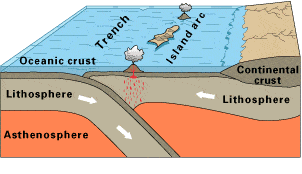
Observe this diagram of a plate boundary. One statement BEST describes what is happening. It is that
the oceanic crust is melting.
the denser ceanic crust is subducting under the less dense oceanic crust
volcanic islands are forming.
the tectonic plates are moving away from each other.
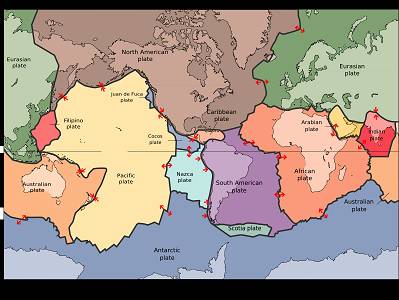
What was Wegener’s continental drift idea?
The continents have moved slowly apart to their current locations.
The continents have always been located at their current locations.
The continents are moving slowly together from their current locations.
None of these

What are the three types of Evidence that supports Alfred Wegener's Theory?
Fossils, Fish, and Land
Sedimentary, Magma, and Climate
Fossils, Land forms, and Climate
Climate, Land forms, and Metamorphic rock

What evidence did Wegener use to support his theory?
Continents and fossils fitting together/matching-up like puzzle pieces
glacier scars and other climate evidence from temperature
mountain ranges and rocks line up across continents
all of the above
The "Ring of Fire" is where there are many earthquakes and volcanoes.
True
False
When plates sink together we get _________.
trenches
ranges
mountains
volcanoes
Seafloor spreading occurs because ____.
new material is being added to the asthenosphere
earthquakes break apart the ocean floor
sediments accumulate at the area of spreading
molten material beneath Earth's crust rises to the surface
Which type of stress is caused by two plates pushing into one another?
compression
tension
force
shear
Which type of stress is caused by two tectonic plates sliding past one another?
compression
tension
force
shear

In this photograph, which rock formation is represented by the blue lines?
syncline
joint
anticline
fault
What is a strike-slip fault?
a fracture caused by tension stress
folding caused by tension stress
a fracture caused by shear stress
a fold caused by shear stress
What is another name for natural selection?
survival of the smartest
survival of the fastest
survival of the biggest
survival of the fittest
Which of the following is the natural law that states that living organisms come only from other living organisms and are not created from nonliving materials?
evolution
oxidation
biogenesis
abiogenesis

What theory is depicted in this image?
Spontaneous Generation
Biogenesis
Special Creation
Panspermia
The concept of primordial soup suggests that ancient water bodies contained organic matter. With the help of sunlight, these organic molecules formed into more complex compounds. Which theory is being supported?
Spontaneous Generation
Biogenesis
Abiogenesis
Panspermia
One of the accepted scientific theories describing the origin of life on Earth is known as chemical evolution. According to this theory, which of the following events would need to occur first for life to evolve?
onset of photosynthesis
origin of genetic material
Synthesis of organic molecules
formation of the plasma membrane
Adaptation is
a change in a species over time; process by which modern organisms have descended from ancient organisms
The process by which individuals that are better suited to their environment survive and reproduce most successfully; also called survival of the fittest
A theory that life comes from non-living objects
Inherited characteristic that increase an organisms chance of survival
Evolution is
A theory that life comes from non-living objects
a change in a species over time; process by which modern organisms have descended from ancient organisms
A theory that life come from life
The species from whom a current one has descended
What type of organisms created oxygen for early life on Earth?
Heterotrophic Bacteria
Photosynthetic Bacteria
Animals
Plants

What is considered the fundamental unit of life?
Viruses
Proteins
Cells
Nucleic acids
What is a major challenge in explaining the spontaneous origin of cells?
Formation of water
Formation of inorganic molecules
Formation of organic molecules and self-replicating systems
Formation of oxygen
Which of the following converts food into energy for the cell?
vacuole
mitochondria
cytoplasm
cell membrane
The fluid that surrounds the organelles is... (hint... "Try to pull a fast one and..."
chloroplast
cytoplasm
vacuole
cell wall
Which organelle takes in "sun showers" and helps plants with the process or photosynthesis?
Vacuole
Mitochondria
Cytoplasm
Chloroplast
What are organelles?
Parts that come together to make an organ system.
A group of similar cells that perform similar functions.
A group of organs that perform similar functions
Tiny structures within a cell that allow the cell to live, grow, and reproduce.

transportER of proteins
endoplasmic reticulum
mitochondria
golgi body
vacuole

gets rid of waste
lysosome
ribosome
vacuole
golgi body

packages and delivers proteins (Hint: "mailman)
golgi body
nucleus
chloroplast
nucleus
All living things do which of the following?
autotrophic mechanisms
photosynthesis
chemosynthesis
cellular respiration
In which way are photosynthesis and cellular respiration different?
Cellular respiration stores ATP, while photosynthesis releases ATP.
Photosynthesis releases energy, while cellular respiration stores energy.
Cellular respiration produces oxygen, while photosynthesis uses oxygen.
Photosynthesis uses carbon dioxide, while cellular respiration produces carbon dioxide.
Which of the following structures is where cellular respiration occurs in the cell?
Nucleus
vacuoles
Mitochondria
cytoplasm
What is the correct equation for cellular respiration?
6O2 + C6H12O6 -> 6CO2 + 6H2O + Energy
6CO2 + 6H2O -> 6O2 + C6H12O6 + Energy
6O2 + C6H12O6 + Energy -> 6CO2 + 6H2O
6CO2 + 6H2O + Energy -> 6O2 + C6H12O6
What happens during cellular respiration?
the breakdown of glucose to release ATP
the breakdown of glucose to release FADH
the breakdown of glucose to release NADH
the breakdown of glucose to release carbon
The energy carrier that the cell uses to power its day-to-day activities is
ATP
FADH2
NADH
glucose
What are the REACTANTS of cellular respiration?
oxygen and carbon dioxide
water and glucose
carbon dioxide and water
glucose and oxygen
What are the PRODUCTS of cellular respiration?
oxygen and ATP (energy)
water and glucose and ATP (energy)
carbon dioxide and water and ATP (energy)
glucose and oxygen
Which of the following describes the correct mechanism of cellular respiration?
Glycolysis -> Kreb’s cycle -> pyruvate oxidation -> oxidative phosphorylation
Glycolysis -> pyruvate oxidation -> oxidative phosphorylation -> Kreb’s cycle
Glycolysis -> oxidative phosphorylation -> pyruvate oxidation -> Kreb’s cycle
Glycolysis -> pyruvate oxidation -> Kreb’s cycle -> oxidative phosphorylation

The image shows the processes involved during what stage of cellular respiration?
Glycolysis
pyruvate oxidation
Kreb’s cycle
oxidative phosphorylation
What happens during photosynthesis?
Heterotrophs produce ATP
Heterotrophs consume ATP.
Autotrophs consume carbohydrates.
Autotrophs produce carbohydrates.
In the autumn, the green leaves of sugar maples turn orange. Which explanation is true?
The leaves increase their production of carotenoids to adjust to the autumn light.
The colors of carotenoids are no longer masked by the color of chlorophyll.
The autumn light has more orange wavelengths than the summer light has.
The autumn light lacks the blue and orange-red wavelengths found in the summer light.
Which of the following is NOT a true statement about ATP?
Used ATP is discarded by the cell as waste.
ATP provides energy for the mechanical functions of cells.
ATP consists of ribose, adenine, and three phosphate groups.
ADP is produced when ATP releases energy.
Plants gather the sun’s energy using molecules called...
glucose
chloroplasts
thylakoids.
pigments
Organisms, such as plants, that make their own food are called..
heterotrophs
autotrophs
thylakoids
pigments
Energy is released from ATP when...
a phosphate group is added
adenine bonds to ribose
ATP is exposed to sunlight
a phosphate group is removed
Photosynthesis uses sunlight to convert water and carbon dioxide into..
oxygen and carbon.
high-energy sugars and proteins
ATP and oxygen
oxygen and high-energy sugars
Plants get the energy they need for photosynthesis by absorbing
high-energy sugars
chlorophyll a
energy from the sun.
chlorophyll b
Most plants appear green because chlorophyll...
absorbs violet light.
absorbs green light.
does not absorb green light.
does not absorb violet light.
The stroma is the region outside the
chloroplasts
thylakoids
plant cells
all of the above
Where do the light-dependent reactions take place?
in the stroma of the chloroplast
within the thylakoid membranes
within the mitochondria membranes
in the outer membrane of the chloroplasts
What are the products of the light-dependent reactions?
ATP, NADPH, and oxygen gas
ATP, carbon dioxide gas, and NADPH
carbon dioxide gas, oxygen gas, and NADPH
oxygen gas and glucose
Which of the following activities happens within the stroma?
Photosystem I absorbs light.
ATP synthase produces ATP.
Electrons move through the electron transport chain.
The Calvin cycle produces sugars.
The Calvin cycle is another name for the...
light-independent reactions.
light-dependent reactions.
photosynthesis reaction.
electron transport chain.
Plants gather energy with light-absorbing molecules called pigments.
True
False
The light reactions of photosynthesis provides the Calvin cycle with...
protons and electrons.
ATP and NADPH
CO2 and glucose.
light and chlorophyll.
The plants’ principal pigment is carotene.
True
False
ATP is NOT a good molecule for storing large amounts of energy over the long term.
True
False
Organisms that make their own food are called heterotrophs.
True
False
During the light-dependent reactions, plants use the energy in ATP and NADPH to build high-energy sugars.
True
False

