
 Worksheets
7th Grade Fall ACP Review
Total questions: 197
Worksheet time: 5hrs 15mins

One piece of evidence that supports the Theory of Plate Tectonics is found in the observation of rocks on either side of the Mid-Atlantic Ridge, shown in the picture provided. Plate Tectonic theory is supported because as you move out form the Mid-Atlantic Ridge, the rocks -
have higher iron content.
become thicker and thicker.
are increasingly older.
are made of smaller particles.
Scientists theorized that the continents were once joined together even before they had modern evidence from rocks and fossils. Using only maps, they observed that -
continents with the most temperate climates were found near the Equator.
the oceans have become smaller throughout the history of Earth.
the shapes of continents appeared to allow them to fit together.
most of the larger land masses are in the Northern Hemisphere.
The Dead Sea to the north of Africa has formed where land is thinning and sinking. This is a result of the interaction of tectonic plates. The Dead Sea -
is located in the center of a rotating plate.
sits on a boundary between plates moving apart.
formed where one plate covers another.
formed from melting due to solar radiation.
The earthquakes experienced in California are related to tectonic plates because these catastrophic events are the result of -
two tectonic plates sliding past each other.
tectonic plates melting as they slide into the mantle.
tectonic plates being weathered over time.
two tectonic plates pulling away from each other.
One piece of evidence that supports the Theory of Plate Tectonics is the discovery of what in both South America and Africa?
The ancient atmosphere in both places was identical.
The rates of weathering of rock are similar.
Fossil remains of the same land-dwelling animal.
Plants on both continents have similar flowers.
Even before modern observations provided evidence that supports the Theory of Plate Tectonics, people developed theories that the continents were once joined together. Using only maps, they observed that -
most of the larger land masses are in the Northern Hemisphere.
continents with the most moderate climates were located near the Equator.
the shapes of continents appeared to allow them to fit together.
the oceans have decreased in size throughout the history of Earth.
Which of the following features is likely to form where two tectonic plates push toward each other?
Ocean shoreline
Mountain range
Mid-ocean ridge
Rift valley

Every 100,000 to 200,000 years, the magnetic poles of Earth reverse. Rocks that contain iron provide a record of both normal and reversed magnetic poles. The pattern of normal and reversed magnetic poles as recorded in the rock on either side of the Mid-Atlantic Ridge provide evidence supporting the Theory of Plate Tectonics because -
the composition of the rock changed every time the plates pushed against each other.
the symmetric pattern shows where plates are moving away from each other.
deposits of iron in the rock were only made when the plates stopped moving.
" the bands of rock showing normal and reversed poles are not all the same width."
Which of the following crustal features would be the result of two continental tectonic plates moving away from each other?
Mountain range
Volcanoes on land
Rift valley
Mid-ocean ridge


A watershed is a
storm drain
aquifer
a place where wter is stored
an area of land that drains into a stream, river, or lake
A small river that flows into a larger is called a
tributary
brook
river
bay
How do watersheds get their names?
After the person who discovered them
For the region they are located
For the body of water they drain into
None of these
Rainfall seeps underground through a process called
precipitation
percolation
Water held underground in the soil or in pores and crevices in rocks is called
groundwater
a divide
run off
surface water
Not all people live in a watershed.
True
False
Human activities do not affect a watershed.
True
False

In this energy pyramid, which organisms have the most energy available?
Producers
Carnivores
Herbivores
Top Predator

In this energy pyramid, which organism has the least amount of energy available?
Producers
Herbivores
Carnivores
Top Predator


What does a pyramid of numbers compare?
the number of individual organisms at each trophic level
the number of individuals in each population
the number of predators and prey in an ecosystem
the number of different populations at each trophic level
Which body system provides oxygen to all parts of the bodies?
Circulatory
Respiratory
Nervous
Muscular
Which body system is the largest?
Integumentary (skin)
Circulatory
Repiratory
Skeletal
Which body system provides calcium to the body.
Skeletal
Muscular
Circulatory
Respiratory
In which body system is the exchange for carbon dioxide for oxygen take place?
Respiratory
Circulatory
Endocrine
Skeletal
Which body system produces a growth hormone?
Endocrine
Muscular
Respiratory
Excretory
This system gives your body shape and support
Skeletal
Muscular
Nervous
Respiratory
This body system contains the brain and spinal cord.
Nervous
Muscular
Excretory
Skeletal
This system has both white blood cells and red blood cells.
Circulatory
Respiratory
Nervous
Endocrine
This body system is the first line for defense against bacteria and viruses.
Integumentary (skin)
Nervous
Circulatory
Muscular
Two body systems work together to help remove waste products from blood. What are these two systems?
Circulatory and Excretory
Respiratory and Muscular
Endocrine and Excretory
Nervous and Skeletal

Which statement best describes the function of this human body system?
supplies oxygen to the blood, which in turn,
delivers oxygen to all parts of the body
breaks down food into nutrients and wastes
produces and secretes hormones which regulate metabolism, growth, and development
provides support and movement for the body
A student touches a hot stove and immediately withdraws her hand from it. Nerves within her hand felt pain from the hot stove. Which body system includes the three layers of skin that function to protect deeper tissue
Integumentary
Respiatory
Circulator
Skeletal
A student touches a hot stove and immediately withdraws her hand from it. The student experienced an adrenaline rush when she felt the heat from the stove. Chemicals rushed through her body, giving her a little scare. The body system that produces such chemicals that affect other parts of the body is the:
Endocrine System
Circulatory System
Respiratory System
Skeletal System
Muscles move the body by
pulling on bones
stimulating the spinal cord
squeezing ligaments
pushing on tendons
What organ system in the human body contains the pituitary gland, hypothalamus gland, and thyroid gland?
Endocrine System
Muscular System
Integumentary System
Nervous System
To which organ system do the esophagus, liver, pancreas, small intestine, and colon belong?
Digestive
Muscular
Nervous
Endocrine
Which system absorbs and carries food from the digestive system to the rest of the body?
Circulatory system
Respiratory system
Nervous system
Endocrine system
Oxygen-rich blood returns from the lungs to the heart. Which two systems are most directly involved in this process?
respiratory and circulatory
excretory and digestive
circulatory and excretory
digestive and respiratory
Which body system is most responsible for the removal of waste?
Excretory system
Nervous system
Endocrine system
Skeletal system
The major function of the kidneys is to
filter waste and by products
carry blood back to the heart
break down nutrients
exchange gases
Organs and tissues that perform the same function is called ___________?
Cells
Organ System
Tissue
Organs
A group of tissue that perform a similar function is called__________________. (Example: heart, lungs, stomach)
Cell
Organ
Tissue
Organ System
A group of cells that have similar functions? Examples are nervous, epithelial, muscle, and connective
Cells
Organs
Tissue
Atoms
The _____________ is the basic unit of life
Cell
Organ
Tissue
Atom
When many organ systems work together is can form...
Cell
Tissue
Organ
Organism
A structure made of two or more tissues that work together is a ________________?
Cell
Tissue
Organ
Organ System

This is an example of
Cell
Tissue
Organ
Organ System

This is an example of
Cell
Tissue
Organ
Organ System

This is an example of
Cell
Tissue
Organ
Organ System

This is an example of
Cell
Tissue
Organ
Organ System

This is an example of
Tissue
Organ
Organ System
Organism
This rainforest organism is multicellular and autotrophic.
Domain Eukarya, Kingdom Plantae
Domain Achaea, Kingdom Plantae
Domain Eukarya, Kingdom Fungi
Domain Eukarya, Kingdom Protista
This rainforest organism is unicellular with no nucleus and live in the soil.
Domain Bacteria, Kingdom Bacteria
Domain Arachea, Kingdom Archaea
Domain Eukarya, Kingdom Protista
Domain Eukarya, Kingdom Fungi
This organism lives in the rainforest and is unicellular with a nucleus. It is heterotrophic and found in rainwater trapped in leaves.
Domain Eukarya, Kingdom Protista
Domain Eukarya, Kingdom Fungi
Domain Archaea, Kingdom Archaea
Domain Bacteria, Kingdom Bacteria
This organism is found in the rainforest jumping from treetop to treetop. It is heterotrophic.
Domain Eukarya, Kingdom Animalia
Domain Eukarya, Kingdom Fungi
Domain Eukarya, Kingdom Plantae
Domain Bacteria, Kingdom Bacteria
This organism is found in a volcanic hot spring in a rainforest. It is unicellular with no nucleus and autotrophic.
Domain Archaea, Kingdom Archaea
Domain Bacteria, Kingdom Bacteria
Domain Eukarya, Kingdom Protista
Domain Eukarya, Kingdom Plantae
This organism is found in the rainforest attached to dead leaves below the trees. It is multicellular and heterotrophic.
Domain Eukarya, Kingdom Fungi
Domain Eukarya, Kingdom Animalia
Domain Eukarya, Kingdom Protista
Domain Bacteria, Kingdom Bacteria
This organism is found in a salt lake in the desert where no fish were living. It is unicellular and has no nucleus.
Domain Archaea, Kingdom Archaea
Domain Bacteria, Kingdom Bacteria
Domain Eukarya, Kingdom Protista
Domain Eukarya, Kingdom Archaea
This organism is found in the desert growing out of the ground. It is multicellular and autotrophic.
Domain Eukarya, Kingdom Plantae
Domain Eukarya, Kingdom Fungi
Domain Eukarya, Kingdom Protista
Domain Archaea, Kingdom Archaea
This organism is found in the desert living in a cactus. It is multicellular and heterotrophic, feeding on insects.
Domain Eukarya, Kingdom Animalia
Domain Eukarya, Kingdom Fungi
Domain Eukarya, Kingdom Protista
Domain Bacteria, Kingdom Archaea
This organism is unicellular with no nucleus and found in the desert living on a cactus.
Domain Bacteria, Kingdom Bacteria
Domain Eukarya, Kingdom Protista
Domain Archaea, Kingdom Archaea
Domain Eukarya, Kingdom Bacteria
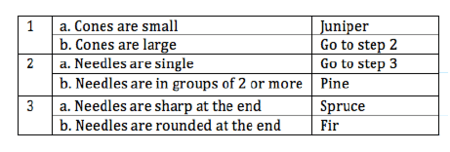

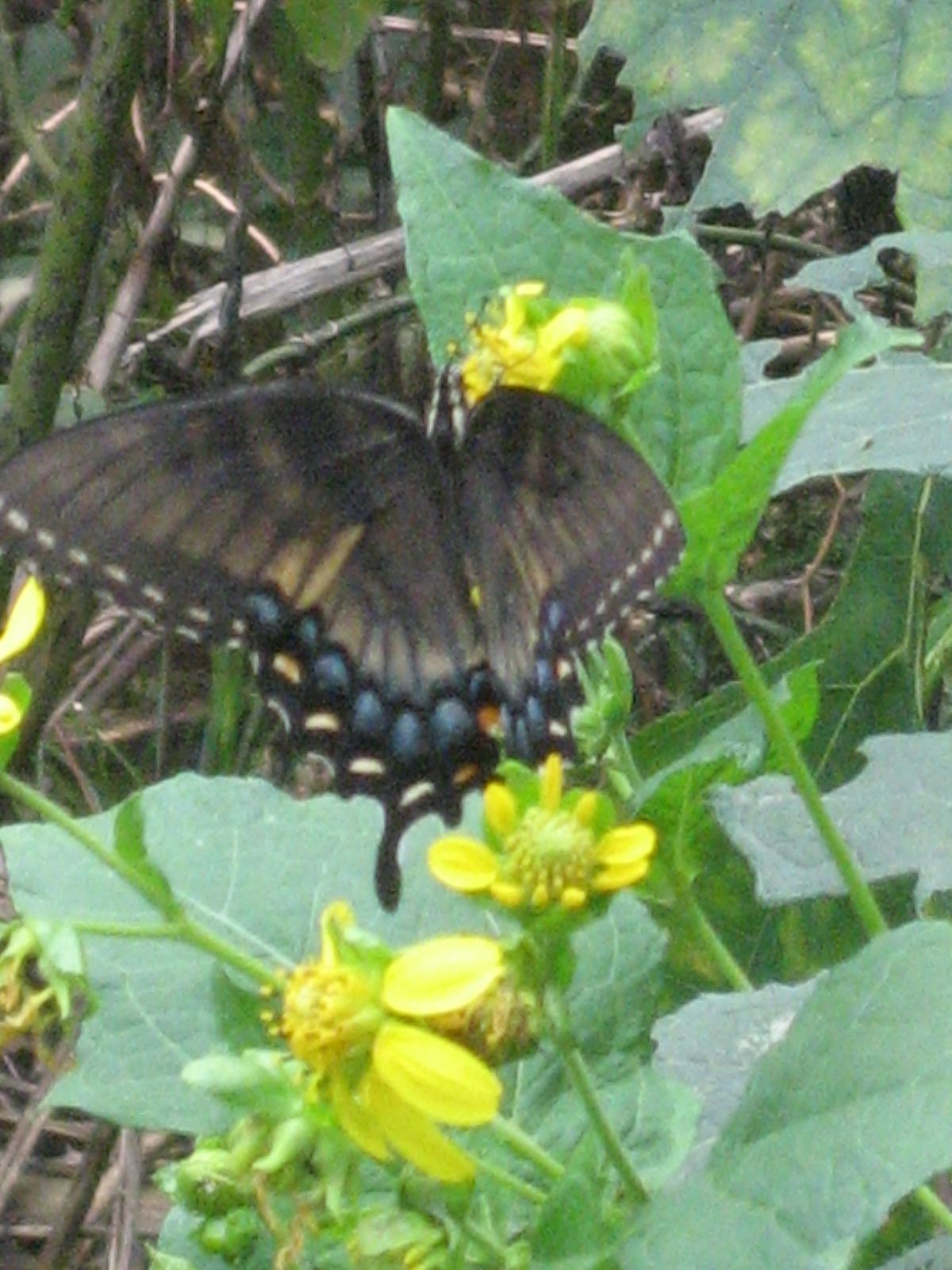

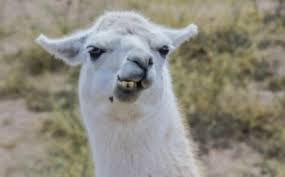

---------
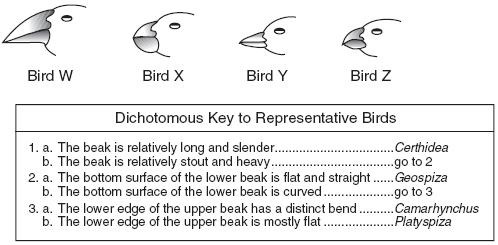
An illustration and a dichotomous key are given. What is the correct classification for this organism?
following observations of the plant’s characteristics would be useful in determining its identity with a dichotomous key?
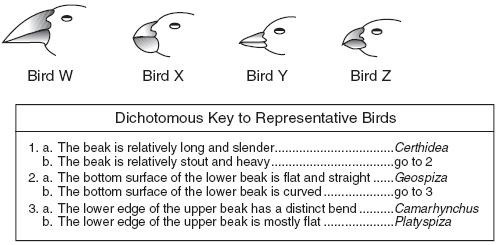


Elements
are made of two or more types of atoms bonded together
are made of one type of atom
are made of two or more types of molecules
are always individual atoms
Which is the smallest particle of an element that has the same properties as that element?
atom
molecule
compound
chemical
A substance that cannot be broken down further chemically is known as...
an element
a compound
a molecule
a mixture
Which of the following are examples of ELEMENTS? Choose all that are correct.
Oxygen (O)
Water
(H2O)
Flourine
(F)
Lemonade
Sulfur Dioxide (SO2)
Compounds
are made of two or more types of atoms chemically bonded together
are made of one type of atom
are found on the periodic table
can be separated into their individual parts through physical means
Which of the following are examples of compounds? Check all that apply.
Salt
(NaCl)
Salt Water
(NaCl and H2O)
Sugar
(C6H12O6)
Carbon Dioxide
(CO2)
The bonds of compounds can be broken easily because they are not chemically bonded.
True
False
When substances combine chemically...
they form a mixture and their properties change
they form a compound and their properties change
they form a mixture where their properties stay the same
the form a compound where their properties stay the same
Which of the following are examples of Mixtures?
The atmosphere
(N + O + Ar + H2O...)
Carbon Dioxide (CO2)
Oxygen
(O2)
Lemonade
(sugar, lemon juice, water)
Anything on the Periodic Table
Mixtures
are made of two different types of atoms chemically bonded together
Are only liquids
Cannot be separated
Can be separated using physical properties
Pure Substances
Are only made of one type of atom
Have the same properties throughout
Can never be broken down into something simpler
Are only made of molecules
Which of the following are examples of a Pure Substance?
Water
(H2O)
Helium
(He)
Orange Juice
(oranges, water)
Uranium
(Ur)
Sugar
(C6H12O6)
Which of the following is an example of COHESION?
water sticking to water
water sticking to glass
oil sticking to plastic
hydrogen sticking to oxygen
What is the correct chemical formula for water?
H2O
HO2
H2O2
2H1O
Water is polar. What does that mean?
it is a molecule with opposite charges on opposite ends
it is a molecule with no charge
it is a molecule with identical charges on opposite ends
it is a molecule with too many protons
Water sticks well to many materials. What term relates to this property of water?
cohesion
adhesion
density
surface tension
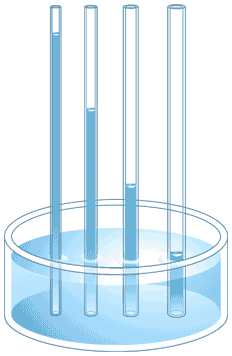
What is the term for water's ability to defy gravity and climb up a tube?
Capillary Action
Specific Heat
Universal Solvent
Magic

A water strider can skate along the top of a pond because:
covalent bonds result in water cohesion (surface tension)
hydrogen bonds result in water cohesion (surface tension)
water striders have adapted to take advantage of water cohesion
water striders are afraid of water and avoid it
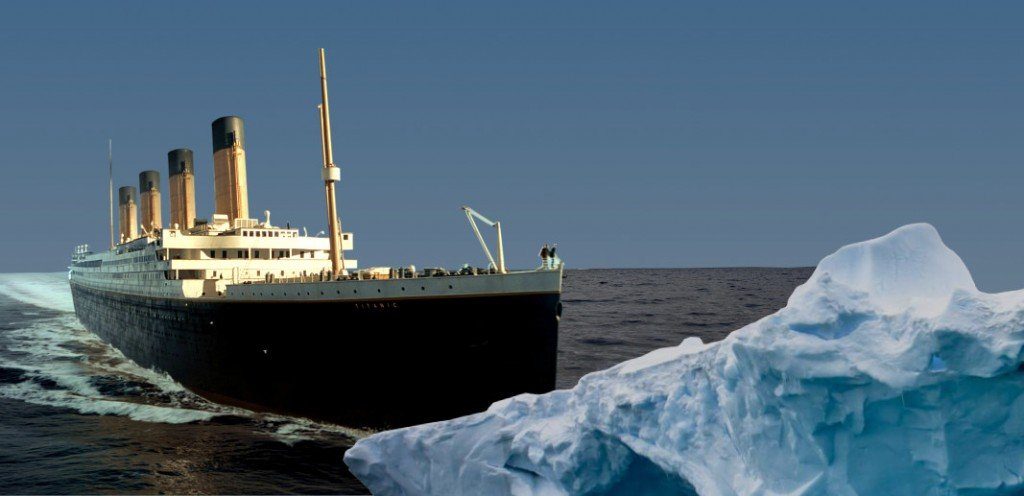
Why does ice float?
water expands when it freezes, making ice less dense than water
water compacts when it freezes, making ice more dense than water
hydrogen bonds in water push the ice to the surface
ice is afraid of water, and avoids it
Which property of water allows water to climb up a tree's root system to the leaves?
Cohesion
water's density
Polarity
Capillary Action
Water is a (a) molecule due to it having a positive AND negative end.

What two elements make up water?
Helium and Oxygen
Hydrogen and Oxygen
Helium and Carbon
Oxygen and Carbon
How many hydrogen atoms are in a water molecule?
(HINT: H20)
5
1
2
0
Water dissolves all substances because it is the universal solvent.
True
False

How do acids taste?
Sweet
Sour
Salty
Bitter

Which solution will turn litmus paper red?
Acids
Bases
Neutral
Which statement describes a base?
Tastes Sour
Stays clear in Phenolphthalein
Turns magenta in Phenolphthalein
Turns litmus paper red

Which of the following is an example of an acid?
Blood
Baking Soda
Drain Cleaner
Lemon Juice

When acids and bases are mixed together, what neutral product is created?
Acid
Base
Acid and Base
Water

Soaps are classified as
Acids
Bases
Neutral
If a solution has a pH of 13, it is considered to be a what?
Strong Acid
Weak Acid
Strong Base
Weak Base

If a solution has a pH of 7, it is considered to be what?
Acid
Base
Neutral

Which is found in a lot of household cleaners?
Acids
Bases
Neutrals
If a litmus paper does not change color (stays red or blue), the solution is -
An Acid
A Base
Neutral
If a solution has a pH of 2, it is considered to be a what?
Strong Acid
Weak Acid
Strong Base
Weak Base

Which statement is true?
Acids taste bitter.
Acids feel slippery.
Bases taste sour.
Bases taste bitter.
What is the pH range for acids?
(a)
What is the pH range for bases?
(a)
Based on the pH scale, which is the weakest base?
Drain Cleaner
Blood
Soap
Ammonia
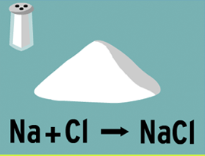
When sodium and chlorine combine to form sodium chloride, sodium chloride is the:
Originator
Reactant
Product
Produce
How many atoms do you have in the compound 2MgCl2?
2 atoms
4 atoms
6 atoms
8 atoms
How many Ca (Calcium) atoms are found in Ca(OH)2?
5 atoms
3 atoms
2 atoms
1 atom
How many atoms do you have in the chemical formula 2Mg(ClO3)2?
2 atoms
7 atoms
9 atoms
18 atoms
Law of conservation of mass states the amounts of atoms in the reactants and the products...
Increase
Decrease
Stay the same
No correct answer
Does the equation H2+O2 →H2O follow the Law of Conservation of Mass?
Yes, because the atoms are equal.
No, because more info is needed.
No, because there are more atoms in the product.
No, because there are more atoms in the reactant.
What is Newton's Second Law of Motion?
The acceleration of an object is directly proportional to the net force acting on it and inversely proportional to its mass (F = ma).
An object in motion stays in motion unless acted upon by an external force.
The force acting on an object is equal to the mass of that object multiplied by its acceleration (F = ma).
For every action, there is an equal and opposite reaction.
What is the difference between mass and weight?
Mass is the amount of matter in an object, while weight is the force exerted by gravity on that mass.
Mass and weight are the same; both refer to the quantity of matter in an object.
Weight is the amount of matter in an object, while mass is the force exerted by gravity on that matter.
Mass is a measure of an object's volume, while weight is a measure of its density.
If a 10 kg object accelerates at 15 m/s², what is the force applied?
100 Newtons
150 Newtons
200 Newtons
250 Newtons
What is the unit of force in the International System of Units (SI)?
Joule (J)
Pascal (Pa)
Newton (N)
Watt (W)
What happens to acceleration if force increases while mass remains constant?
Acceleration decreases.
Acceleration remains constant.
Acceleration increases.
Acceleration becomes zero.
What is the formula for calculating acceleration?
a = F/m
a = m/F
a = F*m
a = F+m
What two variables define force?
Mass and acceleration.
Velocity and time.
Distance and speed.
Energy and momentum.
What is inertia?
The force that causes an object to move in a circular path.
The tendency of an object to resist changes in its state of motion.
The speed at which an object travels in a vacuum.
The gravitational pull exerted by an object on another object.
How does friction affect the motion of an object?
Friction increases the speed of an object.
Friction has no effect on the motion of an object.
Friction opposes the motion of an object, requiring more force to achieve acceleration.
Friction only affects objects at rest.
What is the effect of applying a force to an object at rest?
It will cause the object to accelerate in the direction of the force.
It will cause the object to remain at rest indefinitely.
It will cause the object to change its color.
It will cause the object to vibrate without moving.
How much force is needed to accelerate a 3 kg skateboard at 5 m/s²?
10 Newtons
15 Newtons
20 Newtons
25 Newtons
How do you calculate force?
F = ma, where F is force, m is mass, and a is acceleration.
F = mv^2, where F is force, m is mass, and v is velocity.
F = m/a, where F is force, m is mass, and a is acceleration.
F = m + a, where F is force, m is mass, and a is acceleration.
What is the relationship between mass and force in Newton's Second Law?
The greater the mass of an object, the more force is required to accelerate it.
Mass and force are unrelated concepts in physics.
Increasing mass decreases the required force for acceleration.
Force is independent of mass in Newton's Second Law.
If I apply the same force to a ping pong ball and a bowling ball, which one will accelerate faster?
The bowling ball.
The ping pong ball.
Both will accelerate at the same rate.
The ping pong ball will accelerate slower.
What happens to acceleration if mass increases while force remains constant?
Acceleration increases.
Acceleration remains the same.
Acceleration decreases.
Acceleration becomes zero.
Newtons law states that for every action, there is an_________ reaction
unequal and opposite
stronger and opposite
equal and similar
equal and opposite

Force always come in________
waves
triplets
pairs
Newton's Third Law is also known as...
The Law of Inertia
The Law of Acceleration
The Law of Conservation of Momentum (Force Pairs)

if the action force was 70 N to the right , the reaction force must be ___________________
70 N to the right
80 N to the left
70 N to the left
70 N up

The figure shows __________________
balanced force
unbalanced force
force pairs ( action and reaction force)

What type of wave is pictured?
Transverse wave
Longitudinal wave
Wave, what wave?
Slinky wave

ALL waves carry ______________.
Sound
Light
Water
Energy
Sound travels in which kind of wave?
Longitudinal waves
Transverse waves
In a straight line
Water waves and light waves are both examples to ___
Longitudinal Wave
Transverse Wave
Frequency wave
Sound Wave
When on a flat surface, giving the Slinky® a push or pull will create a disturbance
What is a wave?
A disturbance that transfers matter from place to place.
A disturbance that transfers energy from place to place.
As wavelength increases, frequency ___________.
increases
decreases
stays the same
unknown
As frequency increases, energy ________.
increases
decreases
stays the same
unknown

Visible light is part of the electromagnetic spectrum humans can detect. It can be broken into different colors. Looking at the chart, which color has the greatest energy?
violet
red
green
yellow
What is frequency?
the length between two identical points on adjacent waves
the speed of gravitational acceleration between two waves
how much work a photon particle can exert
how many wavelengths pass a point in a second

What happens to frequency when wavelength decreases?
stays the same
decreases
increases
There is no relationship between wavelength & frequency.
Which color waves have the lowest frequency?
red
yellow
green
violet

The part of the of the wave labeled #3 is the ____________.
amplitude
trough
wavelength
crest

The part of the wave labeled #4 is the ___________________.
amplitude
wavelength
crest
trough

The part of the wave labeled #5 is called a ____________.
wavelength
trough
crest
amplitude

