
 Worksheets
Unit 5 India Review
Total questions: 17
Worksheet time: 9mins
The _____________ are what geographically separates India from the rest of Asia
Himalaya Mountains
Andes Mountains
Rocky Mountains
Alps Mountains
The flat, dry area where the Indus River slows down is the ___________
Indus Plain
Gobi Desert
Indian Ocean
Indus Mountain Range
The ruins of Harappa were discovered in _________
1942
1978
1921
1956
The civilization of Harappa lasted about _________ years.
3000
1000
2000
4000
A year after Harappa was discovered, the ruins of Mohenjo Daro were found 400 miles _____________ of Harappa.
southwest
west
northeast
east
It was a planned city of about 40,000 people, laid out in a grid with paved streets at __________ angles.
left
wrong
45 degree
right
Another interesting find was the Great Bath, which archeologists believe may have been used for __________ purposes.
government
religious
social structure
achievements
Mohenjo Daro means "Mound of the Dead" in _________
Sanskrit
English
Chinese
Spanish
Which word does NOT mean the same as barter?
trade
coin
swap
exchange
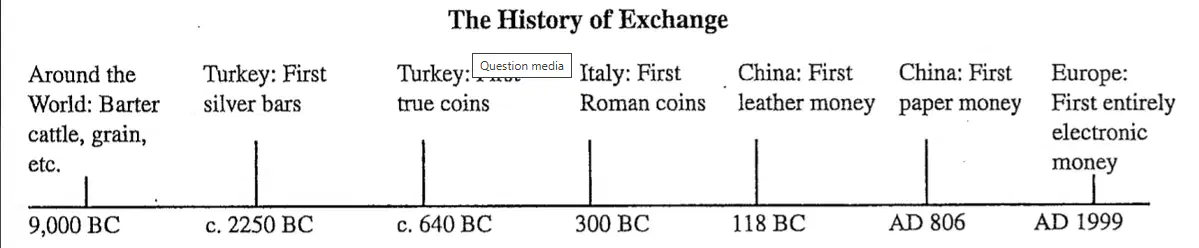
According to the timeline, people in China were the first to use __________
paper money
gold coins
cattle for bartering
silver bars
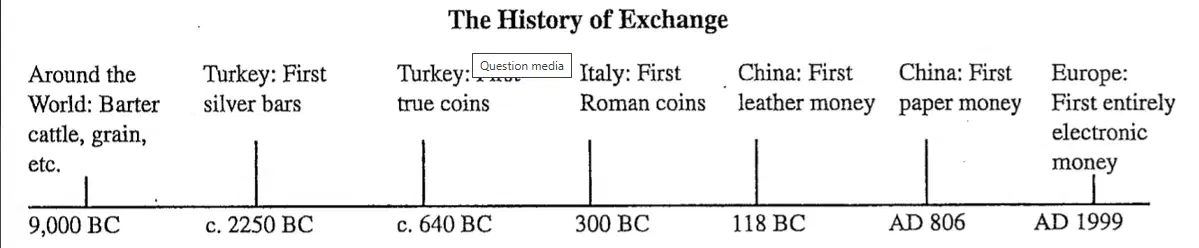
Based on the timeline, where were coins first used?
China
Europe
Italy
Turkey
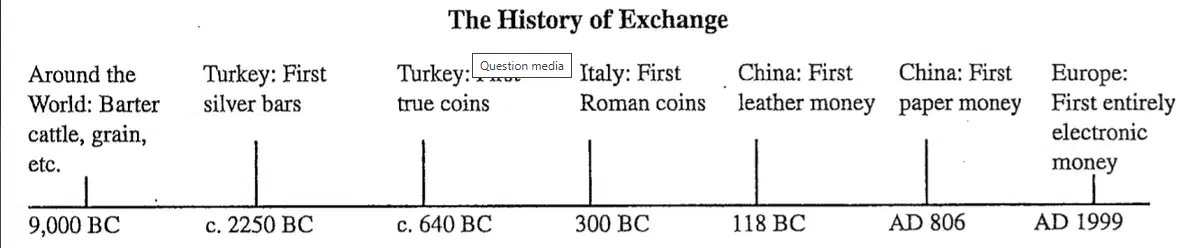
What would another good title for this timeline be?
The History of Money in China
Leather and Paper Money
Money Through Time
Your Time is Money
What geographic features in India affected the settlement of the early Indus people?
Desert and Wind
Mountains and Rivers
Ocean and Deltas
Peninsulas and Cliffs
When we look at the remains of the early Indus Valley's architecture, what can we learn about their society?
They created stepped temples for their religion
They had a well designed city layout
They had a complex government system
They focused on their military more than anything
The three main gods of Hinduism are:
Deva, Brahma. Amun
Vishnu, Brahma, Deva
Brahma, Vishnu, Shiva
Ra, Aten, Deva
What group of people in Ancient India is outside of the caste system and should be placed at the bottom?
Priests and Scholars
Merchants and Professionals
Servants and Peasants
Untouchables
Who is at the top of the Ancient India social structure?
Princes (rulers and soldiers)
Untouchables
Priests and Scholars
Merchants and Professionals

