
Font size
 Worksheets
ortho 2
Total questions: 70
Worksheet time: 43mins
Regarding radiological landmarks around the hip joint, consider the following statements:1. Shenton’s line is a continuous curvilinear line formed by the lower border of the superior pubic ramus and the medial border of the neck of femur. 2. Disruption of Shenton’s line is commonly seen in fracture neck of femur and in posterior dislocation of the hip. 3. Neck–shaft angle greater than 135° is termed coxa vara. 4. In internal rotation of the limb, the lesser trochanter appears prominent on X-ray. 5. If the greater trochanter lies higher than the center of the acetabulum, the limb is shortened. How many statements are correct
2 statements are correct
3 statements are correct
4 statements are correct
All. correct
Unstable pelvic fractures classified based on the forces causing injury (AP compression, lateral compression and complex forces) follow which classification system?
Tiles classification
Hawkins classification
Young and Burgess classification
Letournel classification
A 45-year-old patient is struck from the side. X-ray shows unilateral sacroiliac disruption and superior & inferior pubic rami fractures on the same side.This describes
Duverney's fracture
Malgaigne fracture
Bucket handle fracture
Straddle fracture
Based on Tile’s classification, pelvic fractures are classified into stable and unstable types.Stable fractures involve injury other than the pelvic rim, whereas unstable fractures involve injury to the pelvic rim/ring.Which of the following is/are NOT an unstable pelvic fracture?:- 1.Straddle fracture 2.Malgaigne fracture 3.Bucket handle fracture 4.Duverney's fracture 5.Isolated fracture of anterior superior iliac spine
2 and 4
3 and 4
1 and 4
4 and 5
A positive Thompson test indicates
Rupture of patellar tendon
Plantaris muscle injury
Gastrocnemius tear
Tendoachilles rupture
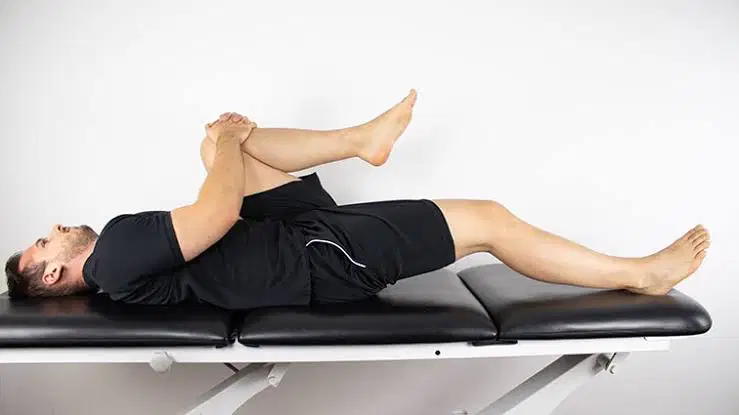
Regarding Thomas test, which statement is incorrect?
A. Used to assess flexion deformity of hip
B. Patient lies supine and opposite hip is flexed
C. Lumbar lordosis is obliterated on flexion of normal limb
D. Used to assess integrity of quadriceps and tendoachilles
A patient reports difficulty maintaining balance while walking after a recent fall. During physical examination, a Trendelenburg test is performed to assess the integrity of the hip abductor mechanism. The patient is asked to stand on the right lower limb, and it is observed that the left side of the pelvis drops downward, indicating inability to maintain pelvic stabilization on the stance side.This finding most commonly results from injury to which of the following nerves?
right superior gluteal nerve
left superior gluteal nerve
right inferior gluteal nerve
left inferior gluteal nerve
Regarding posterior dislocation of the hip, consider the following statements:1. It can result from a dashboard injury. 2. The attitude of the limb is flexion, internal rotation and adduction. 3. The lateral border of the foot rests on the bed due to internal rotation. 4. There is usually limb length shortening 5. Shenton’s line is disrupted 6. The lesser trochanter becomes less visible on radiograph. 7. The head of femur is palpable in the femoral triangle region
3 correct
4 correct
5 correct
6 correct
Regarding complications of hip dislocation, which of the following statements is incorrect?
1. Avascular necrosis is the most common complication and may occur within 6–12 hours.
2. Sciatic nerve injury is commonly associated with posterior hip dislocation.
3. Femoral vessel injury is more common than femoral nerve injury in anterior dislocation
4. Femoral artery injury is commonly seen in posterior dislocation of hip.
Vascular sign of Narath is seen in which of the following conditions? A. Cotton fracture B. Hip dislocation C. Congenital dysplasia of hip D. Excision of femoral head E. Bipartite patella. How many of the given options are correct
1
2
3
4
A 65-year-old man presents after a road traffic accident with severe pain at the hip region. His limb shows marked external rotation more than 45°, and the lateral border of the foot touches the bed. Shortening of the limb is obvious. X-ray reveals a fracture distal to the intertrochanteric line.Which complication is most likely?
Avascular necrosis
Non union
Malunion with coxa vara deformity
sciatic nerve palsy
Which variant of neck of femur fracture based on anatomical location has highest chance of avascular necrosis and non union
Sub capital
transcervical
basicervical
All have equal chance
Regarding Pauwels classification of fractures of the femoral neck, which of the following statements is incorrect?
Pauwels classification is used for transcervical fractures of the femoral neck.
Pauwels classification is based on the inclination angle of the fracture line with respect to the horizontal.
Pauwels Type II has an angle between 30° to 50°.
Pauwels Type III fractures have a lower incidence of non-union and avascular necrosis.
A 72-year-old female presents to the emergency department after a fall from standing height. She complains of severe pain in the right hip and is unable to bear weight. X-ray reveals a displaced intracapsular fracture of the neck of femur. She has a known history of symptomatic osteoarthritis of the hip, and her fracture is > 3 weeks old at presentation.According to the standard management algorithm for neck of femur fractures, what is the best treatment modality for this patient?
A. Closed reduction and internal fixation with cannulated cancellous screws
B. Fixation with osteotomy (McMurray/Pauwels)
C. Total hip replacement
D. Bipolar hemiarthroplasty
Wiinquist and Hansen classification is used for which type of fracture?
Subtrochanteric fracture
Calcaneum fracture
Shaft of femur fracture
Shaft of tibia fracture
Which of the following is a classic clinical triad of fat embolism syndrome?
A. Fever, hematuria, chest pain
B. Respiratory distress, neurological symptoms, petechial rash
C. Seizures, oliguria, hypotension
D. Cyanosis, edema, jaundice
A 30-year-old male develops respiratory distress, confusion, and a petechial rash 36 hours after sustaining a fracture of the shaft of femur. Fat embolism syndrome is suspected and Gurd’s criteria are applied for diagnosis. 1. Axillary / subconjunctival petechiae 2. Pulmonary edema 3. Anemia 4. Thrombocytopenia 5. Tachycardia 6. Fat globules in urine. How many of the following are major criteria
1
2
3
4
A 52-year-old patient with long-standing hindfoot arthritis and severe pain refractory to conservative measures is scheduled for a triple arthrodesis. Which of the following joints will not be fused?
calcaneocuboid joint
tibiotalar joint
talonavicular joint
subtalar joint

A 40 year old male sustained a fracture in his right knee as shown. What would be the treatment of choice in this fracture
patellectomy
tension band wiring
cylinder cast
excision of small fragement
A 28-year-old male soccer player twisted his knee during a rapid pivot and now complains of instability and pain. On examination, he has a positive Lachman test with excessive anterior tibial movement. Which of the following movements does the anterior cruciate ligament normally prevent?
A) Anterior translation of ulna
B) Posterior translation of tibia
C) Anterior translation of tibia
D) Posterior translation of tibia
Schatzker classification is used for
distal tibia fracture
mid shaft tibia fracture
proximal tibia fracture
ankle fracture
Which of the following best describes Tillaux fracture?
A) Stress fracture of the distal fibula 3-8 cm above lateral malleolus
B) Avulsion fracture of medial femoral condyle at the origin of the medial collateral ligament
C) Lateral tibial plateau avulsion fracture with anterior cruciate ligament tear
D) Salter-Harris Type III fracture of distal tibia
What is Lisfranc fracture dislocation
fracture through tarso metatarsal joint
fracture dislocation through ankle joint
fracture dislocation through subtalar joint
fracture dislocation through inter metatarsal joint
All are associated with 5th metatarsal except
Jone's fracture
Dancer' s fracture
Runner's fracture
Iselin disease
All are treatment modalities for patella fracture except
tube cast
patella tendon bearing cast
excision of patella
tension band wiring
A 28-year-old man twists his ankle playing basketball and is unable to bear weight afterward. He has tenderness around the malleolar zone. According to the Ottawa ankle rules, which of the following findings would not indicate the need for ankle radiographs?
A) Bone tenderness at the posterior edge or tip of the lateral malleolus
B) Bone tenderness at the posterior edge or tip of the medial malleolus
C) Inability to bear weight both immediately after injury and for four steps in the ED
D) Bone tenderness at the navicular bone
What is Hoffa's fracture
supracondylar fracture of femur
epiphyseal injury of distal femur
fracture of femoral condyle in saggital plane
fracture of femoral condyle in coronal plane
A 19 year old boy involved in a bike accident is brought to the emergency department. He is unconscious, has a flail chest and a type III open femur fracture with femoral artery injury. First step to be done is:
A) Start IV fluids
B) Put a chest tube
C) Airway maintenance
D) Clamp femoral a. with bulldog clamps
Which displacement is seen in the proximal fragment in proximal third fractures of femur?
A) Flexion, abduction, external rotation
B) Flexion, abduction, internal rotation
C) Flexion, adduction, external rotation
D) Hyper extension
True about Pott's fracture
isolated medial malleolus fracture
isolated lateral malleolus fracture
Bimalleolalar fracture
trimalleolar fracture
Which ONE of the following statements regarding Frozen Shoulder is INCORRECT?
A) Frozen shoulder is commonly associated with diabetes mellitus and thyroid disorders, and may be bilateral in up to 30% of cases.
B) The primary pathology involves capsulitis leading to capsule thickening, fibrosis, and progressive contracture resulting in restriction of both active and passive movements.
C) The earliest movement to be restricted in frozen shoulder is abduction.
D) MRI may show capsulitis while X-ray findings are usually normal.
E) In the freezing stage, pain is more prominent than stiffness, while in the frozen stage stiffness predominates.
Painful arc syndrome typically produces pain during which range of shoulder abduction?
A) 0–30°
B) 30–60°
C) 60–120°
D) 120–180
The most commonly involved tendon in shoulder impingement syndrome is:
supraspinatus
infraspinatus
teres minor
subscapularis
Neer’s test is used to diagnose:
A) Rotator cuff tear
B) Shoulder dislocation
C) Subacromial impingement
D) Clavicular fracture
A 45-year-old manual laborer presents with shoulder pain and difficulty lifting his arm overhead. On examination, abduction is weak, and pain worsens when the arm is placed in 90° abduction in the scapular plane with the thumb pointing downward. The examiner applies downward pressure, which the patient is unable to resist.Which clinical test is being performed?
Roo's test
Neer’s impingement test
Empty Can (Jobe’s) test
Hawkins–Kennedy test
A 55-year-old male presents with sudden pain in the anterior aspect of the arm while lifting a heavy object. Soon after, he notices a bulge in the upper arm that becomes more prominent when he flexes the elbow, giving the appearance of a “Popeye sign.” Which muscle is most likely injured?
A) Brachialis
B) Biceps brachii (long head)
C) Coracobrachialis
D) Brachioradialis
Adson’s test is used for the evaluation of which condition?
1. Thoracic outlet syndrome
2. Rupture of long head of biceps
3. Rotator cuff tear
4. Adhesive capsulitis
Which of the following statements regarding Tennis Elbow is INCORRECT?
A) It is also known as lateral epicondylitis.
B) It most commonly involves inflammation of the common extensor origin.
C) The earliest affected muscle is flexor carpi rdialis
D) Pain is elicited at the lateral epicondyle on resisted wrist extension (Cozen’s test).
Finkelstein test is used for the diagnosis of which condition?
1. De Quervain’s disease
2. Golfer’s elbow
3. Dupuytren’s contracture
4.. Trigger finger
Which of the following is not a muscle of rotator cuff of shoulder joint
subscapularis
supraspinatus
infraspimatus
teres major
Jumper fracture is seen in
(a)
A 42-year-old man falls from a two-metre height, landing on both heels. He presents with severe heel pain, swelling and inability to bear weight. A lateral radiograph of the foot shows a decreased Böhler’s angle. Fracture of which bone is most consistent with this finding?
(a)
Identify the test shown in image
(a)
A 30-year-old man presents with severe heel pain and swelling after jumping from a height and landing on both feet. X-ray of the lateral calcaneum shows a reduced angle between the posterior facet and the anterior process line. This radiological angle is commonly decreased in calcaneal fractures..Name this angle
(a)
A patient suffers an ankle sprain due to inversion and plantar flexion injury while playing basketball. On examination, there is swelling over the lateral aspect of the ankle. The most commonly injured ligament is located on the lateral side of the joint.Which ligament is this?
(a)
Hand to knee gait is seen in (a) weakness due to poliomyelitis
A patient presents after a high-energy trauma with widening between the first and second metatarsals on foot X-ray. A small bony fragment is visible between them, suggesting avulsion of the Lisfranc ligament.What is this radiographic sign called?
(a)
Which muscle's tendon is the Forgotten Tendon of Rotator Cuff?
(a)
Impringement syndrome of shoulder joint is also called as
(a)
Cozen's test is for evaluation of
(a)
Stable pelvis fractures involve an intact pelvic ring and typically include isolated fractures of ilium, ischium or pubic rami.
T
F
Straddle fracture is caused by complex forces and involves bilateral superior and inferior pubic rami fractures.
T
F
The gluteus medius and minimus are supplied by the inferior gluteal nerve.
T
F
In Trendelenburg gait, the patient leans toward the unaffected side to maintain balance.
T
F
In posterior hip dislocation, the affected limb appears shortened, and the lesser trochanter becomes more prominent on X-ray.
T
F
Vascular sign of Narath indicates inability to palpate femoral artery due to displacement of femoral head; pedal pulses remain palpable.Seen in hip dislocation & congenital dysplasia of hip
T
F
Hip spica cast is commonly used to treat femoral shaft fractures in infants below 6 months.
T
F
Pain on passive stretch of limb muscles after femur fracture suggests compartment syndrome rather than fat embolism.
T
F
In Calcaneum fracture caused by fall from height, Böhler’s angle increases and Gissane’s angle decreases.
T
F
Lover’s fracture is bilateral calcaneus fracture associated with vertebral compression fracture.Seen in suicidal jumps, fall from height.
T
F
Mark the correct pairs
A.ankle sprain-Anterior talofibular ligament
B. Ceiling fracture -Intra articular communiteed fracture of distal end of fibula
C. Aviator's fracture-Fracture of talar neck
D.Chopart fracture -Fracture of intertarsal joint
E. Robert Jones fracture -Fracture of 5th metacarpal
Which of the following statements regarding shaft of femur fracture are TRUE?
A) The proximal fragment is displaced into flexion, abduction and external rotation due to action of iliopsoas and abductors.
B) Road traffic accidents and falls from height are common mechanisms of injury due to high-velocity trauma.
C) Temporary stabilization in adults is done using a Thomas splint.
D) Classification system is Hawkins classification
E) Major complications include hypovolemic shock and fat embolism syndrome.
Which of the following statements regarding Fat Embolism Syndrome are TRUE?
A) Petechial rash is a classic feature of fat embolism and usually appears 24–48 hours after trauma.
B) Hypoxemia (PaO₂ < 60 mmHg) and pulmonary edema are major criteria in Gurd’s diagnostic criteria.
C) Tachycardia, fever, and anemia are considered major criteria in fat embolism.
D) Pain on passive stretching is a typical early sign of fat embolism syndrome.
E) Management includes early fracture immobilization and supportive ICU stabilization.
Which of the following statements regarding neck of femur fracture are TRUE?
A) Intracapsular neck of femur fractures are commonly seen in elderly females after trivial fall and present with pain in Scarpa’s triangle.
B) Extracapsular (intertrochanteric) fractures commonly show shortening of >1 inch and more external rotation (>45°).
C) Pauwel’s classification is based on the degree of displacement of fragments and prognosis is best in Pauwel’s type III.
D) Garden Stage III fracture is partially displaced and has a worse prognosis than Garden Stage I and II.
E) In patients older than 65 years with displaced fracture neck of femur, total hip replacement is preferred treatment when pre-existing osteoarthritis is present.
Which of the following statements regarding hip dislocation are TRUE?
A) Anterior hip dislocation commonly occurs due to deceleration injury or fall from height and presents with flexion, abduction, and external rotation of the limb.
B) Hip dislocations are orthopedic emergencies due to high risk of avascular necrosis and should be reduced urgently within 6–12 hours.
C) Closed reduction under anesthesia is the preferred initial management, and open reduction is done if closed reduction fails.
D) Sciatic nerve injury is more common in anterior hip dislocation and presents with foot drop.
E) Avascular necrosis is the most common complication of hip dislocation and is more common in posterior type
Which of the following statements regarding the Trendelenburg test are TRUE?
A) Trendelenburg test is used to assess the integrity of the hip abductor mechanism.
B) The test is positive when the pelvis drops on the affected side while standing on it.
C) Causes of positive Trendelenburg test include weakness of gluteus medius and minimus.
D) Superior gluteal nerve palsy may produce a positive Trendelenburg sign
E) Coxa vara can lead to a positive Trendelenburg test due to mechanical disadvantage.
Mark the correct pairs
A. Mcmurray test -injury to menisci
B. Apley's grinding test -injury to menisci
C. Anterior drawer test-to test ACL injury
D. Lachmann' s test-to test ACL injury
Which of the following statements regarding meniscal injuries are TRUE?
A) Bucket-handle tear is the most common type of meniscal tear and commonly leads to locking of the knee
B) Pain on internal rotation with varus stress suggests medial meniscus injury.
C) MRI is the gold standard investigation for diagnosis of meniscal injury.
D) In Apley’s grinding test, pain during distraction indicates meniscus injury
E) Joint line tenderness is considered the best clinical test to diagnose meniscal injury.
Which of the following statements about Painful Arc Syndrome (Shoulder Impingement Syndrome) are TRUE?
A) Painful arc syndrome is characterized by maximal shoulder pain during mid-abduction (60°–120°).
B) The most commonly involved tendon in painful arc syndrome is the infraspinatus tendon.
C) Narrowing of the subacromial space leads to impingement of the supraspinatus tendon and subacromial bursa.
D) Pain is typically most severe at end-range abduction (160°–180°).
E) First-line treatment includes arthroscopic decompression surgery for all patients
Mark the correct pairs
Hawkins Kennedy Impringement Test-Painful arc syndrome
Belly press test-subscapularis
Roo's test-Thoracic outlet syndrome
Eichoff's test-Tennis elbow

