
 Worksheets
Knowledge test AME Steering Geometry 26-11-25
Total questions: 18
Worksheet time: 9mins
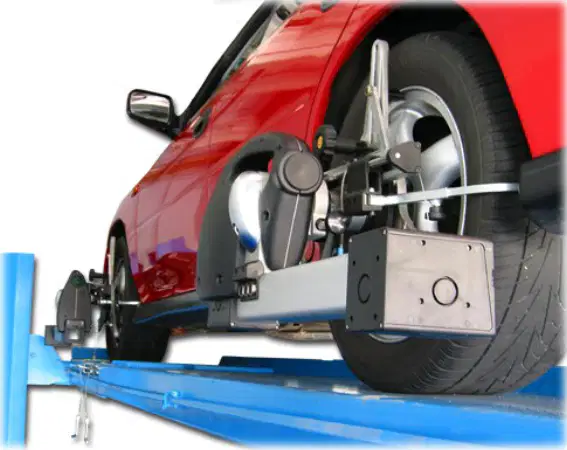
Which item is most likely included when introducing wheel alignment on a vehicle?
Brake pad wear diagnosis
Caster angle basics and effects
Air-conditioning compressor service
Fuel injection mapping overview
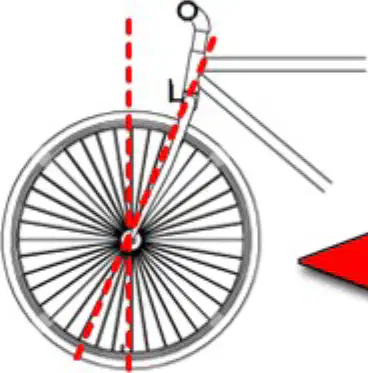
Which setup describes positive caster in a front wheel assembly?
Wheel center trails the mount point
Steering axis tilts to the front
Steering axis tilts to the rear
Knuckle is vertical without tilt
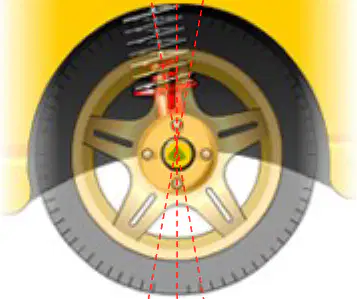
How is caster typically measured in vehicle alignment?
Millimeters along the axle
Degrees from the vertical
Degrees from the horizontal
Percentage of wheelbase length
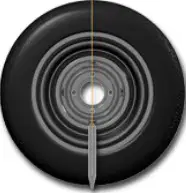
What is a common handling characteristic of negative caster?
Wheels turn more easily
Wheels resist turning strongly
Strong self-centering at speed
Reduced sensitivity to road imperfections
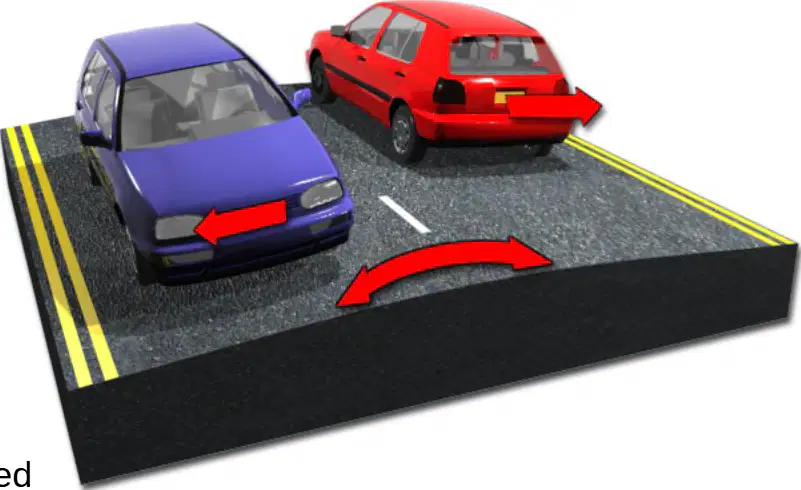
Why might technicians use offset caster on a vehicle?
To counteract pull on crowned roads
To increase tire contact patch
To reduce brake dive under load
To improve fuel economy on highways
Which statement best defines camber in wheel alignment?
Rotational speed difference between wheels
Vertical inward or outward tilt of wheels
Horizontal fore or aft shift of wheels
Suspension spring compression under load
A technician observes the top of both front wheels tilting inward. What camber condition is present, and what tire wear risk increases?
Negative camber, outer tread wear risk
Zero camber, uniform tread wear risk
Positive camber, outer tread wear risk
Negative camber, inner tread wear risk
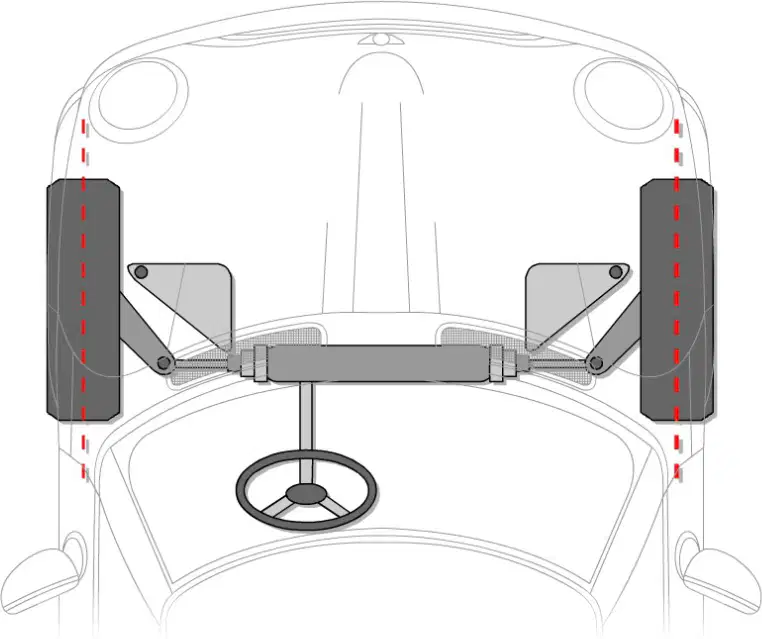
Which toe setting is typically used while the vehicle is moving to reduce scuffing or feathering?
Maximum toe for improved stability
Toe-out for front-drive vehicles
Toe-in for rear-drive compensation
Zero toe for reduced tire scuffing
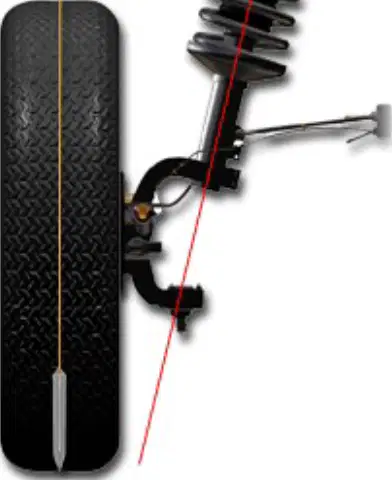
Which statement best describes kingpin (swivel axis) inclination in a typical front suspension?
A vertical axis with outward tilt aiding stability
A vertical axis with inward tilt aiding stability
A horizontal axis with inward tilt aiding stability
A diagonal axis with outward tilt reducing stability
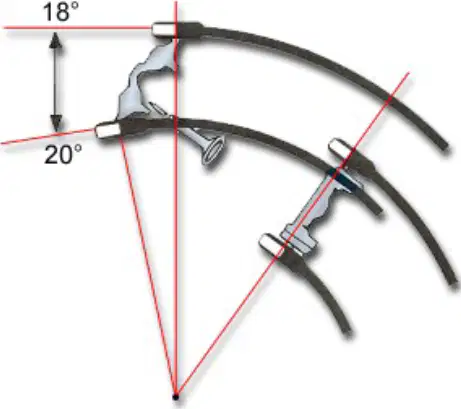
During a low-speed turn, how does the Ackerman steering geometry affect the front wheels?
Inside wheel follows tighter radius with toe-out
Both wheels follow equal-radius paths with toe-out
Both wheels follow equal-radius paths with toe-in
Outside wheel follows tighter radius with toe-out
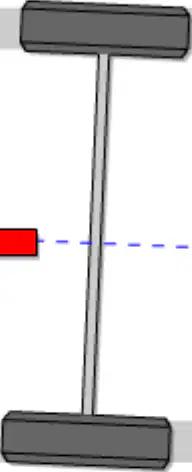
In vehicle dynamics, what best describes crabbing as shown in the diagram?
Front wheels steer while rear axle remains perfectly centered
Rear wheels follow front wheel tracks precisely
Rear axle is parallel and aligned to vehicle centerline
Rear wheels do not follow the tracks of front wheels
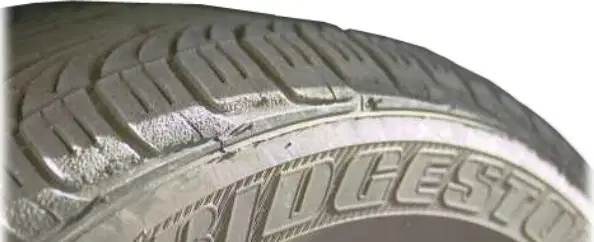
A tyre shows random bald spots across the tread. Which fault is most likely causing this pattern?
Too much negative camber
Excessive toe-in misalignment
Too much positive camber
Faulty wheel balance
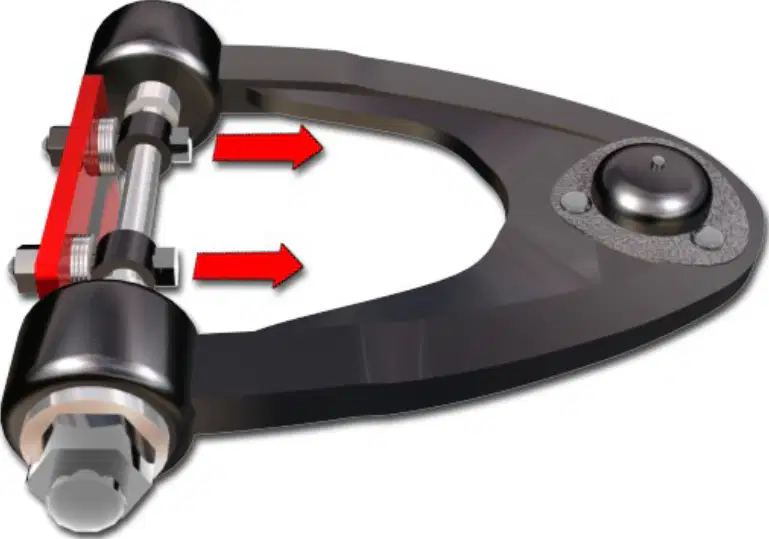
After setting caster, which action is commonly used to adjust camber on double-wishbone suspensions?
Using shims or slots to move the control arm out
Turning an eccentric bolt at the knuckle
Lengthening the track rod sleeve
Adjusting a strut rod for longitudinal angle
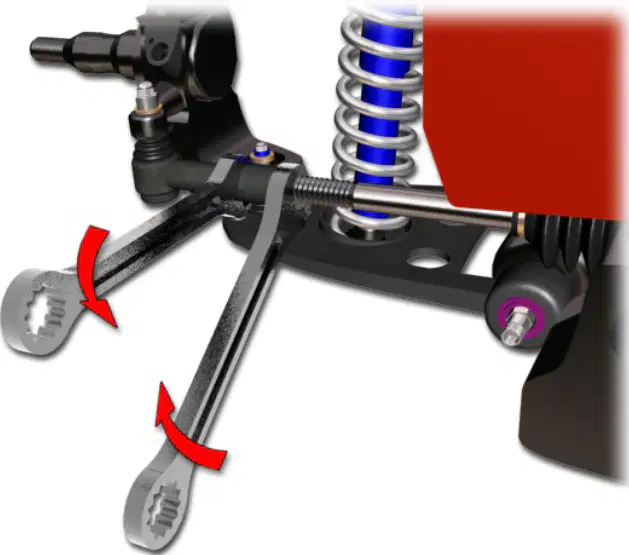
Track rod adjustment primarily affects which wheel alignment setting?
Ride height measured at the fender
Caster angle about the steering axis
Camber angle relative to vertical
Toe setting between left and right wheels
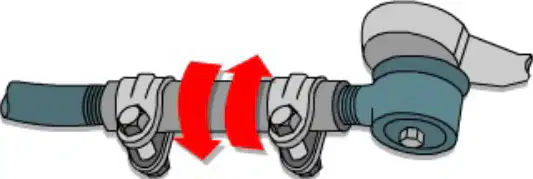
A technician needs to set toe on a linkage-type steering system. What practical step should be taken?
Move the lower control arm outward in its slots
Rotate adjustable sleeves on the tie rods
Insert additional shims at the upper control arm
Pivot the steering knuckle using eccentric adjusters
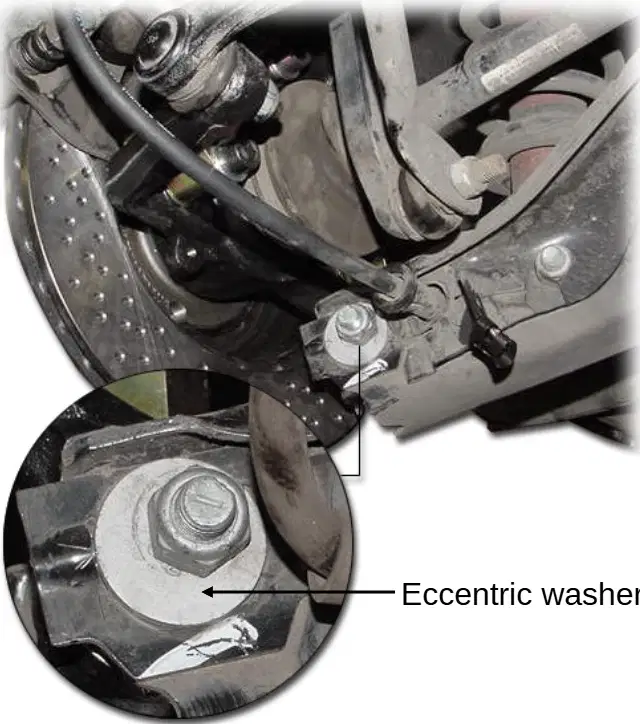
Which component is commonly used to adjust rear wheel alignment by offsetting the bolt position?
Standard locknut
Flat spacer
Rubber bush
Eccentric washer
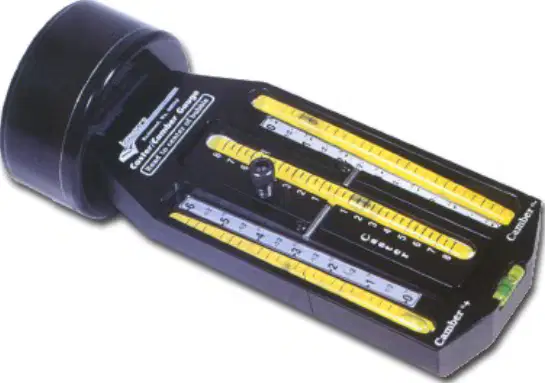
Which tool is specifically used to measure caster and camber during wheel alignment?
Track rod separator device
Graduated turntable unit
Steering wheel steady bar
Caster–camber gauge tool
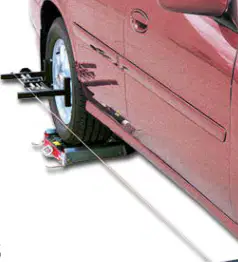
When alignment readings differ significantly from expected values, what is the best next step?
Proceed with toe adjustment immediately
Ignore the readings and retest later
Replace tyres without further checks
Compare results with manufacturer specifications